
Why This Guide Exists
Facing the possibility that a beloved dog is nearing the end of their life is one of the most painful experiences a pet owner can go through. It can also be one of the most isolating, because grief for an animal is still not always treated with the seriousness it deserves by those around us. This guide is written with deep respect for that experience. Its purpose is to help you recognise what is happening, understand what your dog may need, and make informed, compassionate decisions in what may be a very short window of time.
It is important to say from the outset: if your dog's condition changes suddenly or you are concerned, please contact your vet. Some of the signs described here can also result from treatable conditions, and a veterinary assessment is always the right first step.
Common Signs a Dog May Be Approaching End of Life
Dogs approaching the end of life often show a cluster of changes rather than a single sign. The following are among the most commonly observed:
- Extreme lethargy — a dog who sleeps almost constantly and shows little interest in rising or engaging with their environment
- Loss of appetite or complete refusal of food, including food they would normally find irresistible
- Significant, progressive weight loss and muscle wasting
- Difficulty breathing — laboured, shallow, or irregular breathing
- Incontinence — a dog who has been reliably house-trained losing control of their bladder or bowels
- Withdrawal or isolation — seeking out quiet, dark corners rather than the company of family members
- Loss of interest in activities, people, or toys they previously loved
- Extreme weakness, including difficulty standing or walking
- Glazed, unfocused eyes
- Cold extremities — the paws, ears, or nose feeling unusually cold to the touch
- Changes in gum colour — very pale, bluish, or greyish gums can indicate poor circulation or oxygen levels and require immediate veterinary attention
Distinguishing End of Life from a Bad Day
It is important to remember that a dog who shows some of these signs is not necessarily dying. A dog with a temporary infection, a painful flare of arthritis, or a digestive upset may appear dramatically unwell but recover fully with appropriate treatment. The distinction between "a bad day" and end-of-life decline is not always easy to draw at home, which is why veterinary assessment is so important when any sudden change occurs.
End-of-life decline is typically gradual, progressive, and does not respond to treatment in the way an acute illness would. Your vet is the right person to help you understand which situation you are in. Please do not try to make this judgement alone.
Palliative Care at Home
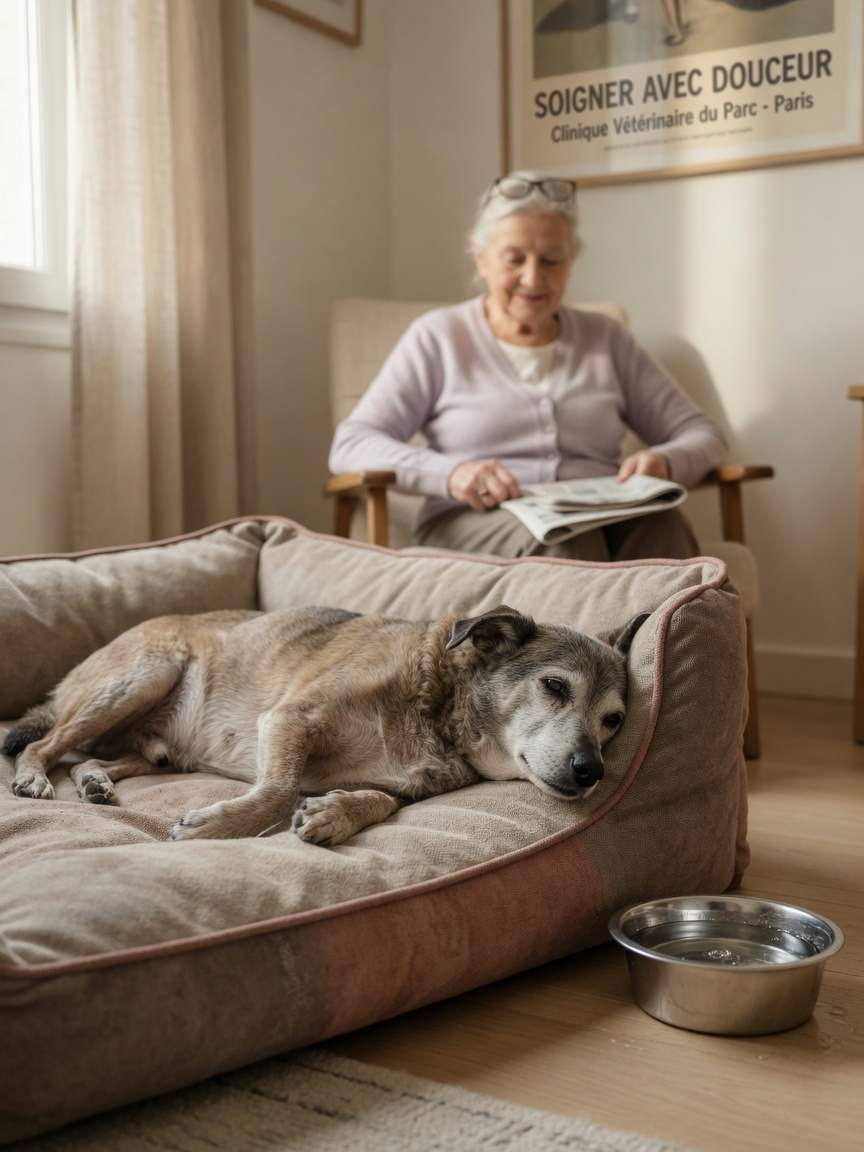
When a dog is in the final stages of life, whether due to age, terminal illness, or a condition for which treatment is no longer helping, the focus of care shifts from cure to comfort. Palliative care at home can include:
- Ensuring your dog is warm and comfortable at all times — a soft, supportive bed in a familiar, quiet location. A well-padded orthopaedic bed can be especially helpful for dogs who are very thin or who spend most of their time lying down.
- Fresh water available close by, and gentle encouragement to drink if your dog is willing
- Pain management prescribed by your vet — do not attempt to manage pain with over-the-counter human medications, which are unsafe for dogs
- Keeping your dog clean and dry, particularly if incontinence is present — this prevents skin soreness and preserves dignity
- Familiar voices, gentle touch, and calm presence — your company is profoundly reassuring to your dog
- Minimising stress by keeping the environment calm and avoiding unnecessary disturbances
If your dog is in pain that cannot be adequately managed at home, or if they are distressed, please contact your vet. Your dog's comfort is the priority above all else.
Hospice and Palliative Veterinary Care
Veterinary palliative and hospice care is a growing field, particularly in Europe. An increasing number of veterinary practices offer dedicated end-of-life support, including home visits, pain management programmes, and guidance for families navigating this stage. Some areas have specialist palliative care vets who can work alongside your regular practice. If this is available to you, it can be an invaluable source of both practical support and emotional guidance. Ask your vet whether a referral or home visit service is available in your area.
Quality of Life Assessment: The HHHHHMM Scale
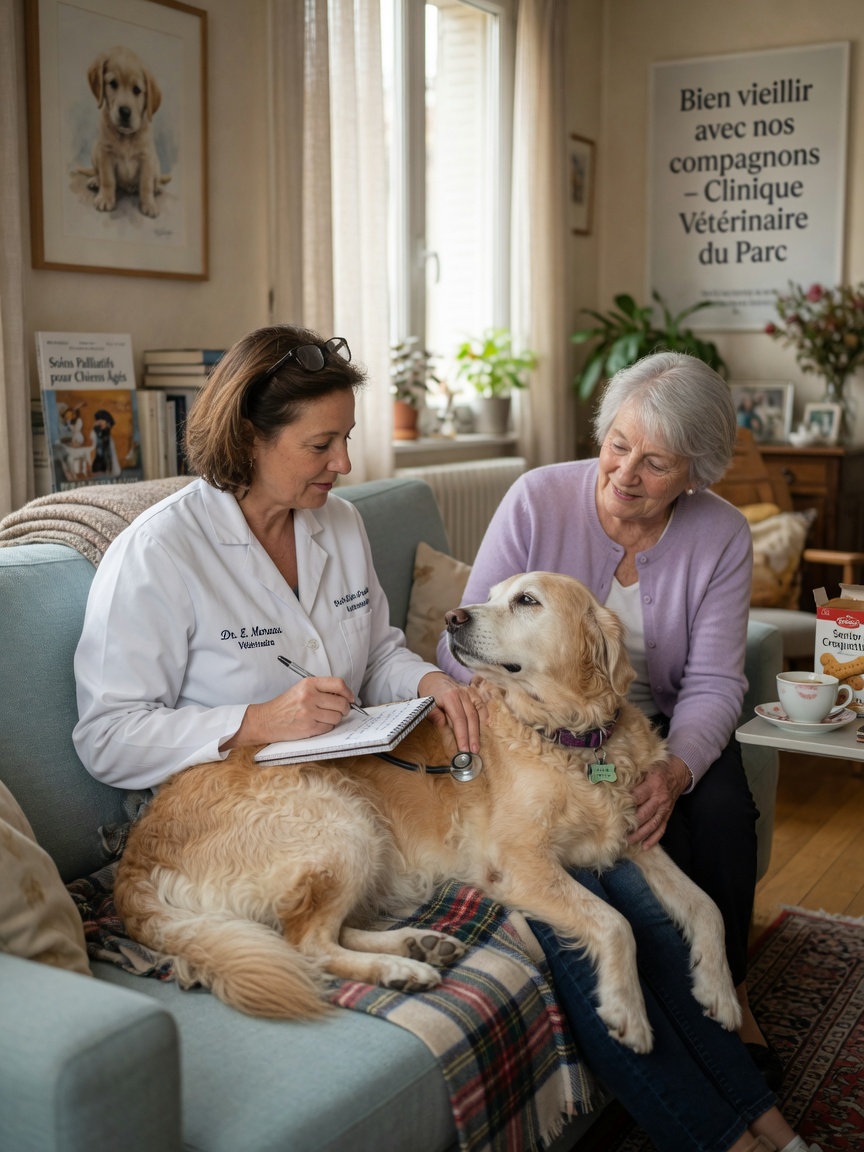
One of the most widely used tools for assessing quality of life in dogs approaching end of life is the HHHHHMM scale, developed by veterinary oncologist Dr Alice Villalobos. It considers seven factors:
- Hurt — is pain being adequately managed?
- Hunger — is the dog able to eat enough to sustain themselves?
- Hydration — is the dog drinking and remaining adequately hydrated?
- Hygiene — can the dog be kept clean and free from sores?
- Happiness — does the dog still experience moments of pleasure, interest, or connection?
- Mobility — can the dog move enough to avoid pressure sores and maintain some independence?
- More good days than bad — taken overall, is the dog experiencing more comfort than distress?
This framework is not a checklist that produces a definitive answer, but it provides a structure for an honest conversation with your vet about your dog's experience. Many vets find it a helpful starting point for discussing end-of-life decisions.
Discussing Euthanasia with Your Vet
Euthanasia is, for most dogs, the final act of care their owner can provide. When suffering cannot be adequately managed and more bad days outnumber good ones, choosing a peaceful, planned death spares a dog from prolonged distress. It is a profound act of love, not a failure or a giving up.
These conversations with your vet can feel very difficult to initiate, but vets welcome them. It is their role to help you understand your dog's condition honestly and to guide you through the options available. You do not need to wait until a crisis point to have this discussion — in fact, having it earlier allows you to make a considered, calm decision rather than one made under acute stress.
In many European countries, euthanasia can be performed at home by a vet, allowing your dog to pass in a familiar, peaceful environment surrounded by their family. Ask your vet or veterinary practice whether a home euthanasia service is available.
What to Expect During Euthanasia
Veterinary euthanasia is a gentle and peaceful process. An intravenous injection of a concentrated anaesthetic agent causes the dog to lose consciousness within seconds and the heart to stop shortly afterwards. There is no pain involved. Many dogs simply relax and fall asleep. You may choose to be present or not — both choices are valid, and your vet will support whichever you decide. There is no wrong way to say goodbye.
Grief, and Why It Is Valid
The grief that follows the loss of a dog is real, deep, and often underestimated by those who have not experienced it. Dogs are daily companions, sources of unconditional affection, and central figures in the rhythm of our lives. Losing them leaves a profound absence. Please do not minimise your grief or allow others to do so.
Pet bereavement support is available in many countries through helplines, online communities, and counselling services. The Blue Cross and the Society for Companion Animal Studies (SCAS) both offer support resources in the UK. Reaching out is a sign of how much your dog mattered — and they did matter.
Saying Goodbye: Practical Steps
In the time remaining with your dog, there are small things that may bring you comfort later. Spend quiet time together doing whatever your dog still enjoys, however modest. Take photographs. Allow children to say goodbye in an age-appropriate, honest way — children often cope better with honesty and inclusion than with euphemism and exclusion. Some families choose to make a paw print or keep a small piece of fur. These gestures may feel small, but they become meaningful in the months ahead.
Your dog has been a source of joy, companionship, and love. The care you give in their final days is a continuation of all that has come before — it matters, and they feel it.