
A Common Household Shortcut With Serious Consequences
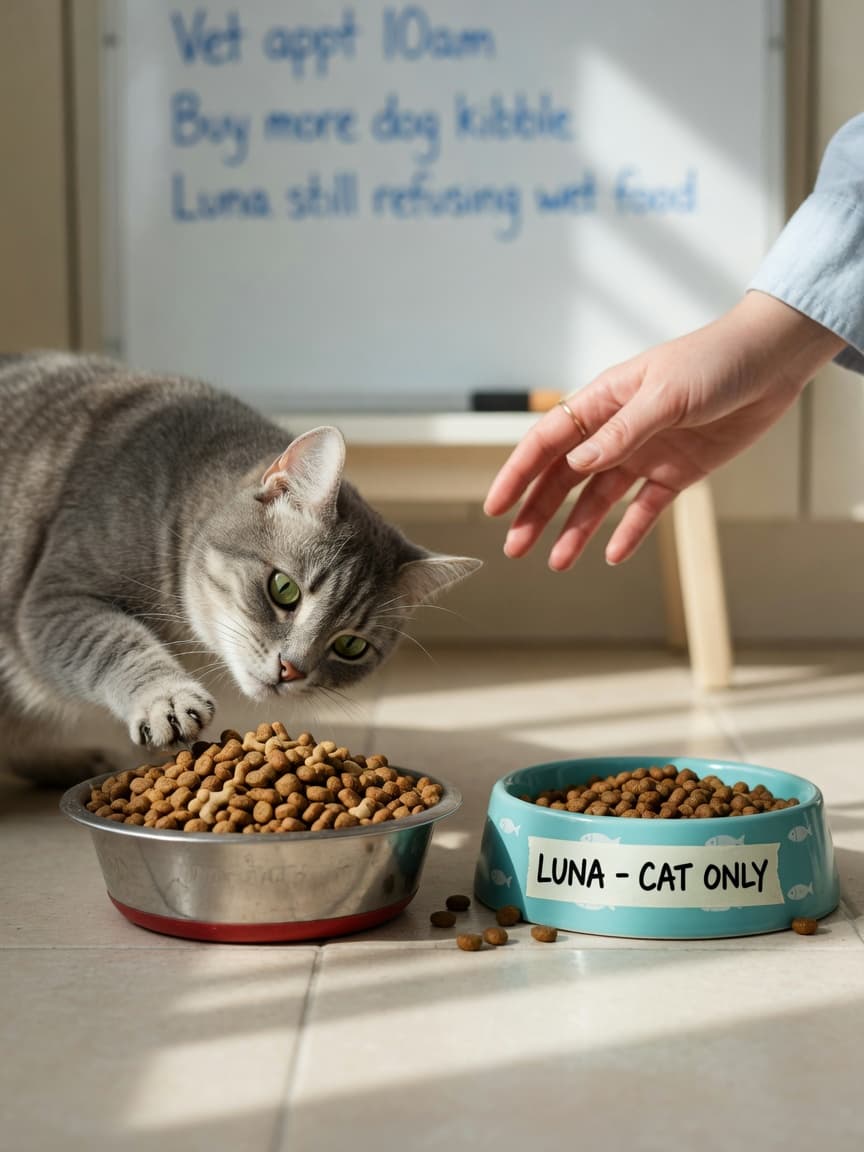
In multi-pet households, it is not unusual for cats to steal from the dog's bowl, and owners sometimes reach for dog food in a pinch when the cat food runs out. A single accidental meal of dog food is unlikely to cause lasting harm, but feeding a cat dog food regularly — even for a few weeks — can initiate nutritional deficiencies with consequences that are difficult to reverse. The reason lies in fundamental differences between feline and canine nutritional requirements, differences that are not visible in the food itself but are critical to understand.
Why Cat and Dog Nutrition Are Not Interchangeable
Dogs are omnivores. Their metabolic systems can synthesise a range of nutrients from both animal and plant precursors, giving them considerable dietary flexibility. Cats are obligate carnivores. Certain nutrients that dogs can produce internally, or extract from plant sources, must be supplied ready-formed in a cat's diet because the cat simply lacks the metabolic machinery to manufacture them. Dog food is formulated for dogs. It does not account for these feline-specific requirements, and no amount of good-quality dog food ingredients changes this fundamental mismatch.
Taurine: The Most Critical Gap
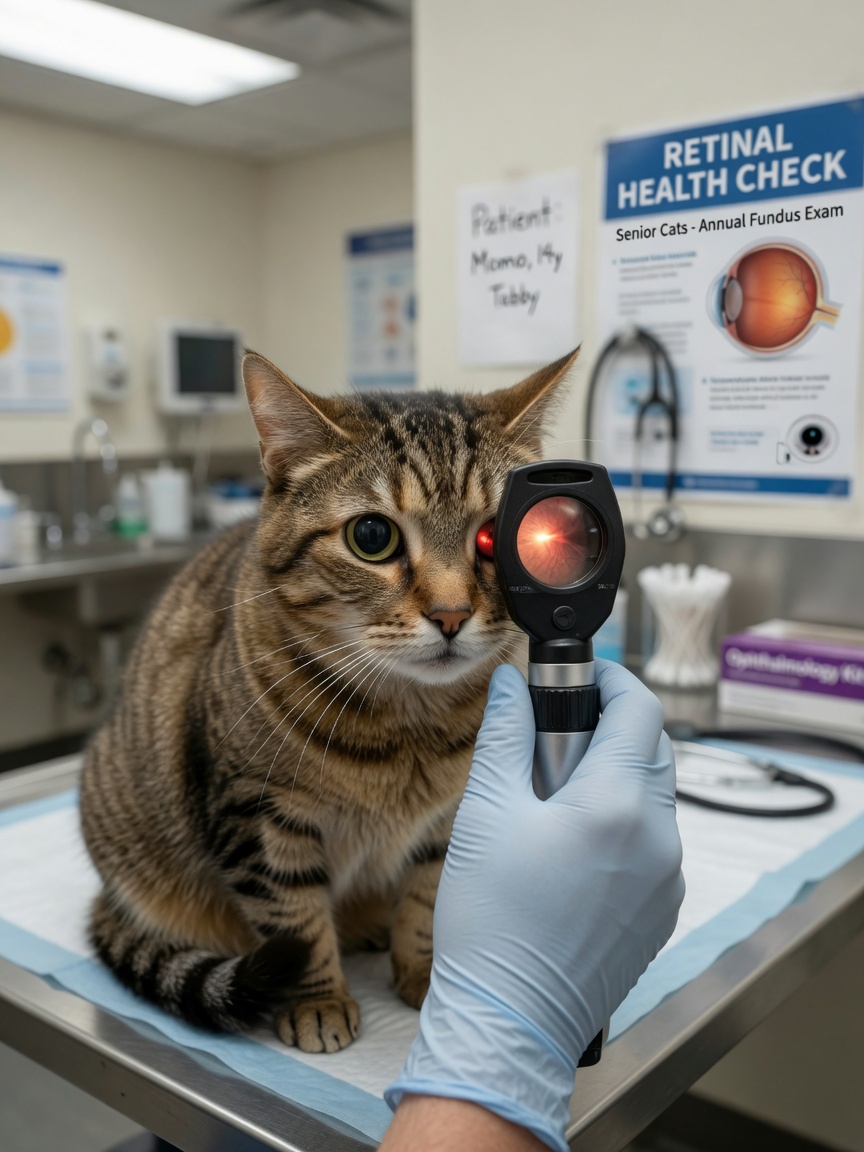
Taurine is an amino sulphonic acid essential for cardiac function, vision, immune health, and reproductive development in cats. Dogs can synthesise taurine from other amino acids — methionine and cysteine — in sufficient quantities for their own needs. Cats cannot. They require preformed taurine from dietary animal tissue.
Historically, dilated cardiomyopathy — a potentially fatal weakening of the heart muscle — was identified in cats fed diets deficient in taurine, including commercial cat foods that were later reformulated. Dog food contains whatever taurine is naturally present in its ingredients, which is generally insufficient for feline requirements and is not supplemented to meet them. A cat eating dog food as a primary diet may develop taurine deficiency over weeks to months, with cardiac and retinal consequences that can become permanent.
Retinal Degeneration
Taurine deficiency in cats causes feline central retinal degeneration, a condition in which photoreceptor cells in the retina deteriorate progressively. Early stages may not produce obvious symptoms. By the time vision impairment is noticeable, significant and irreversible damage has often already occurred. This is one of the clearest documented outcomes of feeding cats a diet not formulated for their species.
Arachidonic Acid and Vitamin A
Two further nutrients highlight why cat food formulation is not merely a regulatory formality but a genuine nutritional necessity.
Arachidonic Acid
Arachidonic acid is an omega-6 fatty acid involved in inflammation regulation, blood clotting, and reproductive function. Dogs can synthesise it from linoleic acid. Cats cannot complete this conversion efficiently and require arachidonic acid to be present preformed in their diet, which in practice means it must come from animal fat. Dog food does not reliably supply arachidonic acid at levels appropriate for cats.
Preformed Vitamin A
Cats cannot convert beta-carotene from plant sources into active vitamin A (retinol) in the way dogs and humans can. They require preformed vitamin A from animal tissue — liver in particular. Dog foods may contain beta-carotene as a vitamin A source, which serves dogs perfectly well but does nothing for a cat's vitamin A requirements. A cat fed primarily dog food will gradually become deficient in this vitamin, with effects on vision, immune function, and epithelial tissue.
Protein Content and Energy Density
Dog food is formulated to meet canine protein requirements, which are lower than those of cats. A cat fed dog food may receive insufficient protein overall, and the protein provided may not supply all essential amino acids in the proportions cats require. Caloric density and the balance of protein, fat, and carbohydrate are calibrated for a different metabolic profile. Over time, a cat eating dog food as its main diet may show loss of muscle mass, reduced coat condition, and general decline in body condition score.
What Happens With Occasional Exposure
One meal of dog food, or occasional accidental access to the dog's bowl, does not constitute a crisis. The deficiencies described above develop over time with sustained exposure, not from a single incident. The appropriate response to a cat that has eaten dog food once is simply to ensure it returns to its own complete diet at the next meal. Monitoring is not generally required unless the cat shows signs of illness.
The concern is with owners who use dog food as a regular substitute, whether due to cost, convenience, or the mistaken belief that the two foods are broadly similar. They are not, and the regulatory feeding standards that distinguish complete cat food from complete dog food exist precisely because of these biological differences.
Practical Steps for Multi-Pet Households
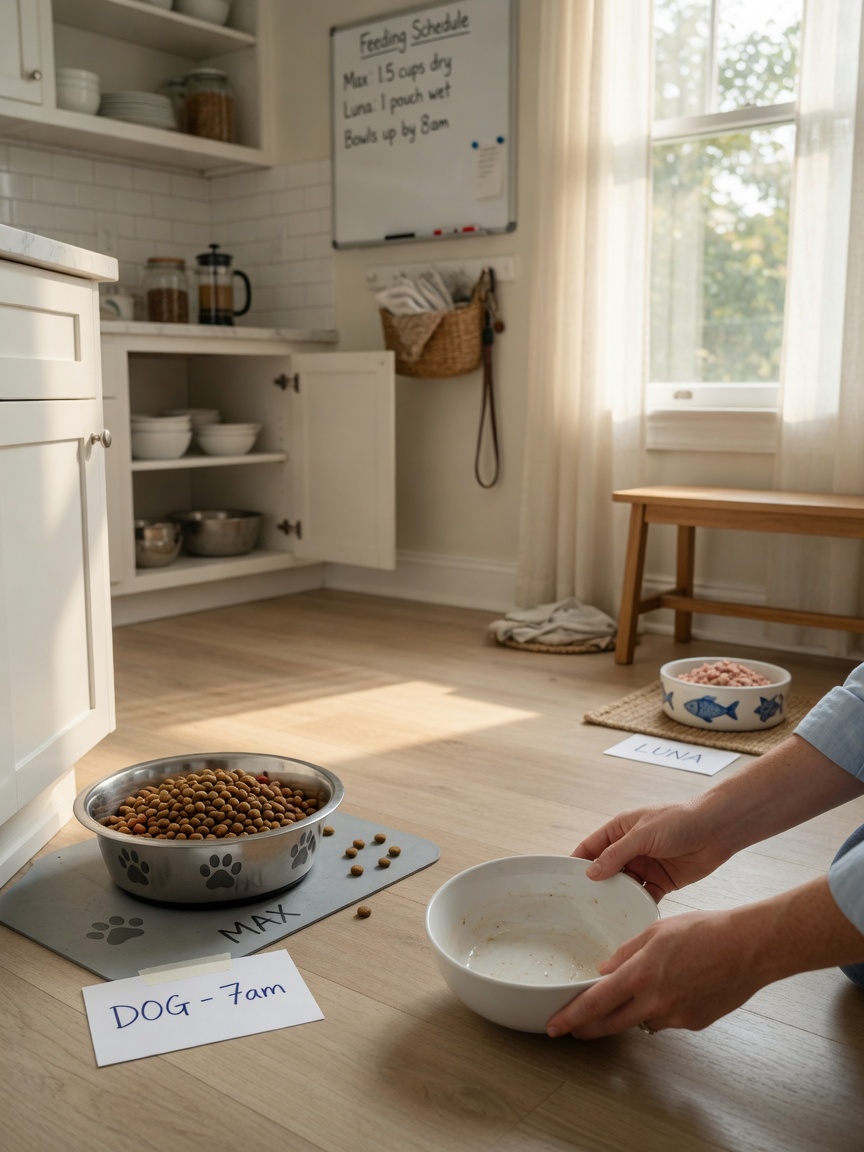
- Feed cats and dogs in separate locations and supervise mealtimes to prevent bowl-sharing.
- Pick up food bowls after feeding rather than leaving them out, which reduces opportunity for cross-species food theft.
- Never use dog food as a planned substitute for cat food, even temporarily if possible — a missed meal is preferable to the wrong species' food as a regular option.
- If your cat has been eating dog food for more than a few days due to supply issues, return to a complete cat diet and consider mentioning it at your next vet visit so that any early signs of deficiency can be assessed.
- If you notice changes in vision, gait, coat condition, or energy levels in a cat that has had access to dog food, book a veterinary appointment promptly.
The line between cat food and dog food is not a marketing distinction — it reflects genuinely different biological requirements. Taurine, arachidonic acid, and preformed vitamin A are not optional extras in feline nutrition. They are essential, they are absent or insufficient in dog food, and their deficiency causes harm that can become irreversible. Keep each animal eating what was formulated for its species, and consult your vet if you have any concerns about nutritional adequacy.