
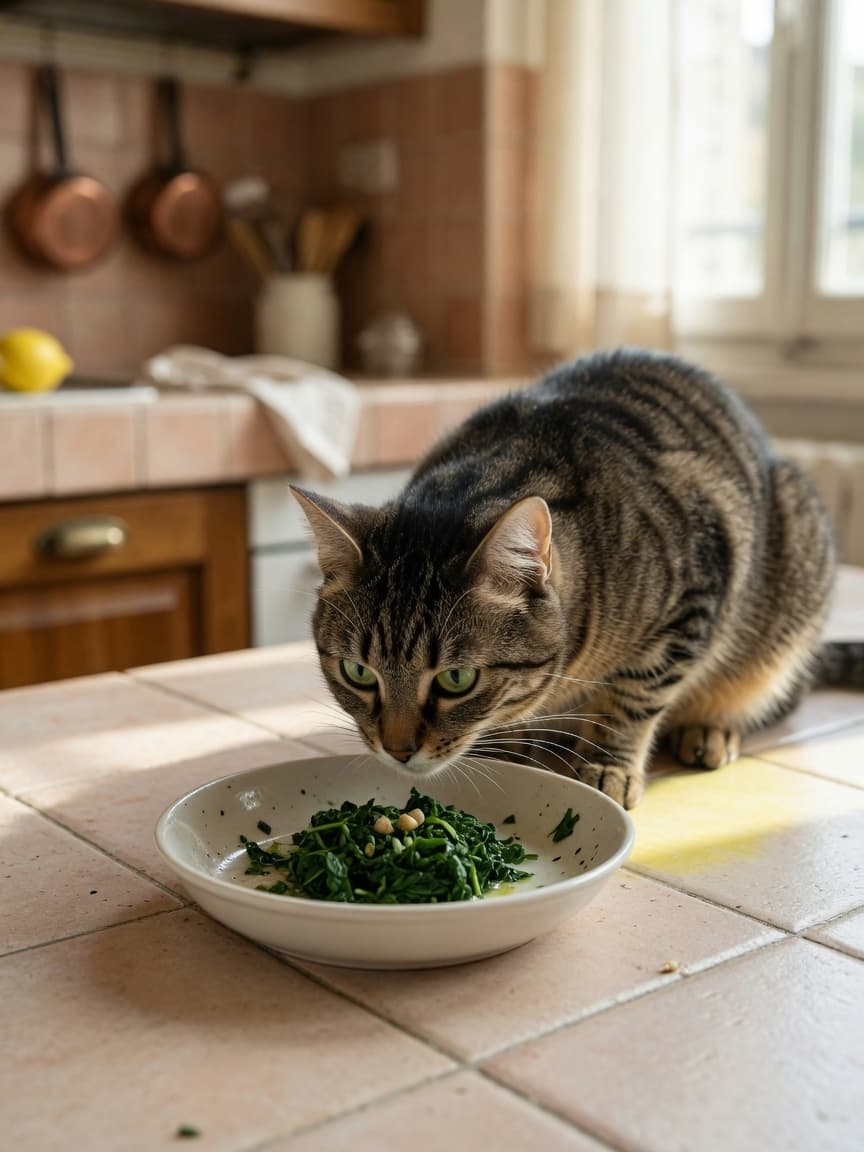
A Superfood for Humans, a Complicated Choice for Cats
Spinach has acquired near-mythic status in human nutrition circles — iron-rich, calcium-packed, dense with antioxidants. Some of that reputation transfers loosely to feline nutrition, but there is a complication that human superfood enthusiasm tends to gloss over: spinach contains oxalic acid, and in cats with compromised kidney function, this is not a trivial concern. Understanding what oxalates do, and which cats should never eat spinach, is essential before you toss a leaf into your cat's bowl.
Is Spinach Toxic to Cats in General
For a healthy adult cat with no history of urinary tract disease or kidney problems, a small amount of spinach is not toxic. Cats can nibble on spinach occasionally without acute harm. The ASPCA does not list spinach as a toxic plant for cats, which sometimes gets interpreted as blanket safety — but that classification refers to acute poisoning risk, not to the cumulative metabolic effects of regular consumption in vulnerable individuals.
What Oxalates Are and Why They Matter
Oxalic acid is a naturally occurring compound found in many leafy greens. In the digestive tract, it binds to minerals such as calcium and forms calcium oxalate crystals. In a healthy individual with well-functioning kidneys, these crystals are filtered and excreted in urine without issue. In cats with reduced kidney function, or cats predisposed to calcium oxalate urolithiasis (bladder or kidney stones), the picture changes significantly.
Calcium Oxalate Urolithiasis in Cats
Calcium oxalate stones are one of the two most common types of urinary stones in cats, the other being struvite. Unlike struvite stones, calcium oxalate stones cannot be dissolved through dietary management alone — they require surgical or non-surgical removal. Cats who have previously had calcium oxalate stones are at elevated risk of recurrence, and feeding oxalate-rich foods increases urinary oxalate load, raising that risk further.
Kidney Disease and Oxalate Sensitivity
Cats with chronic kidney disease (CKD) — a condition affecting an estimated 30 to 40% of cats over the age of 10 — have reduced capacity to process and excrete metabolic byproducts, including oxalates. Dietary management is central to CKD care, and spinach has no place in the diet of a cat already managing compromised renal function. Even small amounts consumed regularly can contribute to oxalate accumulation.
What Nutritional Value Spinach Offers Cats
In purely technical terms, spinach provides vitamins A, C, and K, folate, iron, and calcium. However, cats derive limited benefit from plant-sourced nutrients compared to animal-sourced equivalents. Their intestinal conversion of beta-carotene to vitamin A is poor. The iron and calcium in spinach are significantly less bioavailable than the same minerals from meat. In short, the nutritional case for feeding spinach to cats is weak, which makes the oxalate risk even less worth taking.
Which Cats Should Never Eat Spinach
- Cats with a confirmed or suspected diagnosis of chronic kidney disease
- Cats with a history of calcium oxalate urinary stones
- Cats with idiopathic hypercalciuria (elevated urinary calcium without clear cause)
- Cats currently on a prescription renal or urinary diet — adding spinach undermines the dietary control
- Cats with a family history of urinary stone disease, if known
If Your Healthy Cat Has Already Eaten Some Spinach
A healthy cat stealing a leaf of spinach from your plate is not a veterinary emergency. Monitor for any gastrointestinal upset, which would be the most likely short-term issue, and do not make a habit of offering it. There are no meaningful nutritional benefits that cannot be obtained more safely from high-quality animal-based cat food.
Practical Summary
- Spinach is not acutely toxic to cats but contains oxalates with clinically relevant implications
- Cats with kidney disease or a history of calcium oxalate stones should not eat spinach
- The nutritional benefits of spinach for cats are minimal and obtainable from safer sources
- There is no compelling reason to include spinach in any cat's diet
- If your cat has kidney disease or urinary stone history, consult your vet about all dietary additions, including leafy greens