
How Much to Feed a Kitten: Feeding Chart by Age & Weight
- Meal frequency: 4x/day (under 3 months) → 3x (3–6 months) → 2x (6+ months)
- Caloric density: Kittens need ~2x the calories per kg of adult cats
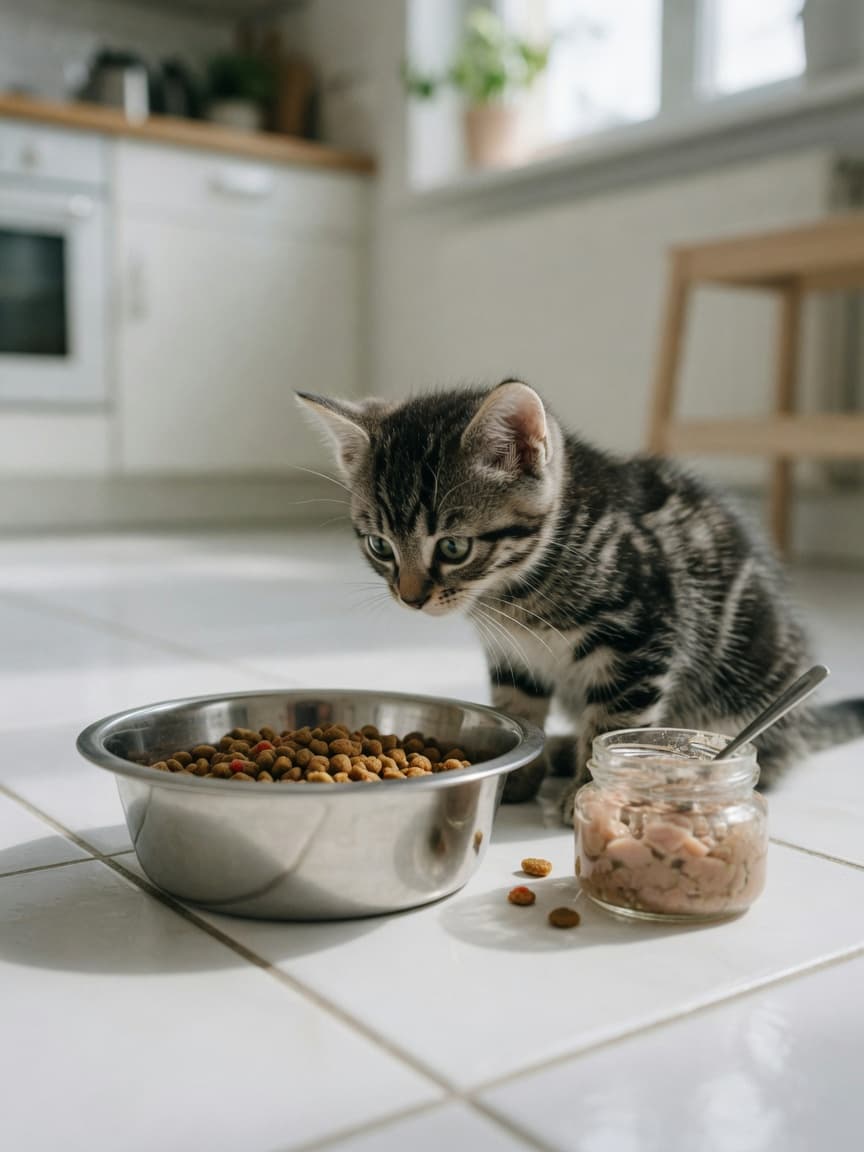
- Wet vs dry: Wet food recommended for at least 50% of diet for hydration
- Growth complete: Most cats finish growing at 12 months; some large breeds at 18 months
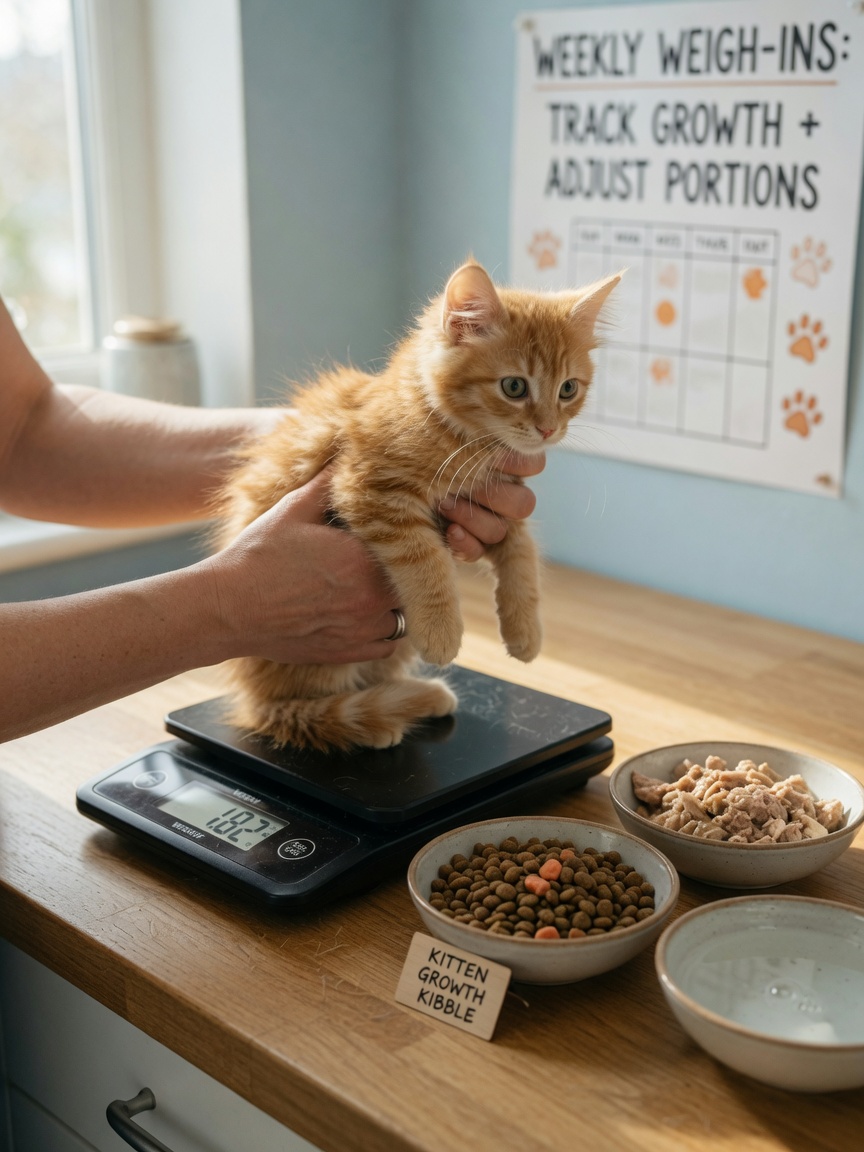
- Always check: BCS monthly and adjust portions accordingly
By Julia Wrenfield, Pet Wellness Researcher | Published June 25, 2026
Kittens are obligate carnivores with extraordinary energy demands during growth. A kitten at 8 weeks old may need as many as 250 kcal per kilogram of body weight per day — more than twice what an adult cat requires. Get this right and you lay the foundation for a healthy immune system, strong bone density, ideal muscle mass, and appropriate organ development. Get it wrong — through underfeeding or overfeeding — and the consequences can include stunted growth, immune suppression, or obesity that tracks the cat into adulthood. This guide gives you the numbers and the principles to feed your kitten correctly at every stage.
Understanding Kitten Nutritional Needs
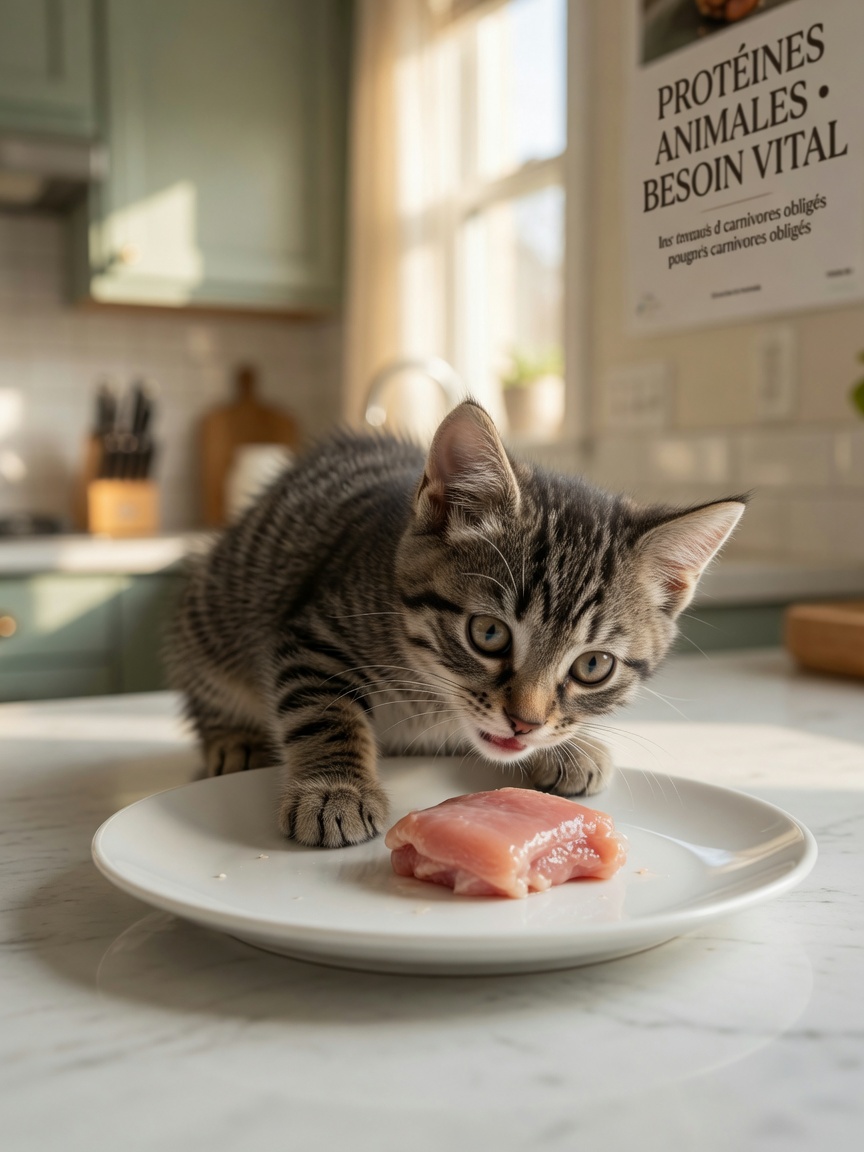
Unlike dogs, cats cannot synthesize certain essential nutrients from precursors — they must obtain them directly from animal tissue. These include taurine (critical for heart and eye health), arachidonic acid (an omega-6 fatty acid), preformed vitamin A, and niacin. This is why cat food cannot be replaced with dog food, and why a nutritionally complete, AAFCO/FEDIAF-approved kitten food is not optional — it is a baseline requirement.
Kittens also have a limited stomach capacity relative to their caloric needs, which is why meal frequency matters. Three to four small meals spaced throughout the day is far more appropriate than two large meals in the first six months of life.
Kitten Feeding Chart by Age and Weight
The following chart provides approximate daily caloric targets and suggested amounts for a typical dry kitten kibble (~380 kcal/100g) and wet food (~90 kcal/100g). Always cross-reference with your specific product's feeding guide.
| Age | Approx Weight | Daily kcal Target | Dry Kibble/Day | Wet Food/Day | Meals/Day |
|---|---|---|---|---|---|
| 8–10 weeks | 0.5–0.9 kg | 130–175 kcal | 35–45 g | 145–195 g | 4 |
| 10–12 weeks | 0.9–1.2 kg | 175–210 kcal | 45–55 g | 195–235 g | 4 |
| 3–4 months | 1.2–1.8 kg | 210–275 kcal | 55–72 g | 235–305 g | 3–4 |
| 4–6 months | 1.8–2.7 kg | 275–350 kcal | 72–92 g | 305–390 g | 3 |
| 6–9 months | 2.7–3.5 kg | 280–330 kcal | 74–87 g | 310–365 g | 2–3 |
| 9–12 months | 3.0–4.5 kg | 220–280 kcal | 58–74 g | 245–310 g | 2 |
Note: Caloric needs drop notably after 6 months as growth rate slows. Continuing the high intake of the 3–6 month period into late kittenhood is a leading cause of kitten obesity.
Wet Food vs Dry Kibble: Which Is Better for Kittens?
This is one of the most debated topics in feline nutrition. The evidence-based answer: both can be adequate nutritionally if formulated to AAFCO/FEDIAF standards for kitten growth, but wet food has meaningful advantages for cats specifically.
Cats evolved in arid environments and have a naturally low thirst drive. They obtain most of their moisture through prey. Dry kibble contains only 8–10% moisture; wet food contains 70–80%. A cat on an exclusively dry diet chronically under-consumes water relative to their needs, which stresses the kidneys and urinary tract. Feline lower urinary tract disease (FLUTD) and chronic kidney disease — major causes of premature death in cats — are both linked to chronic dehydration over years.
Recommendation: Feed at least 50% of daily calories as wet food for kittens and adult cats. A combination diet — wet food for primary nutrition and hydration, dry kibble as an optional addition — is a practical and health-supporting approach.
Growth Stages and When to Switch to Adult Food
Most domestic shorthair cats complete their growth between 10 and 12 months. At this point, switching to an adult maintenance formula is appropriate. Large breeds — Maine Coons, Ragdolls, Norwegian Forest Cats — may not finish growing until 18–24 months and should remain on kitten or "all life stages" food until then.
Transition over 7–10 days: start with 75% kitten food and 25% adult food, then shift the ratio every 2 days until fully transitioned. Abrupt food changes cause GI upset in cats, which are creatures of habit with sensitive digestive systems.
Free-Feeding vs Scheduled Meals
Free-feeding (leaving food out all day) is convenient but associated with obesity in cats, particularly with dry kibble, which is calorie-dense and easy to overconsume. Scheduled meals also establish a routine that makes it easier to monitor your cat's appetite — a valuable early warning system for illness. Most feline nutritionists recommend 2–3 scheduled meals per day from 6 months onward, rather than free-feeding.
For complete, high-quality kitten food ranges including wet pouches, tins, and dry kibble from brands like Royal Canin, Hill's Kitten, Orijen, and more, Zooplus offers great value with home delivery across Europe. Their kitten category filter makes it easy to find age-appropriate options.
- Kittens need 4 meals daily until 3 months, 3 meals until 6 months, then 2 meals as they approach adulthood.
- Caloric needs are highest at 3–6 months and drop significantly after 6 months as growth slows.
- Wet food provides critical hydration and is strongly recommended as at least 50% of a kitten's diet.
- Avoid free-feeding with dry kibble — it promotes overconsumption and obesity.
- Switch to adult food at 12 months for most breeds; large breeds may need kitten food until 18–24 months.
References
- Zoran DL. "The carnivore connection to nutrition in cats." Journal of the American Veterinary Medical Association. 2002;221(11):1559-1567. PMID: 12479324
- Perez-Camargo G. "Cat nutrition: what's new in the old?" Compendium on Continuing Education for the Practicing Veterinarian. 2004;26(Suppl 2A):5-10.
- Buckley CM, et al. "Effect of dietary water intake on urinary output, specific gravity and relative supersaturation for calcium oxalate and struvite in the cat." British Journal of Nutrition. 2011;106(Suppl 1):S128-130. PMID: 22005432