
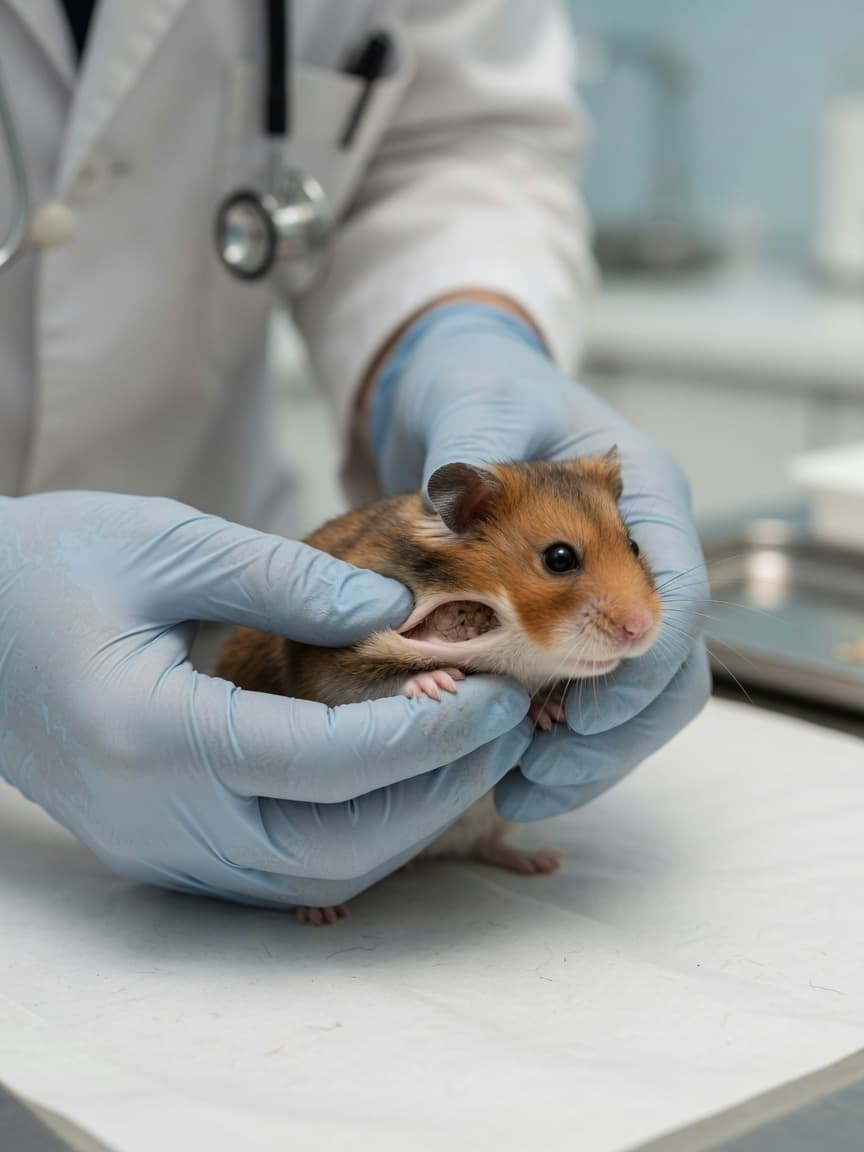
- Two main conditions: impaction (blockage) and prolapse (pouch turns inside out)
- Prolapse is a medical emergency — visible pink/red tissue outside the mouth
- Never try to push prolapsed tissue back yourself
- Requires an exotic animal specialist vet, not a regular vet
- Prevention: avoid sticky foods (peanut butter, gummy treats, bread)
- Cut food into small pieces to reduce impaction risk
Hamster Cheek Pouch Problems: Impaction & Prolapse
By Julia Wrenfield, Pet Wellness Researcher
Hamsters are defined, in large part, by their extraordinary cheek pouches. The ability to stuff both pouches to bursting and waddle back to a burrow to cache food is central to their biology and, let's be honest, much of their charm. But these remarkable structures are also vulnerable to two serious problems — impaction and prolapse — that every hamster owner should be able to recognize and respond to correctly.
Understanding Cheek Pouch Anatomy
A hamster's cheek pouches are not simply expanded cheeks — they are dedicated storage organs. Each pouch is a muscular sac that begins at the mouth and extends backward along the side of the head and neck, sometimes reaching as far as the shoulder. In Syrian (golden) hamsters, each pouch can hold up to 20 ml of material. Dwarf species have proportionally smaller but still functional pouches.
The pouches are lined with a thin, delicate mucous membrane and are emptied by a combination of muscular contraction and the hamster using its forepaws to physically push material forward and out. The epithelium is soft and relatively fragile — robust enough for the seeds and plant material hamsters evolved to carry, but susceptible to damage from sharp objects, sticky substances, and inappropriate bedding material.
Cheek Pouch Impaction: When Food Gets Stuck
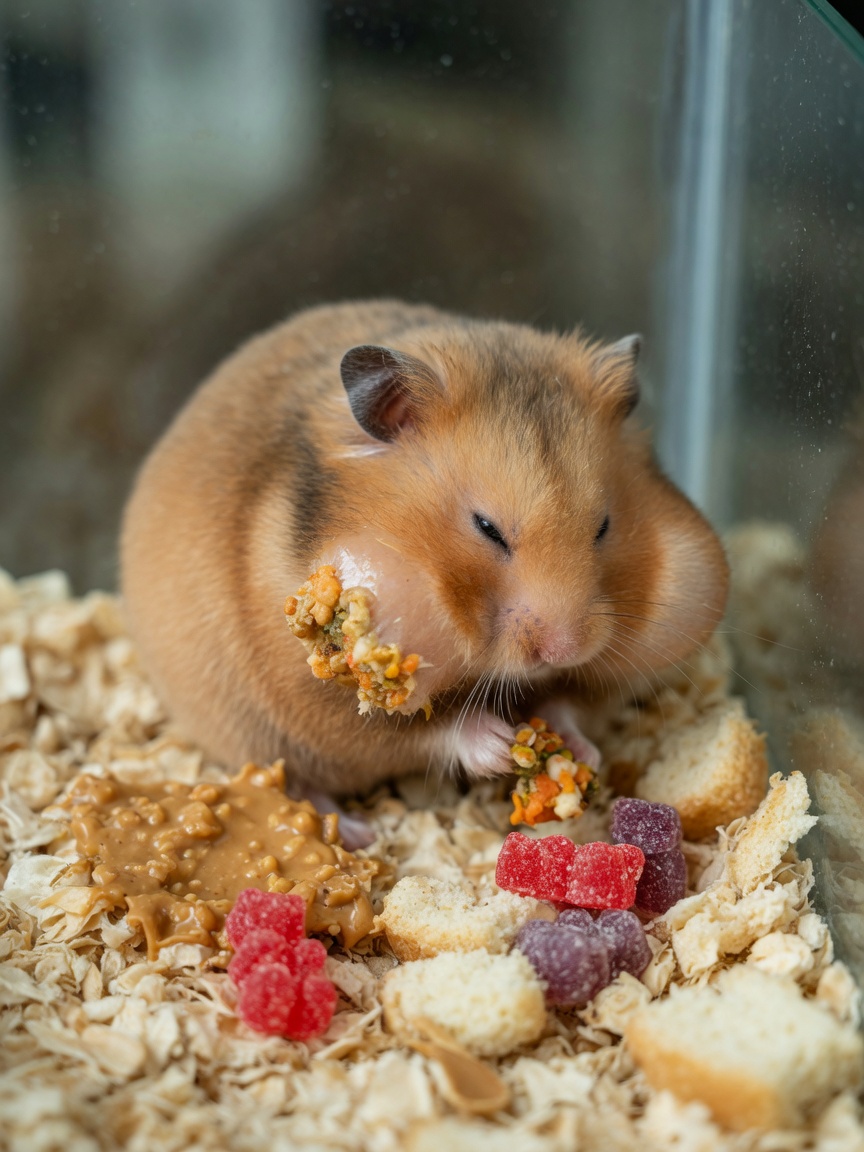
Impaction occurs when material inside the pouch cannot be emptied normally. The pouch becomes packed with food or debris that compacts, dries, or sticks together, making it impossible for the hamster to expel through normal behavior.
Common causes of impaction:
- Sticky foods — peanut butter, honey-based treats, gummy or chewy snacks that adhere to the pouch lining
- Dry, compacted seed mixes or large hard items that wedge into position
- Inappropriate bedding — fluffy cotton-type bedding is particularly dangerous; fibers can be inhaled or packed into pouches where they cannot be expelled
- Sharp food items — splintered wood pieces, certain seed hulls — that embed into the pouch wall and cause the hamster to avoid emptying due to pain
- Abscesses within the pouch that cause the tissue to thicken and block normal emptying
Signs of impaction: The most obvious sign is asymmetry — one or both pouches remain visibly bulging for an extended period (more than a few hours without emptying). A healthy hamster regularly empties its pouches when in or near its nest. Persistent swelling on one side of the face, pawing or scratching at the mouth or cheeks, reluctance to eat, drooling, or an unusual odor from the mouth are all warning signs that require veterinary attention.
Cheek Pouch Prolapse: A Medical Emergency
Prolapse is a more acute and dramatic condition in which part of the cheek pouch lining turns inside out and protrudes from the hamster's mouth. The tissue appears as a pink, red, or dark red mass — sometimes described as looking like a small tongue or a fleshy lump — visible at the corner of the mouth or emerging directly from the oral cavity.
Prolapse can occur due to repeated straining to empty an impacted pouch, direct trauma, infection that weakens the tissue, or occasionally in cases where very sticky food has adhered to the pouch lining and peeled it outward during an emptying attempt. Whatever the cause, the result is exposed mucous membrane tissue that quickly becomes dry, irritated, and at risk of becoming necrotic (dying) if not treated promptly.
Signs of prolapse:
- Visible pink, red, or dark reddish tissue protruding from the mouth or at the corner of the lips
- The hamster appears distressed, may be pawing at the face constantly
- Refusal to eat
- Excessive salivation or drooling
- The tissue may appear wet initially and progressively darken if not treated
What NOT to Do
This is critical: do not attempt to push prolapsed tissue back into the mouth yourself. Without proper technique, sterile equipment, and appropriate anaesthesia or sedation, manual repositioning attempts can cause further trauma, introduce infection, and worsen tearing of the delicate mucous membrane. A hamster in pain from a prolapse may bite, causing you injury and causing the hamster to jerk or flinch in ways that worsen the damage.
Keep the exposed tissue moist if possible during transport — a clean, damp cloth held gently near (not pressed against) the area can reduce drying. Transport immediately to an exotic animal specialist.
Veterinary Treatment Options
For impaction, treatment typically involves sedating the hamster and manually emptying the pouch under veterinary supervision. The vet may irrigate the pouch with saline to loosen compacted material. If infection is present, antibiotics will be prescribed. Refractory or recurrent cases may require surgical pouch removal (technically possible but only performed by vets experienced in exotic rodent surgery).
For prolapse, the vet will assess tissue viability. If the tissue is still healthy (pink, not necrotic), it can be surgically repositioned and sutured back into place. If the tissue has died or is severely damaged, partial or complete pouch removal may be necessary. Hamsters can live normally without their pouches, though they lose the food-caching behavior associated with them.
Prevention: Diet and Environment Choices That Protect the Pouches
Prevention centers on two areas: food selection and bedding choice.
Foods to avoid entirely: peanut butter (a notorious cause of impaction — never give this to a hamster), honey-coated seeds or treats, gummy or chewy commercial hamster treats, bread or doughy foods that compact and expand with moisture, and large sticky dried fruits.
Safe food practices: Cut all soft foods into small pieces. Offer seeds in their natural uncoated form. Hard vegetables like carrot can be given in small pieces — the natural texture poses minimal impaction risk. Avoid putting multiple large items in the cage at once that might encourage the hamster to overstuff its pouches beyond comfortable capacity.
Bedding: Use only safe, natural bedding materials — paper-based bedding, hemp, or wooden shavings (dust-free). Avoid fluffy cotton or polyester fiber bedding, which can be inhaled or packed into pouches with disastrous results.
Browse vet-recommended hamster supplies at Zooplus →
Paper-based bedding, natural seed mixes, and safe treats — no sticky or fluffy fillers.
Key Takeaways
- Cheek pouch impaction (blocked pouch) and prolapse (inside-out pouch) are two distinct conditions requiring veterinary care.
- Prolapse is a medical emergency — visible red/pink tissue outside the mouth needs immediate exotic vet attention.
- Never attempt to push prolapsed tissue back yourself — this causes additional harm.
- An exotic animal specialist vet is required; regular vets may not have the necessary training.
- Never feed hamsters peanut butter, gummy treats, honey-coated foods, or sticky substances.
- Avoid fluffy cotton bedding — it can be packed into pouches and cannot be expelled.
- Signs of impaction include persistent facial asymmetry, pawing at the face, reluctance to eat, and unusual odor.
References
- Donnelly TM, Brown CJ. "Guinea pig and chinchilla care and husbandry." Vet Clin North Am Exot Anim Pract. 2004;7(2):351–373. PMID: 15145515. [Broader small rodent clinical care context including cheek pouch anatomy and pathology discussion.]
- Jekl V, Hauptman K, Knotek Z. "Diseases in pet hamsters — a retrospective study in 191 animals." Vet Med (Praha). 2011;56(4):170–176. [Retrospective clinical data on cheek pouch impaction, prolapse, and other common hamster conditions presenting at exotic animal practices.]