
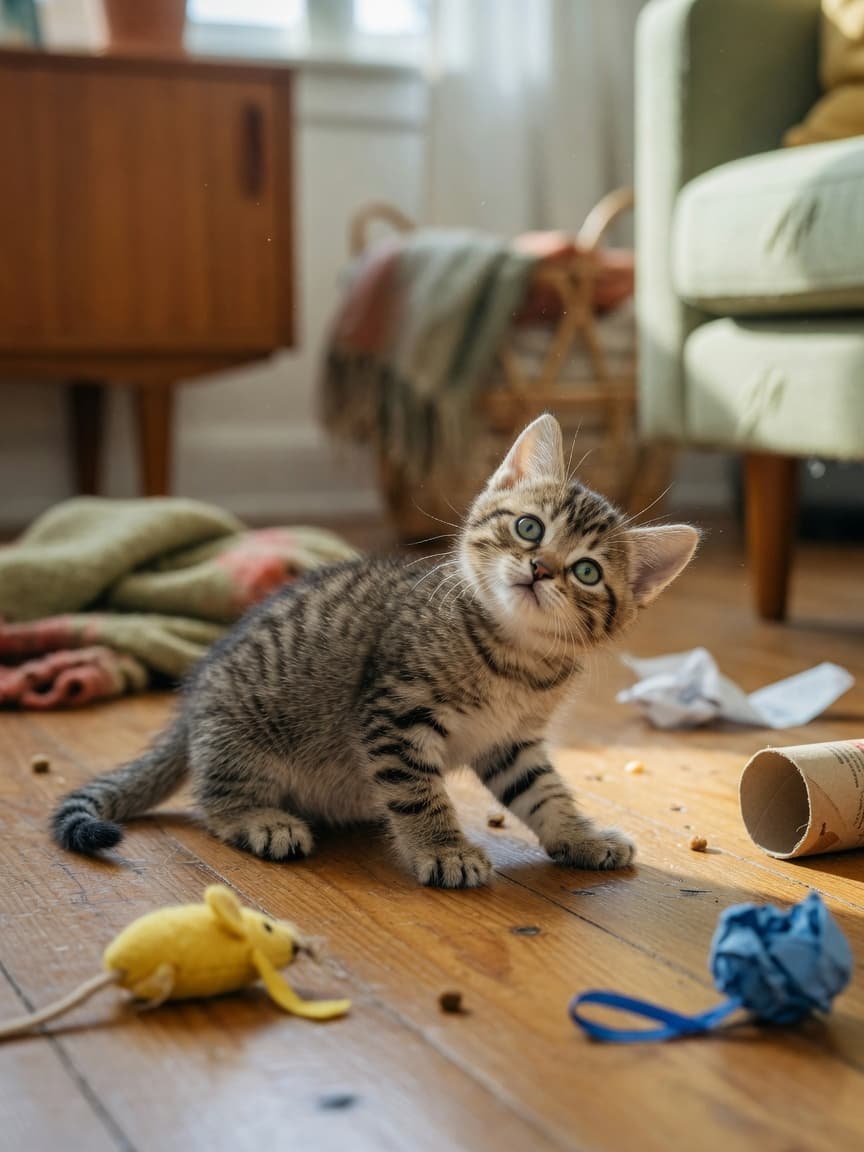
When Is a Kitten Ready to Leave Its Mother?
Across most EU member states, the legal minimum age to rehome a kitten is eight weeks. However, European veterinary and welfare organisations — including the Federation of European Companion Animal Veterinary Associations (FECAVA) — strongly recommend waiting until twelve weeks. The additional four weeks allow kittens to develop critical social skills from their mother and siblings, improve immune function through continued nursing, and reduce the risk of behavioural problems in later life. If you are adopting from a reputable rescue or breeder, they will typically hold kittens until this age as a matter of course.
Kitten-Proofing Your Home
Before your kitten arrives, walk through your home with fresh eyes. Kittens are extraordinarily curious, agile, and determined — a combination that makes them remarkably good at getting into trouble. Key things to address include:
- Securing balconies and open windows (install mesh or screens)
- Hiding or protecting electrical cables
- Removing toxic houseplants — lilies are particularly dangerous for cats and can cause fatal kidney failure even in small amounts
- Checking that washing machines, tumble dryers, and dishwashers are empty before closing
- Keeping toilet lids closed
- Securing any small gaps behind appliances or under floorboards
The best approach is to restrict your kitten to one or two rooms initially, expanding their territory gradually as they gain confidence and you identify any remaining hazards.
Setting Up the Litter Tray
Provide at least one litter tray per cat, plus one extra. For a single kitten, two trays placed in different locations is ideal. Cats are fastidious creatures — a dirty tray will be avoided, and the consequences will be unpleasant for both of you. Place trays in quiet, accessible corners, well away from food and water bowls. Most cats prefer covered trays for privacy, though some dislike the enclosed feeling; trial and error will tell you which your kitten prefers.
Use a fine-grained, low-dust clumping litter for the best hygiene and ease of cleaning. Scoop daily and replace the litter entirely at least once a week. Avoid strongly scented litters — cats have a highly sensitive sense of smell and may reject a tray that smells more of lavender than of itself.
Wet vs Dry Food: What EU Vets Recommend
This is one of the most commonly debated topics in cat nutrition, and the consensus among European veterinary nutritionists is increasingly clear: wet food should form the basis of a kitten's diet. Cats are obligate carnivores with a naturally low thirst drive — they evolved to obtain most of their moisture from prey. Relying heavily on dry food can contribute to chronic low-grade dehydration, which is associated with urinary tract disease, one of the most common health problems seen in domestic cats across Europe.
Wet food provides approximately 70–80% moisture compared to around 10% in dry food. It is also generally higher in protein and lower in carbohydrates, better matching a cat's nutritional needs. That said, a combination of wet and high-quality dry food is perfectly acceptable. Choose kitten-specific formulas, as kittens require significantly more protein, fat, and certain vitamins than adult cats.
EU pet food labelling regulations require ingredients to be listed by weight, making it straightforward to assess quality. Look for a named protein source (chicken, salmon, turkey) as the first ingredient. Zooplus offers an extensive range of kitten wet and dry foods from brands recommended by European vets, available with delivery across the EU.
Feeding Frequency for Kittens
Kittens have small stomachs and high energy requirements. Up to the age of six months, feed four small meals per day. Between six and twelve months, reduce to three meals, then transition to twice daily as an adult. Never restrict food access severely in a young kitten — they are growing rapidly and need consistent fuel. Always ensure fresh water is available alongside food.
The First Vet Visit
Arrange a health check within the first few days of bringing your kitten home. At this appointment, your vet will:
- Perform a full physical examination including eyes, ears, heart, and abdomen
- Check for or arrange microchipping (required by law in several EU countries)
- Review any existing vaccination records from the breeder or rescue
- Begin or continue the kitten vaccination course
- Test for FIV and FeLV if not already done, particularly for rescue kittens
- Discuss parasite prevention (fleas, roundworm, tapeworm) following ESCCAP guidelines
- Advise on neutering timing (typically five to six months in EU practice)
Kitten Vaccination Schedule
Core vaccines for kittens across Europe include protection against:
- Cat flu: caused by feline herpesvirus (FHV-1) and feline calicivirus (FCV), which together cause most upper respiratory infections in cats across the EU
- Feline panleukopenia (enteritis): a highly contagious and potentially fatal viral disease
- Feline leukaemia virus (FeLV): recommended for all kittens, particularly those with outdoor access or in multi-cat households
The primary course typically begins at eight to nine weeks, with a second injection at twelve weeks and sometimes a third at sixteen weeks depending on the vaccine protocol. Annual or triennial boosters follow. Kittens should not be allowed outdoors unsupervised until at least one week after the completion of their primary vaccination course.
Socialisation in the First Weeks
The socialisation window for kittens is roughly two to seven weeks of age — meaning much of it occurs before you bring them home. However, positive experiences in the weeks following adoption still matter enormously. Gently expose your kitten to different people (including children, if relevant to your household), sounds, and handling — including being touched on paws, ears, and inside the mouth, which makes future vet visits much easier.
Play and Stimulation
Kittens need play — lots of it. Interactive play with wand toys that mimic prey movement is ideal and helps satisfy their hunting instincts without encouraging hand-biting. Two short play sessions of ten to fifteen minutes per day are a good starting point, gradually increasing. Puzzle feeders and foraging toys are excellent for mental stimulation.
For all the supplies you need — litter trays, kitten food, toys, scratch posts, and carriers — Zooplus provides a comprehensive range at excellent prices with EU-wide delivery. Setting up properly before your kitten arrives means you can focus entirely on helping them feel safe, happy, and at home from day one.