
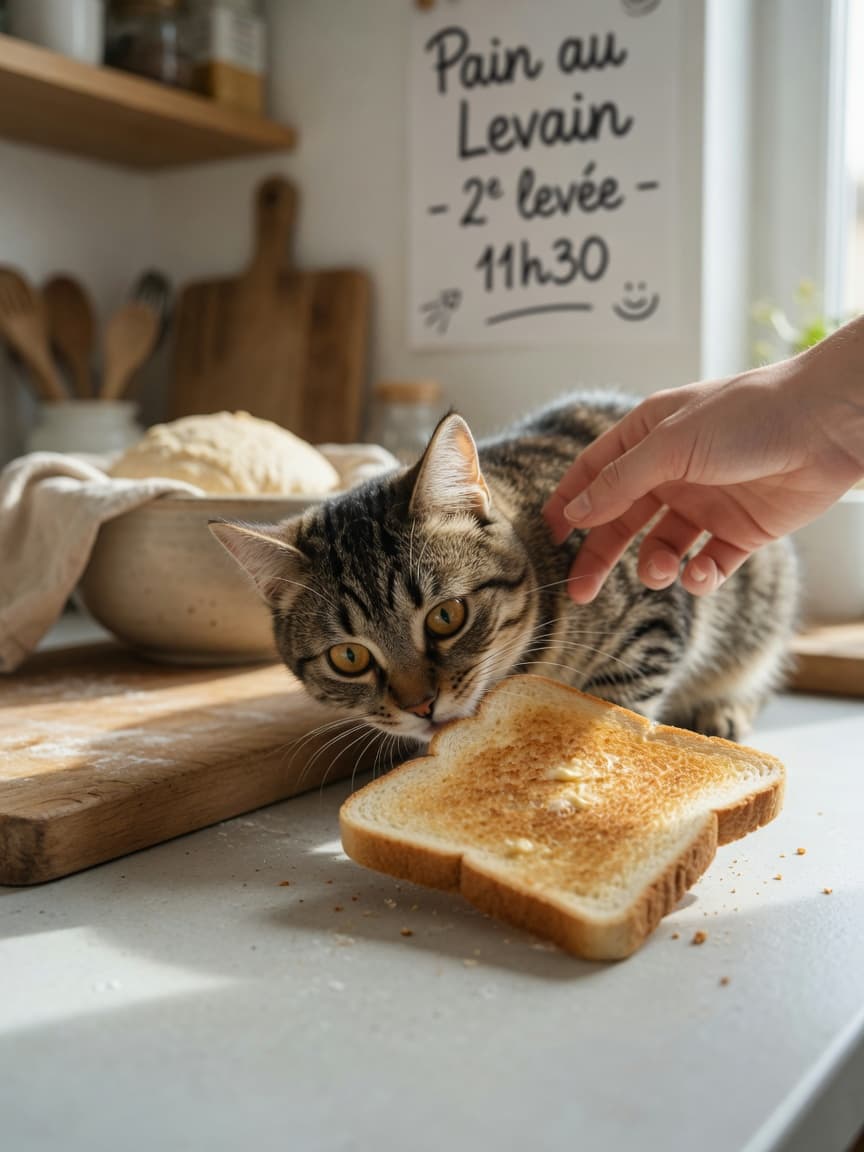
Can Cats Eat Bread? The One Rule That Could Save Your Cat's Life
Plain, fully baked white or wheat bread is not toxic to cats in small quantities. An occasional small piece is unlikely to cause harm. However, bread has zero nutritional value for cats as obligate carnivores and contributes nothing but empty carbohydrate calories. More importantly: raw bread dough is genuinely dangerous and must never reach your cat. Dough containing active yeast can ferment inside a cat's warm stomach, producing ethanol and carbon dioxide — causing alcohol poisoning and life-threatening bloating. Any bread containing raisins, garlic, onion, or xylitol is also toxic. The headline is not about plain bread — it is about raw dough and dangerous ingredients.
The Real Danger: Raw Bread Dough
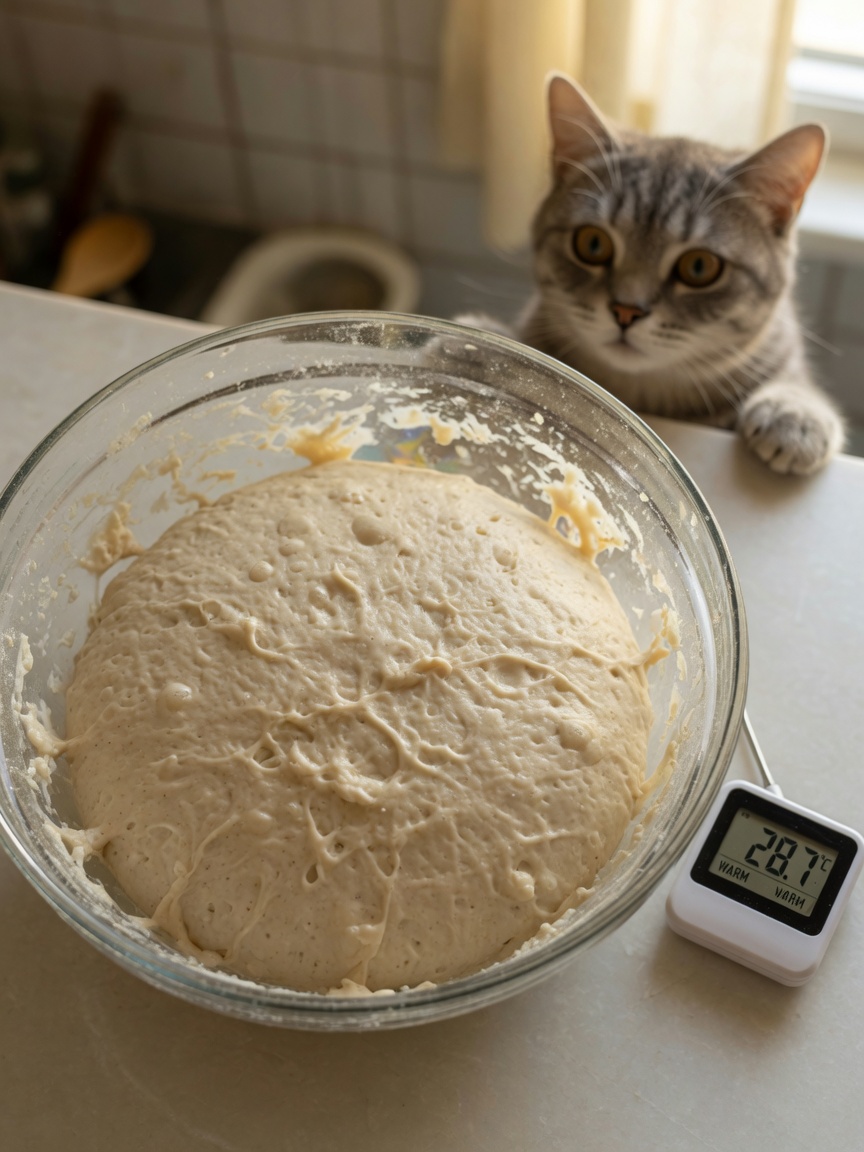
Before discussing whether plain baked bread is acceptable for cats, it is essential to understand the very real hazard posed by unbaked dough. This is the part of the bread conversation that pet owners most need to take seriously.
Raw bread dough contains active yeast — live organisms that consume sugar and produce carbon dioxide and ethanol as byproducts. This process (fermentation) happens slowly at room temperature, which is why bread rises. But inside a cat's stomach, conditions are dramatically different: warm, moist, and rich in exactly the kind of environment yeast thrives in. Fermentation accelerates.
The result is a two-fold emergency. First, the expanding gas causes the stomach to bloat and stretch, which is intensely painful and can compromise blood flow to abdominal organs — a condition that can escalate into gastric dilatation, a veterinary emergency. Second, the ethanol produced by the fermenting yeast is absorbed into the bloodstream. Cats are extremely sensitive to alcohol. Even small amounts can cause rapid-onset ethanol toxicity: disorientation, loss of coordination, vomiting, low blood sugar, respiratory depression, seizures, and potentially death without intervention.
If you bake bread at home, keep all raw dough completely out of your cat's reach. If you suspect your cat has eaten raw dough, contact your veterinarian or an emergency animal hospital immediately. Do not wait for symptoms to appear.
What About Plain Baked Bread?
Once bread is fully baked, the yeast is dead and the fermentation process is over. Plain baked white or wheat bread — with no added ingredients — is not toxic to cats. If your cat manages to steal a small corner of your toast, there is no reason to panic.
That said, "safe" is not the same as "beneficial." Plain bread offers cats essentially nothing of value. Cats are obligate carnivores whose metabolic machinery is designed to run on animal protein and fat. They have limited ability to derive energy from carbohydrates, do not require any dietary carbohydrate at all, and lack the sweet taste receptors that make starchy foods appealing to humans and dogs. Most cats show little interest in plain bread for this reason.
Bread that a cat does eat adds starchy calories with no amino acids, essential fatty acids, vitamins, or minerals of consequence to their diet. Over time, if bread becomes a regular treat, it contributes to weight gain and can displace the high-protein foods that cats actually need to thrive.
Bread Varieties That Are Toxic to Cats
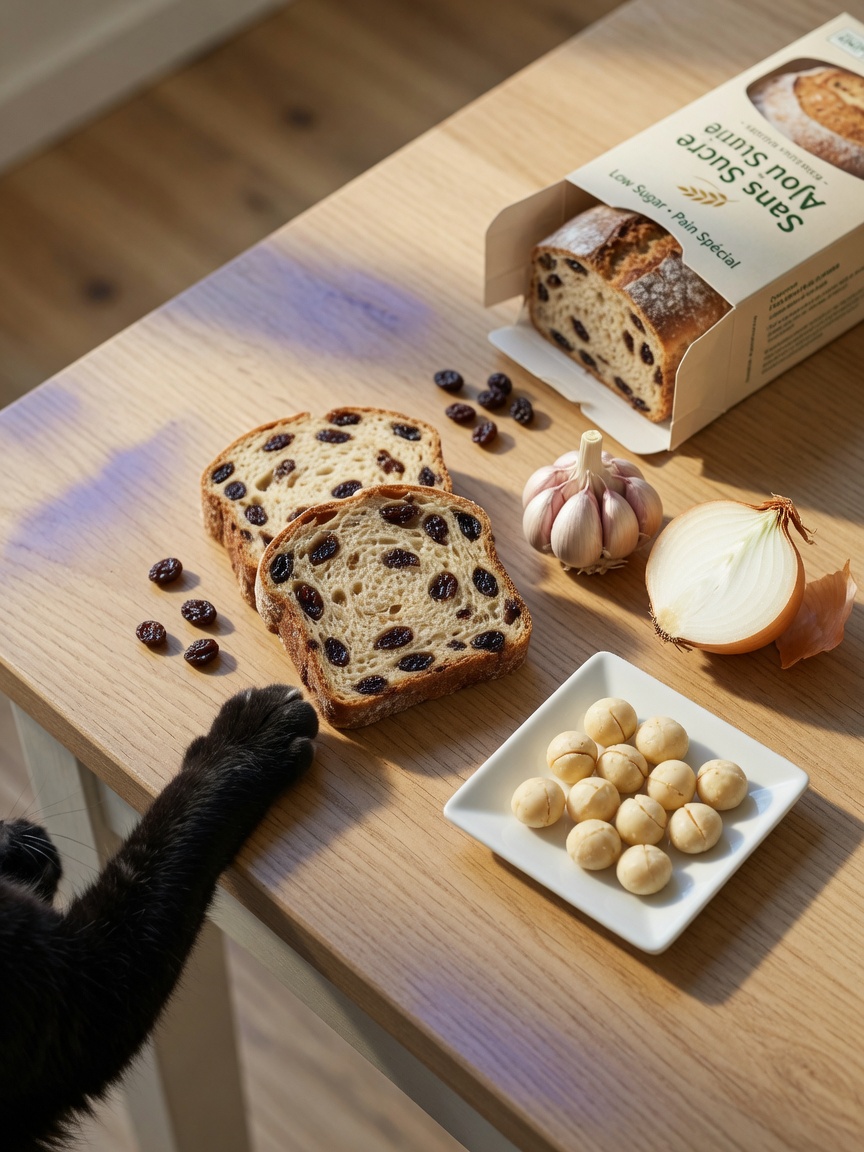
Many common breads contain ingredients that go well beyond a neutral starchy base. Several of these ingredients are genuinely dangerous to cats:
Raisins and dried fruit: Raisins — and all forms of grapes — are toxic to cats and dogs. The exact mechanism is not fully understood, but even small amounts can cause acute kidney failure. Any bread containing raisins, sultanas, currants, or other dried fruit must be kept completely away from cats. This includes fruit loaves, hot cross buns, and similar baked goods.
Garlic and onion: Garlic bread is an obvious offender, but onion powder is also used in some savory breads and crackers. Allium compounds (found in garlic, onion, leeks, and chives) cause oxidative damage to red blood cells in cats, leading to hemolytic anemia. Garlic is roughly five times more toxic than onion by weight. Even small, repeated exposures accumulate. Never give a cat garlic bread or any savory bread seasoned with alliums.
Xylitol: Some specialty breads, particularly low-sugar or "health" varieties, may contain xylitol as a sweetener. Xylitol is highly toxic to pets and has been linked to severe hypoglycemia and liver failure even in small doses. Always read ingredient labels before sharing any human food with your cat.
Seeds and nuts: Macadamia nuts are toxic to pets. Some nuts can cause gastrointestinal upset. Bread containing these should not be given to cats.
Alcohol-infused or sweetened breads: Certain specialty breads use beer or spirits in the recipe, and sweet rolls may contain high amounts of sugar. Neither is appropriate for cats.
Does Bread Have Any Use in a Cat's Diet?
There is no evidence-based reason to include plain bread in a cat's diet, even occasionally. Unlike pumpkin (which offers fiber benefits) or plain cooked chicken (which provides protein), plain bread is genuinely nutritionally inert for a cat.
Some cat owners use a tiny piece of soft plain bread to hide a pill for a cat who resists medication. This is a pragmatic approach that works for short-term use. Wrapping a small pill in a pea-sized pinch of plain bread or tucking it inside is generally harmless if done infrequently. Many veterinarians, however, prefer pill pockets or soft treat-based pill carriers specifically formulated for cats, as these are more palatable and do not contribute unnecessary carbohydrates.
Ver alimentos para gatos en Zooplus →How Much Bread Is Too Much?
If you choose to share a small amount of plain baked bread with your cat — perhaps as a rare novelty — keep it to a bite-sized piece no larger than your thumbnail, and no more than once or twice a week at most. Monitor your cat for any signs of digestive upset: vomiting, loose stool, flatulence, or loss of appetite. If any of these appear, discontinue the bread entirely.
Cats with existing health conditions — particularly diabetes, obesity, chronic kidney disease, or food sensitivities — should not be given bread even in small amounts without consulting a veterinarian first. The carbohydrate load, however modest, can complicate glycemic control in diabetic cats.
What to Do If Your Cat Eats Raw Dough
Act immediately. Raw dough ingestion is a veterinary emergency. Do not induce vomiting at home without professional guidance — if gas has already begun accumulating, vomiting could cause additional complications. Call your vet or an emergency animal poison control line right away. The ASPCA Animal Poison Control Center (US: 888-426-4435) and the Pet Poison Helpline (855-764-7661) are available 24 hours a day. Bring the dough packaging if you have it.
- Plain, fully baked bread is not toxic to cats, but it has zero nutritional value and should only ever be given in tiny amounts as an occasional treat.
- Raw bread dough is a genuine emergency: yeast ferments inside the cat's stomach, producing ethanol and gas that can cause alcohol poisoning and dangerous bloating.
- Never give cats bread containing raisins, garlic, onion, xylitol, macadamia nuts, or alcohol — these ingredients are toxic.
- Cats are obligate carnivores with no dietary need for carbohydrates. Bread displaces more valuable high-protein foods.
- If your cat eats raw dough, contact a vet or animal poison control immediately. Do not wait for symptoms.
- For pill hiding, consider vet-formulated pill pockets rather than bread as a long-term solution.
References
- Verbrugghe A, Bakovic M. "Peculiarities of one-carbon metabolism in the strict carnivore, the domestic cat." Nutrients. 2013;5(7):2811–2835. PMID: 23873295.
- Jergens AE. "Feline idiopathic inflammatory bowel disease: what we know and what remains to be unraveled." J Feline Med Surg. 2012;14(7):445–458. PMID: 22718563.
- Beynen AC, Baer DJ, Hof MH. "Commercial petfood for cats and dogs: the macronutrient composition differs from prey." J Anim Physiol Anim Nutr (Berl). 2009.