
Why Is My Cat Scratching Its Ears? Causes & Treatment
Updated June 2026
- Self-trauma from scratching — open wounds, bleeding, or significant hair loss around the ears
- Head shaking combined with a sudden head tilt or loss of balance (vestibular involvement)
- A large, fluctuant swelling on the ear flap (aural hematoma)
- Strong, foul, or unusually sweet smell from the ear canal
- Dark, coffee-ground discharge filling the ear canal
A cat that obsessively scratches its ears or shakes its head is rarely doing so without good reason. The ear canal is a warm, sheltered environment that can become home to parasites, bacterial and yeast overgrowths, and foreign material — all of which are intensely irritating. Identifying the specific cause matters because the treatment differs considerably between them, and using the wrong product can make the problem worse.
1. Ear Mites (Otodectes cynotis) — Most Common in Young Cats
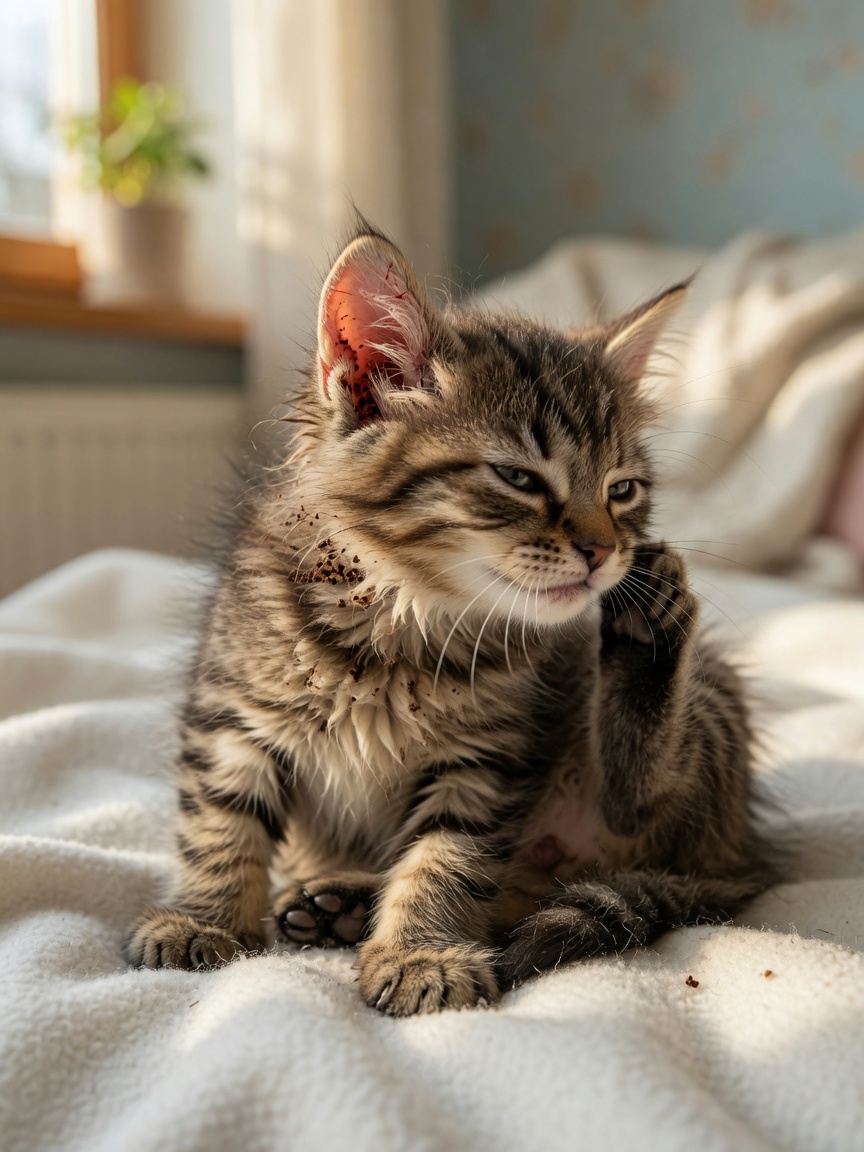
Ear mites are microscopic parasites that live in the ear canal and feed on skin debris. They cause intense itching, head shaking, and a characteristic dark, crumbly discharge that resembles coffee grounds. They spread rapidly between cats in close contact and are especially common in kittens and cats with outdoor access. Ear mites are visible under an otoscope and can sometimes be seen moving if ear debris is examined under magnification. Treatment involves a single dose of a topical antiparasitic (selamectin, moxidectin, or ivermectin-based products) applied to the skin — prescription products are significantly more effective than over-the-counter options. All contact animals must be treated simultaneously.
2. Otitis Externa (Bacterial or Yeast Infection)
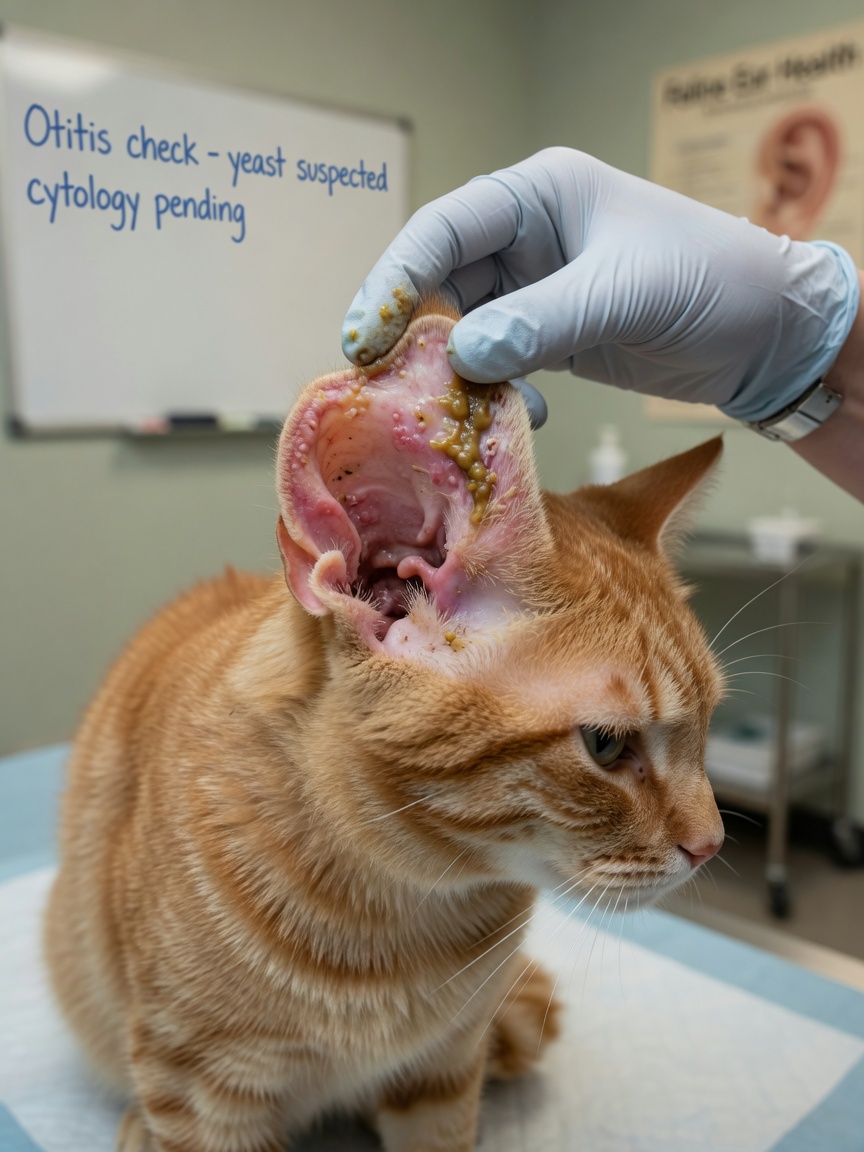
Bacterial or yeast (Malassezia) overgrowth in the outer ear canal is a common cause of ear scratching in cats of all ages. Affected ears are typically red, inflamed, and may have a brownish-yellow discharge with a distinctive musty or sweet smell. Yeast infections are particularly common in cats with allergies or anatomical factors that trap moisture. Diagnosis requires examination of an ear swab under a microscope (cytology) to identify whether bacteria, yeast, or both are present — this determines which medication to use. Treatment involves prescription ear drops (antifungal, antibiotic, or combined) and thorough ear cleaning.
3. Allergies
Both food allergies and environmental allergies (atopy) frequently manifest as ear inflammation in cats. Allergic otitis is often recurrent — the cat has multiple ear infections over months to years, and each infection resolves with treatment but returns within weeks. The ear itself is the end-organ responding to the allergic inflammation in the skin. Without identifying and managing the underlying allergy, infections will continue to recur. A food elimination trial (8–12 weeks on a strict novel protein or hydrolyzed diet) can identify dietary triggers; environmental allergies may require allergy testing and immunotherapy.
4. Foreign Body
A grass seed, sand, or other debris lodged in the ear canal causes sudden-onset intense head shaking and pawing at one ear. Unlike infections, foreign body discomfort typically starts abruptly and affects only one ear. Do not attempt to flush or probe the ear canal yourself — you may push the object deeper or rupture the eardrum. Veterinary removal under sedation is usually straightforward and immediately resolves the symptoms.
5. Polyps and Growths
Nasopharyngeal polyps — benign inflammatory growths — can extend from the middle ear into the ear canal in young cats, causing chronic inflammation, discharge, and scratching. Tumors (ceruminous gland adenocarcinoma, squamous cell carcinoma) more commonly affect older cats and may appear as firm masses in or around the ear canal. Any growth in or near the ear warrants veterinary examination, as some are benign while others require surgery or further treatment.
6. Aural Hematoma
An aural hematoma — a blood-filled swelling of the ear flap (pinna) — is not a cause of ear scratching but rather a consequence of it. When a cat shakes its head or scratches vigorously enough, blood vessels in the pinna rupture and the space fills with blood, creating a soft, fluctuant swelling. Without treatment, it heals with scarring that causes a characteristic "cauliflower ear." Surgical drainage or placement of a drain is usually required, and the underlying ear problem must be treated simultaneously to prevent recurrence.
Examining Your Cat's Ears at Home
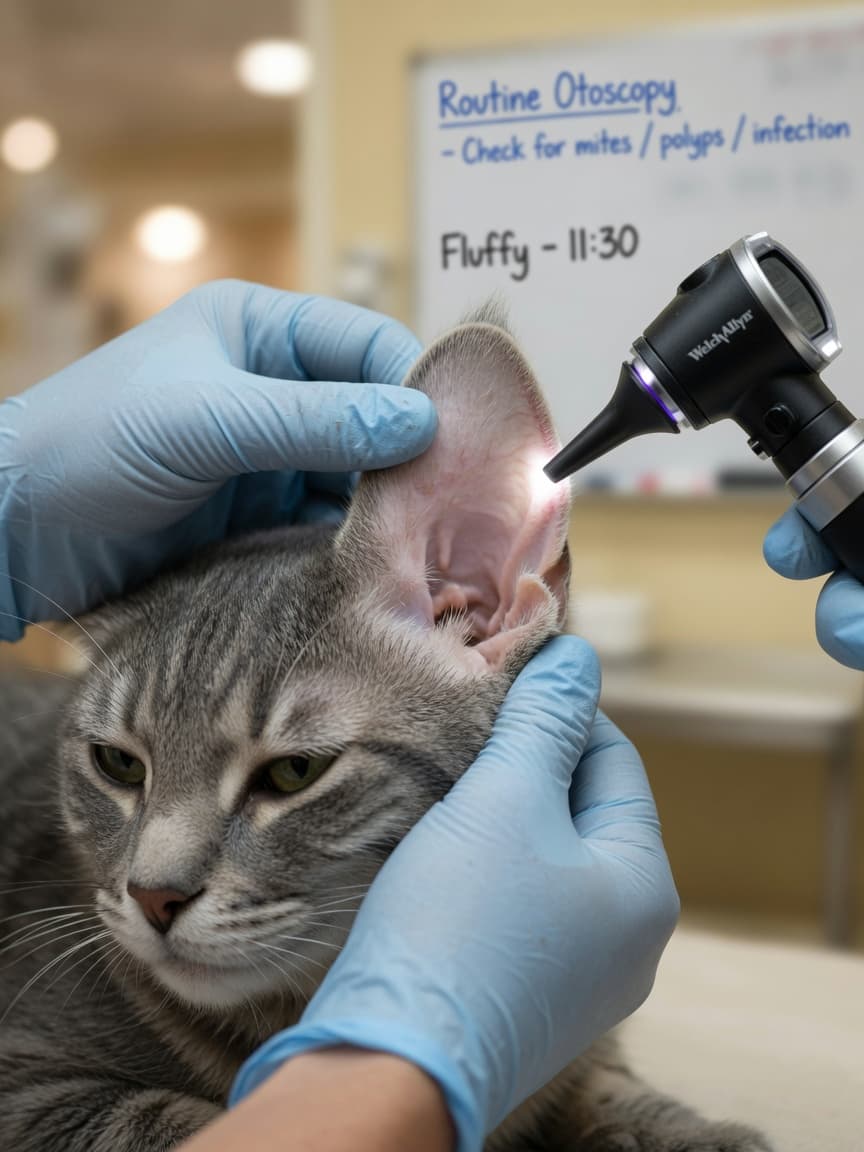
Gently fold back the ear flap and look into the ear canal in good lighting. A healthy cat's ear canal should be pale pink, clean, and odorless with minimal wax. Brown waxy discharge is normal in small amounts. Redness, swelling, strong odor, dark or excessive discharge, or visible dark debris should prompt a vet call. Do not insert cotton swabs into the ear canal — this pushes debris deeper and can damage the delicate tissues.
For cats with recurrent ear infections, monthly ear cleaning with a veterinarian-recommended ear cleaner (not water or homemade solutions) can reduce debris buildup and lower infection risk. Apply the cleaner, massage the base of the ear for 30 seconds, then let the cat shake its head and gently wipe the outer canal with a cotton ball. Never use hydrogen peroxide or alcohol — both irritate the ear canal. Always use ear cleaning products after swimming or bathing if your cat tolerates water.
Key Takeaways
- Ear mites (dark crumbly discharge, intense itching) are most common in kittens and outdoor cats; treat all contact animals simultaneously.
- Bacterial and yeast infections require cytology-guided prescription treatment — OTC ear products are rarely sufficient.
- Recurrent ear infections in the same ear strongly suggest an underlying allergy requiring dietary or environmental management.
- Sudden one-sided symptoms (foreign body) differ from gradual bilateral symptoms (infection/mites) — context helps guide urgency.
- An aural hematoma is a secondary consequence of ear trauma; treat the underlying ear problem to prevent it from recurring.