
Your Kitten's First Vet Visit: What to Expect
The first veterinary appointment is one of the most important steps you can take for your new kitten's long-term health and wellbeing. Whether you have adopted from a rescue or purchased from a breeder, your kitten needs a thorough health check, a tailored vaccination plan, and professional guidance on the many decisions that lie ahead. This guide covers everything you need to know before, during, and after that first visit.
When to Book and What to Bring
Book your kitten's first appointment as soon as possible after bringing them home — ideally within the first week. Most kittens are rehomed at eight to twelve weeks of age, which aligns with the start of the primary vaccination course. If your kitten came with any existing health documentation from a breeder or rescue organisation, bring it along so your vet can review what has already been given.
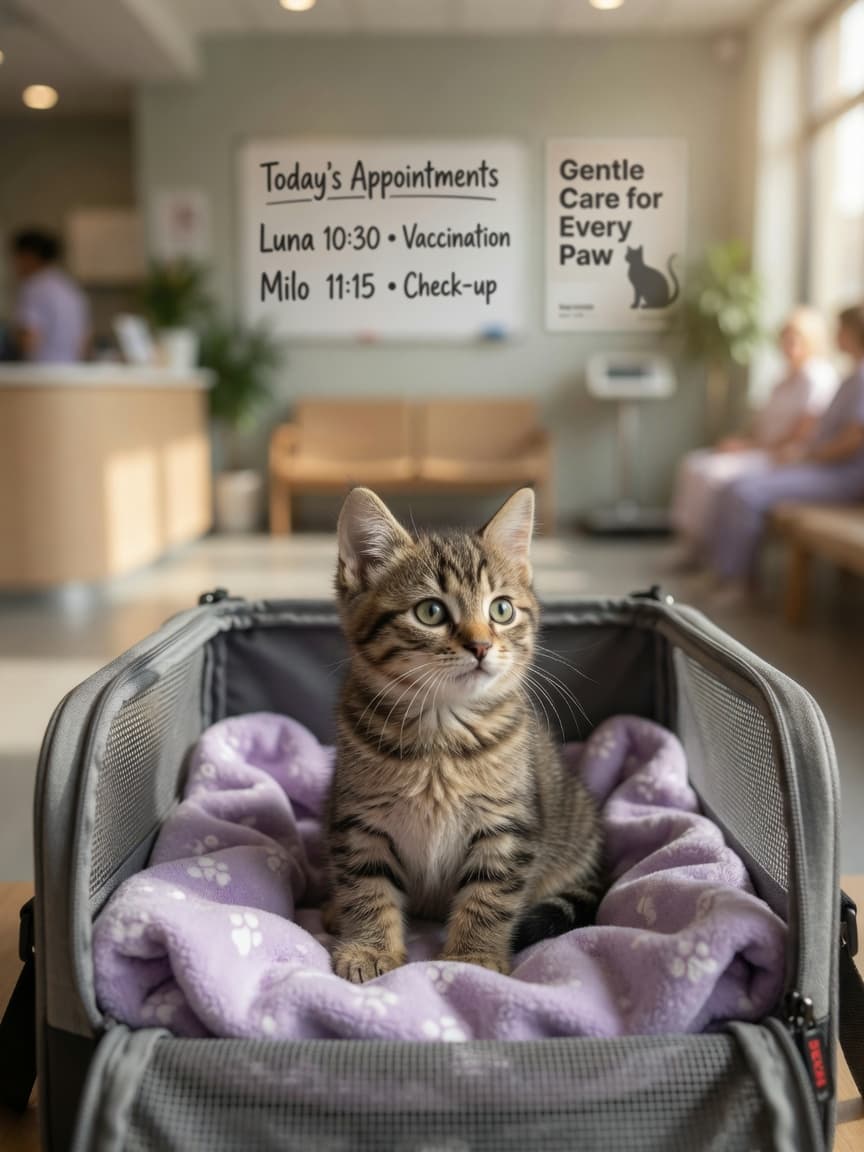
You will also need to bring your kitten in a secure, well-ventilated carrier. A blanket or item of clothing with familiar scents placed inside the carrier will help reduce anxiety during the journey. Arrive a few minutes early and ask to wait in a quiet area, away from dogs, if your clinic has a cat-friendly waiting space.
WSAVA Core Vaccinations for Kittens
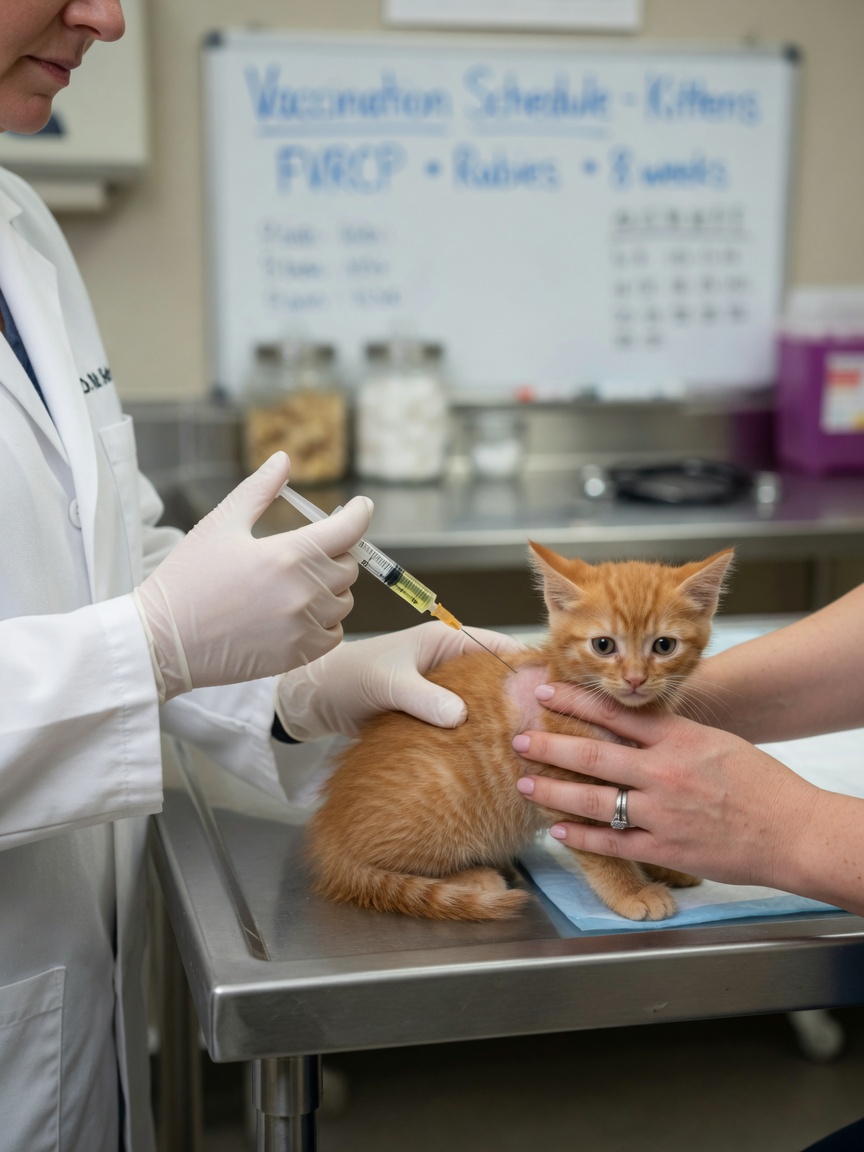
The World Small Animal Veterinary Association (WSAVA) Vaccination Guidelines identify three core diseases that all kittens should be vaccinated against, regardless of lifestyle or location:
- Feline Herpesvirus Type 1 (FHV-1): A primary cause of feline upper respiratory tract disease (cat flu). Infected cats can experience severe eye, nose, and throat symptoms. While vaccination does not always prevent infection, it significantly reduces the severity of disease.
- Feline Calicivirus (FCV): Another major cause of cat flu and oral disease. Multiple strains exist, and the vaccine provides cross-protection against the most common variants.
- Feline Panleukopenia Virus (FPV): Also known as feline parvovirus or feline distemper, this highly contagious and potentially fatal disease attacks rapidly dividing cells, causing severe gastrointestinal disease and immune suppression.
These three antigens are combined in a single injection, commonly referred to as the "cat flu and enteritis" vaccine or the trivalent core vaccine. The WSAVA guidelines recommend that kittens receive their first core vaccine at eight to nine weeks of age, with a second dose at twelve weeks, and a final booster at sixteen weeks or older. A booster is then required twelve months after the last primary dose, and every three years thereafter (or more frequently for panleukopenia in high-risk environments).
Non-core vaccines, such as those for feline leukaemia virus (FeLV), may be recommended by your vet depending on your kitten's lifestyle — particularly if they will have outdoor access or contact with other cats.
Microchipping
In England, it became a legal requirement in June 2024 for all cats to be microchipped before they reach twenty weeks of age, with the owner's details registered on an approved database. Many kittens from reputable breeders or rescue organisations will already be microchipped, but if not, your vet can perform the procedure quickly and safely during the first appointment.
The microchip is implanted under the skin at the back of the neck using a needle — the process takes seconds and causes minimal discomfort comparable to a routine injection. Always ensure your contact details are kept up to date on the database, especially if you move house or change your phone number.
Flea and Worm Treatment
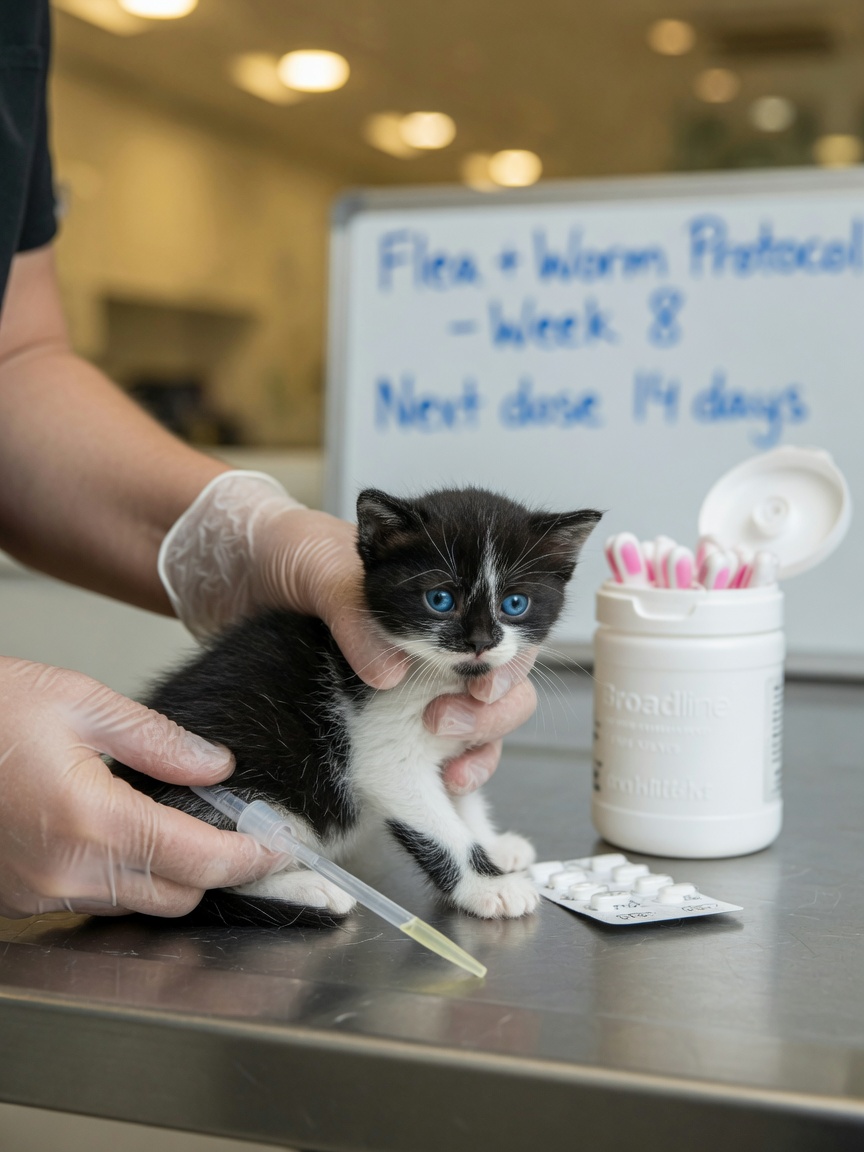
Kittens are susceptible to both internal and external parasites from a very early age. Your vet will recommend an appropriate treatment protocol based on your kitten's age, weight, and lifestyle. Common parasite concerns include:
- Fleas: Highly prevalent, even in indoor cats, as fleas can enter homes on clothing and other pets. The lifecycle of the flea means that treating the cat alone is insufficient — the home environment must also be treated.
- Roundworms: Very common in kittens, often passed from mother to offspring. A regular worming schedule is essential — typically every two weeks until twelve weeks of age, then monthly until six months, and every one to three months for adult cats.
- Tapeworms: Less common in young kittens but relevant in cats with flea infestations, as fleas act as intermediate hosts for the most common tapeworm species.
Always use veterinary-licensed products and avoid human antiparasitic treatments or herbal remedies, which can be toxic to cats. Permethrin, for example — found in many dog flea products — is extremely dangerous to cats and must never be applied to them or to surfaces they access.
Neutering: Timing and Benefits
Your vet will discuss neutering at the first appointment. The International Society of Feline Medicine (ISFM) and most veterinary bodies recommend neutering at four to five months of age, before the first season in females and before sexually motivated behaviours become established in males. Early neutering is associated with reduced risk of mammary tumours in females, elimination of the risk of pyometra (a serious uterine infection), and prevention of unwanted litters.
Male cats that are not neutered are significantly more likely to roam, fight, and spray — behaviours that also increase their risk of injury, disease transmission, and becoming lost. Neutering eliminates or dramatically reduces these tendencies. Your vet can provide specific timing advice based on your kitten's breed and development.
The Kitten Socialisation Window: Two to Seven Weeks
The primary socialisation window for kittens is narrower than for puppies, running from approximately two to seven weeks of age. During this period, the developing brain is uniquely receptive to new experiences, and positive exposure to human handling, household sounds, and other animals has a lasting influence on adult temperament and confidence.
Responsible breeders should have begun handling kittens daily from the second week of life. By the time a kitten reaches you at eight weeks, their foundational social experiences are already largely established. However, ongoing gentle socialisation — to new people, places, sounds, and veterinary-style handling — should continue throughout the first year of life. The WSAVA recommends that kittens receive socialisation experiences in their new home as early as possible, with structured handling routines that mimic what happens at the vet clinic.
Carrier Training Before the First Visit
One of the most valuable things you can do before the first vet appointment is teach your kitten that their carrier is a safe, pleasant space. Cats that are forced into carriers only when a vet visit is imminent quickly learn to associate the carrier with stress. Instead:
- Leave the carrier out in your home as a permanent fixture, with the door open and comfortable bedding inside.
- Place treats and toys inside the carrier to encourage exploration.
- Feed meals near and eventually inside the carrier.
- Practise short car journeys to neutral destinations before the actual vet appointment.
The ISFM's Cat Friendly Practice guidelines highlight carrier training as one of the most effective interventions for reducing feline veterinary stress, with benefits that last a lifetime.
Preparing a Kitten Starter Kit
Arriving at the vet well prepared makes everything easier. A kitten starter kit should include a secure carrier with familiar bedding, high-value treats for use during the examination, and any existing health documentation. Zooplus stocks a wide selection of kitten starter essentials — from carriers and travel aids to litter trays, scratching posts, and kitten-specific food — making it straightforward to gather everything you need before and after that first appointment.
The Physical Examination
Your vet will carry out a full physical examination during the first visit. This typically includes assessing the eyes for discharge, corneal clarity, and signs of herpesvirus; checking the ears for mites or infection; examining the mouth and teeth for developmental abnormalities; listening to the heart for murmurs or arrhythmias; palpating the abdomen to assess organ size; and evaluating the coat and skin for parasites or dermatological issues.
This is also an ideal time to ask about dental care, appropriate nutrition for your kitten's life stage, pet insurance, and any breed-specific concerns relevant to your cat.
Building a Lifelong Relationship with Your Vet
The first vet visit is the beginning of an ongoing partnership. Keeping thorough records, attending all booster appointments, and raising health concerns promptly will give your kitten the best possible foundation for a long, healthy, and happy life.