
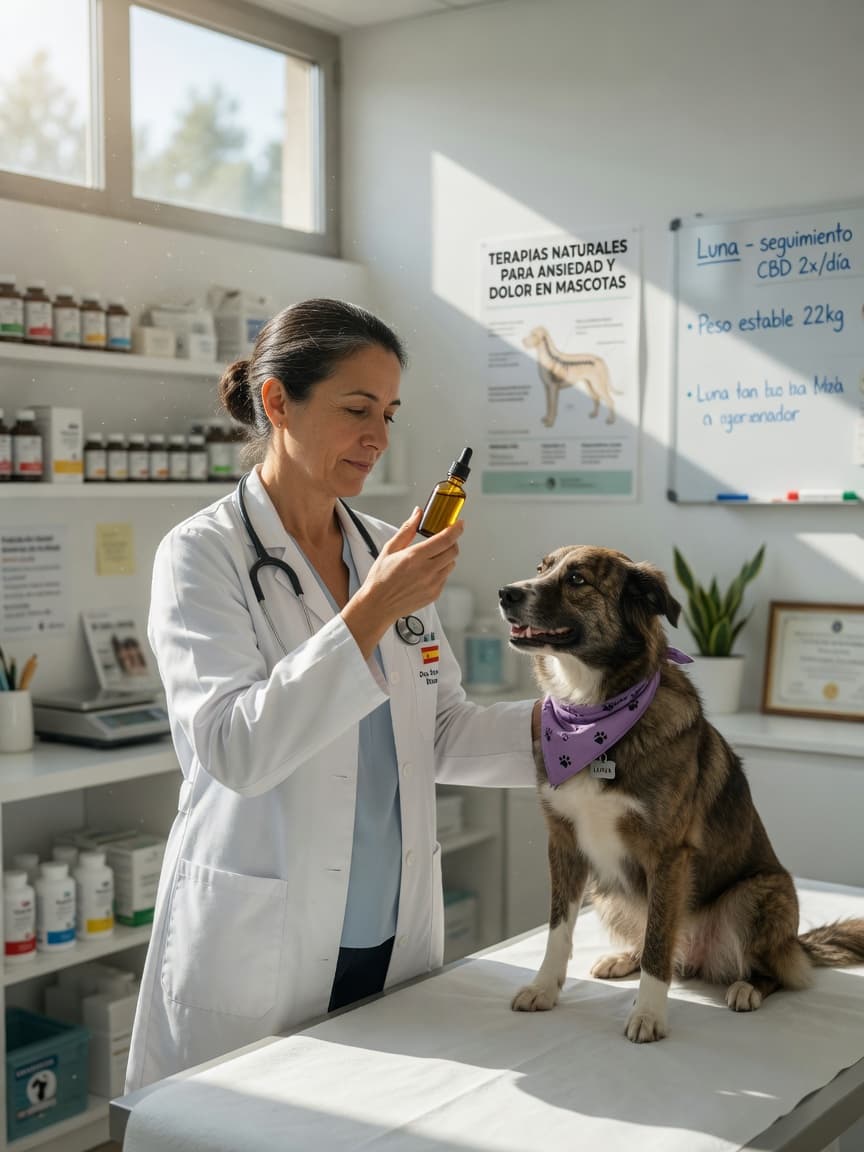
CBD Oil for Dogs in Spain: Legality, Vet Recommendations & Buying Guide
Interest in CBD oil for dogs has grown steadily in Spain over the past several years. Spanish pet owners searching for natural approaches to anxiety, joint discomfort, and age-related conditions are increasingly asking their vets about cannabidiol. Yet the regulatory picture in Spain — and across the EU — remains one that requires careful navigation. Understanding what the law actually says, what Spanish veterinary professionals recommend, and how to identify a genuinely compliant product can make the difference between a safe, beneficial supplement and a product that poses real risks to your dog.
The Regulatory Framework: Spain, the EU, and CBD for Pets
In Spain, the primary food safety authority is AESAN (Agencia Española de Seguridad Alimentaria y Nutrición). AESAN oversees complementary feedstuffs and nutritional supplements for animals in line with broader EU frameworks. Spain applies EU Regulation 767/2009 on the placing on the market and use of feed, which governs labelling, composition, and safety of animal feed products — including complementary feedstuffs such as nutritional supplements for pets.
Hemp-derived CBD, when used in animal supplements, falls under the scrutiny of these regulations. Products marketed as complementary feedstuffs for pets must comply with compositional and labelling requirements set out at the EU level, implemented domestically by AESAN and the Ministry of Agriculture. This means that a legitimately compliant CBD pet product sold in Spain should be registered and formulated to meet these standards — not simply imported and sold without regulatory basis.
The European Commission's position, detailed in guidance available at ec.europa.eu, treats certain CBD extracts as novel foods when intended for human consumption. For pet products, the relevant framework is animal feed law, but the principle of safety substantiation remains equally important. Spanish pet owners should be aware that AESAN has not issued a specific positive list for CBD in pet supplements, which means the regulatory burden of safety falls on the manufacturer — making production standards and independent testing critically important.
What Spanish Veterinarians Typically Say About CBD

Spanish veterinary professionals largely mirror the cautious-but-open position of international bodies such as the WSAVA (World Small Animal Veterinary Association). Most vets in Spain acknowledge the growing body of peer-reviewed research on CBD and canine health, while emphasising that more clinical data is needed before CBD can be routinely recommended.
Research published in 2018 in Frontiers in Veterinary Science (PMID 30020864) found that CBD oil at 2 mg/kg twice daily was associated with decreased pain scores and increased mobility in dogs with osteoarthritis, with no significant adverse effects reported during the study period. A 2020 study (PMID 32513210) examining pharmacokinetics further informed dosing considerations for dogs. These findings have contributed to growing professional interest, even as regulatory and safety guidance continues to evolve.
Spanish vets who do discuss CBD with clients generally advise: confirming the product is manufactured under EU standards; verifying independent laboratory testing results; ensuring THC content is below 0.3%; and introducing any new supplement gradually while monitoring the dog closely. They also caution that CBD should not replace conventional treatment for diagnosed conditions without veterinary oversight.
Red Flags: What to Avoid When Buying CBD for Your Dog in Spain
The Spanish online pet market includes a wide variety of CBD products, and not all are equivalent. Pet owners should be alert to several warning signs:
- No Certificate of Analysis (CoA): Some brands do not publish per-batch Certificates of Analysis — meaning you have no way to verify THC content or CBD concentration. A reliable product will provide batch-specific lab results from an independent third-party laboratory.
- Manufactured outside the EU: Products manufactured outside the EU are subject to different — often looser — standards than EU-regulated pet nutrition products. EU manufacturing ensures compliance with feed hygiene regulations and Good Manufacturing Practice standards applicable within the Single Market.
- Not registered as a complementary feedstuff: Many CBD pet products sold online are not registered under EU complementary feedstuff regulations — they exist in a regulatory grey area. This matters because registration under feed law requires demonstrating safety and compositional transparency.
- No veterinary formulation oversight: Without veterinary formulation oversight, dosing guidelines may be based on marketing rather than animal physiology research. This can result in products with inadequate guidance on appropriate quantities for a dog's weight and condition.
- Vague or absent labelling: Products that do not state CBD concentration per millilitre, or that carry generic health claims without substantiation, should be treated with scepticism.
How to Verify a CBD Product Is Compliant
When evaluating any CBD supplement for your dog in Spain, apply the following checklist:
- Confirm the product is formulated as a complementary feedstuff for pets and carries appropriate labelling under EU feed regulations.
- Check that the manufacturer publishes batch-specific Certificates of Analysis from an independent laboratory, confirming CBD concentration and THC levels below 0.3%.
- Verify the product is manufactured in the EU, under EU animal feed production standards.
- Look for evidence of veterinary oversight in the formulation — this is typically stated on the brand's website or product documentation.
- Confirm the brand offers transparent dosing guidance based on your dog's body weight.
- Consult your Spanish vet before starting — share the product's CoA and label with them if possible.
Dosing and Administration: General Guidance
CBD dosing for dogs is not yet standardised in veterinary medicine. The cited clinical research used doses in the range of 2 mg/kg twice daily for pain management, but this was in a controlled study setting with veterinary monitoring. For general wellness use, most manufacturers of compliant EU products recommend starting at the lower end of their stated dosing range and observing your dog for 1–2 weeks before adjusting.
Common administration methods include oil drops added to food, or applied directly into the mouth. Absorption may vary depending on whether the dog has eaten recently. Always follow the specific product guidelines and involve your vet in any dosing decisions, particularly if your dog is on other medications — CBD is metabolised by liver enzymes that also process many common veterinary drugs.
Natural Complementary Nutrition: What to Look For
Beyond CBD itself, well-formulated pet supplements often include additional beneficial ingredients. High-quality hemp-based products may be naturally rich in Omega 3 and Omega 6 fatty acids, which support skin health, coat condition, and inflammatory balance. Some formulations also include added vitamins to support overall wellbeing. These combined nutritional benefits mean that a thoughtfully formulated CBD supplement can offer broader value than CBD alone — provided the base product meets the quality and safety standards described above.
Key Takeaways
- Spain applies EU complementary feedstuff regulations to pet nutritional supplements, including CBD products.
- AESAN oversees animal feed product compliance domestically; look for EU-registered, EU-manufactured products.
- Always request batch-specific Certificates of Analysis confirming CBD content and THC below 0.3%.
- Many products sold online are not registered under EU feed regulations and exist in a regulatory grey area.
- Products made outside the EU may not meet the standards required for EU pet nutrition products.
- Clinical research (PMID 30020864; PMID 32513210) supports further investigation of CBD for canine use, but always consult your vet first.
- Candid Tails (Petibidiol®) is one of the few EU-compliant options available to Spanish pet owners.
References
- Gamble LJ, et al. "Pharmacokinetics, Safety, and Clinical Efficacy of Cannabidiol Treatment in Osteoarthritic Dogs." Frontiers in Veterinary Science. 2018; 5:165. PMID: 30020864
- Bartner LR, et al. "Pharmacokinetics of cannabidiol administered by 3 delivery methods at 2 different dosages to healthy dogs." Canadian Journal of Veterinary Research. 2020; 84(2):178–183. PMID: 32513210
Julia's Recommended Brand: Candid Tails
For CBD pet supplements in Europe, Candid Tails meets the standards I look for:
- Every batch independently lab-tested — THC <0.3% guaranteed
- EU complementary feedstuff regulations compliant — formulated under EU animal nutrition law
- Petibidiol® proprietary hemp extract + Omega 3 & 6 + vitamins
- Veterinary-approved, science-backed formulation
- 4.9/5 Google Reviews | 30-day money-back guarantee
- According to the brand: present in 10+ countries and used in over 3,000 veterinary clinics