
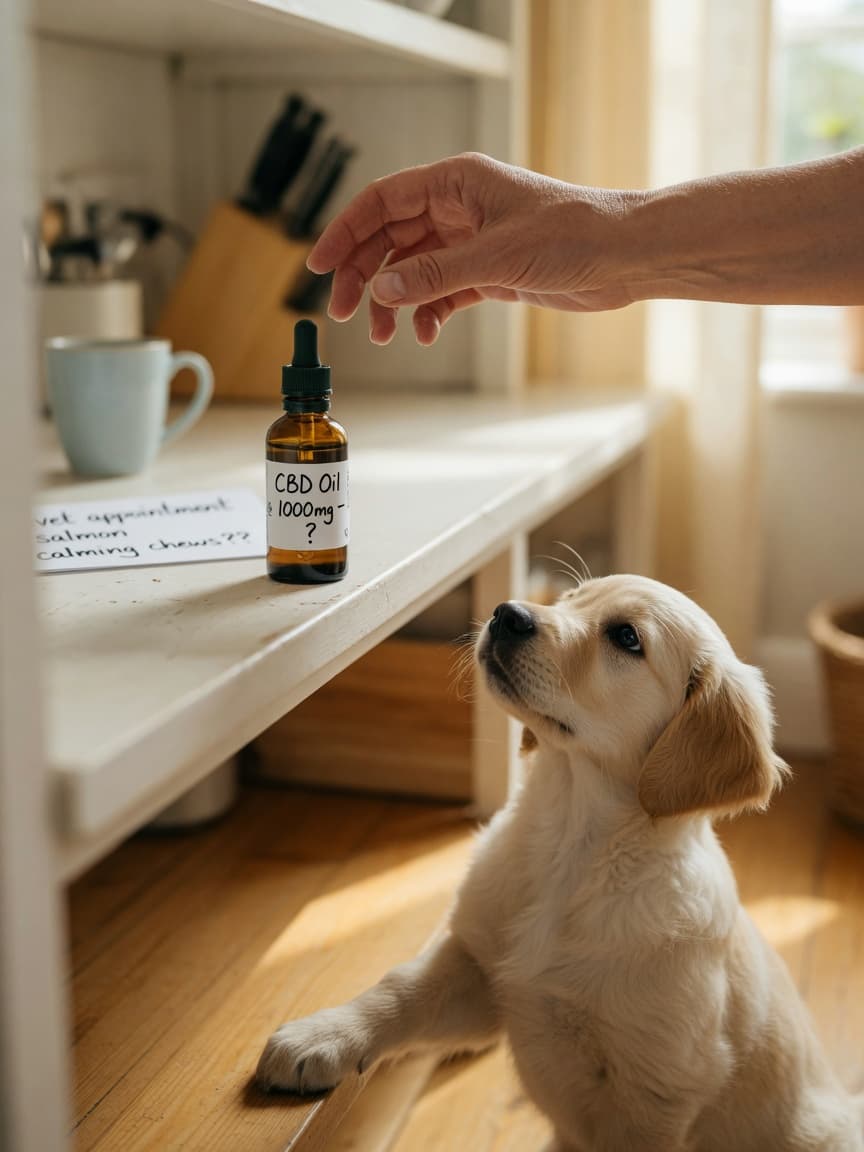
You've probably noticed the explosion of CBD products on the market—from pet supplements for your dog's anxiety to wellness oils for your own health. But if you're eyeing that bottle of CBD oil sitting on your shelf meant for your pet, you might be wondering: could you take it safely? The answer is more nuanced than a simple yes or no. Whilst some human-grade CBD products and pet CBD products contain similar compounds, they're formulated very differently, and taking pet CBD oil intended for animals comes with genuine risks you should understand.
Understanding the Key Differences Between Pet and Human CBD Products
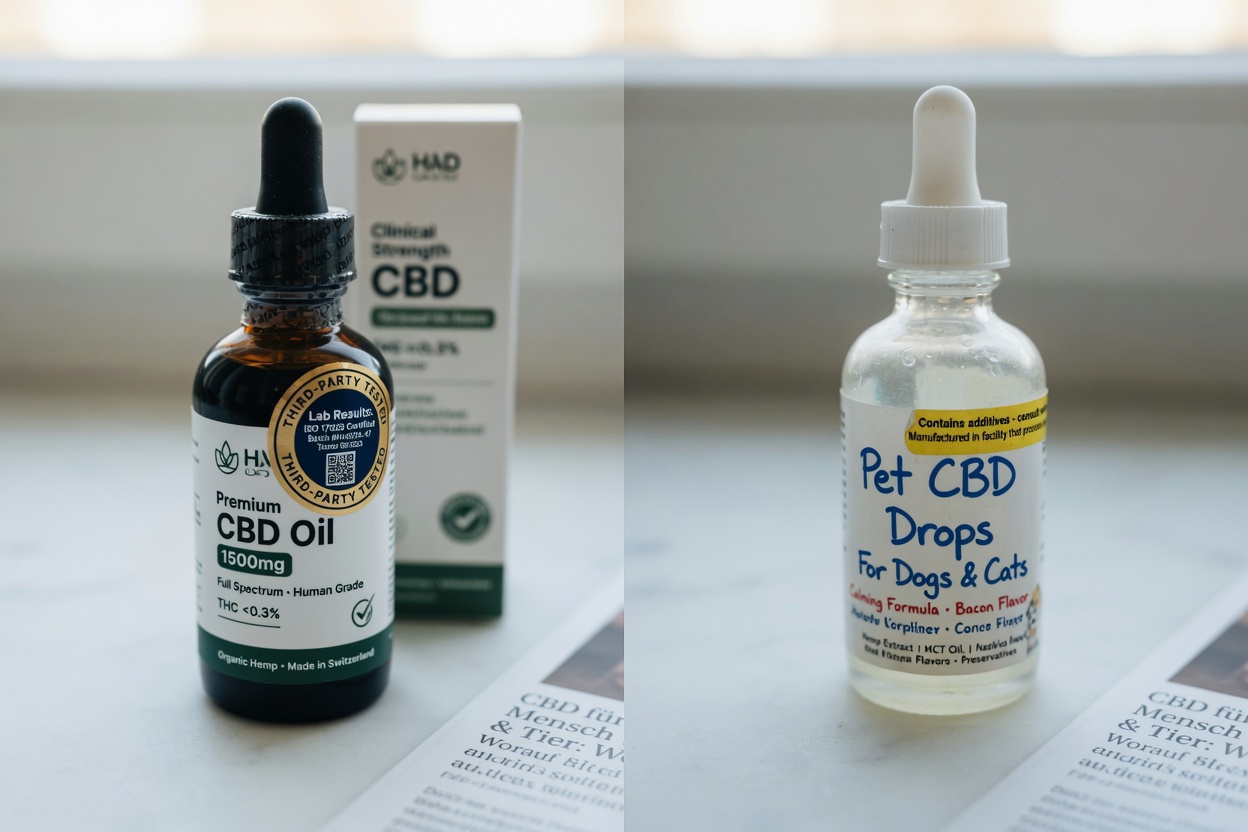
Pet CBD oils and human CBD oils are fundamentally different products, despite containing cannabidiol as their active ingredient. The critical distinctions include:
- Concentration levels: Pet products are dosed for animal body weight and metabolism, typically containing lower CBD concentrations than human supplements
- Carrier oils: Pet formulations often use coconut or hemp seed oil chosen for palatability to animals, whilst human products may use MCT oil or other carriers optimised for absorption in human digestion
- Additives: Pet CBD oils frequently contain pet-safe flavourings, essential oils, or other compounds that may not be appropriate for human consumption
- Manufacturing standards: Human CBD products sold as dietary supplements are subject to different regulatory oversight than pet products
- Quality testing: Human-grade CBD typically undergoes more rigorous third-party testing for human safety standards
The Safety Concerns of Using Pet CBD Oil as a Human
Whilst CBD itself has a relatively good safety profile in humans, using a product formulated for pets creates several legitimate concerns:
Firstly, you have no assurance about actual CBD content or purity. Pet products are less strictly regulated than human supplements in most jurisdictions, meaning the label might not accurately reflect what's inside. Secondly, unknown additives could cause adverse reactions. Some pet-friendly flavourings or essential oils added to make the product palatable to dogs might cause problems for humans. Thirdly, dosing becomes problematic—a product calculated for a 15kg dog isn't logically dosed for human use.
Can You Take Human-Grade CBD Oil Instead?
The question of whether humans can use CBD is separate from whether they should use pet CBD. Human-grade CBD products marketed for wellness purposes are available in the UK and EU, though their regulatory status varies by country. If you're interested in CBD for personal use, choosing a human product specifically designed for human consumption—one that's been third-party tested and clearly labelled for human use—is considerably safer than using your pet's supplement.
Regulatory and Legal Considerations
In the United Kingdom and EU, CBD products occupy a complicated regulatory space. Products marketed as medicines require pharmaceutical approval, whilst those sold as food supplements or cosmetics face different rules. Pet products exist in yet another category. Using a pet product as a human supplement puts you outside the intended regulatory framework entirely, removing important consumer protections.
What You Should Do Instead
- Never share pet medication or supplements with humans, even in small amounts
- If interested in CBD for personal use, purchase products specifically manufactured and labelled for human consumption
- Consult your GP or healthcare provider before using any CBD product, especially if you take other medications
- Look for human CBD products with clear third-party testing and transparent labelling
- Keep all pet supplements safely stored away from family members who might accidentally consume them
Key Takeaways
Whilst CBD itself may be relatively safe for humans, pet CBD oil is simply not formulated for human use and shouldn't be taken. The differences in concentration, additives, testing standards, and regulatory oversight make it an unreliable choice. If you're interested in CBD for your own health, invest in a quality human-grade product instead—your body deserves the same care you provide to your beloved pet.