ForPetsHealthcare
Natural Remedies

What is CBD Extraction, and Why Does it Matter?

By Julia WrenfieldUpdated August 4, 20263 min read
Evidence-based · Sources checked
{"en": "Dog receiving CBD oil dropper treatment, illustrating pet wellness and CBD supplement administration", "es": "Perro recibiendo tratamiento con gotero de aceite CBD, ilustrando bienestar de mascotas y administraci\u00f3n de suplementos", "fr": "Chien recevant un traitement au compte-gouttes d'huile CBD, illustrant le bien-\u00eatre animal et l'administration de suppl\u00e9ments", "de": "Hund erh\u00e4lt CBD-\u00d6l-Tropfenbehandlung, zeigt Haustier-Wellness und Nahrungserg\u00e4nzungsmittel-Verabreichung", "nl": "Hond ontvangt CBD-oliepipetbehandeling, illustreert huisdierwelzijn en supplementadministratie", "pt": "Cachorro recebendo tratamento com conta-gotas de \u00f3leo CBD, ilustrando bem-estar e administra\u00e7\u00e3o de suplementos", "it": "Cane che riceve trattamento con contagocce di olio CBD, illustrando il benessere degli animali domestici e l'integrazione"}

If you've been exploring CBD products for your pets, you've likely encountered the term "extraction method" without fully understanding what it means or why it matters. The truth is, how CBD is extracted from the hemp plant directly affects the quality, purity, and safety of the product your dog or cat receives. Understanding extraction methods empowers you to make informed decisions about your pet's wellness journey.

Understanding CBD Extraction Basics

CBD extraction is the process of separating cannabidiol (CBD) from the hemp plant material. Think of it as creating a concentrated form of the beneficial compound from the raw plant. The extraction method determines which additional compounds end up in your final product—whether that's pure CBD isolate, full-spectrum oil, or a broad-spectrum formula. This distinction is crucial for pet health because different extraction methods yield different purity levels and may leave behind unwanted residues.

Common Extraction Methods Explained
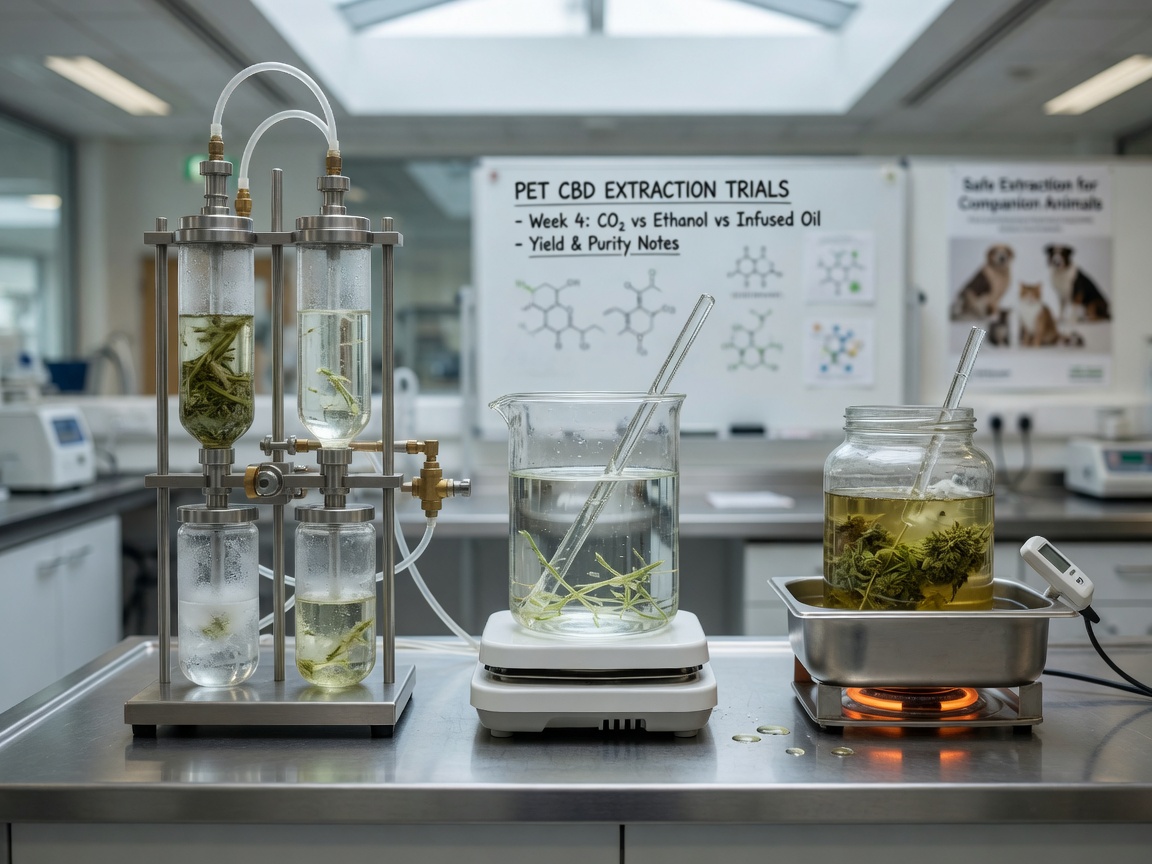
Three CBD extraction method setups: pressurised CO₂ apparatus, ethanol solvent beaker, and oil infusion heating setup in a clean laboratory environment

Several extraction techniques exist, each with distinct advantages and limitations:

  • CO₂ Extraction: This method uses pressurised carbon dioxide to pull CBD from plant material. It's widely regarded as the gold standard because it's safe, doesn't leave chemical residues, and produces high-quality extracts. CO₂ extraction is particularly popular for pet products.
  • Ethanol Extraction: Uses food-grade ethanol as a solvent. It's efficient and cost-effective but may extract unwanted chlorophyll, which can affect taste and may cause mild digestive upset in sensitive pets.
  • Oil Infusion: The plant material is heated and infused directly into carrier oils like coconut or MCT oil. This method is gentle but produces lower CBD concentrations and has shorter shelf lives.
  • Hydrocarbon Extraction: Uses solvents like butane or propane. Whilst efficient, it carries contamination risks if not performed by experienced professionals, making it less suitable for pet products.

Why Extraction Method Matters for Your Pet

The extraction method directly impacts your pet's health and safety in several ways:

  1. Purity and Safety: Poor extraction techniques may leave behind solvent residues or heavy metals. Your pet's smaller body size means contaminants pose a greater risk.
  2. Compound Profile: Different methods yield different cannabinoid and terpene profiles, affecting how your pet's body responds to the product.
  3. Bioavailability: How well your pet's body absorbs and utilises the CBD depends partly on how it was extracted and processed.
  4. Cost Reflection: Quality extraction methods cost more but deliver superior products worth the investment for your pet's wellbeing.

What to Look for When Choosing CBD Products

When selecting CBD products for your pets, look for these indicators of quality extraction:

  • Manufacturers who transparently state their extraction method
  • Third-party laboratory testing certificates (COAs) showing cannabinoid content and absence of contaminants
  • Products made from organically-grown hemp
  • Clear information about what type of extract is used (isolate, full-spectrum, or broad-spectrum)
  • Veterinary endorsement or consultation recommendations

Key Takeaways for Pet Owners

Understanding CBD extraction empowers you to choose safer, higher-quality products for your beloved companions. CO₂ extraction remains the preferred method for pet CBD products due to its safety and efficacy. Always prioritise transparency from manufacturers, demand third-party testing evidence, and consult your veterinary surgeon before introducing any new supplement. Your pet's health is too important for shortcuts—quality extraction methods ensure you're giving them the best possible product.

#what is cbd extraction and why does it matter#forpetshealthcare

Sources & further reading

This article is based on peer-reviewed veterinary research and reputable animal-health sources. Explore the underlying science in our Research Library.

Related articles

What is the Difference Between Hemp Seed Oil and CBD Oil?

If you've been browsing pet health supplements recently, you've likely encountered both hemp seed oil and CBD oil mentioned in the same breath. Whilst these products come from the same plant, they are fundamentally different compounds with distinct properties and effects on your pet's health. Unders…

Read more →

Does CBD Oil Need to Be Refrigerated? Quick Storage Guide

If you're giving your dog or cat CBD oil as part of their wellness routine, you've likely wondered about the best way to store it. Unlike some supplements, CBD oil's shelf life and potency depend heavily on how you keep it—and temperature plays a crucial role. In this guide, I'll walk you through ev…

Read more →

Does CBD Get You High?

If you've been researching CBD for your pet, you've likely encountered the question: "Will it make my dog or cat high?" It's one of the most common concerns pet owners express when considering cannabidiol (CBD) as a wellness supplement. The short answer is no—CBD won't get your pet high. However, un…

Read more →

Can Humans Take Pet CBD Oil? Safety, Differences, and Risks Explained

You've probably noticed the explosion of CBD products on the market—from pet supplements for your dog's anxiety to wellness oils for your own health. But if you're eyeing that bottle of CBD oil sitting on your shelf meant for your pet, you might be wondering: could you take it safely? The answer is …

Read more →

How Can CBD + CBDA Help with Joint Discomfort in Dogs?

If your dog struggles with stiffness, limping, or reluctance to jump and play, joint discomfort could be affecting their quality of life. Whilst traditional pain management options exist, many pet owners are exploring cannabidiol (CBD) and cannabidiolic acid (CBDA)—two compounds derived from hemp pl…

Read more →

What Do Fleas Look Like on Dogs?

Fleas are among the most common parasites affecting dogs across Europe, yet many pet owners struggle to identify them. Whether you're dealing with an active infestation or simply want to spot the early warning signs, knowing what fleas actually look like is crucial for protecting your dog's health a…

Read more →
Disclaimer:This article is for informational purposes only and does not constitute veterinary advice. Always consult a qualified veterinarian for your pet's health concerns.

Free newsletter

Pet health tips, straight to your inbox

Weekly science-backed advice for dog & cat owners. No spam, unsubscribe anytime.