ForPetsHealthcare
Natural Remedies

Does CBD Oil Need to Be Refrigerated? Quick Storage Guide

By Julia WrenfieldUpdated August 4, 20264 min read
Evidence-based · Sources checked
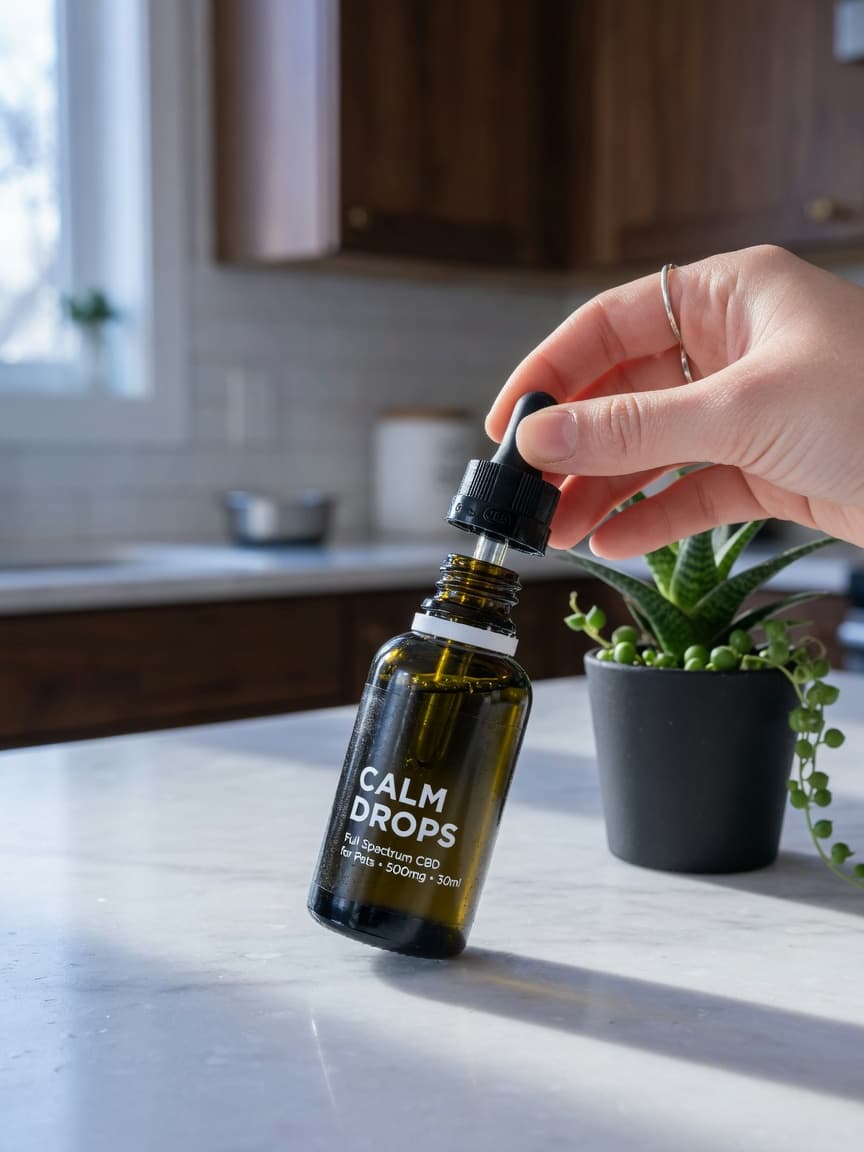
{"en": "Pet CBD oil bottle stored in a cool, dark place with storage containers and thermometer", "es": "Botella de aceite CBD para mascotas almacenada en lugar fresco y oscuro con recipientes y term\u00f3metro", "fr": "Flacon d'huile CBD pour animaux stock\u00e9 dans un endroit frais et sombre avec conteneurs et thermom\u00e8tre", "de": "Flasche mit CBD-\u00d6l f\u00fcr Haustiere an k\u00fchlem, dunklem Ort mit Beh\u00e4ltern und Thermometer gelagert", "nl": "Fles met CBD-olie voor huisdieren opgeslagen op koele, donkere plaats met opbergcontainers en thermometer", "pt": "Frasco de \u00f3leo CBD para animais de estima\u00e7\u00e3o armazenado em local fresco e escuro com recipientes e term\u00f4metro", "it": "Flacone di olio CBD per animali domestici conservato in luogo fresco e buio con contenitori e termometro"}

If you're giving your dog or cat CBD oil as part of their wellness routine, you've likely wondered about the best way to store it. Unlike some supplements, CBD oil's shelf life and potency depend heavily on how you keep it—and temperature plays a crucial role. In this guide, I'll walk you through everything you need to know about storing CBD oil properly to ensure it remains effective for your pet.

Does CBD Oil Need Refrigeration?

The short answer is: not necessarily, but it often benefits from cool storage. Most CBD oils don't require refrigeration, but they do perform best when stored in cool, dark conditions. The truth is more nuanced than a simple yes or no.

CBD is sensitive to light, heat, and oxygen. These factors can degrade the cannabinoids and reduce the oil's effectiveness over time. Refrigeration slows this degradation process significantly, which is why many manufacturers recommend it—particularly once the bottle is opened.

How to Store CBD Oil Properly

Here are the key storage principles to maintain your pet's CBD oil in optimal condition:

  • Keep it in a cool place: Room temperature (around 15-21°C) is acceptable, but refrigeration extends shelf life considerably
  • Away from direct sunlight: UV light breaks down cannabinoids, so store in a dark cupboard or opaque container
  • Sealed tightly: Oxygen exposure degrades CBD, so always ensure the cap is firmly closed after each use
  • Away from heat sources: Don't place near radiators, cookers, or sunny windowsills
  • In the original bottle: Dark glass bottles provide better protection than plastic containers

Refrigerator vs. Pantry Storage
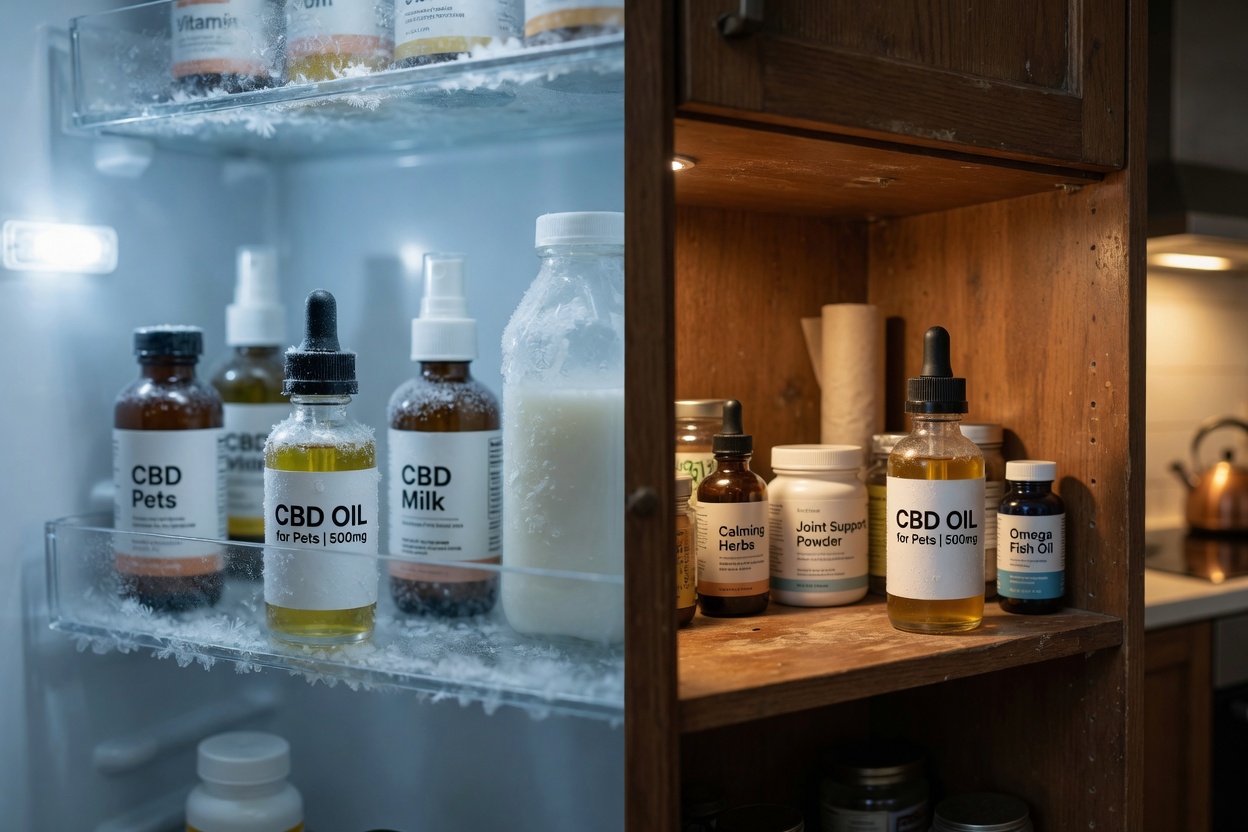
Split comparison showing CBD oil bottle in refrigerator on left, in dark cupboard on right

Both options work, but each has advantages and disadvantages:

Refrigerator storage: This is ideal for long-term preservation. Refrigerated CBD oil can last 1-2 years or longer without significant potency loss. The downside? Some pet owners find it inconvenient for daily dosing, as the oil may become thicker when cold.

Pantry storage: If kept in a cool, dark cupboard away from light and heat, CBD oil typically remains potent for 6-12 months. This option is more convenient for daily use, though it doesn't offer the extended shelf life of refrigeration.

Signs Your CBD Oil Has Degraded

Even with proper storage, CBD oil eventually loses potency. Watch for these warning signs:

  • Noticeable change in colour (darkening or cloudiness)
  • Unpleasant or rancid smell
  • Visible separation of ingredients that doesn't mix back in
  • Your pet shows reduced response to the same dosage
  • Expiration date has passed

If you notice any of these signs, it's time to replace the product.

Practical Storage Tips for Pet Owners

To make CBD storage easier whilst maintaining quality, consider these practical suggestions:

  • Label your bottle with the opening date so you know when it was first used
  • Keep a small amount in your kitchen for daily use and refrigerate the rest
  • Use a tinted glass dropper bottle rather than clear plastic
  • Store away from other supplements and medications to avoid confusion
  • Keep CBD oil out of reach of children and other pets

Key Takeaways

Whilst CBD oil doesn't absolutely require refrigeration, keeping it cool significantly extends its shelf life and maintains its therapeutic potential for your pet. Store your bottle in a cool, dark place with a tight seal, and refrigerate for maximum longevity. By following these simple storage guidelines, you'll ensure that every dose you give your dog or cat contains the full, intended benefits. Always check the manufacturer's specific recommendations, and don't hesitate to ask your veterinary surgeon if you have concerns about your pet's CBD oil quality.

#does cbd oil need to be refrigerated quick storage guide#forpetshealthcare

Sources & further reading

This article is based on peer-reviewed veterinary research and reputable animal-health sources. Explore the underlying science in our Research Library.

Related articles

What is the Difference Between Hemp Seed Oil and CBD Oil?

If you've been browsing pet health supplements recently, you've likely encountered both hemp seed oil and CBD oil mentioned in the same breath. Whilst these products come from the same plant, they are fundamentally different compounds with distinct properties and effects on your pet's health. Unders…

Read more →

What is CBD Extraction, and Why Does it Matter?

If you've been exploring CBD products for your pets, you've likely encountered the term "extraction method" without fully understanding what it means or why it matters. The truth is, how CBD is extracted from the hemp plant directly affects the quality, purity, and safety of the product your dog or …

Read more →

Does CBD Get You High?

If you've been researching CBD for your pet, you've likely encountered the question: "Will it make my dog or cat high?" It's one of the most common concerns pet owners express when considering cannabidiol (CBD) as a wellness supplement. The short answer is no—CBD won't get your pet high. However, un…

Read more →

Can Humans Take Pet CBD Oil? Safety, Differences, and Risks Explained

You've probably noticed the explosion of CBD products on the market—from pet supplements for your dog's anxiety to wellness oils for your own health. But if you're eyeing that bottle of CBD oil sitting on your shelf meant for your pet, you might be wondering: could you take it safely? The answer is …

Read more →

How Can CBD + CBDA Help with Joint Discomfort in Dogs?

If your dog struggles with stiffness, limping, or reluctance to jump and play, joint discomfort could be affecting their quality of life. Whilst traditional pain management options exist, many pet owners are exploring cannabidiol (CBD) and cannabidiolic acid (CBDA)—two compounds derived from hemp pl…

Read more →

What Do Fleas Look Like on Dogs?

Fleas are among the most common parasites affecting dogs across Europe, yet many pet owners struggle to identify them. Whether you're dealing with an active infestation or simply want to spot the early warning signs, knowing what fleas actually look like is crucial for protecting your dog's health a…

Read more →
Disclaimer:This article is for informational purposes only and does not constitute veterinary advice. Always consult a qualified veterinarian for your pet's health concerns.

Free newsletter

Pet health tips, straight to your inbox

Weekly science-backed advice for dog & cat owners. No spam, unsubscribe anytime.