
Dog Fleas: Identify, Treat & Prevent (Complete 2025 Guide)
By Julia Wrenfield, Pet Wellness Researcher
Fleas are the most common external parasite affecting domestic dogs worldwide. Despite decades of effective treatments, flea infestations remain the number-one reason dogs are brought to veterinary clinics for dermatological complaints. Understanding how fleas live, breed, and spread is the first step toward breaking the cycle for good.
Flea Lifecycle: Why Treatment Is So Complicated
The cat flea (Ctenocephalides felis) — which, despite its name, is the species most commonly found on dogs — has a four-stage lifecycle: egg, larva, pupa, and adult. This lifecycle is the core reason why treating only your dog rarely solves an infestation.
- Eggs (50%): Laid on the dog but fall off within hours, scattering throughout bedding, carpets, and furniture. They hatch in 1–10 days depending on temperature and humidity.
- Larvae (35%): Blind, worm-like larvae avoid light and burrow deep into carpet fibres. They feed on organic debris, including the dried blood in adult flea faeces ("flea dirt"). Larvae develop over 5–18 days before spinning a sticky cocoon.
- Pupae (10%): The most resilient stage. Pupae are protected inside their cocoon and can remain dormant for up to 12 months, impervious to most insecticides. Vibration, warmth, and CO₂ from a passing host trigger emergence.
- Adults (5%): Newly emerged adults must find a blood meal within days. They begin feeding within seconds of jumping onto a host. A female can start laying eggs within 24–36 hours of her first blood meal.
This means that only 5% of a flea infestation lives on your pet at any one time. The other 95% is in your home. According to research published in Veterinary Parasitology (PubMed), environmental contamination is the dominant driver of re-infestation and treatment failure.
How to Identify Fleas on Your Dog
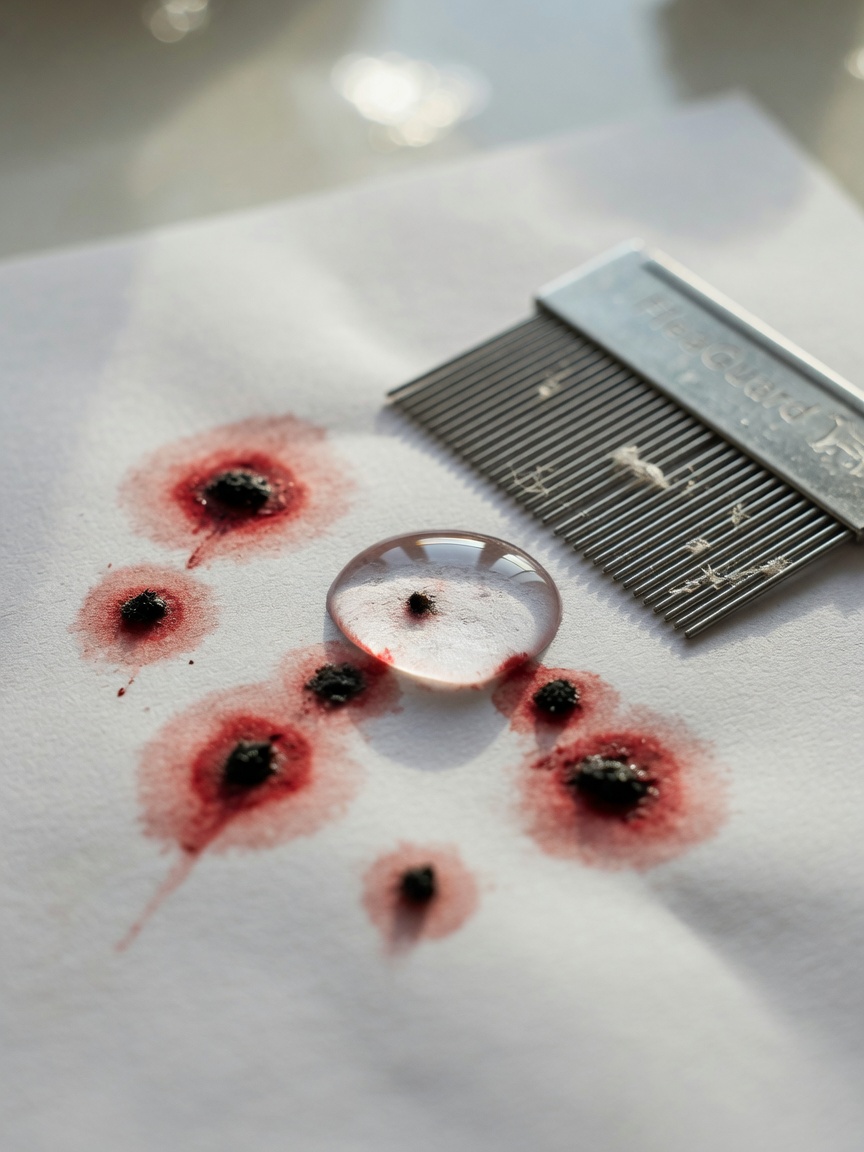
Adult fleas are small (1–2 mm), reddish-brown, and move extremely fast, making them difficult to spot in fur. Look for these signs instead:
- Flea dirt: Tiny black specks resembling ground pepper in the coat. Place some on damp white paper — flea dirt dissolves into a reddish-brown ring (digested blood), distinguishing it from regular dirt.
- Excessive scratching, biting, or licking: Especially around the base of the tail, groin, and neck — flea hotspots.
- Red, irritated skin or hair loss: Dogs with Flea Allergy Dermatitis (FAD) react to a single flea bite, causing intense itching and scabbing.
- Pale gums in puppies: Heavy infestations can cause significant blood loss. This is a veterinary emergency.
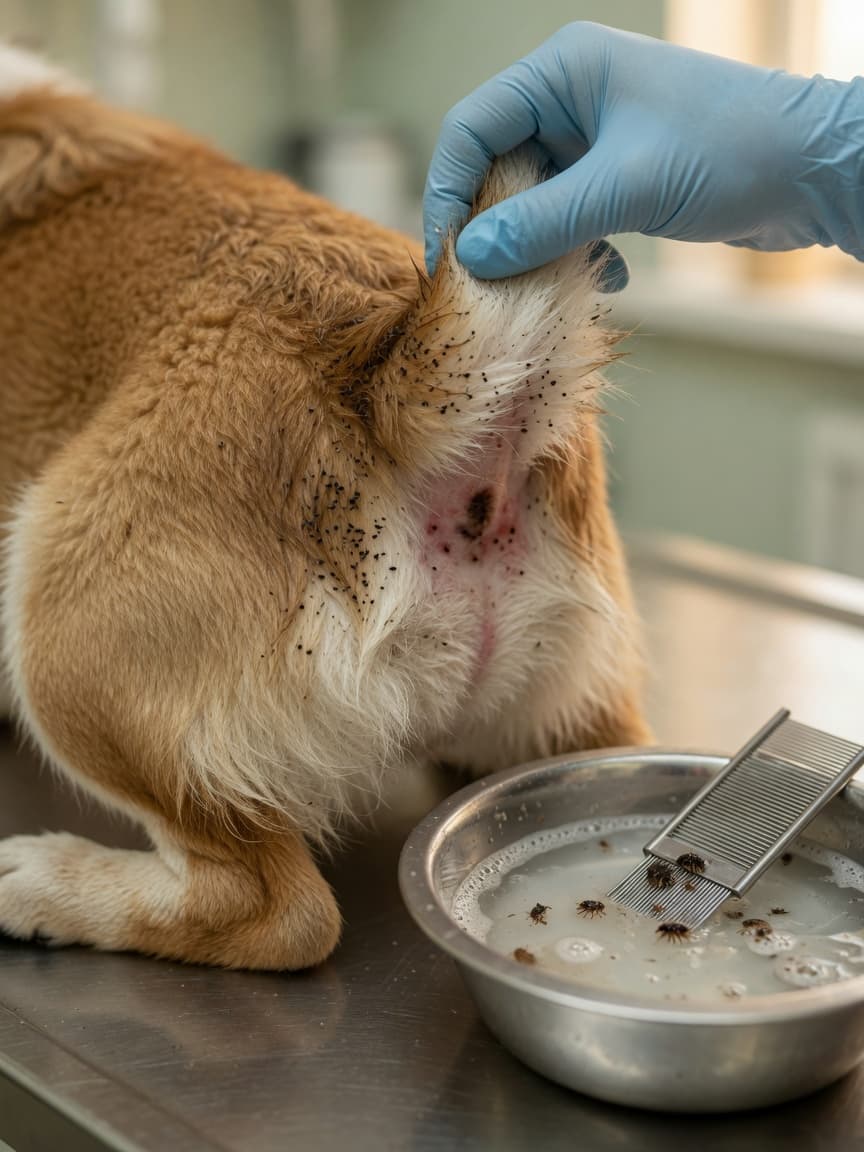
Use a fine-toothed flea comb to check your dog, paying close attention to the neck and base of tail. Comb into a bowl of warm soapy water — trapped fleas will drown.
The Flea Allergy Dermatitis Problem
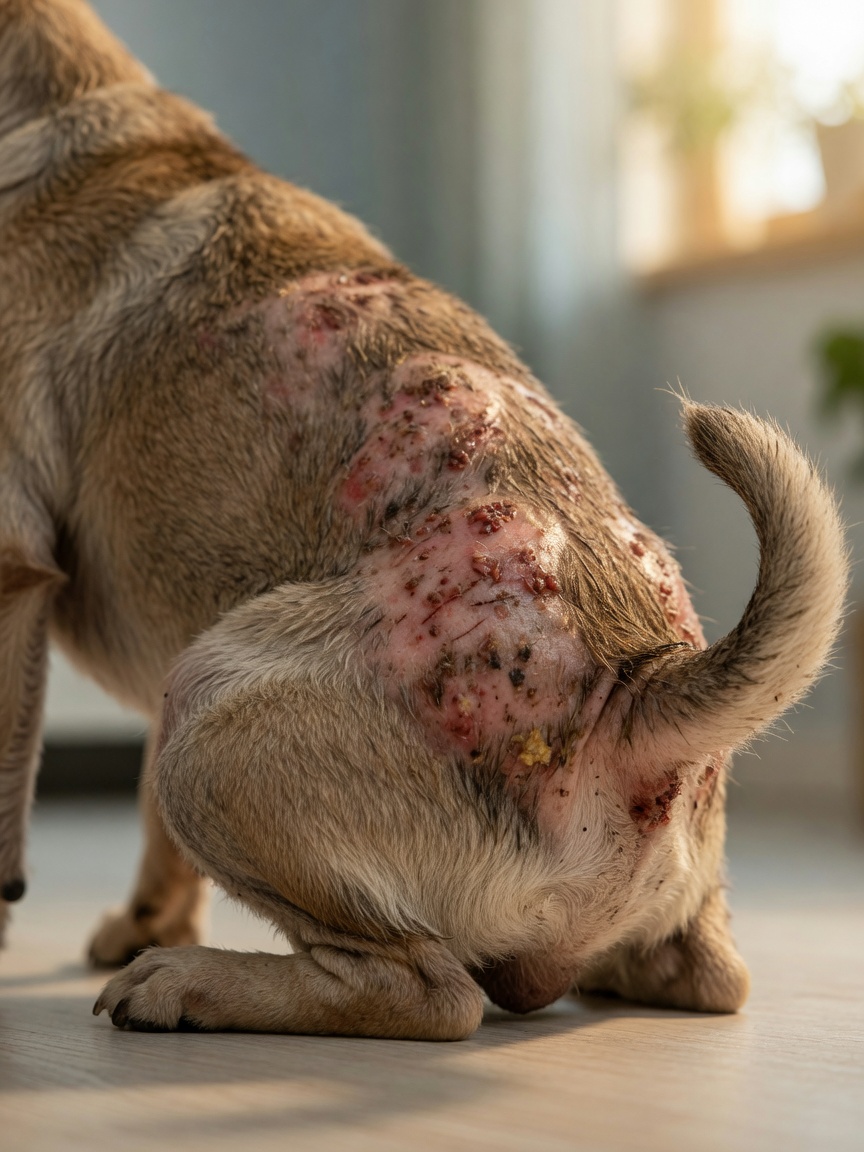
FAD is an allergic reaction to proteins in flea saliva. Sensitised dogs do not need a large burden of fleas — a single bite can trigger days of intense pruritus (itching). Dogs with FAD often show classic "hot spot" lesions, secondary bacterial skin infections, and significant hair loss around the rump and tail base. The American Kennel Club notes that FAD is the leading cause of allergic skin disease in dogs in the United States. Treatment requires both eliminating fleas on the dog and rigorous environmental control.
Treating an Active Flea Infestation
Effective treatment targets every stage of the flea lifecycle and every environment the dog inhabits.
On the Dog
Modern prescription flea treatments fall into two main classes: isoxazolines (fluralaner, afoxolaner, sarolaner, lotilaner) and spinosyns (spinosad). These are highly effective, fast-acting, and generally very safe for adult dogs. Older pyrethrins and fipronil-based spot-ons remain available over the counter but have lower efficacy due to resistance in some flea populations. Always consult your vet before choosing a product, particularly for puppies, senior dogs, or those with underlying health conditions.
In the Home
- Vacuum all carpets, upholstery, and skirting boards daily during an active infestation. Immediately seal and dispose of the vacuum bag outdoors.
- Wash all bedding (dog's and human's) at 60°C or higher.
- Apply a household insecticide spray containing an adulticide (permethrin) AND an insect growth regulator (IGR) such as methoprene or pyriproxyfen. IGRs prevent larvae and eggs from developing but do not kill adults.
- Treat all pets in the household simultaneously, even those not showing symptoms.
The American Veterinary Medical Association (AVMA) emphasises that successful flea control requires treating all life stages and all environments concurrently. Expect 2–3 months of consistent treatment before an infestation is fully resolved, due to the pupae's insecticide resistance.
Fleas as Disease Vectors
Beyond causing skin irritation, fleas transmit several serious diseases and parasites:
- Dipylidium caninum (tapeworm): Dogs ingest flea larvae that carry tapeworm eggs during grooming. This is the most common route of tapeworm infection in dogs.
- Bartonella henselae (Cat Scratch Disease): While primarily a concern in cats, fleas can transmit Bartonella to dogs and potentially to humans.
- Murine typhus: Caused by Rickettsia typhi, transmitted via flea faeces contaminating skin wounds.
- Haemobartonellosis: A blood parasite transmitted by fleas that can cause haemolytic anaemia in dogs.
A 2023 report in The Guardian highlighted how warming climates across Europe are extending flea season year-round in regions that previously had natural winter breaks, increasing the overall parasite burden on companion animals.
Year-Round Prevention
The most effective strategy is continuous, year-round prevention rather than reactive treatment. Modern oral and topical preventatives, when used consistently and correctly, make infestations extremely unlikely. Key prevention tips:
- Use a veterinarian-recommended flea preventative every month (or per the product's schedule) without gaps in coverage.
- Vacuum regularly, especially in warm months, to remove eggs and larvae before they mature.
- Keep grass cut short in areas where your dog exercises — flea larvae thrive in humid, shaded microclimates.
- Inspect dogs after walks in high-risk environments such as woodland, parks, and areas frequented by wildlife.
- Treat all pets in the household on the same schedule, even indoor-only animals who can pick up fleas from visiting pets or via human clothing.
The European Scientific Counsel Companion Animal Parasites (ESCCAP) recommends risk-based prevention assessment with a veterinarian to establish the optimal treatment schedule for each individual pet.
Key Takeaways
- 95% of a flea infestation lives in the home environment, not on your dog — treat both simultaneously.
- The pupa stage is dormant and insecticide-resistant; expect 2–3 months to fully clear an infestation.
- Flea Allergy Dermatitis can be triggered by a single bite in sensitised dogs.
- Fleas transmit tapeworms and several bacterial diseases — they are vectors, not just irritants.
- Year-round prevention with a vet-recommended product is far more effective than seasonal or reactive treatment.