
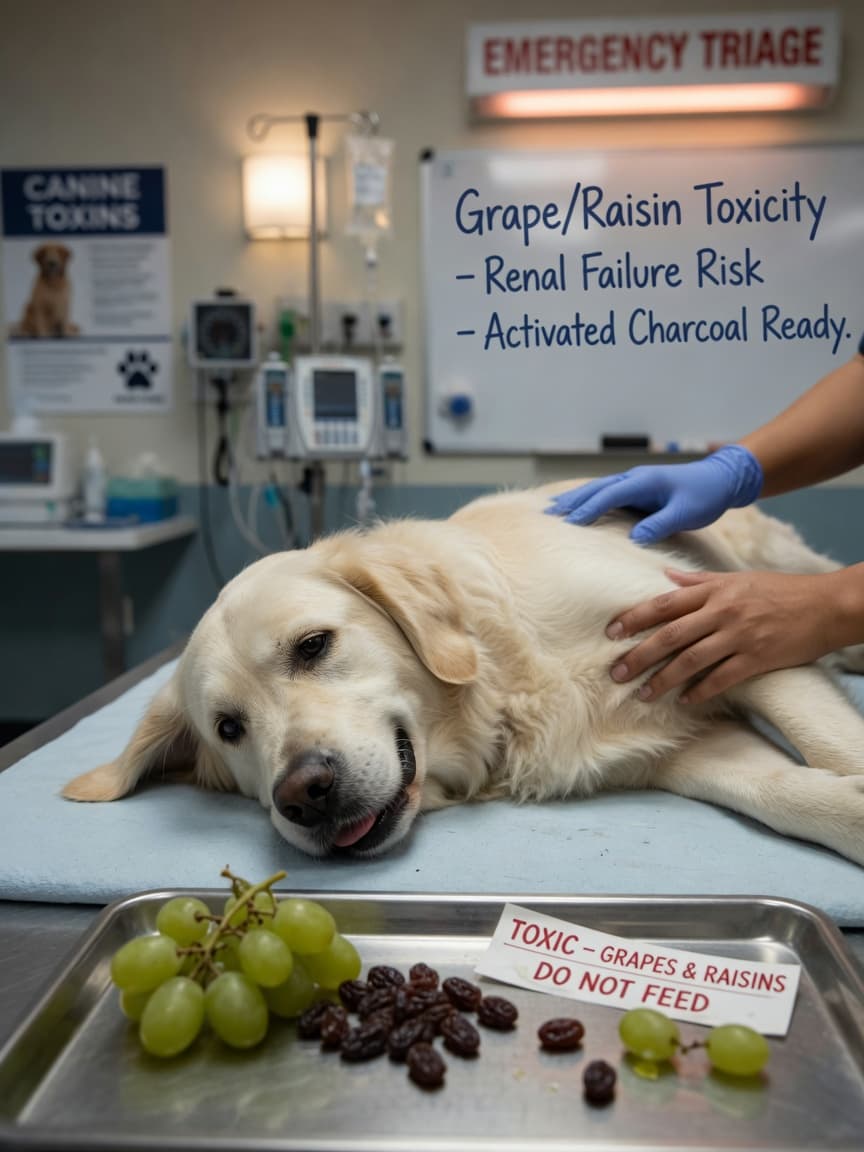
Can Dogs Eat Grapes? NO — This Is a Veterinary Emergency
By Julia Wrenfield, Pet Wellness Researcher — June 24, 2026
Even a single grape can trigger acute kidney failure in dogs. There is no known safe amount. Raisins, currants, and sultanas are equally — often even more — dangerous. If your dog has eaten any grapes or raisins, call your vet or an emergency animal poison control center immediately. Do not wait for symptoms.
Emergency contacts:
- ASPCA Animal Poison Control Center (USA): +1 (888) 426-4435 (24/7)
- Pet Poison Helpline (USA): +1 (855) 764-7661 (24/7)
- Your nearest emergency veterinary clinic — call ahead so they can prepare
Grapes look harmless. They're small, sweet, and a common household snack. But for dogs, they represent one of the most insidious and unpredictable toxins in veterinary medicine. Unlike many toxic foods where dosage is the key variable, grapes can kill without warning — and toxicity does not scale reliably with size or quantity. This article could save your dog's life.
Why Are Grapes Dangerous to Dogs?
Here is the most terrifying aspect of grape toxicity: scientists still do not fully understand the toxic mechanism. Despite decades of reported cases and active research, the specific compound in grapes responsible for kidney destruction has not been definitively identified.
What we do know from peer-reviewed veterinary literature and thousands of documented cases is this:
- Grapes — in any form, any variety, whether fresh, dried, peeled, or seeded — can cause acute kidney injury (AKI) in dogs.
- Raisins are significantly more dangerous than fresh grapes by weight because the toxic compound (whatever it is) becomes concentrated during the drying process. A single raisin can be lethal for a small dog.
- Currants and sultanas — often found in baked goods, trail mixes, and cereals — carry the same risk.
- Toxicity is completely unpredictable. Some dogs have eaten large amounts and survived with immediate treatment; others have died after eating just a few. You cannot gamble on your dog being one of the lucky ones.
- The toxic compound appears to be present in the flesh of the fruit — not just the skin or seeds. Peeled grapes are not safe.
- Organic, commercially grown, homegrown — none of these distinctions matter. All grapes are dangerous.
The ASPCA Animal Poison Control Center has documented grape and raisin toxicity as one of the most common causes of acute kidney failure calls they receive. The mortality rate in untreated or delayed-treatment cases is extremely high.
What Happens If My Dog Eats Grapes?
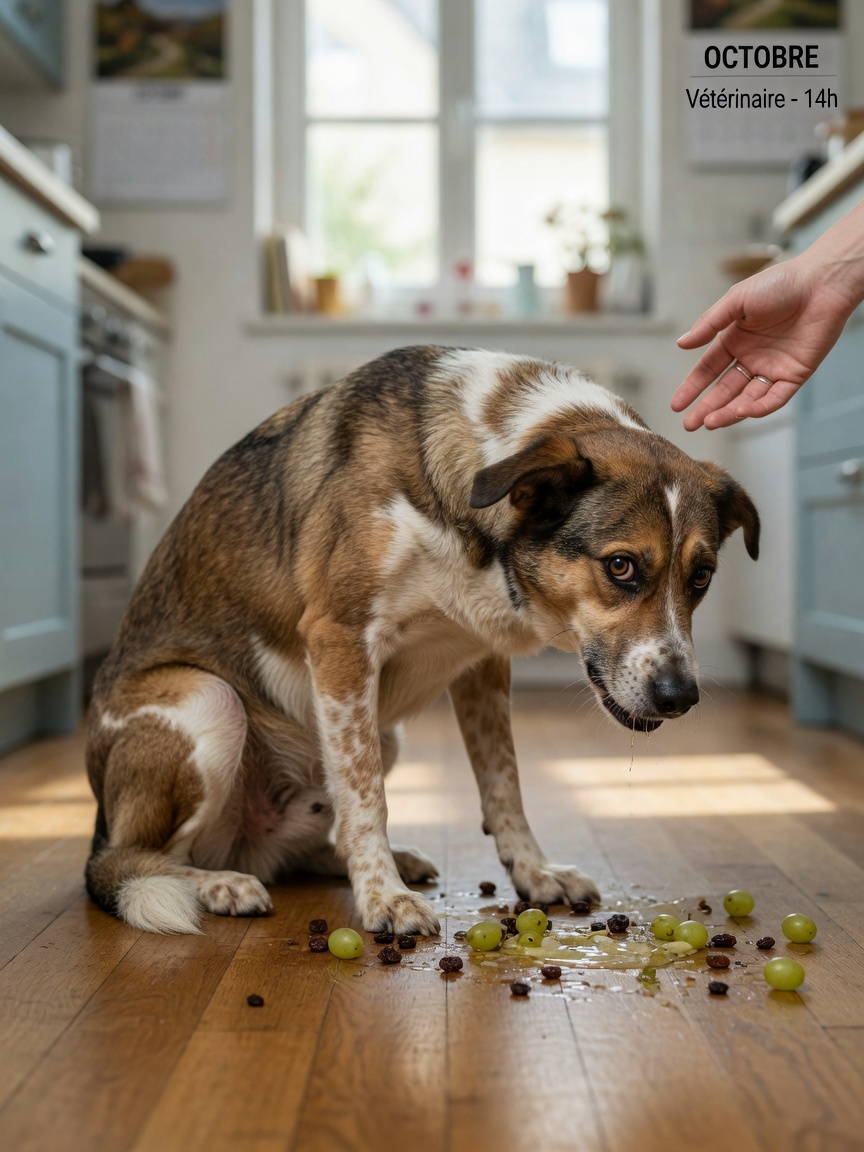
Grape toxicity progresses rapidly. Here is the clinical timeline that veterinarians observe:
Within 0–6 Hours: Initial Gastrointestinal Symptoms
The first signs of grape poisoning typically appear within hours of ingestion and include:
- Vomiting — often the first and most consistent symptom. You may see grape or raisin remnants in the vomit.
- Diarrhea — may contain undigested grape material
- Loss of appetite
- Lethargy and weakness — your dog may suddenly seem uninterested in play or movement
- Abdominal pain — your dog may hunch, whine when the abdomen is touched, or appear restless
DO NOT WAIT FOR THESE SYMPTOMS TO APPEAR BEFORE CALLING A VET. By the time symptoms are visible, kidney damage may already be occurring.
Within 24–72 Hours: Acute Kidney Failure
If untreated, the toxin moves aggressively into the renal system:
- Oliguria or anuria: Dramatically reduced urine output, or complete cessation of urination — a sign the kidneys are shutting down
- Severe lethargy: The dog may be unable to rise or respond normally
- Tremors and seizures in advanced cases
- Oral ulcers from uremic compounds building up in the blood
- Coma in the final stages
- Death from complete renal failure
Bloodwork at this stage will reveal dramatically elevated BUN (blood urea nitrogen) and creatinine levels — classic markers of kidney destruction. The kidneys, once severely damaged, cannot regenerate their functional tissue. Even dogs that survive acute toxicity may face chronic kidney disease for the rest of their lives.
What To Do If Your Dog Ate Grapes — Emergency Steps
TIME IS CRITICAL. Do not search the internet for 30 minutes. Act now.
Step 1: Note the details
Before calling, quickly gather this information — the vet will ask for it:
- Your dog's approximate weight
- How many grapes or raisins were eaten (approximate)
- Whether they were fresh grapes, raisins, or a product containing them
- When ingestion occurred (as precisely as possible)
- Whether your dog has already vomited
Step 2: Call immediately
Phone your vet or an emergency animal poison control center. Do not drive to the clinic without calling first — they need to prepare for your arrival, and they may advise you on whether to induce vomiting at home or to wait until you arrive.
Step 3: Do NOT induce vomiting without veterinary instruction
Inducing vomiting at home (typically with hydrogen peroxide) can cause its own complications, including aspiration pneumonia or chemical burns to the esophagus if done incorrectly. Only do this if a qualified veterinarian explicitly instructs you to and walks you through the process. Do not act on advice from online forums or general articles.
Step 4: Rush to the emergency vet
If ingestion was very recent (within 1–2 hours), a vet can safely induce vomiting in a clinical setting and administer activated charcoal to slow further absorption. This window is critical — the sooner the stomach is emptied, the better the prognosis.
Step 5: Expect hospitalization
Veterinary treatment for grape toxicity typically involves:
- Induced emesis (if within the ingestion window)
- Activated charcoal administration to bind remaining toxin
- IV fluid diuresis — aggressive intravenous fluids to flush the kidneys and support renal function for 48–72 hours
- Serial bloodwork monitoring BUN, creatinine, phosphorus, and electrolytes
- Anti-nausea and gastroprotectant medications
- Kidney function monitoring for weeks after discharge
The sooner treatment begins, the better the chance of avoiding permanent kidney damage. Dogs treated within the first 1–2 hours of ingestion have significantly better outcomes than those treated after symptoms develop.
Hidden Sources of Grapes and Raisins
Many grape poisonings occur because owners didn't realize a food product contained grapes or raisins. Always check the ingredient labels of:
- Fruit cakes, Christmas cake, and holiday baked goods
- Trail mix and granola bars
- Raisin bran and other cereals
- Grape juice and wine (obviously never give your dog alcohol, but spills happen)
- Bread and scones (currant scones are common in many countries)
- Energy bars and health snacks
- Baby food with grape juice concentrate
- Stuffing and savory dishes made with raisins or currants
Children in the household dropping food on the floor is one of the most common accidental poisoning scenarios. Make sure all family members know that grapes and raisins are absolutely off-limits for the dog.
- Grapes, raisins, currants, and sultanas are acutely toxic to dogs. There is no safe amount.
- Even a single grape or raisin can cause fatal kidney failure.
- The toxic mechanism is still unknown — which means there is no antidote and no way to predict who will be affected.
- Symptoms appear within hours but kidney damage can begin before symptoms are visible.
- If your dog ate any grapes or raisins: call a vet immediately — do not wait.
- Check all packaged foods and baked goods for hidden grape or raisin content.
- Treatment success depends entirely on how quickly you act.
References
- Eubig PA, Brady MS, Gwaltney-Brant SM, Khan SA, Mazzaferro EM, Morrow CM. "Acute renal failure in dogs after the ingestion of grapes or raisins: a retrospective evaluation of 43 dogs (1992–2002)." Journal of Veterinary Internal Medicine. 2005;19(5):663–674. PMID: 16220872.
- Gwaltney-Brant SM, Holding JK, Donaldson CW, Eubig PA, Khan SA. "Renal failure associated with ingestion of grapes or raisins in dogs." Journal of the American Veterinary Medical Association. 2001;218(10):1555–1556. PMID: 11393372.
- Wegenast CA, et al. "Acute kidney injury in dogs following ingestion of cream of tartar and tamarinds and implications for tartaric acid as the toxic principle in grapes and raisins." Journal of Veterinary Emergency and Critical Care. 2022;32(6):812–816. doi:10.1111/vec.13235.