
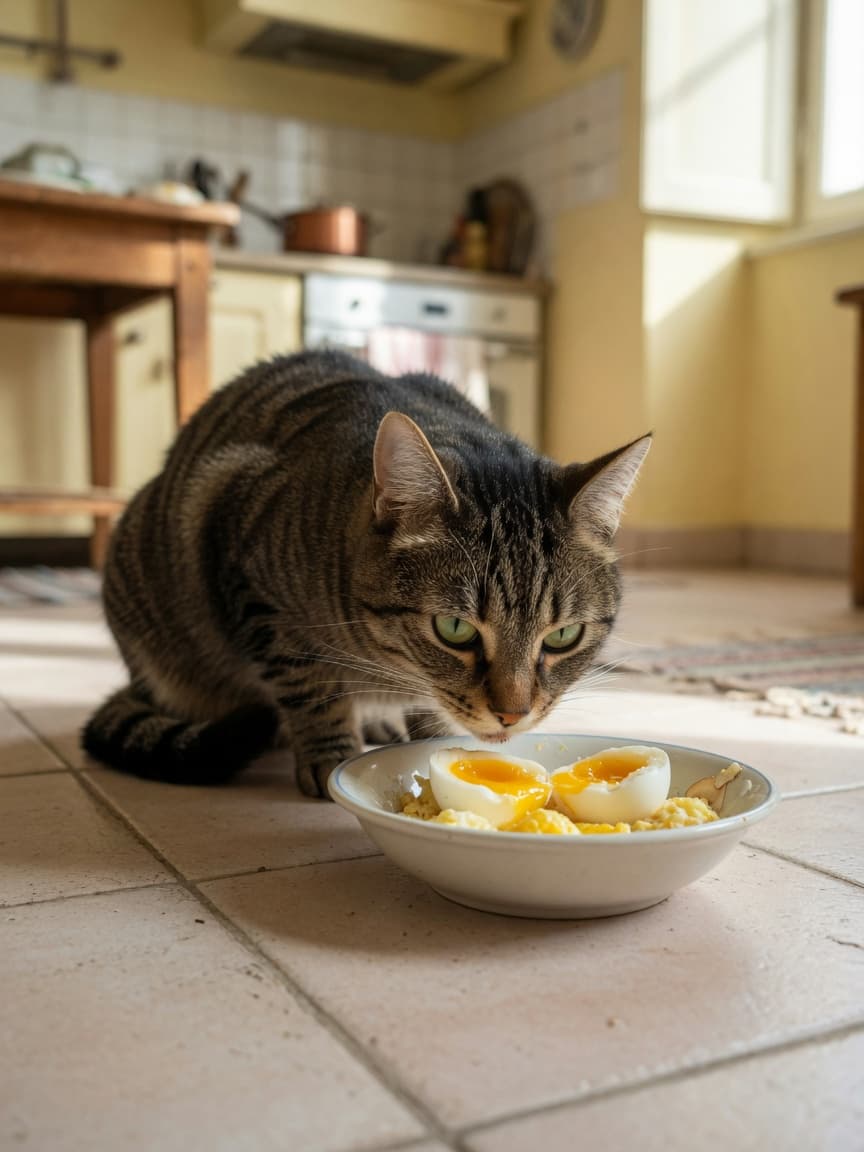
Can Cats Eat Eggs? Cooked vs. Raw — What Every Cat Owner Should Know
Eggs and the Obligate Carnivore
Cats are obligate carnivores — their digestive systems and metabolic pathways are optimized for animal-sourced nutrition. Eggs are one of the most nutritionally complete animal foods available, which is why they can be a valuable occasional addition to a cat's diet. Unlike plant-based protein sources, eggs provide a full complement of essential amino acids in forms cats can readily absorb and utilize.
Eggs also contain arachidonic acid (an omega-6 fatty acid that cats cannot synthesize from linoleic acid, unlike many mammals), choline for neurological health, and fat-soluble vitamins including A, D, and B12 — all delivered in an animal matrix that feline digestive systems handle efficiently.
The Avidin Problem: Why Raw Egg Whites Are Risky
Here is the key issue with raw eggs: egg whites contain a glycoprotein called avidin that binds very strongly to biotin (vitamin B7) in the digestive tract, preventing its absorption. Biotin is essential for fatty acid metabolism, cell growth, and the health of skin and coat. A cat that regularly eats raw egg whites can develop biotin deficiency over time.
Signs of biotin deficiency in cats include dull, flaky coat, hair loss, scaling skin, and lethargy. The condition is reversible when caught, but it can take weeks to months of regular raw egg consumption before symptoms appear — making it easy to miss until significant deficiency has built up.
The good news: cooking denatures avidin completely. A fully cooked egg white has no avidin activity and poses no biotin absorption risk. This is why the rule is simple — always cook eggs before offering them to your cat.
The yolk does not contain avidin, and raw yolks are less risky in that regard. However, raw yolks still carry salmonella risk, and offering only yolks creates a fat-heavy snack without balanced protein, so whole cooked eggs remain the sensible recommendation.
Salmonella Risk in Raw Eggs
Raw eggs — like raw poultry — can be contaminated with Salmonella enterica. Cats can contract salmonellosis, which causes vomiting, diarrhea, fever, and lethargy. Beyond the risk to the cat itself, household members can be exposed through contact with an infected pet or contaminated surfaces — a particular concern for children, elderly people, or anyone with a compromised immune system.
Cooking eggs eliminates salmonella risk. Scrambled, hard-boiled, or poached eggs (plain, no additives) are all appropriate preparation methods.
How to Prepare Eggs Safely for Cats
- Scrambled: Cook in a dry non-stick pan with no butter, oil, salt, or pepper. Plain scrambled eggs are one of the easiest ways to serve egg to a cat.
- Hard-boiled: Simply boil the egg until fully cooked, peel, and allow to cool. Remove the shell — eggshell is not harmful in small amounts (it is mostly calcium carbonate) but serves no purpose and can be a choking risk.
- Poached: Poach without vinegar or salt, and ensure the white is fully set.
- Never add: salt, pepper, garlic, onion, chives, hot sauce, cheese, cream, or any other ingredient. Many common additions are toxic to cats.
How Much Egg Can a Cat Eat?
A whole large egg contains roughly 70–80 kcal. For an average 4 kg adult cat with a daily caloric need of around 200 kcal, even half an egg would represent about 17–20% of daily intake — already exceeding the typical 10% treat guideline. In practice, a small portion (a tablespoon of scrambled egg or a quarter of a hard-boiled egg) is an appropriate serving size for an occasional treat.
Eggs are calorie-dense and protein-rich, which makes them a good high-value treat for training purposes or as a food topper to encourage appetite in cats who are reluctant eaters. But they should not replace a complete, balanced commercial diet formulated to meet all of a cat's micronutrient needs — particularly their requirements for taurine, which must come from animal tissue.
Ver alimentos para gatos en Zooplus →Egg Allergies in Cats — Rare But Possible
Food allergies in cats, while less common than in dogs, do occur. Egg is not among the most common feline allergens (beef and fish feature more prominently), but any protein source can theoretically trigger an immune response. If your cat develops itching, skin lesions, vomiting, or digestive upset after eating egg, discontinue it and consult your veterinarian. An elimination diet trial is typically required to confirm food allergy.
Special Situations: Kittens and Senior Cats
Kittens have higher energy and protein demands relative to body weight, and cooked egg can be a useful calorie-dense supplement during growth — but only as a supplement to a complete kitten formula, not as a primary protein source. Senior cats with reduced appetite may benefit from a small amount of egg as a palatable topper. Cats with kidney disease should have protein sources discussed with a veterinarian, as high-protein treats may not be appropriate for all patients.
- Fully cooked eggs are safe and nutritious for cats — excellent animal protein with a complete amino acid profile.
- Raw egg whites contain avidin, which blocks biotin (vitamin B7) absorption and can cause deficiency with regular feeding. Cooking destroys avidin completely.
- Raw eggs also carry salmonella risk — always cook eggs thoroughly.
- No salt, butter, oil, garlic, onion, or any seasoning — plain only.
- Keep egg to a small treat portion (¼ egg or 1 tbsp scrambled) — no more than 10% of daily calories.
- Eggs are not a complete diet; cats still need taurine and other nutrients from a balanced commercial formula.
References
- Mock DM, Quirk JG, Mock NI. "Marginal biotin deficiency during normal pregnancy." Am J Clin Nutr. 2002;75(2):295–299. PMID: 11815322. [Background on avidin-biotin interaction, applicable across mammals.]
- Verbrugghe A, Bakovic M. "Peculiarities of one-carbon metabolism in the strict carnivore, the domestic cat (Felis catus)." Nutrients. 2013;5(7):2811–2835. PMID: 23873295.
- National Research Council. Nutrient Requirements of Cats and Dogs. Washington, DC: National Academies Press; 2006. ISBN: 978-0309086288.