
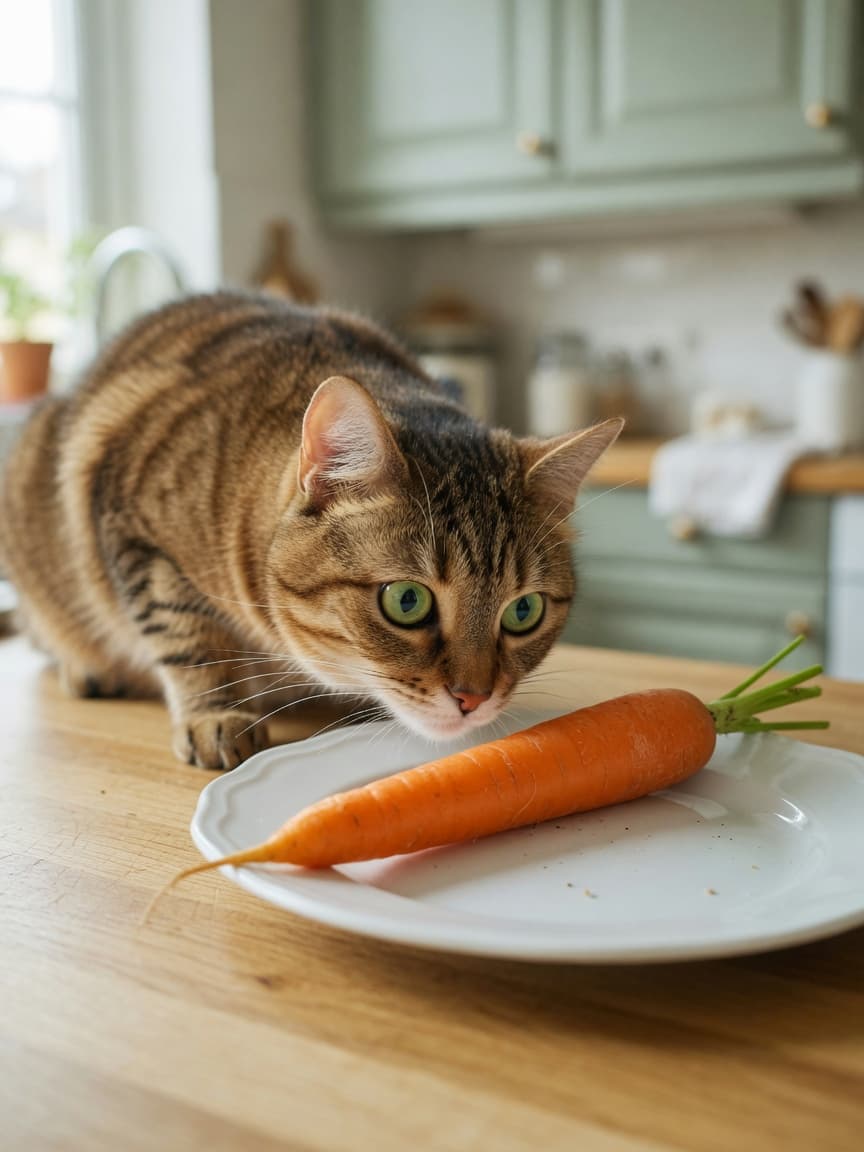
Can Cats Eat Carrot? The Verdict
Cooked plain carrots are safe for cats in very small amounts and are not toxic. However, raw carrots present a choking and digestive risk, and the nutritional case for feeding carrots to cats is weak at best. Cats are obligate carnivores whose bodies are not designed to extract meaningful nutrition from vegetables. While a small piece of soft, cooked carrot as an occasional treat is unlikely to cause harm in a healthy adult cat, it provides essentially no benefit either. If a cat enjoys the texture, a tiny amount now and then is acceptable — but carrots should never be considered a health supplement or a source of vitamins for a feline.
The Beta-Carotene Problem: Why Carrots Cannot Be a Vitamin A Source for Cats
Carrots are frequently cited in human nutrition for their high beta-carotene content, a precursor that the human body converts into vitamin A. This conversion relies on an enzyme called beta-carotene 15,15'-dioxygenase (BCO1). Cats have extremely low activity of this enzyme compared to humans and most omnivores. Research has consistently shown that cats have a very limited capacity to convert beta-carotene into retinol (active vitamin A), making plant sources of provitamin A essentially useless for meeting feline nutritional requirements.
This is not a minor metabolic quirk — it reflects a fundamental aspect of feline evolutionary biology. In the wild, cats obtain preformed vitamin A (retinol) directly from the liver and other organs of their prey. They never needed to evolve the enzymatic machinery to convert plant pigments into vitamins because animal prey always provided the active form directly. Feeding carrots to a cat in the belief that it is boosting their vitamin A intake is therefore biologically mistaken. Any nutritionally complete commercial cat food already supplies preformed vitamin A at the correct levels.
Raw Carrots: A Physical Hazard
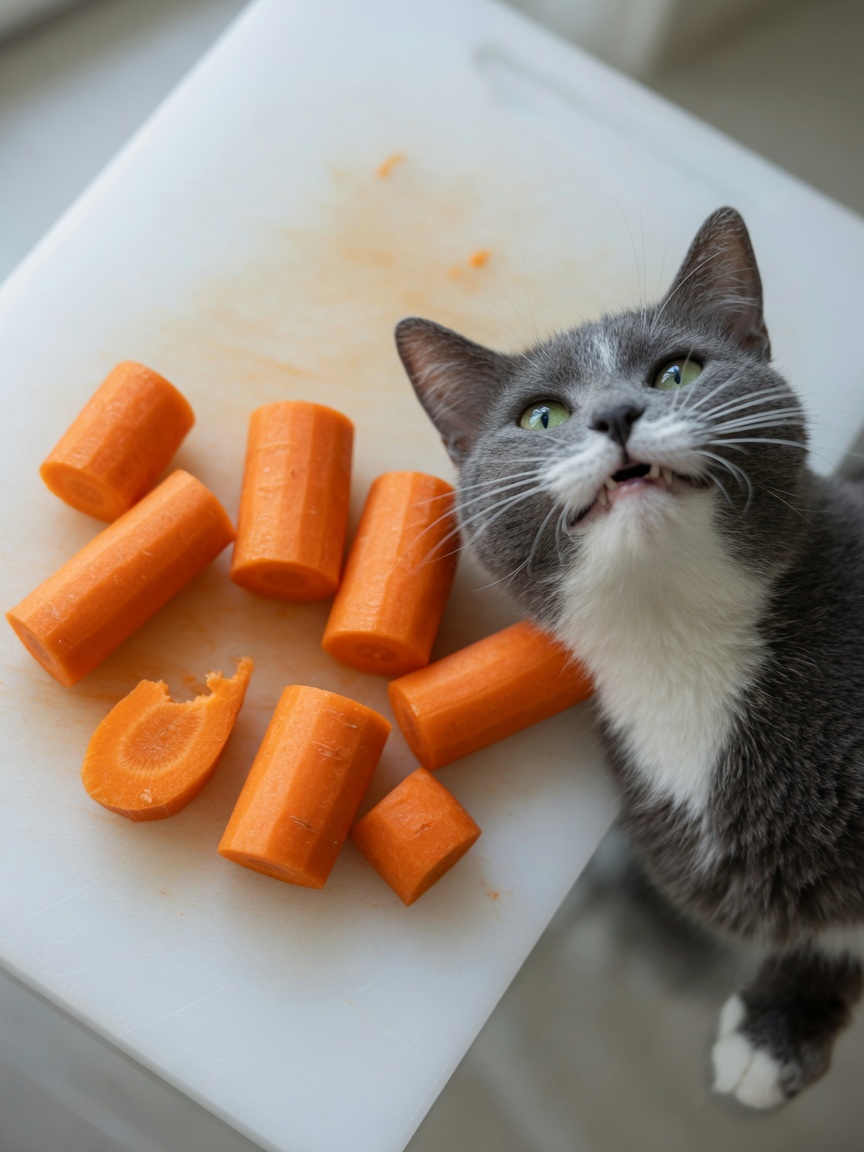
Raw carrots are firm and cylindrical — a shape and texture that poses a genuine choking hazard for cats. Unlike dogs, cats tend to swallow food with less chewing, and a chunk of raw carrot can become lodged in the oesophagus or, worse, cause a complete obstruction requiring veterinary intervention. Even smaller pieces of raw carrot are difficult for a cat's digestive system to break down. The cell walls of raw vegetables are not efficiently disrupted by feline digestive enzymes, meaning most of the cellular content of a raw carrot passes through largely undigested.
If you want to offer carrot to your cat at all, it must be thoroughly cooked until soft — steamed or boiled without any salt, butter, oil, or seasoning. Roasted or spiced carrot preparations intended for human consumption are not appropriate.
Fibre: Modest Benefits, Context-Dependent
Cooked carrot does contain dietary fibre, and small amounts of fibre can occasionally be beneficial for cats experiencing mild constipation. Some veterinary diets for cats with certain gastrointestinal conditions do include vegetable fibre as a functional ingredient. However, this is a medical use case guided by a vet, not a justification for regularly feeding carrots as a treat. The fibre content in a small piece of cooked carrot is too modest to have significant therapeutic effect, and cats with chronic digestive issues should be managed with veterinary-prescribed diets rather than home remedies.
Excess fibre can also be counterproductive, interfering with the absorption of protein and other nutrients and contributing to loose stools in sensitive cats.
Sugar Content and Metabolic Considerations
Carrots contain natural sugars — more than many other vegetables, which is part of why they taste sweet to humans. While the sugar content is lower than in fruit, it is still relevant for cats with diabetes or those prone to weight gain. Cats have a limited ability to regulate blood glucose spikes from dietary carbohydrates, and even vegetables with moderate sugar content should be offered with caution to metabolically vulnerable cats.
EFSA's dietary reference values for humans highlight carrots as a source of natural sugars, but no equivalent guidance exists for cats, reflecting the reality that vegetables are not part of a healthy feline diet.
When Cats Must Not Eat Carrot
- Diabetic cats or cats with blood sugar regulation issues, due to the natural sugar content
- Cats with inflammatory bowel disease, where fibre and novel plant ingredients can trigger flares
- Kittens under 12 months, whose digestive systems are still maturing and do not process plant matter well
- Cats with a history of gastrointestinal obstruction, where any firm or fibrous food is a risk
- Overweight cats, where even small caloric additions from non-protein sources are undesirable
Safe Preparation and Amounts
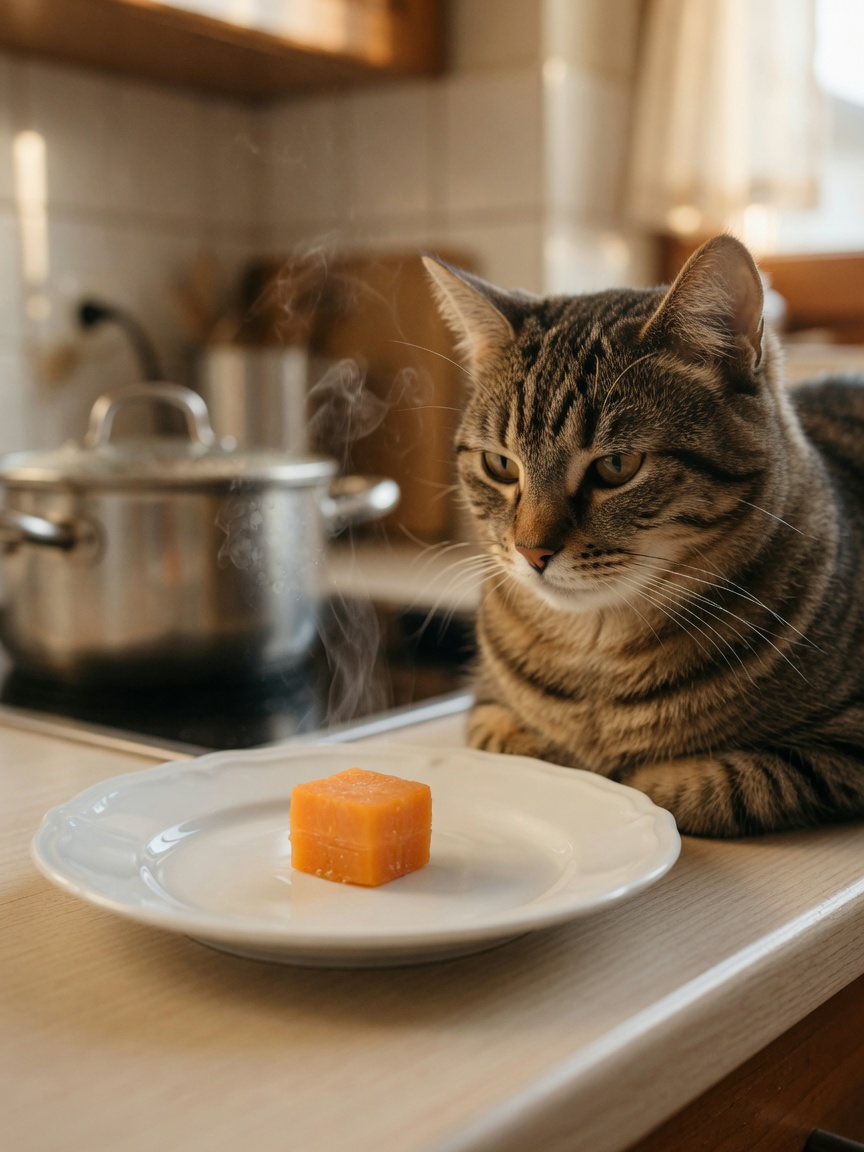
If a healthy adult cat shows interest in carrot and you wish to offer a small taste, follow these guidelines:
- Cook the carrot thoroughly by steaming or boiling until completely soft
- Use no salt, butter, oil, onion, garlic, or any seasoning
- Allow the carrot to cool completely before offering it
- Offer a piece no larger than one centimetre square
- Do not offer carrot more than once or twice per week
- Monitor for any signs of digestive upset such as vomiting, diarrhoea, or reduced appetite
What Cats Actually Need
A nutritionally complete cat food — wet food in particular, which more closely mirrors the moisture and protein content of natural prey — provides everything a cat requires, including preformed vitamin A at correct levels. There is no vegetable that can meaningfully supplement what a good quality cat food already delivers.
For occasional treats, single-ingredient meat-based options are always more appropriate than vegetables. Zooplus stocks a wide range of high-protein, low-carbohydrate cat treats across the EU and UK, making it easy to reward your cat without introducing unnecessary plant matter into their diet. Freeze-dried chicken, turkey, or fish treats are particularly popular and biologically appropriate for cats.
Summary
- Cooked plain carrots are not toxic to cats and safe in tiny amounts for healthy adults
- Raw carrots are a choking hazard and should never be given to cats
- Cats cannot efficiently convert beta-carotene to vitamin A due to low BCO1 enzyme activity
- Carrots provide no meaningful nutritional benefit for an obligate carnivore
- Diabetic cats, cats with IBD, kittens, and overweight cats should avoid carrot
- A high-quality meat-based diet already provides all vitamins a cat needs