
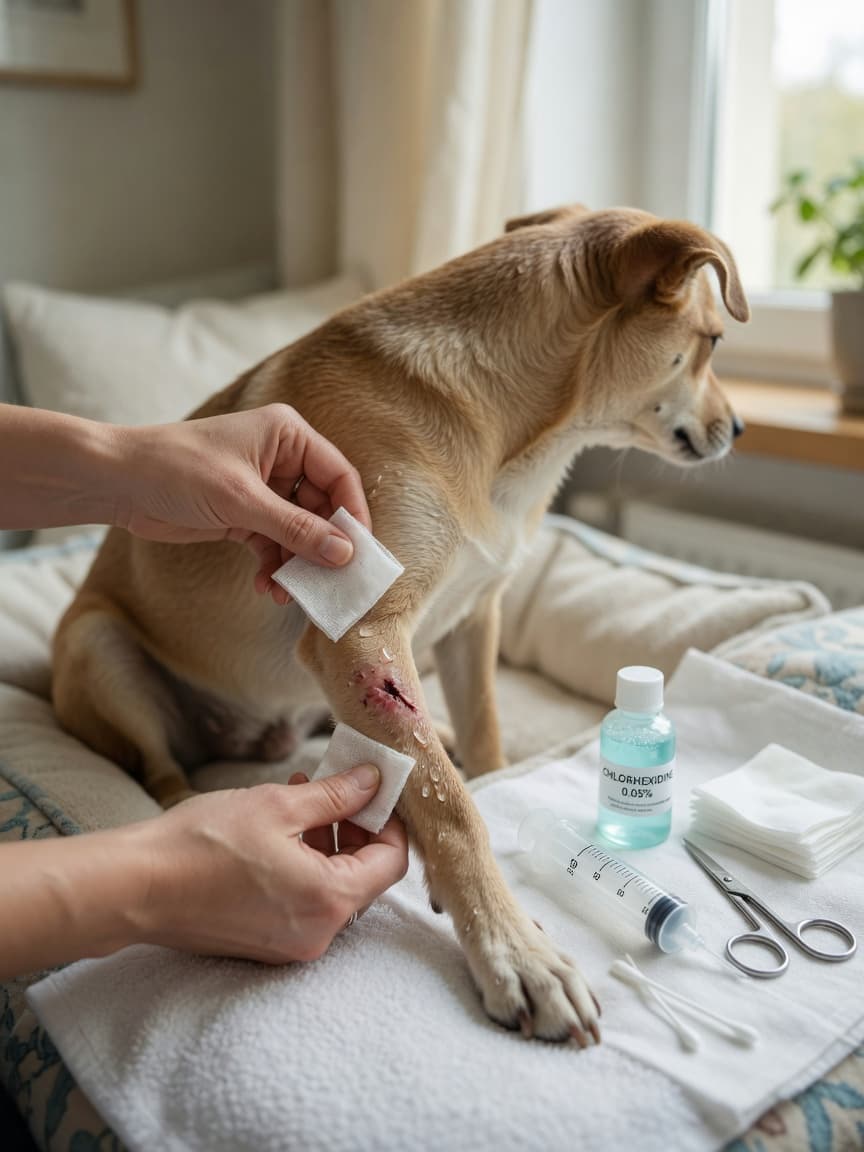
Assessing the Wound Before You Do Anything Else
The first thirty seconds after discovering a wound on your pet are the most important. Before reaching for cotton wool or antiseptic, take a breath and assess what you are actually dealing with. Minor grazes, superficial cuts, and small puncture wounds are manageable at home with proper technique. Deeper lacerations, wounds with visible tissue, bites from another animal, or anything still bleeding heavily after five minutes of firm pressure all require prompt veterinary attention — not home treatment.
Check the size and depth as accurately as you can. A wound that appears small on the surface can be deceptively deep, particularly in the case of puncture wounds from bites or sharp objects. If in doubt, contact your vet before treating.
Cleaning a Wound Safely
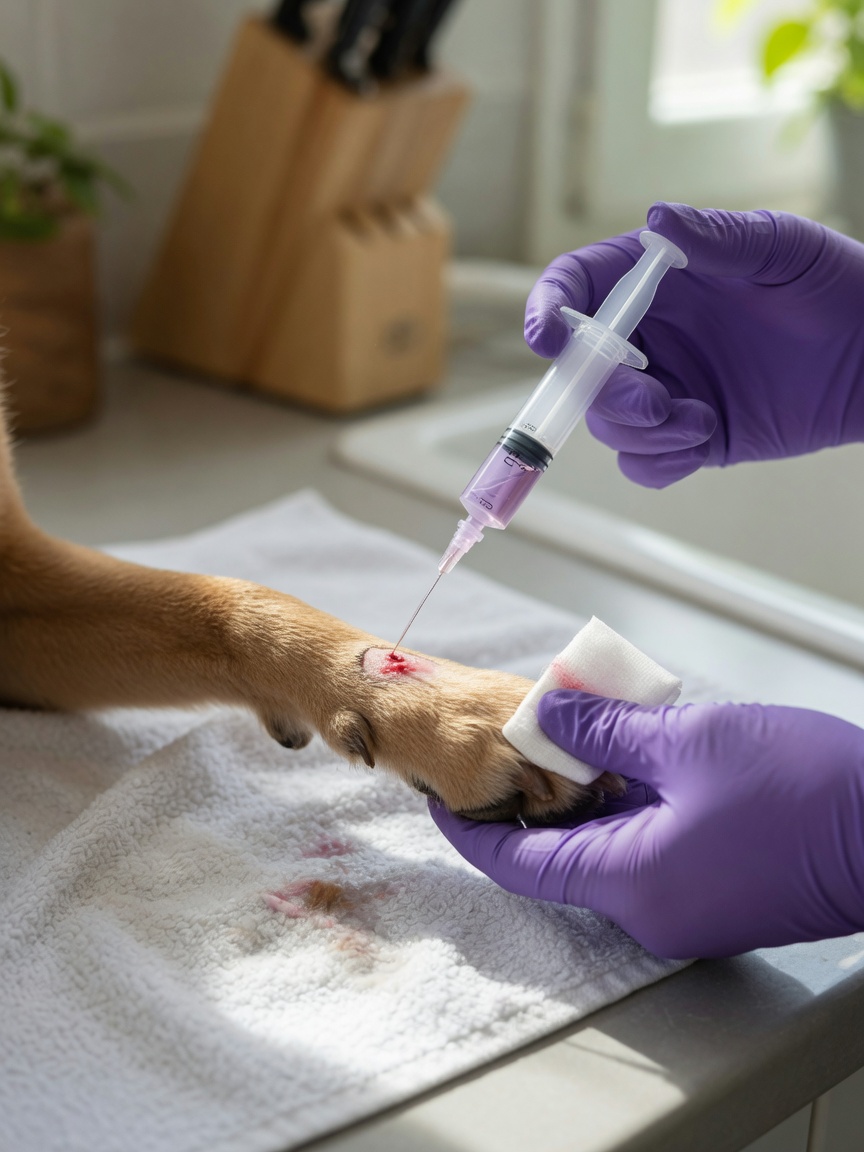
Proper cleaning is the single most important thing you can do at home. Infection risk drops dramatically when a wound is thoroughly irrigated within the first hour.
What you will need
- Sterile saline solution or cooled boiled water
- Clean cotton wool or non-woven gauze swabs
- A 10–20ml syringe for irrigation (available from pharmacies)
- Clean scissors to trim surrounding fur if necessary
- Chlorhexidine solution diluted to 0.05% (a pale blue colour) — this is the gold standard for wound cleaning
Never use neat Dettol, hydrogen peroxide, or iodine directly on a wound. These damage the tissue cells that are responsible for healing and can significantly slow recovery. Similarly, avoid cotton wool directly inside deep wounds as fibres can become embedded.
Cleaning technique
- Gently clip the fur around the wound edges with scissors to prevent hair contaminating the area — placing a small amount of water-soluble lubricant such as KY jelly in the wound first catches clipped hairs and can be rinsed away
- Fill a syringe with diluted chlorhexidine solution or sterile saline
- Irrigate the wound with gentle but steady pressure — you are aiming to physically flush debris and bacteria out, not scrub the tissue
- Dab the surrounding area dry with clean gauze
- If the wound is superficial, allow it to air dry briefly before any covering
Bandaging at Home
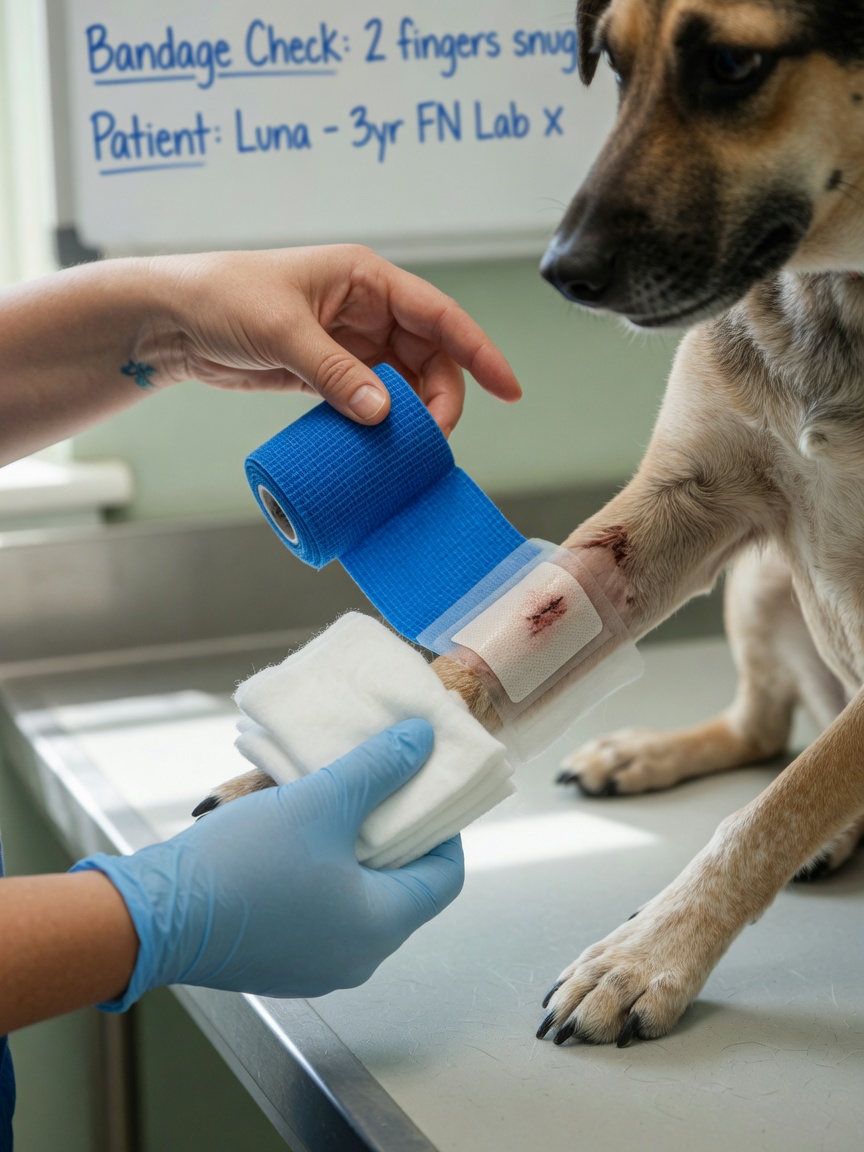
Not every wound needs bandaging, and a poorly applied bandage can cause more harm than leaving a wound uncovered. That said, covering a wound protects it from licking, contamination, and further trauma — all of which are significant risks with pets.
Basic bandaging layers
- Primary layer: a non-adhesive wound contact dressing placed directly on the wound surface
- Secondary layer: cotton padding or orthopaedic wool wrapped around the primary layer to absorb discharge and provide cushioning
- Tertiary layer: a self-adhesive bandage such as Vetrap or Co-Flex to hold everything in place
The most common mistake in home bandaging is applying it too tightly. You should be able to slip two fingers comfortably beneath the bandage at all points. A bandage that is too tight cuts off circulation and can cause serious damage within hours. Check the toes or paw pads below the bandage every few hours for swelling, coldness, or colour change.
Change bandages daily or when they become wet or soiled. Wounds heal better in a moist environment than a completely dry one, but saturated dressings harbour bacteria and must be replaced promptly.
Managing Licking and Self-Trauma
Dogs and cats instinctively lick wounds, and while saliva has minor antimicrobial properties, repeated licking removes healing tissue, introduces bacteria from the mouth, and can turn a minor wound into a serious infection within days. An Elizabethan collar (the lampshade cone) remains the most reliable solution, though many pets adjust better to inflatable or soft alternatives. Recovery suits — garment-style covers worn on the body — are excellent for trunk wounds.
Never leave a bandaged wound unmonitored for extended periods without checking for signs of interference.
Signs of Infection to Watch For
Even a well-managed wound can become infected, and catching this early makes an enormous difference to treatment outcomes.
- Increasing redness, swelling, or warmth around the wound edges after the first 24 hours
- Discharge that is yellow, green, or has an unpleasant odour
- The wound edges pulling apart or failing to draw together
- Your pet showing signs of pain when the area is touched
- Lethargy, reduced appetite, or fever in your pet
When to Return to the Vet
Home care has clear limits, and returning to the vet promptly when those limits are reached is not a failure — it is responsible ownership. Go back if the wound is not showing clear improvement within 48 hours, if infection signs appear, if your pet is in persistent pain, or if you have any doubt at all about wound depth or contamination. Bite wounds in particular should always be assessed by a vet even when they look minor, as they carry a very high risk of deep tissue infection that is not visible on the surface.