
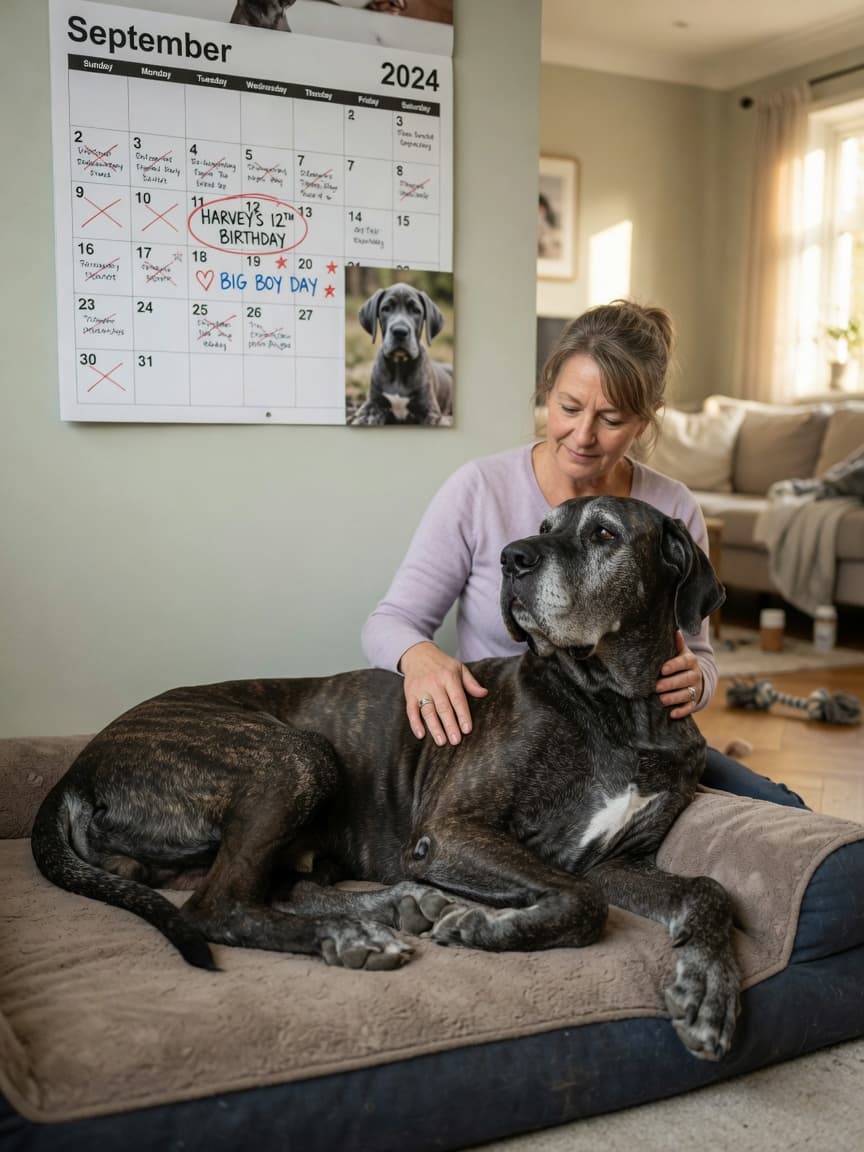
When Is a Dog Considered Senior? Age Guide by Breed Size
When a client walks into a veterinary clinic with a seven-year-old Labrador and asks, "Is he old yet?"—the honest answer is: kind of. Canine aging does not follow a single calendar. The old "multiply by seven" rule has long been debunked; the reality is more nuanced and depends heavily on body size, breed genetics, and cellular biology. Getting this right matters, because senior dogs need different nutrition, different veterinary screening schedules, and a watchful owner who knows what early signs to look for.
Why Breed Size Determines Aging Rate
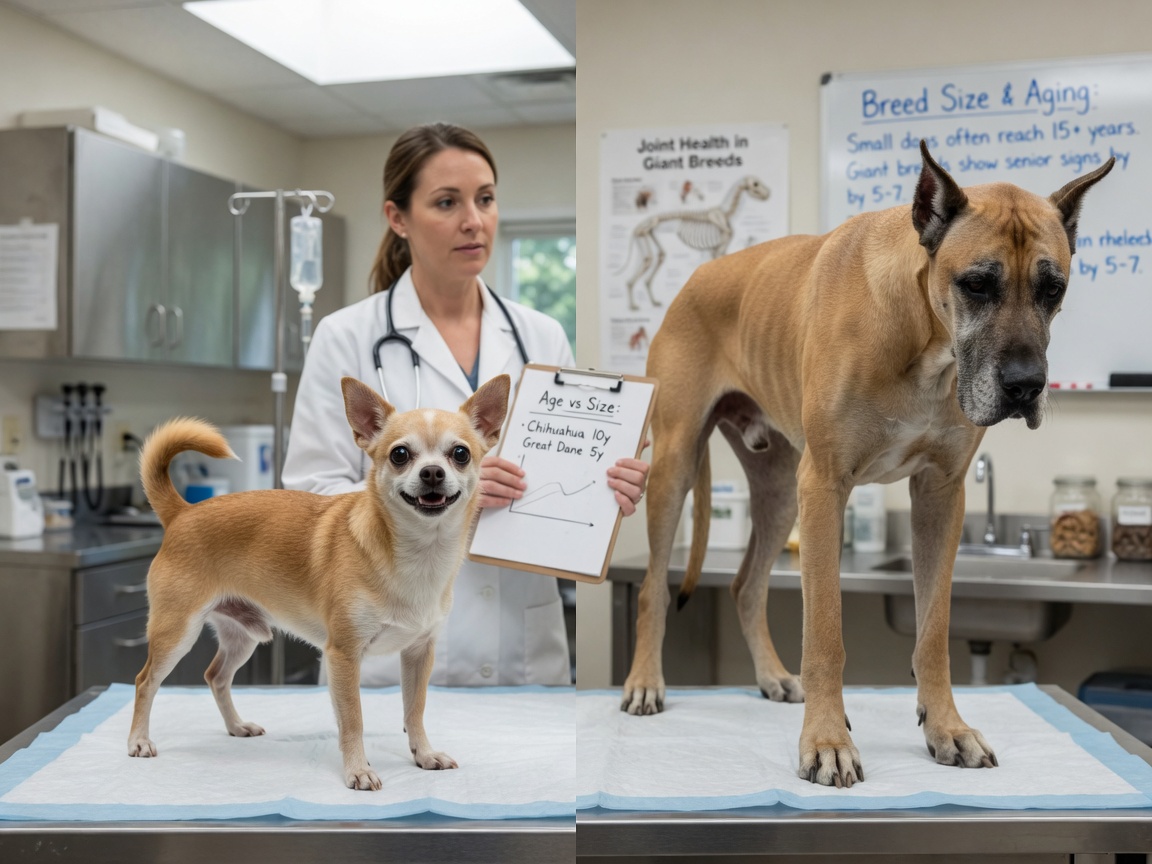
The relationship between body size and longevity in dogs is paradoxical compared to most of the animal kingdom—where larger animals tend to live longer. In dogs, the opposite is true. A 2013 study published in The American Naturalist found that for every 4.4 pounds (2 kg) of additional body weight, a dog's expected lifespan decreases by roughly one month. The leading hypothesis involves growth rate: large and giant breeds grow at extraordinary speed in their first year, and this rapid cellular proliferation appears to accelerate aging processes and increase the risk of age-related diseases, including cancer.
Telomere length—the protective caps on chromosomes that shorten with each cell division—also plays a role. Dogs that grow faster appear to deplete telomere reserves more quickly, resulting in earlier cellular senescence. This molecular clock helps explain why the Great Dane that seems vigorous at four may be showing early signs of organ stress by six, while a Border Terrier of the same age is still in full athletic prime.
Senior Age Thresholds by Breed Size
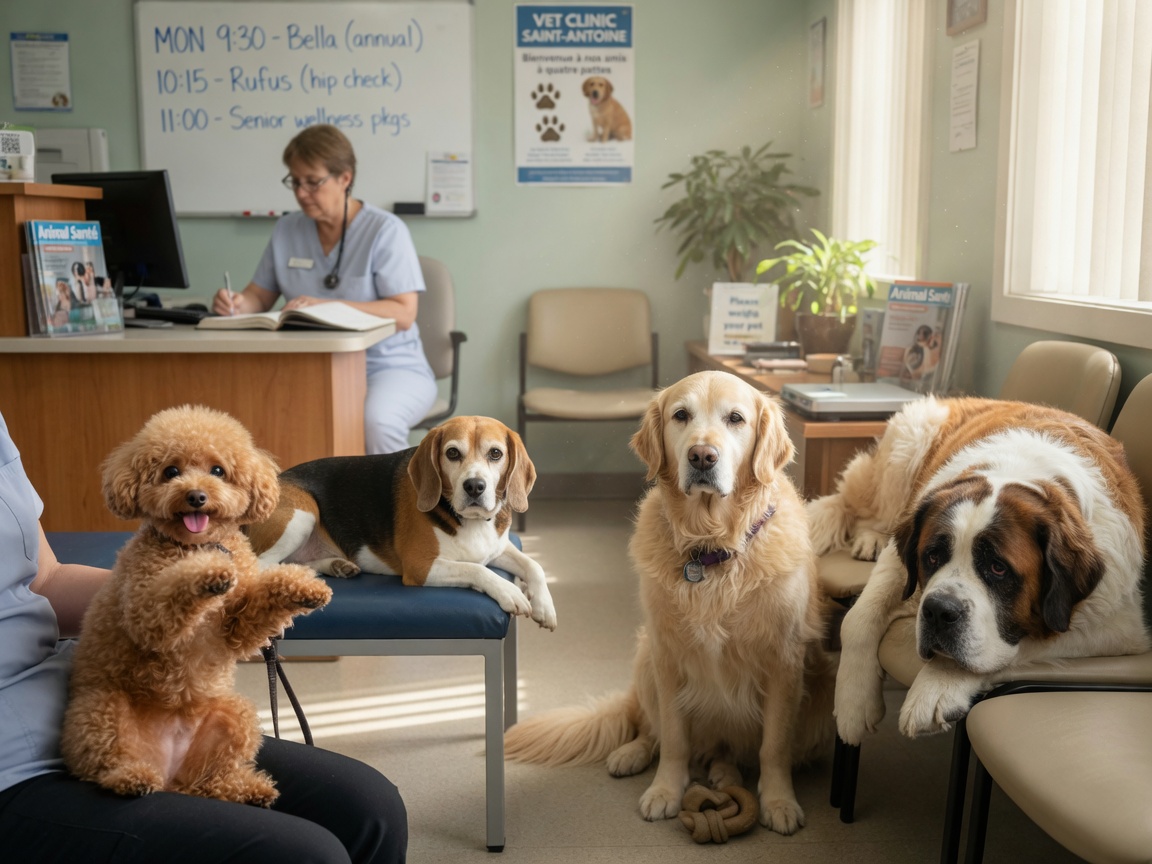
Veterinary consensus generally organizes dogs into four size categories, each with its own senior threshold:
- Small breeds (under 20 lbs / 9 kg) — Senior at 10–11 years. Breeds like Chihuahuas, Toy Poodles, and Dachshunds regularly live 14–17 years. Their senior phase begins later but can last nearly half their life. Common age-related issues include dental disease, tracheal collapse, and mitral valve disease.
- Medium breeds (20–50 lbs / 9–23 kg) — Senior at 7–8 years. Cocker Spaniels, Beagles, and Border Collies fall here. With lifespans of 12–14 years, the senior phase is roughly the final third of life. Owners should begin biannual vet checkups around age seven.
- Large breeds (50–90 lbs / 23–41 kg) — Senior at 6–7 years. Labrador Retrievers, Golden Retrievers, and German Shepherds age noticeably faster. Hip dysplasia, elbow arthritis, and hypothyroidism are common concerns from mid-life onward.
- Giant breeds (over 90 lbs / 41 kg) — Senior at 5–6 years. Great Danes, Saint Bernards, and Mastiffs have average lifespans of only 7–10 years. A five-year-old Great Dane is the physiological equivalent of a 60-year-old human. Dilated cardiomyopathy and osteosarcoma are disproportionately common in these dogs.
What Cellular Aging Looks Like in Practice
Aging at the cellular level precedes visible symptoms by months or years. Mitochondrial efficiency declines, meaning cells produce energy less effectively. Protein repair mechanisms slow, allowing damaged proteins to accumulate. The immune system becomes less responsive to novel pathogens while paradoxically more prone to chronic low-grade inflammation—a state sometimes called "inflammaging." In practice, this translates to subtler early signs long before a dog looks obviously old.
Owners who pay close attention often notice the earliest changes in activity tolerance. A dog that used to run for 45 minutes without stopping may now flag after 20. Recovery from exercise takes longer. Naps get longer and more frequent. These are not laziness—they are measurable physiological shifts in cardiovascular reserve, muscle fiber composition, and metabolic rate.
Practical Signs Your Dog Is Entering the Senior Phase
Beyond age thresholds, specific physical and behavioral changes signal that your dog's body has shifted into its senior chapter:
- Graying muzzle: Pigment cells in the fur follicles are among the first affected by cellular aging. Graying typically starts around the muzzle and eyebrows and progresses inward.
- Cloudiness in the eyes: Nuclear sclerosis—a blue-gray haze in the lens—is a normal aging change that begins around age seven in most breeds. Unlike cataracts, it does not cause severe vision loss, but it is a reliable aging marker.
- Stiffness after rest: A dog that rises slowly from lying down, particularly in the morning, is often experiencing early joint inflammation. This is especially common in large and giant breeds.
- Behavioral changes: Increased sleep, reduced interest in play, or mild disorientation can be early signs of cognitive aging. Some dogs become more clingy; others more withdrawn.
- Changes in coat texture: Senior dogs often develop coarser, drier coats as sebaceous gland function declines. This is usually manageable with omega-3 fatty acid supplementation and appropriate grooming.
- Increased water consumption or urination: Polydipsia and polyuria in an older dog should always prompt a veterinary workup—they can signal kidney disease, diabetes, or Cushing's syndrome, all of which are more common in senior dogs.
Adapting Care for the Senior Dog
Once your dog enters the senior category for their size, the most impactful change you can make is increasing the frequency of veterinary visits. Most veterinarians recommend biannual wellness exams for senior dogs rather than annual ones. Twice-yearly blood panels allow early detection of kidney disease, liver dysfunction, and thyroid abnormalities—conditions far more treatable when caught before clinical signs appear.
Nutrition matters enormously. Senior dogs generally benefit from diets with highly digestible protein sources to preserve muscle mass (sarcopenia is a real concern in aging dogs), controlled phosphorus to support kidney health, and elevated levels of omega-3 fatty acids to manage inflammation. Antioxidants such as vitamins E and C, beta-carotene, and lutein have shown benefit in supporting cognitive health in aging dogs.
Exercise should continue throughout the senior years but be adapted to the dog's current capacity. Low-impact activities like swimming and gentle leash walks maintain cardiovascular fitness and muscle mass without stressing aging joints. Mental stimulation through puzzle feeders and scent work remains beneficial well into old age and may help slow cognitive decline.
Weight management is non-negotiable. Even a modest degree of overweight in a senior dog dramatically increases stress on joints, cardiovascular function, and metabolic health. Studies consistently show that lean body condition is one of the most reliable predictors of longevity in dogs.
Key Takeaways
- Giant breeds (over 90 lbs) are considered senior at 5–6 years; small breeds (under 20 lbs) not until 10–11 years.
- Rapid growth rate and faster telomere shortening explain why large dogs age faster despite being "bigger."
- Early signs of aging include graying muzzle, nuclear sclerosis, post-rest stiffness, and reduced exercise tolerance.
- Biannual veterinary visits are recommended once a dog reaches senior status, regardless of apparent health.
- Diet adjustments—high-quality protein, omega-3s, antioxidants, and phosphorus control—support healthy aging.
- Maintaining lean body condition is one of the single most impactful things an owner can do for senior dog longevity.
References
- Kraus C, Pavard S, Promislow DE. The size-life span trade-off decomposed: why large dogs die young. Am Nat. 2013;181(4):492–505. PMID: 23535612.
- Michell AR. Longevity of British breeds of dog and its relationships with sex, size, cardiovascular variables and disease. Vet Rec. 1999;145(22):625–629. PMID: 10619607.
About the Author: Julia Wrenfield is a Pet Wellness Researcher with over 12 years of experience in companion animal health. She writes for ForPetsHealthcare.com to help pet owners make informed, evidence-based decisions for their animals.