
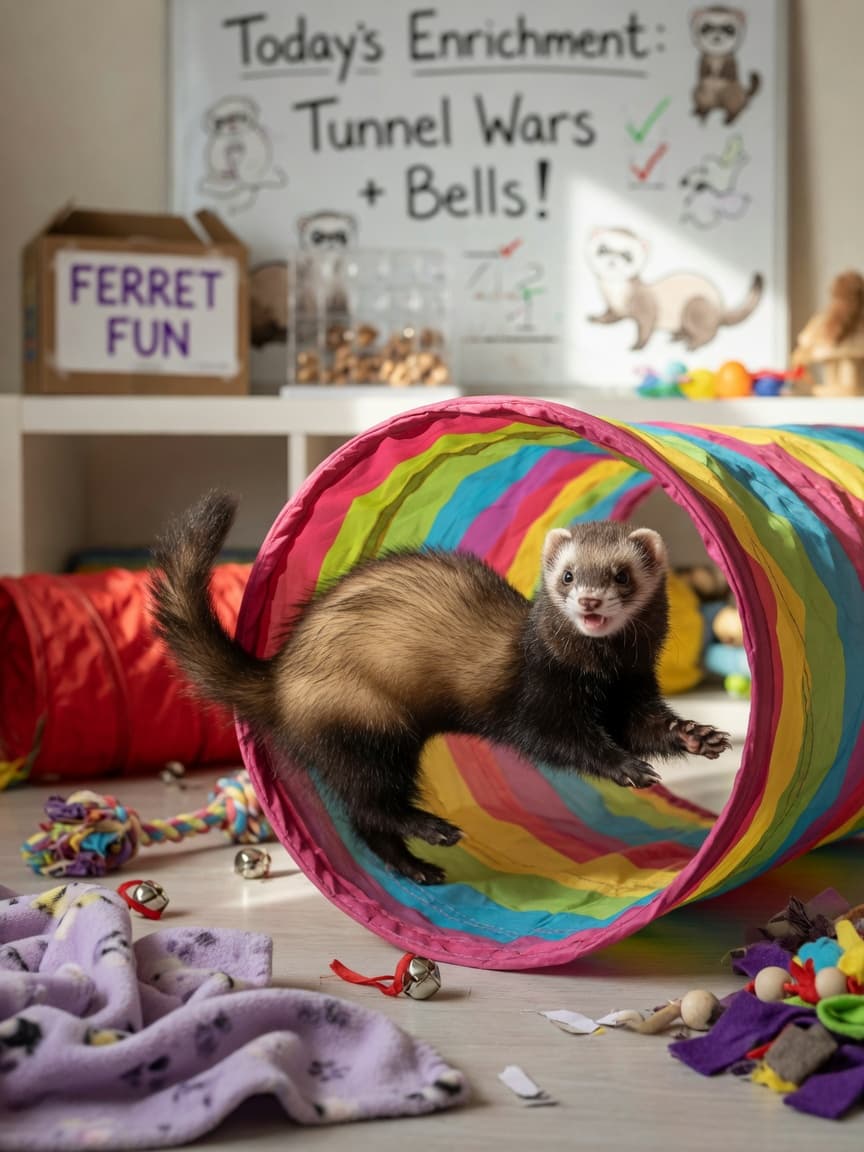
Ferrets are among the most playful and intelligent pets you can own, possessing boundless energy and insatiable curiosity. These delightful creatures spend up to eight hours daily engaged in active play, making it essential to understand what types of toys and activities truly capture their interest. Providing appropriate enrichment isn't just about keeping your ferret entertained—it's crucial for their physical health, mental stimulation, and emotional well-being. This guide explores the toys and activities that ferrets genuinely enjoy, helping you create an enriching environment that keeps your fuzzy friend happy and engaged.
Understanding Ferret Play Behaviour
Ferrets are naturally curious and predatory animals descended from European polecats. Their play behaviour mirrors hunting instincts, involving stalking, pouncing, and wrestling. They also enjoy social interaction and will often engage in what's called "weasel war dance"—a playful, bouncy behaviour where they leap and twist about. Understanding these natural behaviours helps you select toys that align with their instinctive needs.
Tunnel and Burrowing Toys
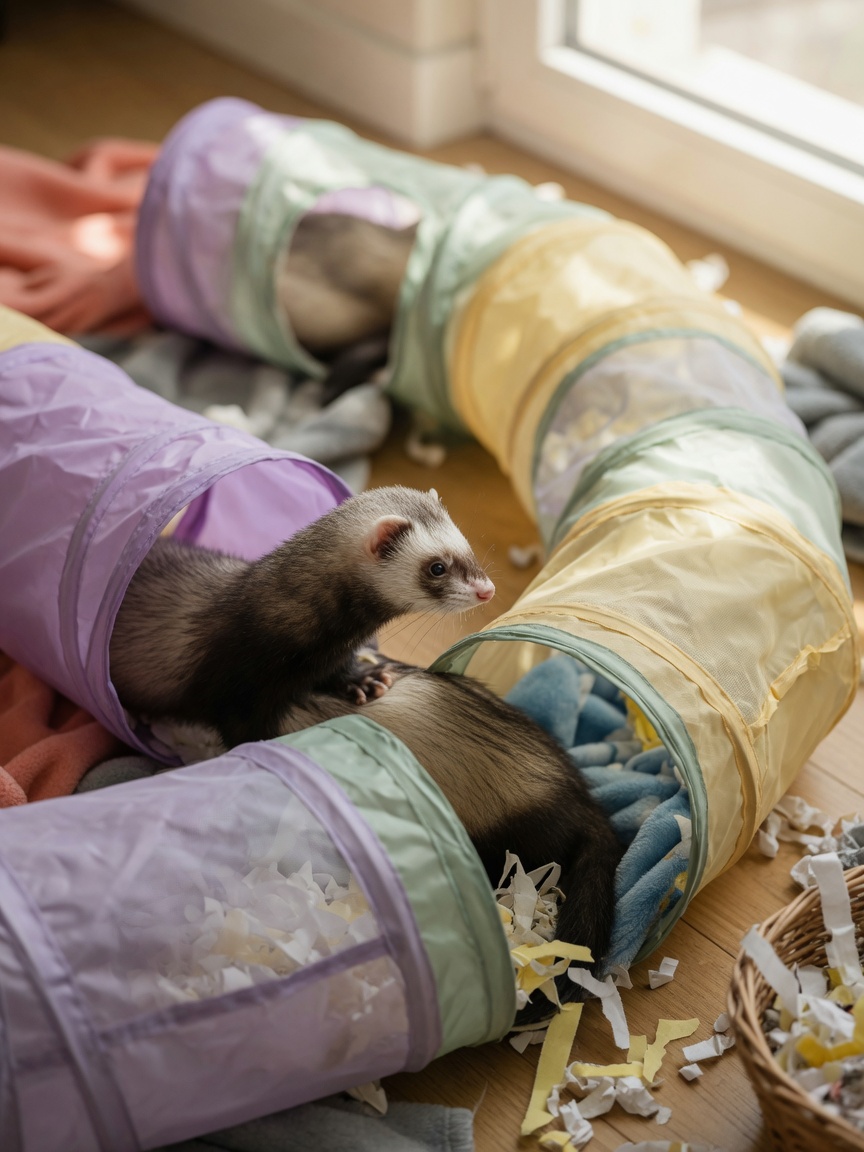
Ferrets have an innate desire to burrow and explore confined spaces. Tunnels represent some of their favourite enrichment items:
- Fabric play tunnels and tubes designed for pets
- Crinkle sacks and paper bags (supervised play)
- PVC pipe tunnels (smooth edges essential)
- Carpet-lined tubes that mimic natural burrowing
- Multi-chamber tunnel systems for extended exploration
These items provide both physical exercise and mental engagement as ferrets navigate, hide, and pounce within confined spaces.
Interactive and Hunting Toys

Ferrets thrive with toys that stimulate their predatory instincts. Consider offering:
- Feather wands: Wave these to trigger stalking and pouncing behaviour
- Small balls: They'll chase, carry, and hide rolling toys throughout your home
- Jingle bells: The sound and movement attract playful pouncing
- Stuffed toys: Ferrets enjoy carrying and "hunting" soft plush items
- Puzzle feeders: These combine play with mental stimulation during feeding time
Rotate toys regularly to maintain novelty and prevent boredom, which can lead to destructive behaviour.
Digging and Foraging Opportunities
Creating digging zones provides natural outlet for ferret instincts. Offer:
- Boxes filled with safe, shredded paper or blankets
- Sand boxes (using safe, non-clumping sand)
- Blankets and cushions they can burrow into and rearrange
- Shallow plastic containers filled with safe materials
Foraging activities, such as hiding small treats within toys or blankets, encourage natural hunting behaviours whilst providing mental enrichment.
Social Play and Exercise
Ferrets are highly social animals and enjoy interactive play with their owners and fellow ferrets. Daily interaction sessions of 1-2 hours are recommended. Activities include:
- Chasing games in ferret-proofed spaces
- Supervised play between bonded ferret pairs
- Hand wrestling with gentle control
- Chase games using toys on strings
Ensure all play areas are properly ferret-proofed, removing potential hazards and escape routes.
Safety Considerations
When selecting toys, prioritise safety. Avoid toys with small detachable parts, toxic materials, or sharp edges. Supervise play with string-based toys and regularly inspect all toys for damage. Ferrets should never have access to foam, rubber, or plastic items they might ingest, as these can cause serious intestinal blockages requiring veterinary intervention.
Key Takeaways
Ferrets thrive with varied, engaging toys that stimulate their natural hunting, burrowing, and exploratory instincts. A combination of tunnels, interactive toys, digging opportunities, and social play creates an enriching environment that promotes physical fitness and mental well-being. Rotate toys regularly, prioritise safety, and dedicate daily time to interactive play. By understanding what ferrets naturally enjoy, you'll create a happier, healthier companion who remains engaged and content throughout their 6-10 year lifespan.