
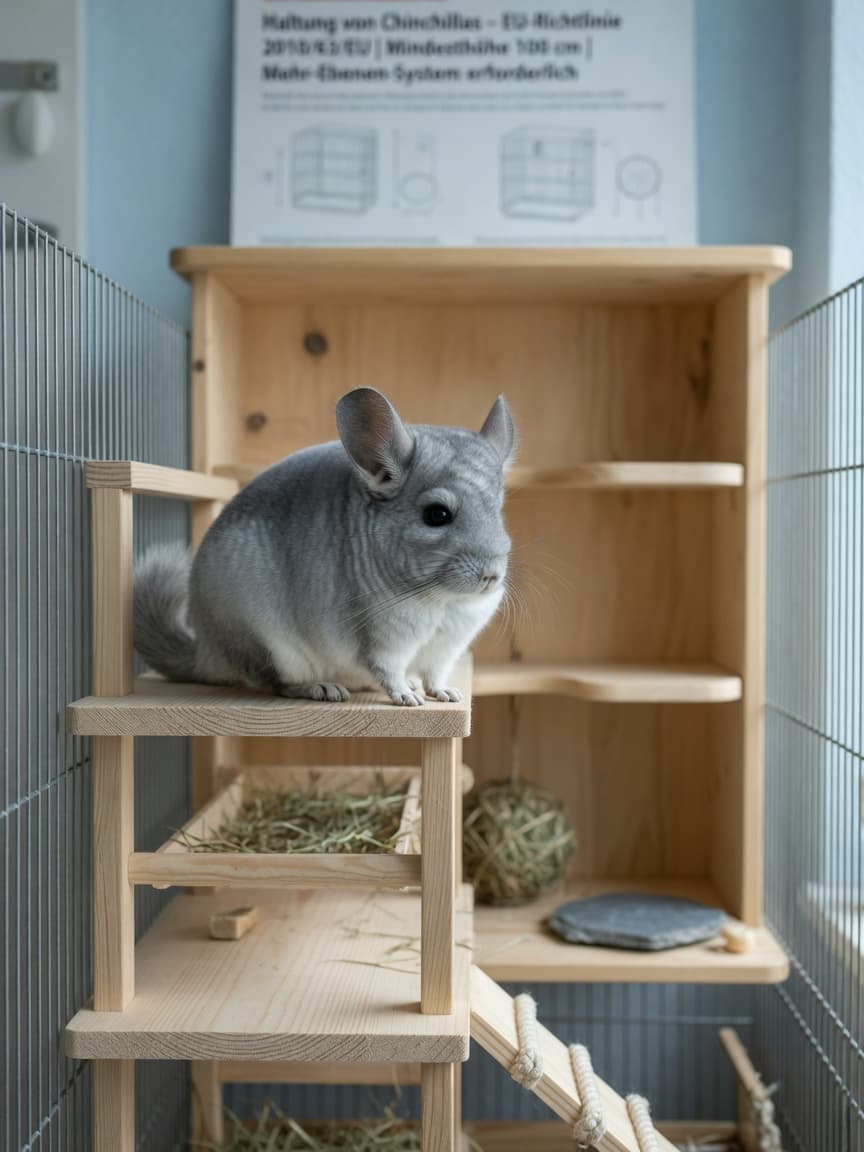
Chinchilla Care Guide for EU Keepers: Legal Status, Housing, Diet, and Behaviour
Chinchillas are among the most striking small mammals kept as pets in Europe, with their extraordinarily dense fur, curious personalities, and remarkably long lifespans of 10–15 years. They are also one of the few commonly kept small pets with a specific legal status under international wildlife law — a fact that every EU keeper should understand before acquiring one. This guide covers everything European chinchilla owners need to know, from CITES status to dust baths.
CITES Status: What EU Keepers Must Know
Both species of long-tailed chinchilla (Chinchilla lanigera) and short-tailed chinchilla (Chinchilla brevicaudata) are listed under the Convention on International Trade in Endangered Species of Wild Fauna and Flora (CITES). Wild chinchillas — whose natural populations were devastated by the fur trade in the 19th and 20th centuries — are protected under CITES Appendix I, which prohibits all commercial international trade in wild-caught individuals.
Captive-bred chinchillas from established breeding lines are considered separately. Animals bred in captivity and their descendants are typically treated under CITES Appendix II provisions, which permit trade with appropriate documentation demonstrating captive origin. In practical terms for EU pet keepers, this means:
- Purchasing from a reputable breeder who can provide documentation proving captive breeding is essential
- Chinchillas should not be imported from outside the EU without proper CITES permits
- Legitimate pet chinchillas in Europe are many generations removed from wild populations and are sold legally with appropriate records
- If you are ever offered a chinchilla without documentation or at an unusually low price from an informal source, ask questions before purchasing
In practice, the vast majority of chinchillas sold as pets in EU countries are well-established captive lines with no recent wild ancestry, and purchasing from a reputable breeder or specialist rescue is straightforward.
Housing Requirements
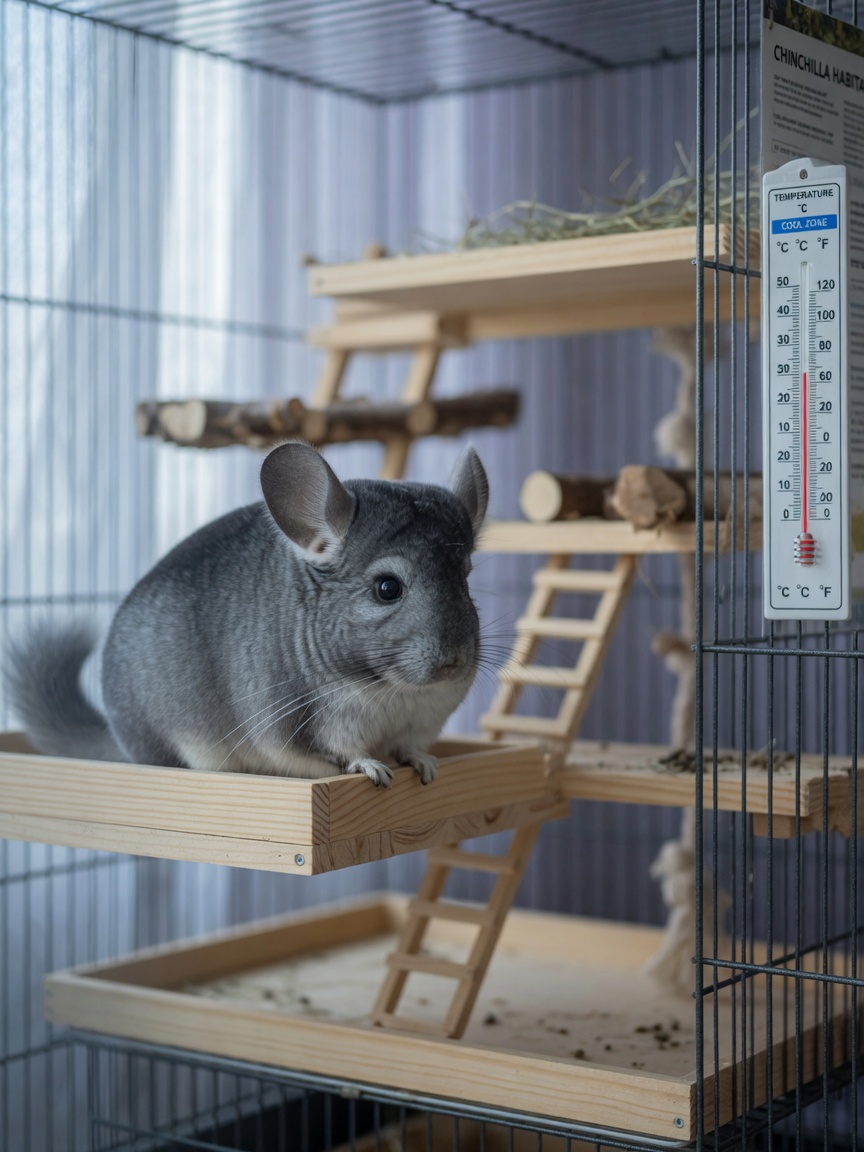
Chinchillas are active, agile animals that need substantially more space than most keepers initially expect. A multi-level cage is essential — chinchillas are semi-arboreal in the wild and will use vertical height extensively. The minimum recommended cage size for a pair of chinchillas is approximately 100 cm wide by 60 cm deep by 140 cm tall, with multiple platforms, shelves, and ledges at different heights. Wooden shelves are preferable to plastic, as chinchillas will chew plastic components, which can cause digestive blockages if ingested.
Temperature management is one of the most critical aspects of chinchilla care. Chinchillas originate from the cool, dry elevations of the Andes and are highly susceptible to heat stress. The ambient temperature in the room where they are housed must remain below 25°C at all times, and ideally between 15°C and 20°C. Temperatures above 26°C risk heatstroke, which can be fatal within hours. During European summer heat waves, air conditioning or ice packs placed outside the cage (not inside, where direct contact causes damp) may be necessary. Humidity must also be kept below 50%, as damp conditions promote respiratory infections and fungal skin conditions.
Dust Baths: Essential, Not Optional
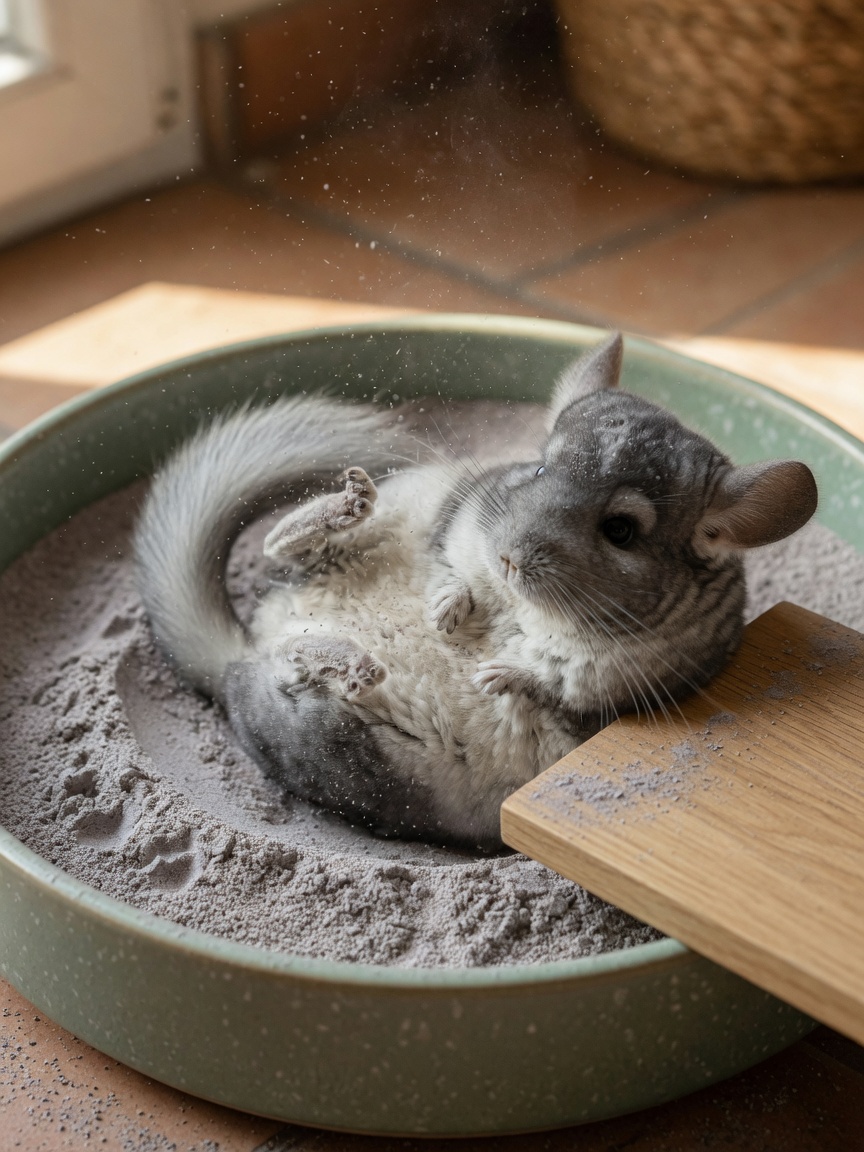
A chinchilla's coat is so extraordinarily dense — up to 60 hairs per follicle compared to a single hair in humans — that it cannot be dried effectively if it becomes wet. Instead, chinchillas clean and condition their fur using fine volcanic dust baths. Two to three dust bath sessions per week are recommended, each lasting 10–15 minutes. The dust must be specifically formulated chinchilla bathing sand — fine pumice or sepiolite — and not regular sand or play sand, which can damage the coat and eyes.
Zooplus stocks chinchilla bathing dust alongside appropriately sized dust bath containers, which makes sourcing these essentials convenient for European keepers.
Diet: Simplicity Is Key
Chinchilla nutrition is less complicated than many small mammal diets, provided you follow a few firm rules. The foundation is unlimited high-quality Timothy hay, which should make up the majority of their diet and is essential for proper dental wear — chinchillas have continuously growing teeth that require constant mechanical abrasion. Specialist chinchilla pellets should be provided in a measured portion of approximately one to two tablespoons per day per animal.
Foods to avoid include:
- Moist vegetables and fruit — the high water content disrupts gut balance and can cause fatal diarrhoea
- Sugary treats, bread, crackers, and human snack foods
- Nuts and seeds in large quantities — too high in fat
- Any mouldy or damp hay or bedding
A single raisin offered very occasionally is often cited as a suitable rare treat, but frequency should be kept to no more than once or twice per week at most, and treats should never form a regular part of the diet.
Social Behaviour and Companionship
Chinchillas are social animals that generally benefit from living in same-sex pairs or small groups. A lone chinchilla kept without companionship may show signs of stress and boredom. Introductions between chinchillas require care — place new animals in adjacent cages separated by mesh for two to four weeks before attempting direct contact. Introductions should always be supervised and should take place in a neutral space.
Chinchillas are nocturnal to crepuscular — most active at dawn, dusk, and through the night. This means that demanding interaction during the day may cause stress. The best time to handle and interact with chinchillas is in the early evening when they are naturally becoming active.
Understanding Chinchilla Body Language and Vocalisation
Chinchillas communicate through a range of sounds and postures. A sharp, high-pitched bark is an alarm call, typically triggered by a sudden noise or unfamiliar presence. A softer, chattering sound can indicate mild agitation or excitement. Ear position is informative — ears flattened back signal fear or irritation, while upright, forward-facing ears indicate alertness and curiosity. A raised tail and stiff posture often precede spraying — female chinchillas can spray urine as a defence mechanism when threatened.
Common Health Problems
Several health conditions are particularly common in chinchillas and European keepers should be aware of them:
- Dental malocclusion — overgrown or misaligned teeth, causing drooling, weight loss, and difficulty eating
- Heatstroke — a genuine emergency requiring immediate cooling and veterinary attention
- Gastrointestinal stasis — like rabbits, chinchillas can develop dangerous gut slowdowns, often linked to stress or dietary change
- Ringworm — a fungal skin infection causing patches of missing fur, more common in damp conditions or animals under stress
All of these conditions require veterinary assessment. Chinchillas are exotic animals in a clinical context and need a vet with specialist knowledge. The European College of Zoological Medicine (ECZM) accredits exotic mammal specialists, and finding an ECZM-accredited vet or a practice with an established exotic small mammal caseload is strongly recommended for all chinchilla owners.
Never house chinchillas with other species. Their dietary, environmental, and social needs are incompatible with those of rabbits, guinea pigs, and other small mammals.