
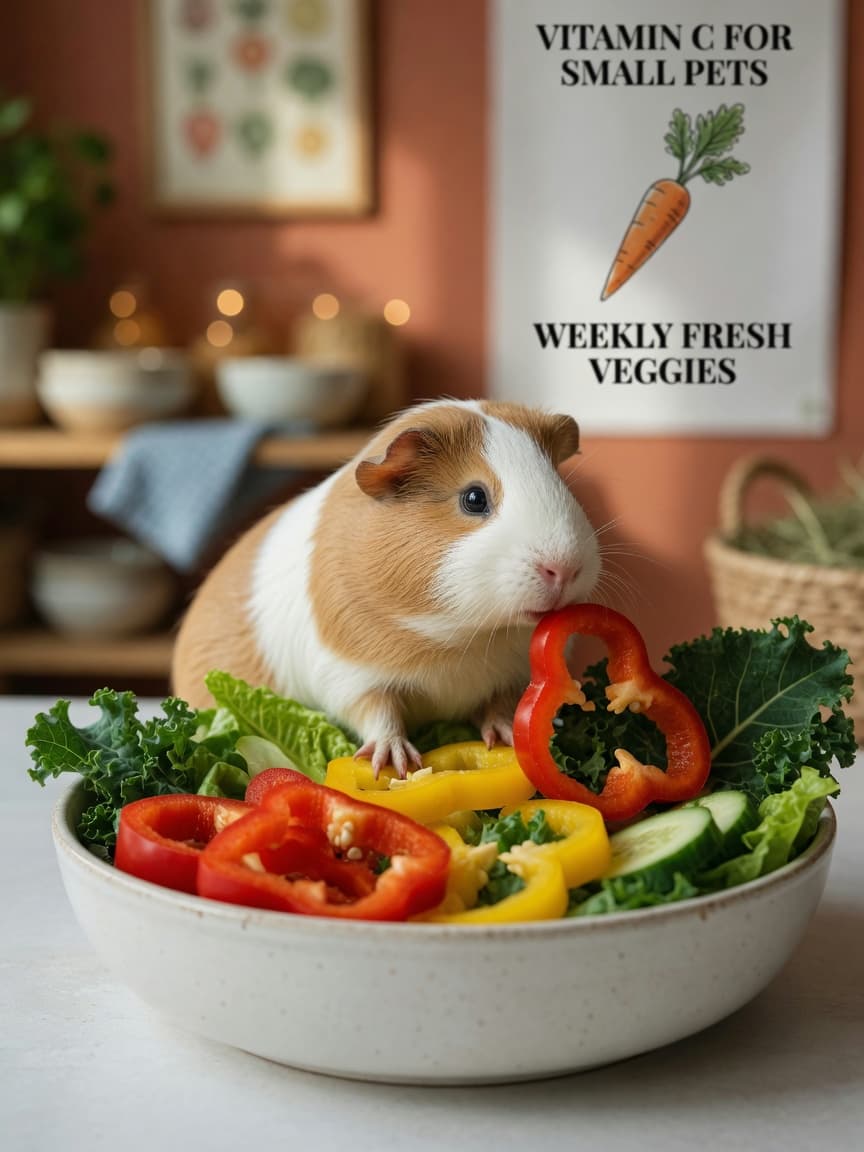
The One Nutrient Your Guinea Pig Cannot Make For Itself
Guinea pigs share something important with humans: they are among the very few mammals that cannot synthesise their own vitamin C. Every other molecule they need can be produced internally or absorbed from a basic diet — but ascorbic acid must come from food, every single day. When it does not, the consequences are serious, painful, and unfortunately common in pet guinea pigs whose owners are unaware of this fundamental need.
Scurvy in guinea pigs is not a historical curiosity. It is a real and preventable condition that continues to cause suffering in domestic cavies worldwide.
Why Vitamin C Is Non-Negotiable
Vitamin C (ascorbic acid) is essential for the synthesis of collagen, a structural protein found throughout the body. Without adequate collagen, blood vessels become fragile, wounds fail to heal, joints deteriorate, and immune function declines. In guinea pigs, deficiency develops relatively quickly — within two to three weeks on a diet lacking adequate vitamin C — because their bodies cannot store large reserves.
The daily requirement for a healthy adult guinea pig is approximately 10 to 30 milligrams of vitamin C per day, with higher amounts recommended during pregnancy, illness, or recovery. Sick guinea pigs may need up to 50 milligrams daily under veterinary supervision.
Recognising the Symptoms of Scurvy
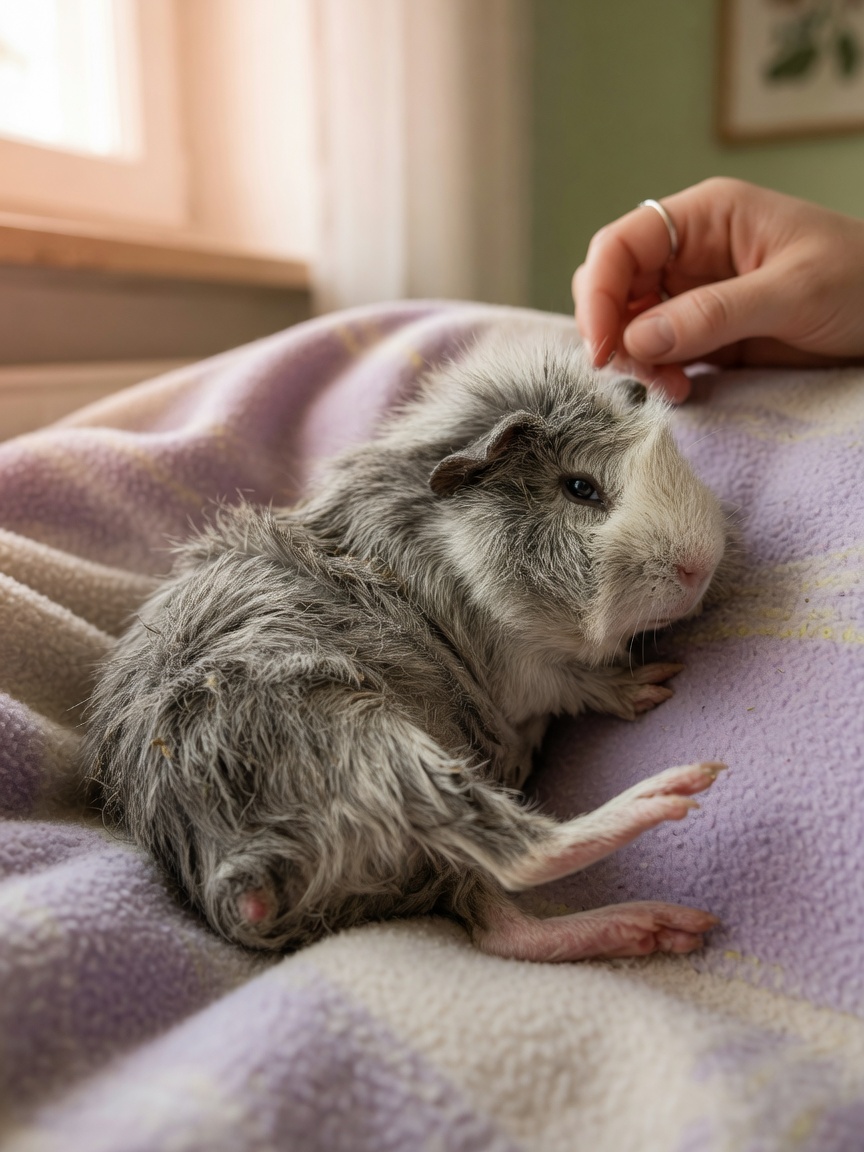
The signs of vitamin C deficiency in guinea pigs progress from subtle to severe. Early detection dramatically improves outcomes.
Early Signs
- Lethargy and reluctance to move
- Reduced appetite or weight loss
- Rough or unkempt coat
- Vocalising when handled, particularly around the limbs or body
Progressive Signs
- Swollen, painful joints — the guinea pig may move stiffly or drag its hind legs
- Bleeding gums, which may appear red, swollen, or ulcerated
- Small haemorrhages visible under the skin or in the gums
- Slow-healing wounds or spontaneous skin sores
- Loose teeth or difficulty eating hard foods
- Diarrhoea in advanced cases
A guinea pig displaying any of these signs should be seen by a vet promptly. Scurvy can be confused with other conditions — particularly musculoskeletal problems — and accurate diagnosis is important for appropriate treatment.
Causes: Where Owners Go Wrong
Relying on Pellets Alone
Many commercial guinea pig pellets are fortified with vitamin C, but this is one of the least stable vitamins in processed food. Vitamin C degrades rapidly when exposed to light, heat, and air. Pellets that have been stored for more than six weeks — or kept in warm, bright conditions — may contain very little active vitamin C by the time they reach your guinea pig's bowl. Relying entirely on pellets for vitamin C is an unreliable strategy.
Vitamin C in Water
Supplementing via water is equally problematic. Dissolved vitamin C oxidises within hours, particularly in metal water bottles. Unless the water is changed multiple times daily, the vitamin C is largely ineffective before the guinea pig drinks it.
Incorrect Diet Composition
A guinea pig fed primarily hay and pellets without a daily offering of fresh, vitamin C-rich vegetables is at significant risk. Many owners underestimate how central fresh greens are to this species' health.
Prevention: Getting the Diet Right
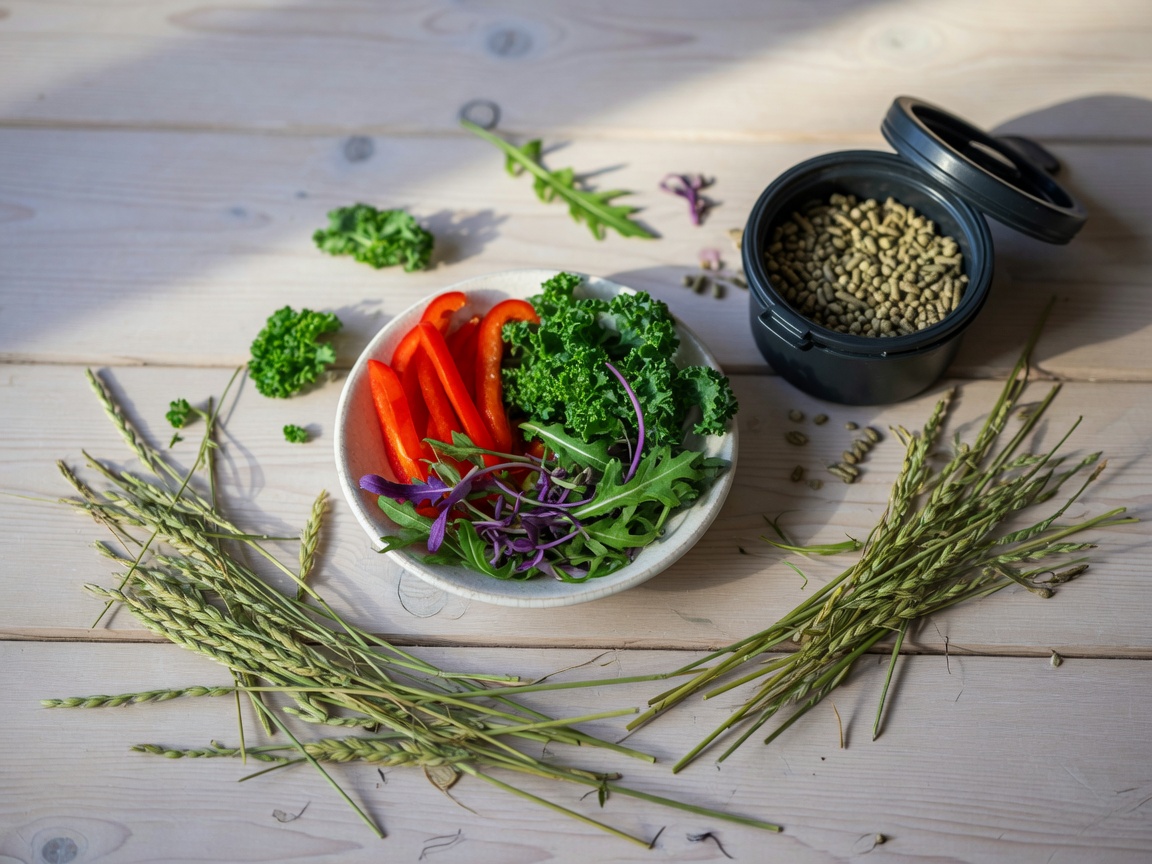
Preventing scurvy is straightforward once you understand the principles. Fresh vegetables are the most reliable source of bioavailable vitamin C for guinea pigs.
Best Dietary Sources of Vitamin C
- Bell peppers (particularly red and yellow) — among the highest sources, far exceeding most leafy greens
- Kale, spring greens, and cavolo nero
- Fresh parsley (offered in moderation due to calcium content)
- Broccoli florets and leaves
- Rocket and watercress
- Romaine lettuce and little gem lettuce
A small daily portion of red or yellow bell pepper alone can meet the majority of a guinea pig's vitamin C needs. Aim for a varied selection of two to three vegetables each day, rotating regularly to ensure a broad nutrient profile.
Foods to Approach With Caution
Some high-vitamin C foods are not suitable in large quantities. Citrus fruit, for example, contains vitamin C but also high sugar and acid content that can upset the digestive system. Spinach is high in oxalates and should be offered only occasionally. Always introduce new foods gradually.
Fresh Pellets and Hay
Buy pellets in small quantities and store them in a cool, dark, airtight container. Check the expiry date and do not use pellets past the best-before date, as vitamin C content will have significantly declined. High-quality grass hay — timothy or meadow hay — should form the dietary bulk, but it contains negligible vitamin C and should not be counted as a source.
Treatment and Veterinary Care
If scurvy is diagnosed, veterinary-guided vitamin C supplementation is the primary treatment. This is typically given via oral syringe using a pharmaceutical-grade ascorbic acid solution at a therapeutic dose. Most guinea pigs show improvement within one to two weeks when treatment begins early, though joint damage in advanced cases may be irreversible.
Pain management is an important component of treatment for guinea pigs with swollen joints. Your vet will advise on appropriate analgesics, as many human pain medications are toxic to guinea pigs.
A Simple Condition to Prevent
Scurvy in guinea pigs is entirely avoidable. The solution requires no supplements, no specialist knowledge, and very little expense — simply a daily offering of fresh, vitamin C-rich vegetables alongside good-quality hay and appropriately stored pellets.
- Offer fresh vegetables every day without exception
- Prioritise bell peppers and dark leafy greens as your vitamin C staples
- Do not rely on water-soluble supplements in the drinking bottle
- Store pellets correctly and replace them regularly
- Weigh your guinea pig weekly — early weight loss is a reliable indicator that something is wrong
- Consult a vet experienced with small animals if you notice any of the early signs described above
A well-nourished guinea pig with adequate daily vitamin C can live four to seven years and remain active and social throughout. That outcome begins with the right diet from day one.