
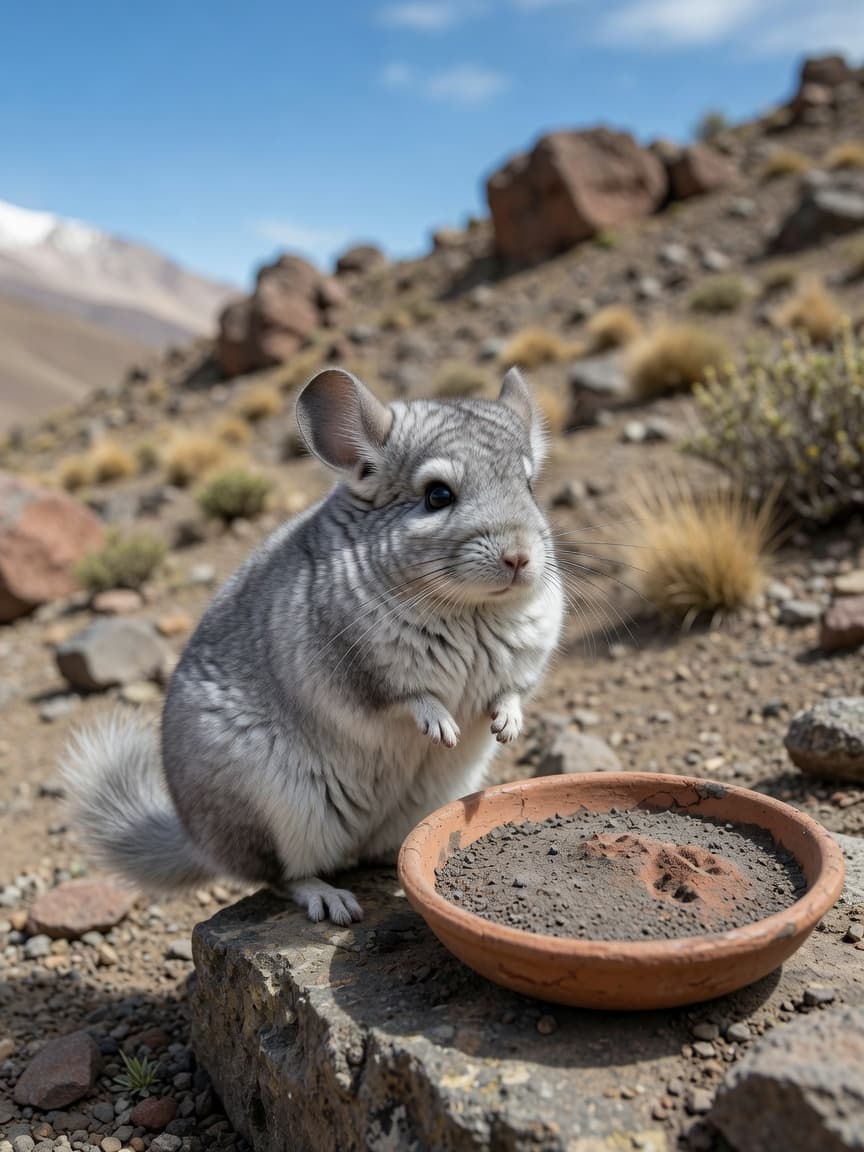
If you're a chinchilla owner, you've probably wondered about your pet's relationship with water. Unlike many other small mammals, chinchillas have a fascinating and rather unique approach to staying clean—and getting them wet can actually be harmful to their health. Understanding why water and chinchillas don't mix is essential for providing proper care and maintaining your pet's wellbeing.
Why Chinchillas Cannot Get Wet
Chinchillas evolved in the high-altitude Andes mountains of South America, where water is scarce and humidity levels are extremely low. Their fur has adapted remarkably to this environment—each hair follicle produces approximately 60 individual hairs, creating an incredibly dense coat. This thickness makes it nearly impossible for water to evaporate properly from their skin once they become wet.
When water penetrates a chinchilla's fur, it can remain trapped against their skin, creating the perfect environment for fungal infections, bacterial growth, and skin diseases. Additionally, if a wet chinchilla becomes cold, they can suffer from hypothermia, as their dense coat loses its insulating properties when saturated.
The Risks of Getting Your Chinchilla Wet
- Fungal infections: Moisture trapped in their fur encourages mould and fungus growth, leading to serious skin conditions
- Bacterial infections: Damp environments promote bacterial colonisation on the skin
- Hypothermia: Wet fur loses its thermal regulation ability, potentially causing dangerous temperature drops
- Stress: Getting wet causes significant stress to chinchillas, affecting their overall health and behaviour
- Difficulty drying: Their dense coat takes an extremely long time to dry completely
How Chinchillas Stay Clean
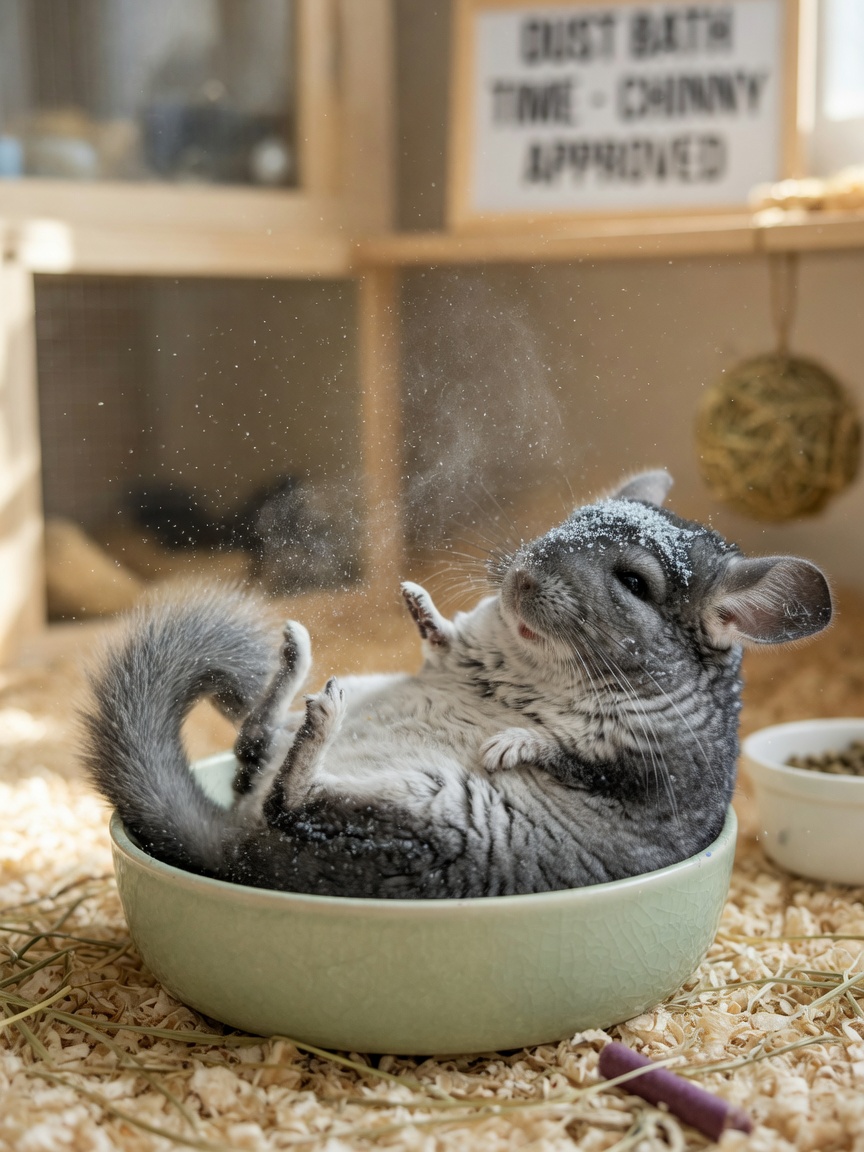
Nature has provided chinchillas with an elegant solution: dust baths. Rather than water, chinchillas clean themselves using fine volcanic dust or specially formulated chinchilla dust. This method removes oils, dirt, and debris from their fur without introducing moisture.
Chinchillas typically spend 15-30 minutes rolling around in dust, which absorbs excess oils and keeps their coat in pristine condition. You should provide your chinchilla with a dust bath 2-3 times per week. A shallow ceramic dish or specially designed dust bath container works perfectly—fill it with chinchilla dust and let your pet enjoy this natural grooming behaviour.
When Accidental Wetting Happens
If your chinchilla accidentally gets wet, take immediate action:
- Gently remove excess water using a soft, absorbent towel—avoid vigorous rubbing
- Place your chinchilla in a warm, dry environment (around 18-24°C)
- Consider using a hair dryer on the lowest, coolest setting, held at a safe distance
- Provide a dust bath once they're completely dry to help restore their coat condition
- Monitor for signs of illness over the following days
If your chinchilla shows signs of respiratory issues, lethargy, or skin problems after getting wet, contact your veterinarian immediately.
Maintaining Proper Humidity and Environment
Since chinchillas are moisture-sensitive, maintain your pet's habitat at 40-60% humidity. Avoid damp environments and ensure proper ventilation in their enclosure. Never bathe your chinchilla with water under any circumstances, as this represents a serious health risk.
Key Takeaways
Chinchillas cannot tolerate water due to their unique evolutionary adaptations. Their impossibly dense fur traps moisture, leading to infections and health complications. Instead of water baths, provide regular dust baths using proper chinchilla dust. Keep your pet's environment dry and well-ventilated, and if accidental wetting occurs, dry them thoroughly and monitor their health carefully. By respecting your chinchilla's natural needs, you'll ensure a healthy, happy pet for years to come.