

Ancient Animals, Modern Risks
Tortoises have survived on Earth for more than 200 million years, which might suggest they are difficult to kill. In captivity, however, they face threats their evolutionary history never prepared them for — a warm house disrupting natural hibernation cues, pathogens thriving in confined spaces, and shell injuries that go unnoticed until they become serious. The three issues below account for a disproportionate share of veterinary consultations in pet tortoises.
Hibernation: Getting It Right
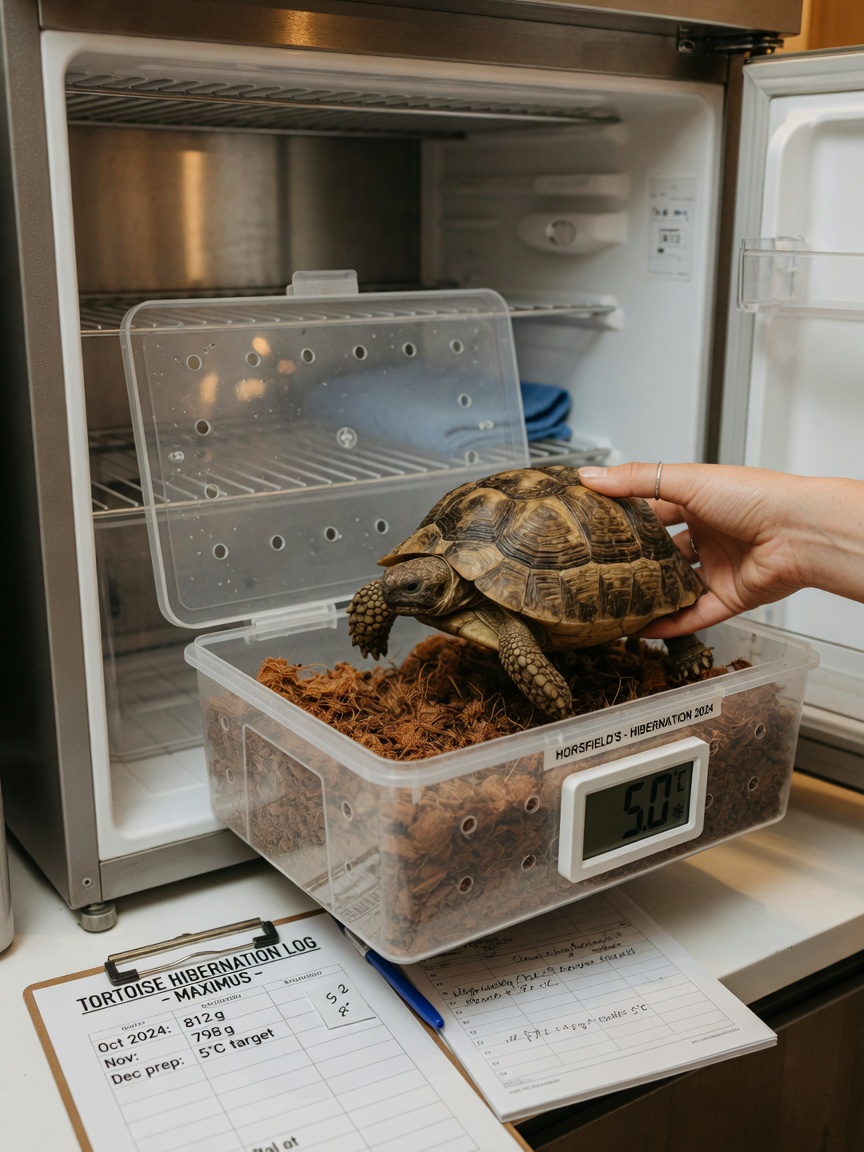
Many temperate tortoise species — Hermann's, Horsfield's, and spur-thighed tortoises among them — need to hibernate. Preventing hibernation in a species that requires it causes significant physiological stress over time. But hibernating a tortoise incorrectly carries its own serious risks, including death.
Preparation
- Tortoises should be healthy and well-nourished going into hibernation — underweight animals should not be hibernated
- Stop feeding approximately four to six weeks before hibernation to allow the gut to empty completely; undigested food ferments during hibernation and causes fatal infections
- Provide regular warm baths in the final weeks to encourage emptying
- Weigh your tortoise and plot it on a Jackson Ratio chart to assess whether it has adequate fat reserves
During hibernation
The refrigerator method — placing the tortoise in a ventilated box within a dedicated refrigerator held at 4–6°C — offers the most controlled conditions and is now widely recommended by reptile vets over the traditional outdoor box method. Check on the tortoise weekly, weigh it monthly, and offer water every few weeks when briefly brought to room temperature. If a tortoise loses more than 10% of its pre-hibernation weight, develops nasal discharge during hibernation, or shows signs of distress, bring it out early and consult a vet immediately.
Waking up
Post-hibernation, warm the tortoise gradually over several hours, offer a lukewarm bath, and provide food and strong UVB exposure. A tortoise that does not eat within two weeks of emerging, or that shows lethargy, swollen eyes, or nasal discharge, needs veterinary assessment — post-hibernation anorexia can spiral quickly.
Respiratory Infections
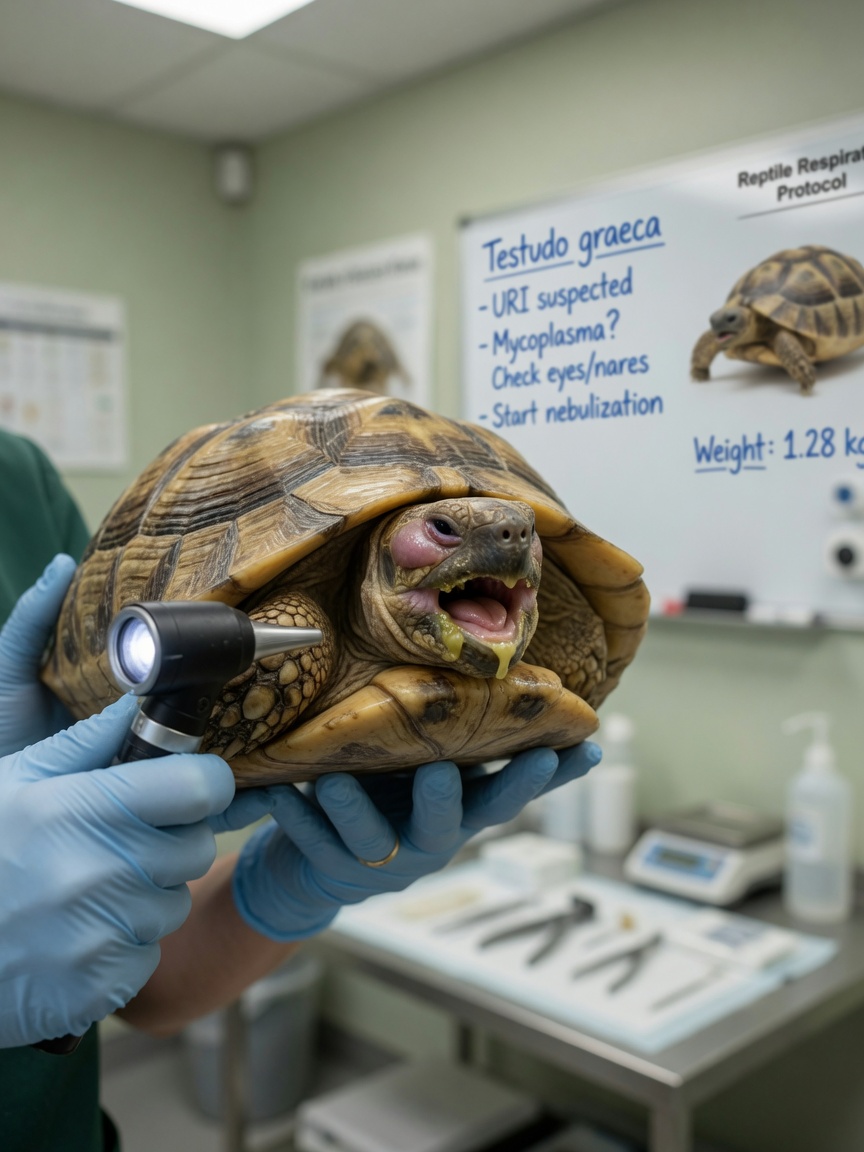
Respiratory infections are extremely common in tortoises, particularly shortly after hibernation, following a change in environment, or when kept in conditions that are too cold or too damp. Mycoplasma bacteria are a particularly significant pathogen in tortoises — capable of spreading between animals and persisting long-term even in apparently recovered individuals.
Signs of a respiratory infection
- Wheezing, rasping, or clicking sounds when breathing
- Nasal discharge — clear initially, becoming opaque or purulent
- Open-mouth breathing
- Lethargy and reduced appetite
- Swollen or closed eyes, which may accompany systemic infection
Respiratory infections in tortoises require veterinary diagnosis and treatment; do not wait to see if the tortoise improves. Your vet may recommend swabbing for culture, blood tests, or X-rays, and treatment typically involves antibiotics prescribed specifically for the pathogen identified. Because Mycoplasma can persist in recovered animals, any tortoise that has had a respiratory infection should be quarantined from others permanently unless a vet advises otherwise.
Shell Rot
Shell rot, or ulcerative shell disease, occurs when bacteria or fungi penetrate the keratin layers of the shell — usually following an injury, poor hygiene, or prolonged damp conditions. It can progress from a surface lesion to a deep systemic infection if left untreated.
What to look for
- Soft, pitted, or discoloured areas on the shell — yellowing, brown patches, or white chalky spots
- A foul smell from the shell
- Fluid or discharge beneath shell plates
- Shell plates that appear loose or are lifting away from the surface
Treatment approach
Mild surface lesions may respond to gentle cleaning with an antiseptic solution and keeping the tortoise dry and on clean substrate. However, anything more than superficial discolouration should be assessed by a vet. Deep shell rot requires debridement — removal of infected tissue — and may need weeks or months of treatment to resolve. Shell injuries also carry the risk of entry by fly larvae during outdoor time, so any wound should be monitored closely. Prevention involves keeping the enclosure clean and dry, inspecting the shell regularly, and ensuring outdoor enclosures cannot be accessed by rodents or other animals that might bite.
General Health Monitoring
Weigh your tortoise at least monthly and keep a written record. A consistent, gradual gain during the active season and no more than a 10% loss during hibernation are the targets. Eyes should be bright and open, limbs should retract fully into the shell when the animal is startled, and the shell should be smooth (within normal species variation) with no soft patches. Good husbandry — correct temperatures, appropriate UVB, varied diet with calcium supplementation, and clean water for bathing — prevents the majority of conditions described here.
Summary
- Only hibernate healthy, well-prepared tortoises; use the refrigerator method for consistent temperature control
- Any nasal discharge or laboured breathing warrants prompt veterinary attention
- Inspect the shell regularly for soft spots, discolouration, or smell
- Keep records of weight year-round — it is one of the most informative indicators of health
- Consult a vet experienced with reptiles for any condition beyond the most minor surface issue