
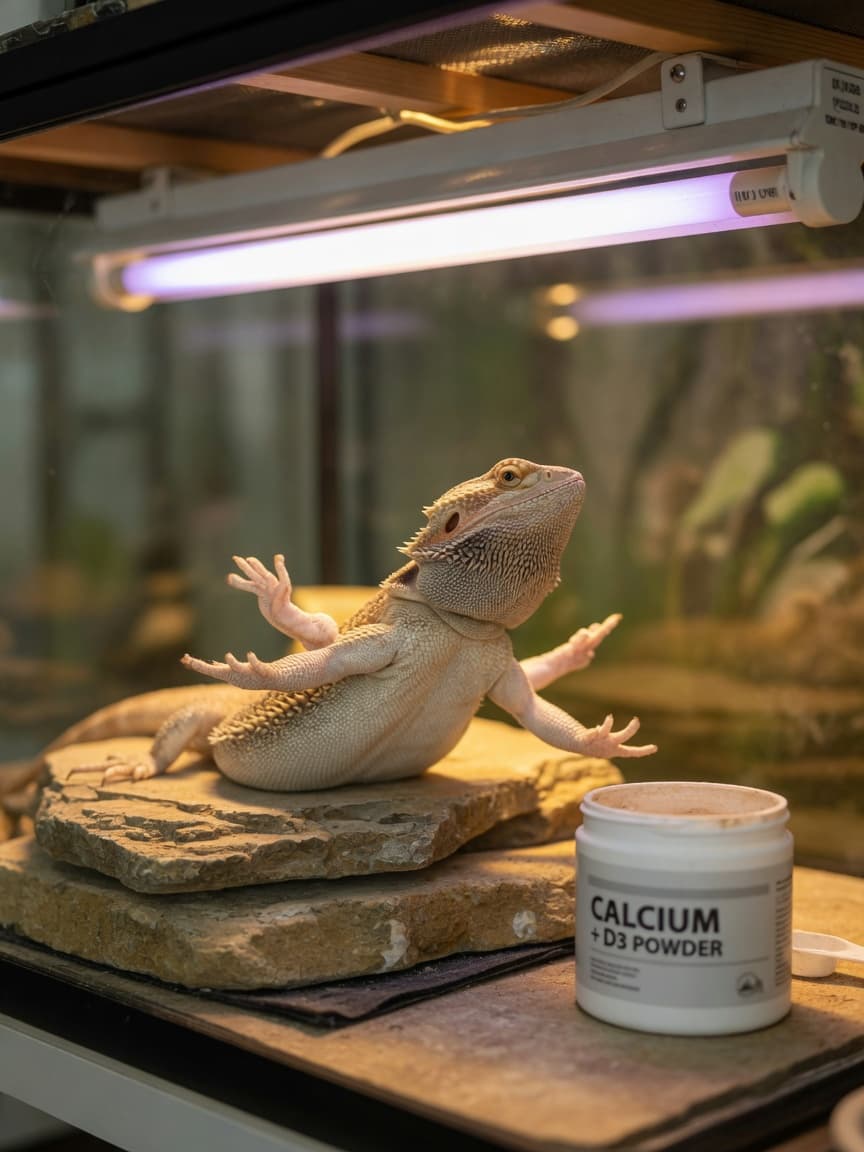
Keeping Bearded Dragons Healthy: The Basics Matter Most
Bearded dragons are one of the most popular reptile pets in the UK, and for good reason — they are sociable, handleable, and genuinely interesting to observe. But they are also animals with very specific environmental and nutritional requirements, and when those requirements are not met, serious health consequences follow. The most common and most preventable health crisis seen in captive bearded dragons is metabolic bone disease, almost always the result of inadequate UVB lighting and calcium supplementation.
Understanding UVB and Why It Matters
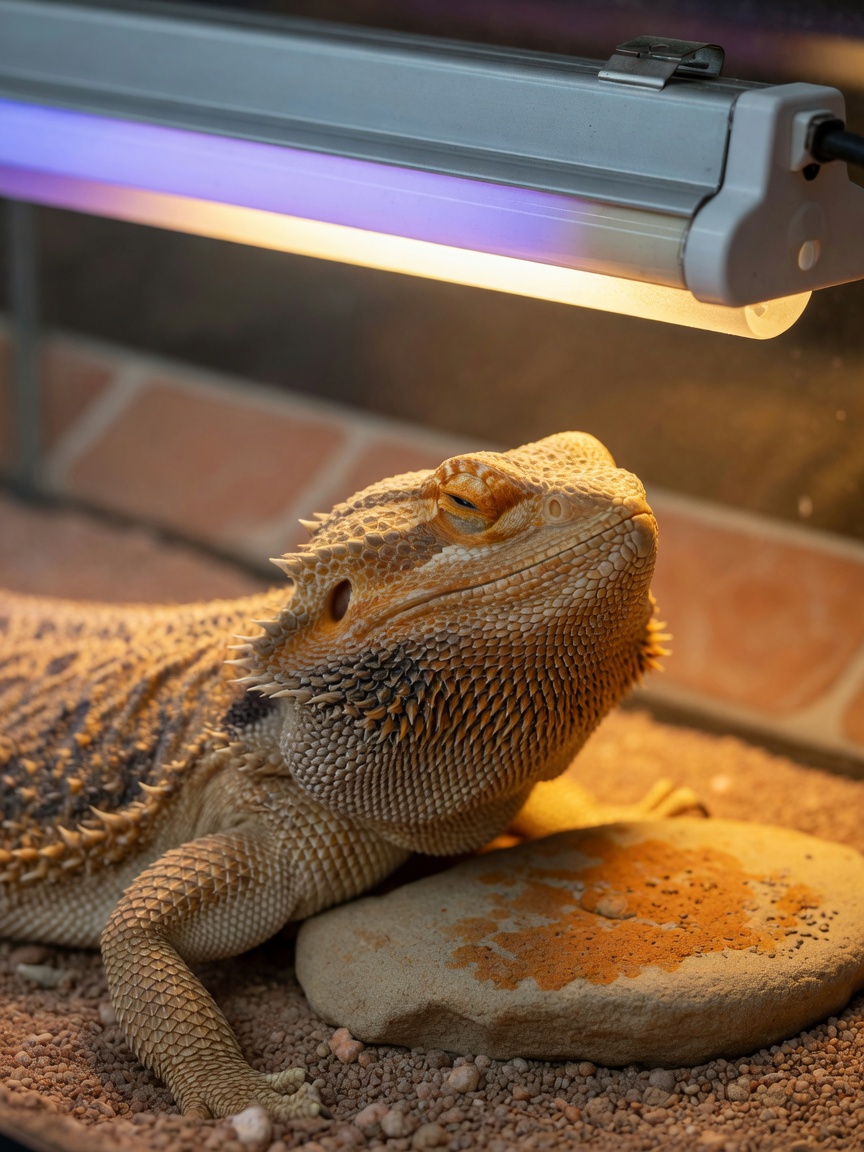
In their native Australian habitat, bearded dragons bask in intense sunlight for hours each day. That sunlight provides the UVB radiation their bodies need to synthesise vitamin D3, which is in turn essential for the absorption of calcium from the gut. Without adequate UVB, even a diet rich in calcium becomes largely useless, because the calcium cannot be absorbed and utilised effectively.
Captive bearded dragons depend entirely on UVB lighting to meet this need. Standard household lighting, LED bulbs, and visible-spectrum reptile lights do not provide UVB radiation. Specialist UVB fluorescent tubes or mercury vapour bulbs are required, and they must be positioned correctly — typically no more than 30 to 40 centimetres from the basking area, depending on the bulb's output rating. UVB bulbs also need replacing every six to twelve months even if they are still visibly producing light, as the UVB component degrades before the visible light fails.
Calcium Supplementation
Alongside UVB, dietary calcium is critical. Most of the insects used as feeder prey — crickets, locusts, mealworms, waxworms — have a poor calcium-to-phosphorus ratio. Phosphorus competes with calcium for absorption, and an excess of phosphorus in the diet actively draws calcium from the bones. This creates a negative calcium balance even when the dragon appears to be eating well.
- Dust feeder insects with pure calcium carbonate supplement at most feeds
- Use a combined calcium and vitamin D3 supplement two to three times per week if UVB provision is uncertain
- Gutload insects 24 to 48 hours before feeding with nutritious vegetables to improve their nutritional profile
- Offer a wide variety of calcium-rich leafy greens such as collard greens, kale, and dandelion leaves alongside insects
Metabolic Bone Disease: Recognising the Signs
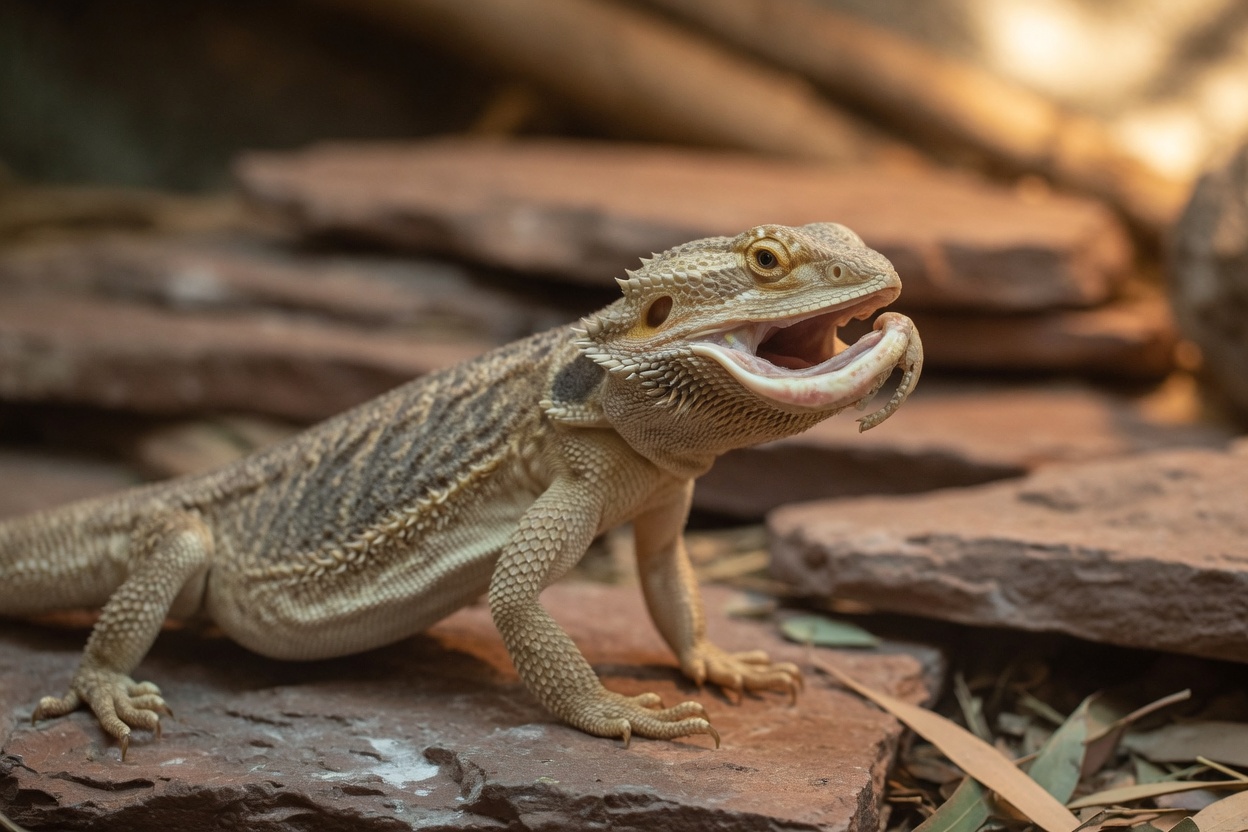
Metabolic bone disease (MBD) is not a single condition but rather a spectrum of skeletal and metabolic problems that result from chronic calcium or vitamin D3 deficiency. It is one of the most commonly seen conditions in captive bearded dragons, and it is almost entirely preventable with correct husbandry.
In the early stages, signs can be subtle. You might notice a slight tremor in the limbs, a reluctance to climb, or limbs that appear to splay outward rather than supporting the body correctly. As the condition progresses, the bones soften and deform. The jaw may become pliable — owners sometimes describe it as feeling like rubber — and fractures can occur from minimal trauma. Spinal deformity and paralysis of the hind limbs represent advanced stages of the disease.
Young, rapidly growing bearded dragons are at greatest risk because their calcium demands are highest. A dragon that is lethargic, not basking normally, or showing any of the above physical signs needs veterinary evaluation immediately. Blood calcium levels, X-rays, and an assessment of husbandry are all part of diagnosis.
Treatment and Recovery
Early-stage MBD can often be addressed through immediate correction of husbandry — introducing appropriate UVB lighting, supplementing calcium, and ensuring the enclosure temperatures support proper digestion and metabolism. In more severe cases, a vet may administer injectable calcium and vitamin D3 to stabilise the animal more quickly.
Recovery from MBD is possible, but it takes time, and some skeletal deformities may be permanent. The goal in treatment is to halt further damage, allow the bones to remineralise as much as possible, and prevent recurrence through sustained correct care.
Other Common Health Problems in Bearded Dragons
Impaction
Impaction occurs when a bearded dragon ingests material that blocks the digestive tract. Loose substrates — particularly fine sand, walnut shell, and similar particulate materials — are frequently implicated, as are large feeder insects or pieces of vegetable too large to pass through. Signs include a bloated abdomen, straining to defecate, lethargy, and loss of appetite. Impaction is a veterinary emergency.
Parasites
Internal parasites, including pinworms and coccidia, are common in bearded dragons, particularly those that were wild-caught or sourced from crowded breeding operations. A low parasite burden may cause no obvious symptoms, but heavy infections lead to weight loss, diarrhoea, and lethargy. Faecal testing by a vet is the only way to diagnose internal parasites, and annual testing is a reasonable part of routine care.
Respiratory Infections
Bearded dragons kept in enclosures that are too cold or too humid are at risk of respiratory infections. Signs include wheezing, mucus around the nostrils or mouth, breathing with the mouth open, and reduced activity. Correct thermal gradients — a basking spot of around 40 to 42 degrees Celsius with a cooler end of around 26 to 28 degrees — are fundamental to immune function and overall health.
Enclosure Requirements as Preventive Medicine
The single most effective thing a bearded dragon owner can do for their animal's health is to maintain a correctly set-up enclosure. Temperature, UVB, humidity, substrate, and diet all interact to support or undermine the immune system and metabolic function.
- Use a quality UVB tube rated for desert species and replace it on schedule
- Verify temperatures with a digital thermometer or temperature gun, not by feel
- Avoid loose particulate substrates, particularly in juvenile dragons
- Schedule annual veterinary health checks with a vet experienced in reptiles
Bearded dragons can live ten to fifteen years in captivity with appropriate care. Most of the conditions that shorten their lives are preventable with the right information and consistent attention to their environment and diet.