
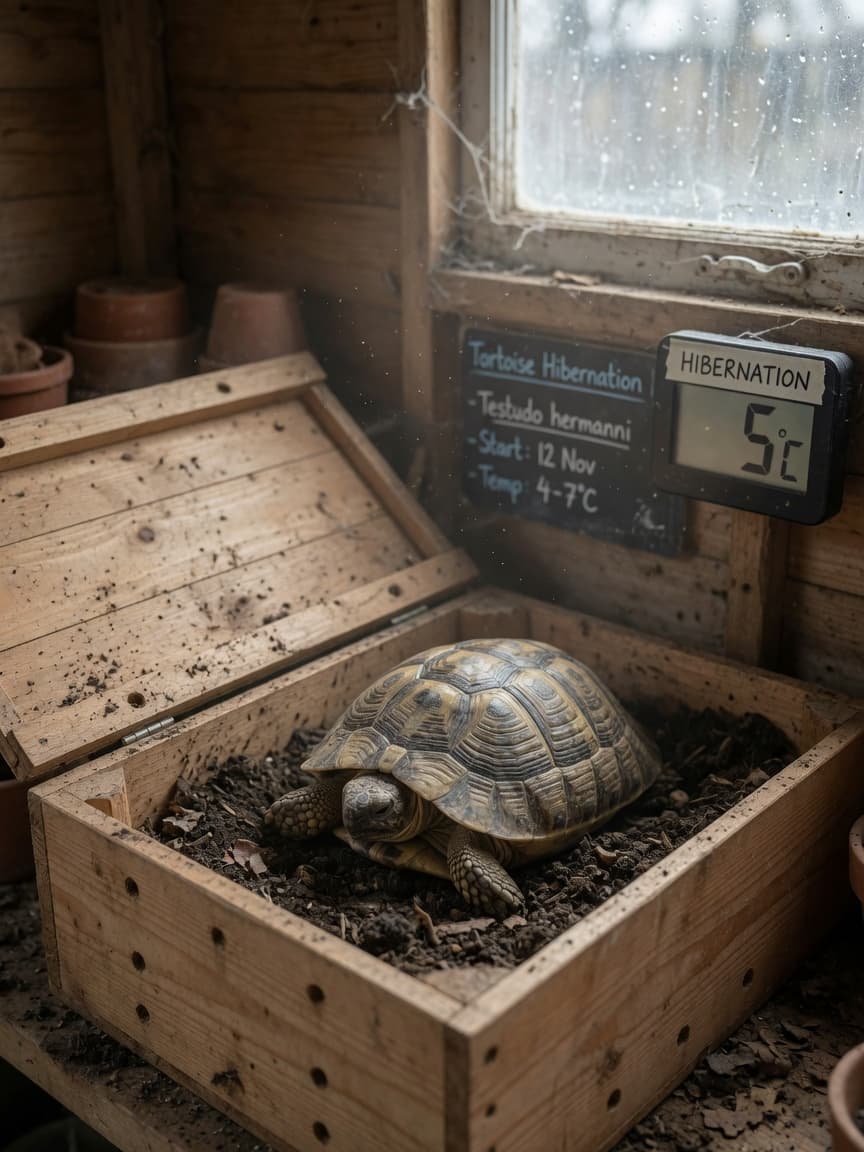
Understanding Tortoise Hibernation
Hibernation — or more accurately, brumation — is a natural and necessary process for many tortoise species kept as pets in the UK and Europe. For species such as the Hermann's tortoise, the horsfield, and the spur-thighed tortoise, skipping hibernation altogether can shorten their lifespan considerably. Yet it is also one of the most dangerous periods in a captive tortoise's year. Knowing when to step back and let nature run its course, and when to act swiftly, can be the difference between a tortoise that wakes in spring and one that never does.
Which Tortoises Should Hibernate?
Not all tortoise species hibernate. Tropical species such as the red-footed and the sulcata tortoise do not brumate and should never be allowed to do so. Attempting to hibernate a tropical species can be fatal. Before doing anything else, confirm your tortoise's species with certainty. If you are unsure, a reptile-specialist vet is your best starting point.
The species most commonly kept in the UK that do require hibernation include:
- Hermann's tortoise (Testudo hermanni)
- Horsfield's tortoise (Agrionemys horsfieldii)
- Spur-thighed tortoise (Testudo graeca)
- Marginated tortoise (Testudo marginata)
Pre-Hibernation Health Checks
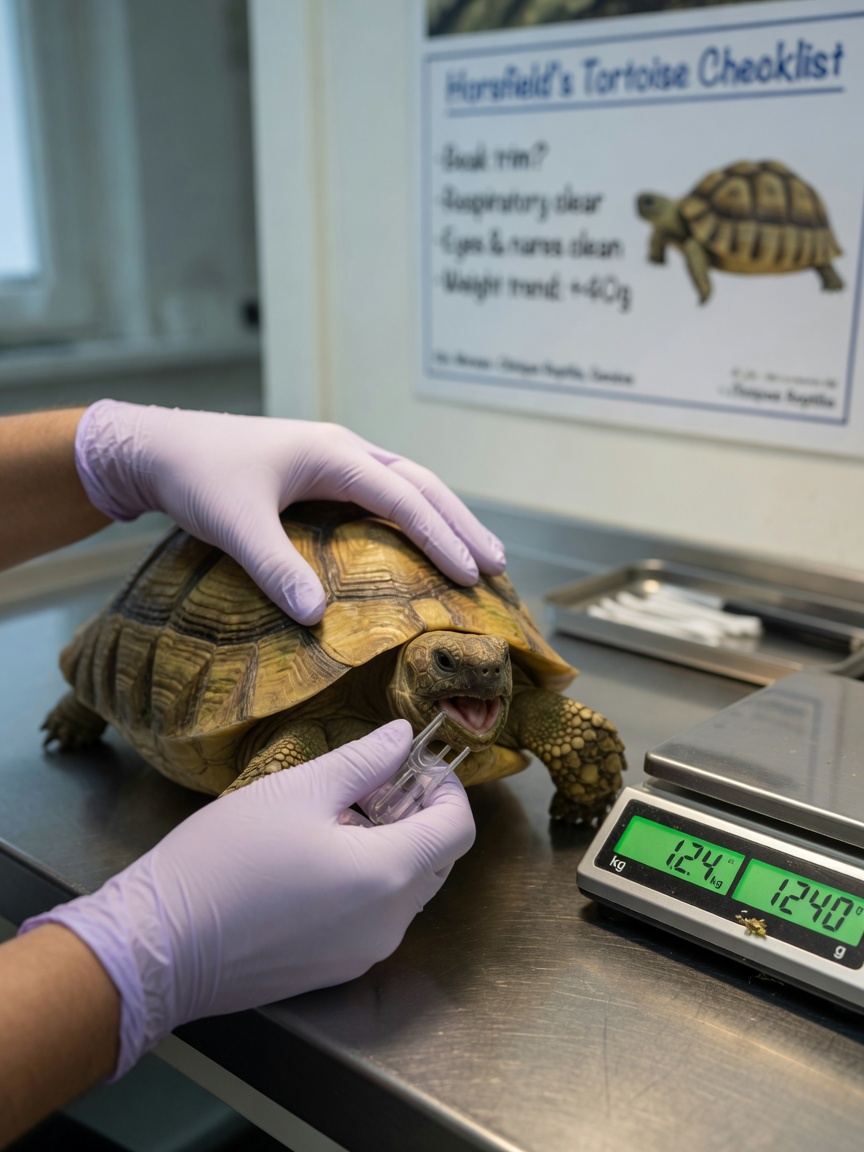
The single most important thing you can do before allowing a tortoise to hibernate is ensure it is healthy enough to survive the process. A tortoise that enters hibernation underweight, ill, or with a parasitic burden may not wake up. Vets who specialise in exotic animals typically recommend a pre-hibernation health check in September or early October, before the animal begins winding down.
The Jackson Ratio is a widely used tool that compares a tortoise's weight to its straight carapace length. It gives a rough indication of whether the animal has sufficient fat reserves. However, it is not species-specific and should be used as a guide rather than a definitive rule. A vet assessment remains the gold standard.
Key pre-hibernation checks include:
- Faecal examination for internal parasites
- Weight and body condition scoring
- Checking the eyes, nose, and mouth for signs of respiratory infection
- Ensuring the tortoise has stopped eating and its gut is empty before cooling begins
The Winding Down Period
As temperatures drop in autumn, a tortoise will naturally reduce its food intake and activity level. This is normal. Most keepers stop offering food in late September to allow the digestive system to empty — undigested food fermenting in the gut during hibernation is a common cause of death. The tortoise should have access to water for bathing during this period to ensure it is well hydrated before cooling begins.
Hibernation should begin once daytime temperatures consistently fall below around 10°C. The tortoise can be placed in a hibernation box — a well-ventilated wooden or polystyrene box filled with topsoil or a soil and sand mixture — and stored in a location where the temperature remains between 3°C and 7°C throughout. A garden shed or garage that does not freeze is often suitable, though a dedicated fridge set to the correct temperature offers more consistent conditions.
When to Leave Well Alone
A hibernating tortoise that is stored at the correct temperature and was healthy going in requires minimal interference. Checking on it every two to three weeks to confirm it has not moved significantly and to weigh it is generally sufficient. Weight loss of up to 1% of body weight per month is considered acceptable. Do not be alarmed by a torpid, still animal — this is exactly what you want to see.
Resist the urge to wake the tortoise early simply because you are worried. Repeated disturbances raise the metabolic rate, increase energy expenditure, and can cause the animal to wake before spring temperatures are warm enough to support normal activity. Unless there is a clear sign of a problem, trust the process.
Warning Signs That Demand Action
There are specific circumstances in which you must intervene immediately:
- The tortoise is moving around in the hibernation box, which suggests the temperature is too warm and the animal is not truly torpid
- Significant weight loss exceeding 10% of the starting body weight
- Any discharge from the eyes or nose, which indicates infection
- The storage temperature drops below 3°C — there is a genuine risk of freezing, which is fatal
- The tortoise has been in hibernation for longer than the recommended period for its size (smaller tortoises should not hibernate for more than 10 weeks; larger adults can manage 16 weeks)
If any of these apply, bring the tortoise out of hibernation by warming it gradually over 24 to 48 hours, offer water, and contact a reptile vet as soon as possible.
Waking Up in Spring
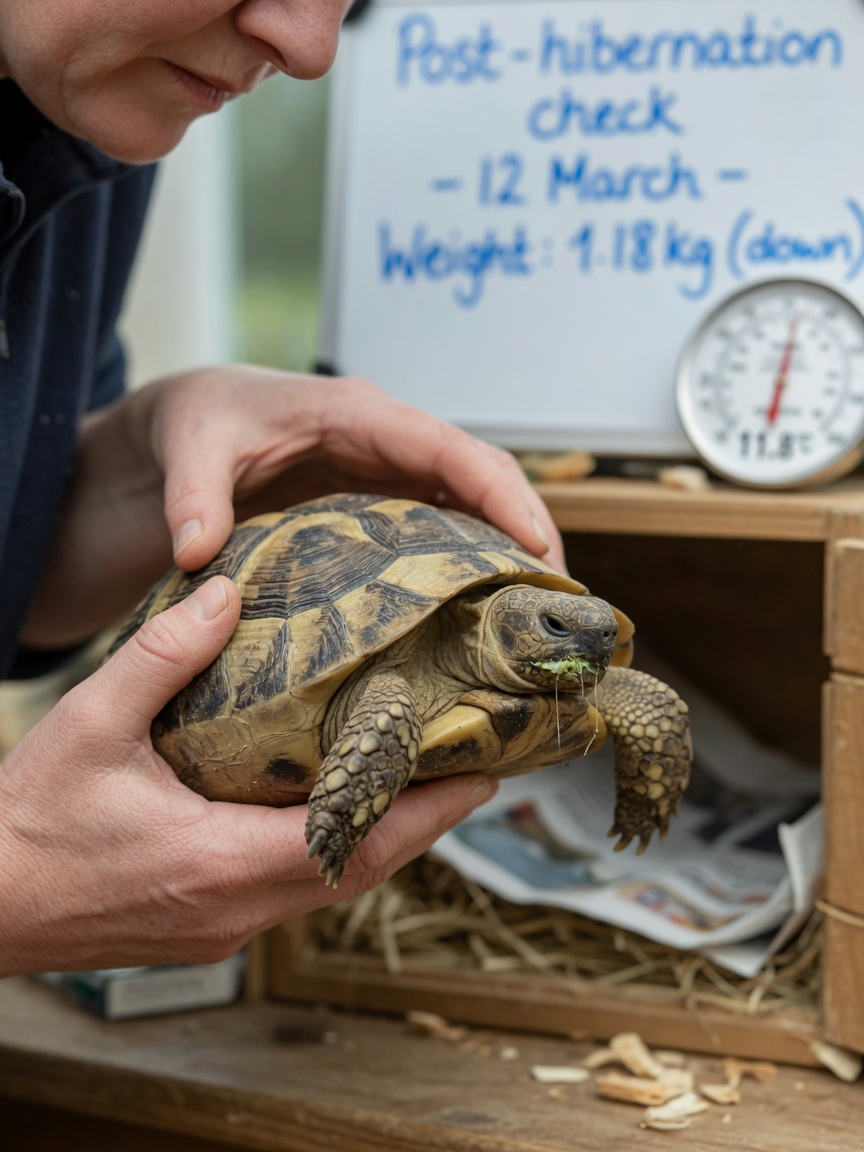
When spring arrives and ambient temperatures begin to climb, a healthy tortoise will start to stir naturally. Assist the process by moving the hibernation box to a warmer room. Once the tortoise is alert, offer a lukewarm bath — this encourages drinking and helps flush the kidneys, which is important after months of dormancy. Food can be offered once the tortoise is fully active and temperatures support normal digestion, typically once daytime highs are reliably above 15°C.
A tortoise that does not wake on its own by late March, or one that wakes but refuses food, appears lethargic, or has closed eyes, should be seen by a vet without delay. Post-hibernation anorexia lasting more than a few weeks is a red flag that warrants investigation.
A Final Word on Record Keeping
Keeping a simple hibernation log — recording the start date, weight, monthly weights, storage temperature, and wake date — is one of the most useful habits a tortoise keeper can develop. It gives you a baseline for future years and helps a vet identify problems quickly if something goes wrong. Tortoise keeping is a long-term commitment; some of these animals will outlive their owners. Taking hibernation seriously is one of the most important ways to honour that responsibility.