
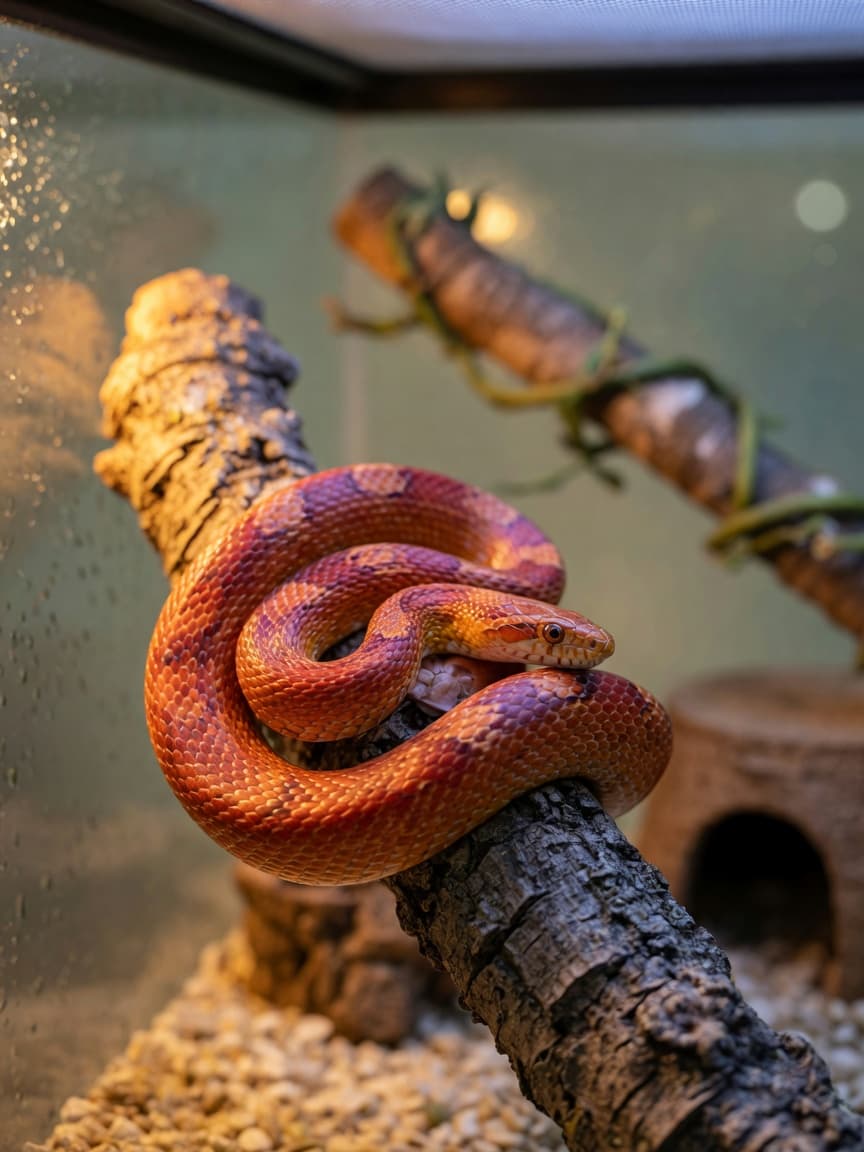
Corn Snake Care: The Complete UK Keeper's Guide
The corn snake (Pantherophis guttatus) is consistently recommended as the best first snake for new reptile keepers, and the reputation is well earned. Corn snakes are non-venomous, non-aggressive and reach a manageable adult length of approximately one metre. They tolerate careful handling well and adapt readily to captive life. With proper husbandry, a corn snake will thrive for 15 to 20 years.
Enclosure Size and Setup
A juvenile corn snake can be kept in a smaller enclosure initially — a 60x30x30cm vivarium is suitable for snakes up to around 60cm. Adults require a minimum of 90x45x45cm, though larger is always better. Corn snakes are semi-arboreal and will make use of height if branches and climbing opportunities are provided.
The enclosure should include:
- At least two hides — one on the warm side and one on the cool side
- A fresh water bowl large enough for the snake to soak in if desired
- Climbing branches or cork bark for enrichment
- Secure lid — corn snakes are accomplished escape artists and will exploit any gap
Safe substrate options include aspen bedding, orchid bark and beech chippings. Avoid cedar and pine, which release aromatic oils toxic to reptiles. Avoid anything damp as a permanent substrate — corn snakes are susceptible to scale rot in wet conditions.
Temperature Gradient: Getting the Thermal Setup Right
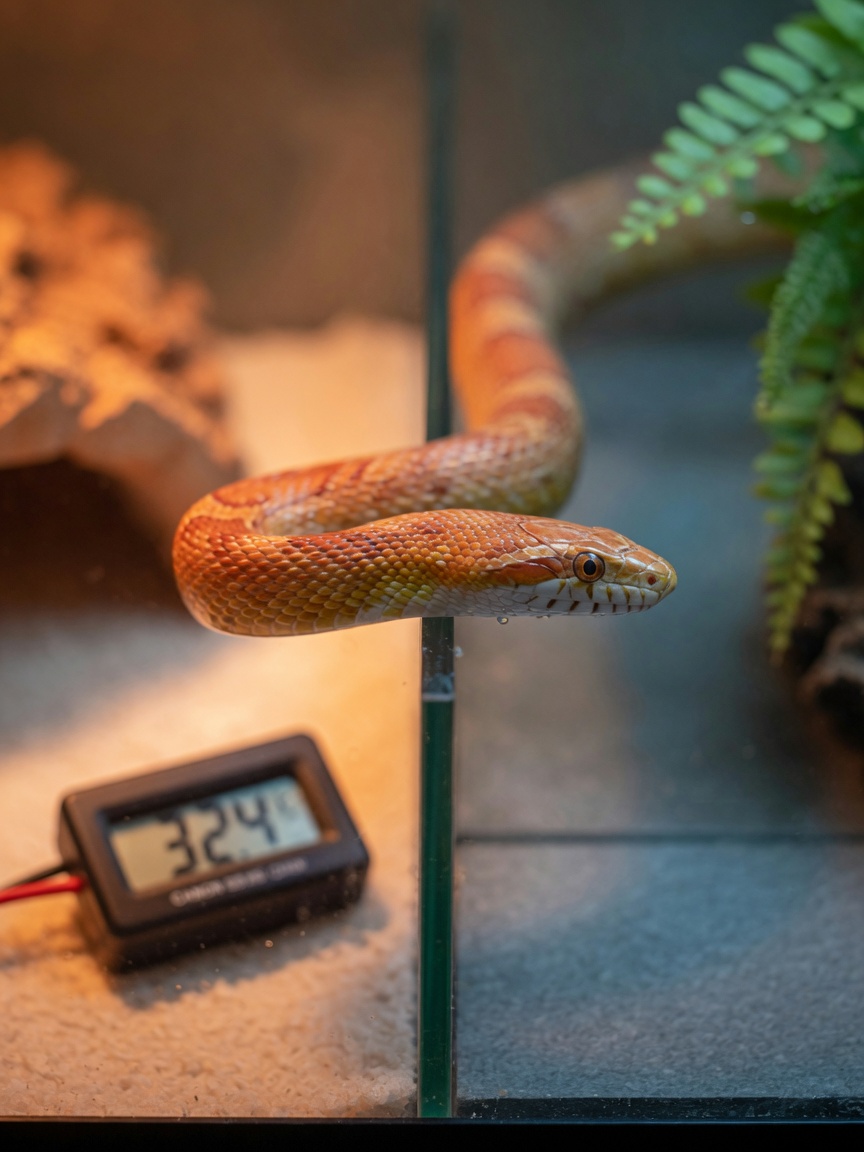
Like all reptiles, corn snakes are ectotherms and rely entirely on environmental temperature to regulate their body temperature. A correct thermal gradient is essential for digestion, immune function and general health.
Your enclosure should maintain:
- Warm end: approximately 28–30°C
- Cool end: approximately 20–22°C
- Night-time drop: can fall to 18°C without harm
Heat can be provided via a heat mat connected to a thermostat, positioned under one third of the enclosure floor. A thermostat is essential — uncontrolled heat mats can reach dangerous temperatures and cause serious burns. Measure temperatures with a digital probe thermometer; dial thermometers are unreliable and should not be used alone.
Ceramic heat emitters or low-wattage heat bulbs with a thermostat can be used as an alternative if you prefer overhead heating, though heat mats are the most common and practical solution for corn snakes.
Feeding: Always Use Frozen-Thawed Prey
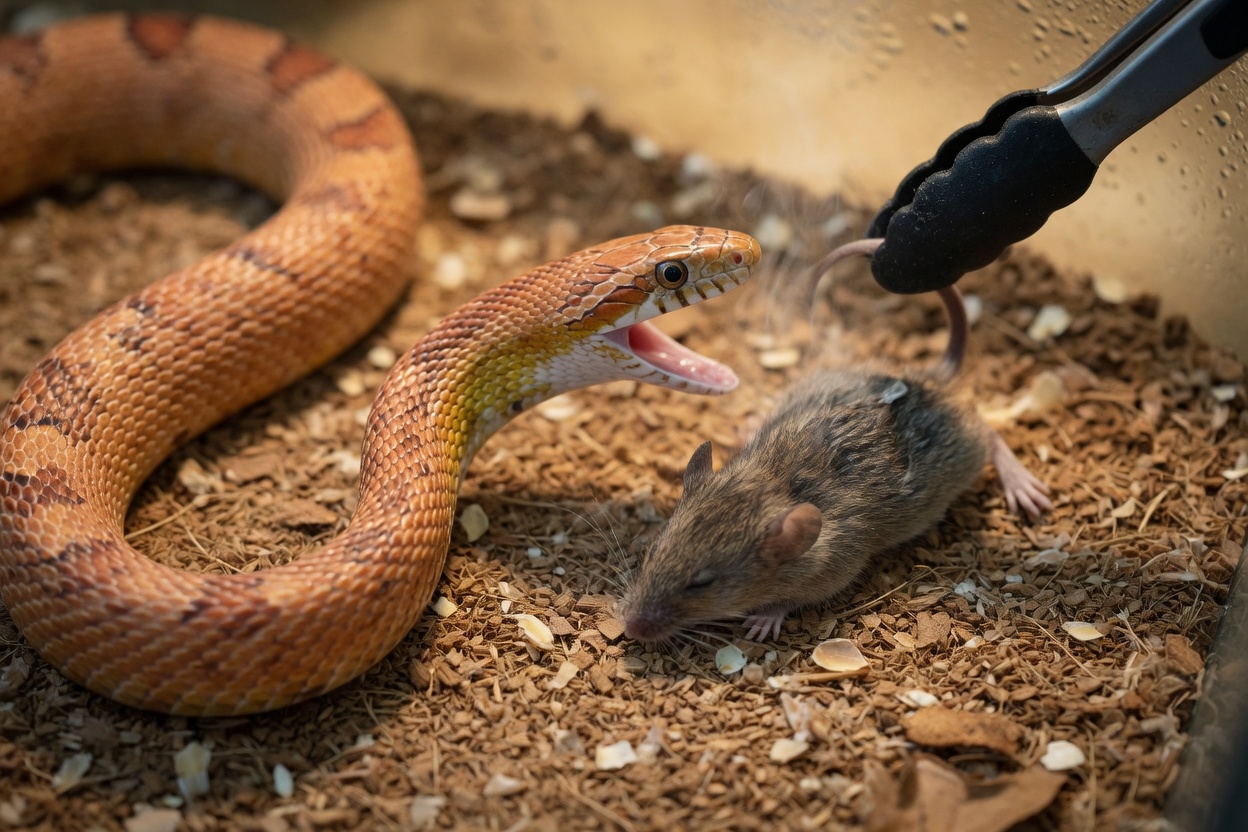
Corn snakes are constrictors that feed primarily on small rodents in the wild. In captivity, they should be fed pre-killed, frozen-thawed mice of an appropriate size — the prey item should be no wider than the widest part of the snake's body.
Frozen-thawed prey is strongly recommended over live prey for several important reasons:
- Live mice can and do bite — even small rodents cause serious injuries to snakes, particularly around the head and eyes
- Frozen-thawed prey is more hygienic, with lower parasite risk
- It is more convenient to store and feed
- Snakes that are raised on frozen-thawed prey rarely present feeding difficulties
Thaw frozen mice fully in the refrigerator overnight, then warm them to approximately body temperature in warm water before offering. Never use a microwave, which creates dangerous hot spots. Offer prey using feeding tongs rather than by hand, to avoid conditioning the snake to associate your hand with food.
Feeding frequency varies by age: juveniles up to six months typically eat every five to seven days; adults eat every seven to ten days. One appropriately sized prey item per feeding is sufficient.
The 48-Hour Post-Feeding Rule
After your corn snake has eaten, you must wait a minimum of 48 hours before handling it. Handling too soon after feeding stresses the snake and disrupts digestion, frequently causing regurgitation. Regurgitation is unpleasant for the snake, nutritionally costly, and if it happens repeatedly, can damage the oesophagus and lead to bacterial infection.
If your snake regurgitates, do not offer food again for at least ten days. Allow the digestive system to recover fully before the next meal, and begin with a prey item slightly smaller than usual.
Shedding: What is Normal and What is Not
Corn snakes shed their entire skin periodically as they grow. Juvenile snakes shed more frequently than adults — sometimes every three to four weeks when growing rapidly. Adults may shed every eight to twelve weeks or less.
Signs that a shed is approaching include:
- Eyes turning milky blue or grey — this indicates the spectacles (eye caps) are preparing to shed
- Skin appearing dull and faded
- Reduced appetite — many snakes refuse food in the days before shedding
- Increased hiding behaviour
A successful shed produces a complete skin in one piece, including the eye caps. Incomplete sheds — retained patches of skin — are usually caused by insufficient humidity or dehydration. Ensure a water bowl is always available and consider adding a moist hide containing damp sphagnum moss during the shed period.
Do not attempt to peel retained shed unless it has been softened by soaking. Retained eye caps are a veterinary matter if they do not come away with the next shed.
Respiratory Infections: A Common and Preventable Problem
Respiratory infections are frequently seen in corn snakes kept in conditions that are too cold or too damp. The bacteria responsible thrive when a snake's immune system is compromised by chronic cold stress.
Warning signs include:
- Open-mouthed breathing or wheezing — this is an emergency sign requiring immediate veterinary attention
- Mucus or discharge from the nostrils or mouth
- Clicking or crackling sounds during breathing
- Lethargy and loss of appetite
- Holding the head elevated, which sometimes indicates fluid in the lungs
Early-stage respiratory infections respond well to antibiotic treatment from a vet. Left untreated, they progress rapidly and can be fatal. Prevention centres on maintaining correct temperatures and ensuring the enclosure substrate does not remain wet.
Scale Rot: Caused by Damp Conditions
Scale rot (ulcerative dermatitis) occurs when a corn snake is exposed to persistently wet or dirty substrate. The condition presents as reddened, blistered or discoloured scales, particularly on the belly. It is painful and can spread rapidly without treatment.
Treatment requires cleaning the affected area, switching to dry substrate, correcting temperatures and humidity, and in moderate to severe cases, veterinary treatment with antibiotics or topical medication. Prevent scale rot by removing soiled substrate promptly, never allowing water bowls to overflow, and ensuring the enclosure has adequate ventilation.
Handling and Temperament
Corn snakes are generally calm and tolerate handling well when acclimatised gradually. Allow a new snake to settle in for at least two weeks before handling, and begin with short sessions of five to ten minutes. Most corn snakes become very relaxed with regular, gentle handling, making them an excellent choice for keepers of all experience levels.