
Understanding Separation Anxiety
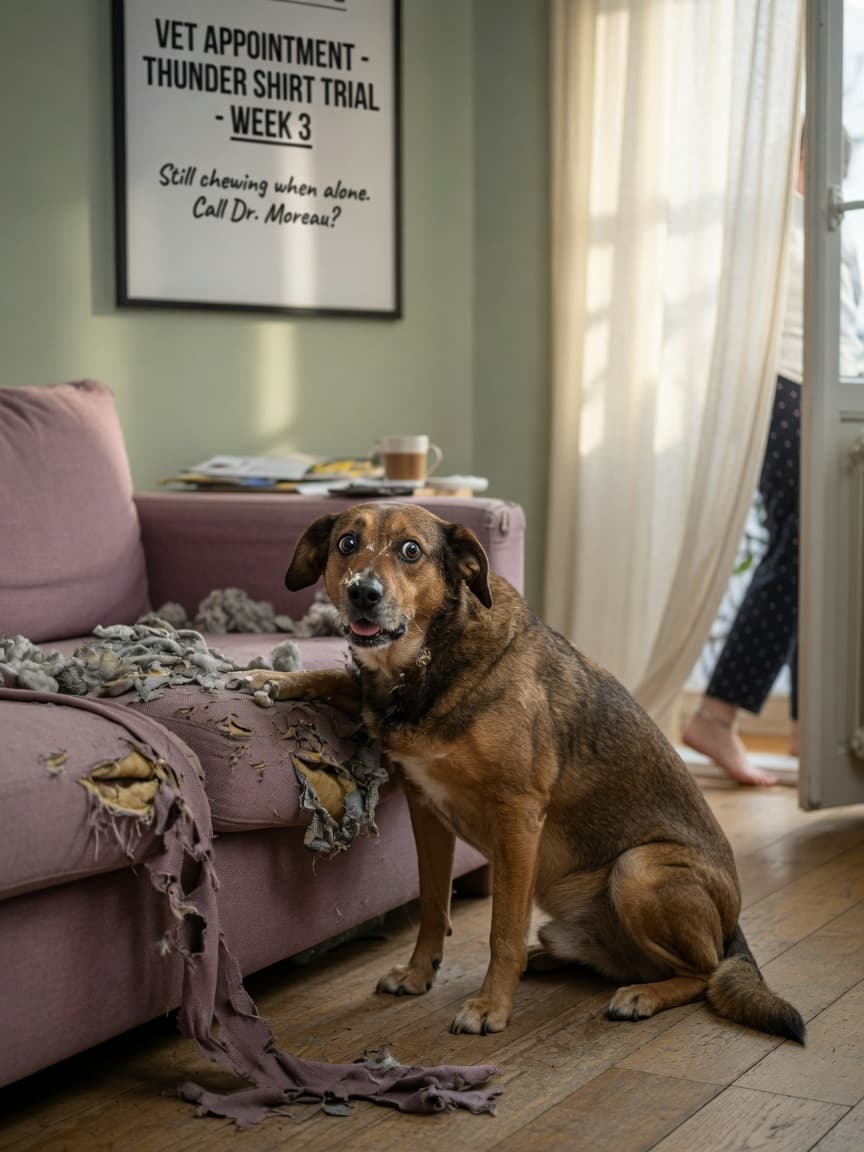
Separation anxiety is one of the most misunderstood behavioural issues in dogs. It is frequently dismissed as attention-seeking or naughtiness, when in reality it is a genuine emotional welfare problem that causes significant distress to the dog experiencing it. A dog with separation anxiety is not being difficult — they are in a state of genuine panic when separated from the person or animal they are attached to.
It is also important to distinguish between different types of separation-related problems, because they need different approaches. True separation anxiety is specifically attached to a particular person or companion animal — the dog is calm when that individual is present and distressed when they are gone, regardless of whether other people are home. Isolation distress is broader: the dog is distressed when left alone regardless of who is absent. Boredom-related destruction is different again — the dog is not emotionally distressed, simply under-stimulated and entertaining themselves in destructive ways.
Signs of Separation Anxiety
The most reliable way to assess whether your dog has true separation anxiety is to film them when you leave. Many owners assume their dog is fine because there is no evidence of a problem when they return, not realising the distress occurred in the first minutes after departure and the dog has since settled. A short clip from a phone or webcam can be extremely revealing.
Typical signs of separation anxiety include:
- Vocalisation — barking, whining, or howling shortly after the owner leaves
- Pacing and restlessness, often following a fixed route
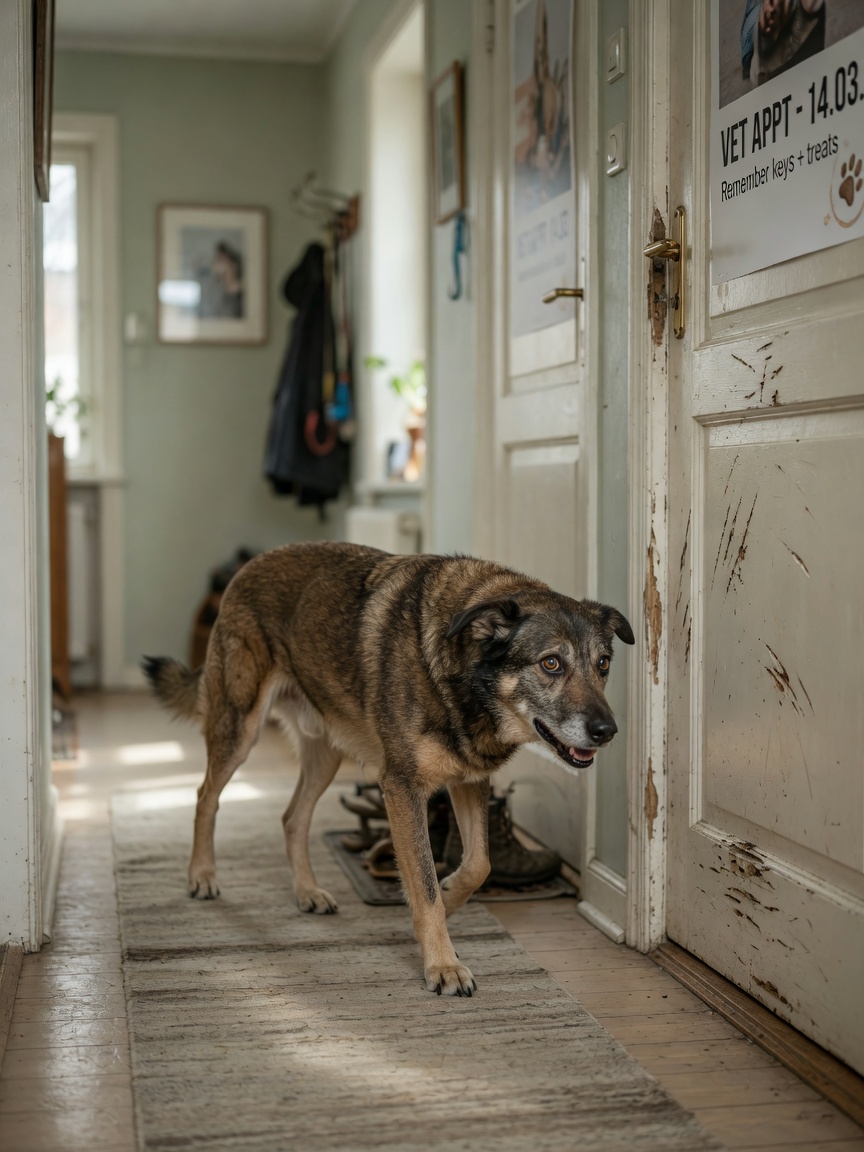
- Destructive behaviour focused near exits — doors, windows, and skirting boards
- House training regression, with toileting indoors despite being fully housetrained
- Excessive salivation or drooling
- Refusal to eat when left alone, even if food is available
- Frantic greeting behaviour when the owner returns, lasting longer than a few minutes
Signs that begin the moment you pick up your keys or put on your coat — before you have even left — suggest your dog has learned to associate pre-departure cues with your absence, which is a hallmark of separation anxiety.
Pre-Departure Cue Desensitisation
Pre-departure cues are the small rituals that reliably precede your leaving: picking up your bag, putting on shoes, checking your phone before heading out. Dogs are acutely observant and quickly learn that these actions predict being left alone. As a result, some dogs begin to show anxiety during the pre-departure sequence itself, long before you have actually left.
To address this, practise performing pre-departure cues repeatedly without leaving. Pick up your keys and sit back down. Put on your coat and watch television. Collect your bag and then put it away. By decoupling these cues from your actual departure, you reduce their power as predictors of absence. This alone can reduce the pre-departure anxiety that escalates before you even reach the door.
Independence Training
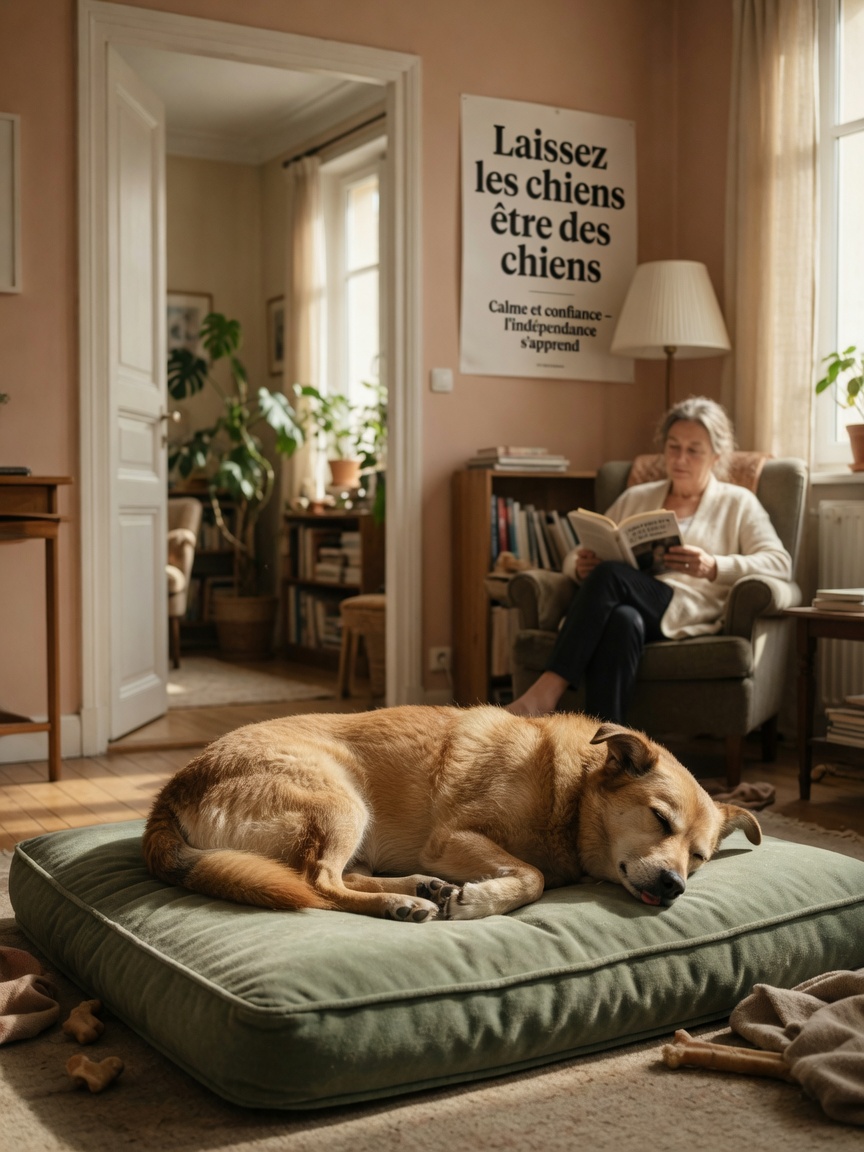
Dogs with separation anxiety often find it difficult to settle when their owner is home but not in close proximity. Building independence starts within the house, before any actual absence is attempted. Encourage your dog to rest in a different room while you are home, reward them for settling calmly on their own, and avoid responding to every demand for contact and attention. This does not mean being cold or rejecting — it means gradually building your dog's confidence that they can be comfortable without constant physical closeness.
Graduated Desensitisation to Absences
This is the core of separation anxiety treatment and the part that requires the most patience. The principle is to expose your dog to absences that are shorter than the point at which they begin to show distress — their anxiety threshold — and very gradually extend the duration over time. If your dog begins to show signs of distress after thirty seconds, your initial absences should be ten to fifteen seconds. You return before any anxiety occurs, so your dog never reaches the point of panic.
This process is painstakingly slow and genuinely difficult for many owners to implement around normal life. Progress can feel imperceptibly gradual. It is, however, the approach with the strongest evidence behind it. Rushing the process — leaving for longer than the dog can cope with — resets the anxiety and can set progress back significantly. If you must leave for longer than your dog's current threshold, arrange for someone to stay with them or consider a dog-sitter during the training period.
Adaptil and Other Adjuncts
Adaptil (Dog Appeasing Pheromone, or DAP) is a synthetic version of the calming pheromone produced by nursing mother dogs. It is available as a plug-in diffuser, a collar, or a spray, and can be a useful adjunct to a behaviour modification programme. It is not a cure on its own and will not resolve separation anxiety without accompanying training, but some dogs benefit from the additional support it provides, particularly in the early stages of a programme.
Other adjuncts worth discussing with your vet include calming supplements containing ingredients such as L-theanine or alpha-casozepine. Again, these are tools to support training, not replacements for it.
Veterinary Medication for Severe Cases
For dogs with moderate to severe separation anxiety, veterinary medication can be an important and legitimate part of the treatment plan. Medications such as fluoxetine (an SSRI) or clomipramine (a tricyclic antidepressant) are licensed for use in dogs with anxiety-related conditions and can lower the baseline anxiety level enough for behaviour modification to be effective. It is essential to understand that medication should always be combined with a structured behaviour modification programme — medication alone, without training, will not resolve separation anxiety. Discuss this option honestly with your vet if your dog's distress is severe.
When to Contact a Behaviourist
Separation anxiety is one of the conditions most frequently cited as a reason for giving up a dog, yet with the right professional support, many cases can be dramatically improved. If home-based management and gradual desensitisation are not making progress, or if the anxiety is severe from the outset, contact a behaviourist accredited by the APBC (Association of Pet Behaviour Counsellors). APBC members work to a strict code of practice, use only positive, science-based methods, and many have specific expertise in separation-related problems. A referral from your vet is often the best route to finding the right support.