
CBD for Senior Dogs: Joint Pain, Sleep & Appetite Benefits
By Julia Wrenfield, Pet Wellness Researcher
Watching a beloved dog enter their senior years is bittersweet. The stiff mornings, the reluctance to climb stairs, the fitful nights — these are not inevitable indignities. Many of the challenges facing aging dogs have biological roots that respond to targeted nutritional and therapeutic support. CBD (cannabidiol) has attracted significant attention as a complementary tool for senior dog care, with the most compelling evidence concentrated in three areas: joint pain, sleep quality, and appetite maintenance.
This article reviews what the science currently supports, how to approach CBD in an older dog's care plan, and what to watch for as you navigate this stage of your dog's life.
The Aging Canine Body: What Changes and Why It Matters
Dogs are generally considered senior at age 7, though giant breeds age faster and may show geriatric changes as early as 5–6 years. With age comes a measurable decline in the endocannabinoid system (ECS) — the network of receptors and signaling molecules that regulates pain perception, inflammation, sleep, appetite, and immune function. Reduced ECS tone may partly explain why older dogs seem less resilient to pain and stress, and why their sleep and hunger cues become disrupted.
CBD's primary mechanism is ECS modulation. By inhibiting the breakdown of the body's own endocannabinoids (particularly anandamide), CBD effectively amplifies the ECS without directly overwhelming it. This indirect action profile makes it particularly suited to older animals whose systems need support rather than disruption.
CBD and Joint Pain: The Strongest Evidence
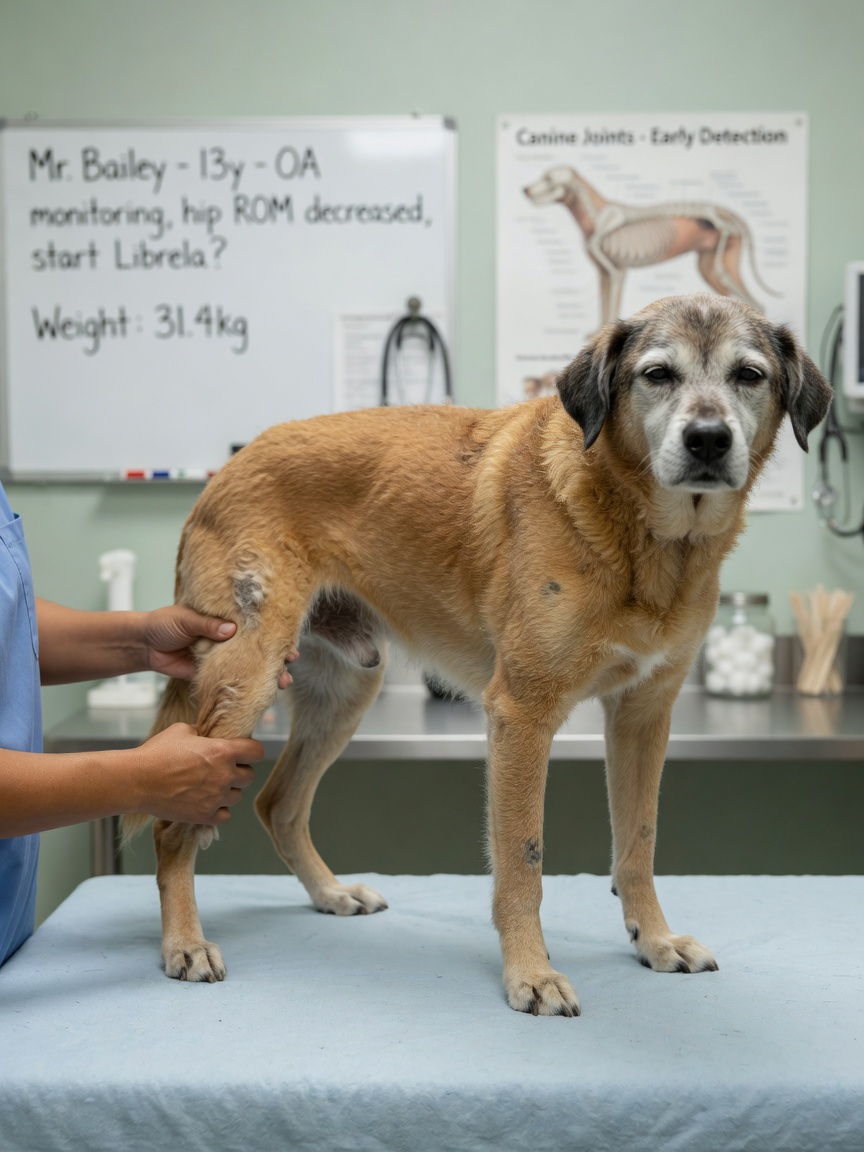
Canine osteoarthritis (OA) affects an estimated 20% of dogs over one year of age and up to 80% of dogs over age 8. The Gamble et al. 2018 study (PMID 29686786) — a randomized, double-blind, placebo-controlled crossover trial from Cornell University College of Veterinary Medicine — is the landmark reference. Dogs received 2 mg of CBD per kg of body weight twice daily over four weeks. Results showed statistically significant reductions in pain scores (p=0.01) and significant improvements in mobility assessed by veterinary orthopedic examination, with no clinically significant adverse effects.
The mechanism likely involves CBD's inhibition of inflammatory cytokines and its effect on transient receptor potential (TRP) channels, which are involved in pain signal transmission. VCA Hospitals acknowledges this study as the most rigorous evidence to date for CBD in canine pain management.
For owners managing a senior dog with OA, CBD may complement — not replace — NSAIDs or joint supplements like glucosamine and omega-3 fatty acids. Combining approaches under veterinary supervision often yields better outcomes than any single intervention.
CBD and Sleep Disturbances in Older Dogs

Canine cognitive dysfunction syndrome (CDS), the dog equivalent of dementia, affects approximately 14–35% of dogs aged 8 and older. One of its hallmark symptoms is sleep-wake cycle disruption: affected dogs sleep more during the day and become restless or confused at night. This pattern is distressing for the dog and exhausting for owners.
CBD's interaction with serotonin receptors (5-HT1A) and its influence on the endocannabinoid system's role in circadian rhythm regulation may explain its emerging use in sleep support. While controlled trials specifically targeting sleep in dogs are still lacking, the anxiolytic and ECS-stabilizing properties of CBD provide a plausible rationale. Many veterinarians now incorporate CBD as part of a multimodal CDS protocol alongside enrichment activities and dietary antioxidants.
CBD and Appetite in Senior Dogs
Appetite loss in senior dogs can stem from multiple causes: dental pain, nausea from medications, reduced olfactory sensitivity, or underlying disease. CBD has demonstrated antiemetic properties in animal models, potentially reducing the nausea that suppresses food interest. It may also stimulate appetite through CB1 receptor modulation — the same pathway that makes THC (the psychoactive cannabinoid) produce hunger in humans, though CBD's effect is far milder and non-psychoactive.
If your senior dog has unexplained weight loss or prolonged appetite reduction, these require veterinary investigation before attributing them to aging alone. CBD may support appetite once underlying causes are ruled out or treated.
Dosing CBD in Senior Dogs
The dosing framework from the Gamble study — 2 mg/kg twice daily — is a reasonable starting reference for pain management in senior dogs. However, older dogs often have reduced liver and kidney function, meaning slower drug clearance. A prudent approach:
- Start at 1 mg/kg once daily for the first week.
- If well tolerated, increase to 1 mg/kg twice daily in week two.
- Only escalate to 2 mg/kg twice daily if the lower dose produces insufficient benefit and your vet approves.
Monitor your senior dog closely for excessive sedation, changes in gait, or altered urination patterns (which might indicate altered drug clearance).
Supporting Your Senior Dog Holistically
CBD works best as part of a broader senior wellness strategy. The American Kennel Club recommends regular veterinary checkups (every 6 months for senior dogs), joint-supportive diets rich in omega-3 fatty acids, appropriate low-impact exercise, and environmental modifications like ramps and orthopedic bedding. Integrating CBD into this framework — rather than treating it as a standalone solution — produces the most meaningful quality-of-life improvements. Research from McGrath et al. 2019 (PMID 31067185) reinforces that multimodal approaches, including CBD as a complementary agent, are the direction veterinary medicine is heading.
Key Takeaways
- The Gamble et al. 2018 Cornell study showed significant pain and mobility improvements at 2 mg/kg CBD twice daily in arthritic dogs.
- Start senior dogs at a lower dose (1 mg/kg/day) due to reduced liver and kidney clearance capacity.
- CBD may support sleep-wake cycles in dogs with cognitive dysfunction syndrome.
- Antiemetic and appetite-stimulating properties make CBD useful for senior dogs with reduced food interest.
- Always check for drug interactions with existing medications — inform your vet.
- CBD is most effective as part of a comprehensive senior wellness plan, not as a standalone treatment.
Article by Julia Wrenfield, Pet Wellness Researcher. For educational purposes only — not a substitute for professional veterinary advice.
CBD has been studied in clinical trials specifically in dogs with osteoarthritis — one of the strongest evidence bases in the veterinary CBD field:
- Cornell University / Gamble (2018): 2 mg/kg twice daily significantly reduced pain scores and improved mobility in dogs with OA (PMID 30160947)
- Verrico et al. (2020): A double-blind RCT confirmed analgesic and anti-inflammatory effects in OA dogs (PMID 32920194)
- Overall: 1,898+ studies on cannabinoids and OA/pain, including 89 in-vivo canine studies and 408 RCTs
Julia's Pick: Candid Tails Mobility+
For joint and mobility support, Candid Tails Mobility+ combines CBD with omega-3 fatty acids (EPA/DHA) — the only ingredient that unlocks the EU's legal claim for osteoarthritis support (Reg. 2020/354, Entry 27).
- CBD at doses consistent with canine OA clinical trials (Gamble/Cornell, Verrico RCTs)
- Omega-3 EPA/DHA included — provides the EU-compliant anti-inflammatory claim base
- Batch lab-tested, THC <0.3% guaranteed | Made in Europe
- 4.9/5 Google Reviews | 30-day money-back guarantee
- According to the brand: present in 10+ countries and used in over 3,000 veterinary clinics