
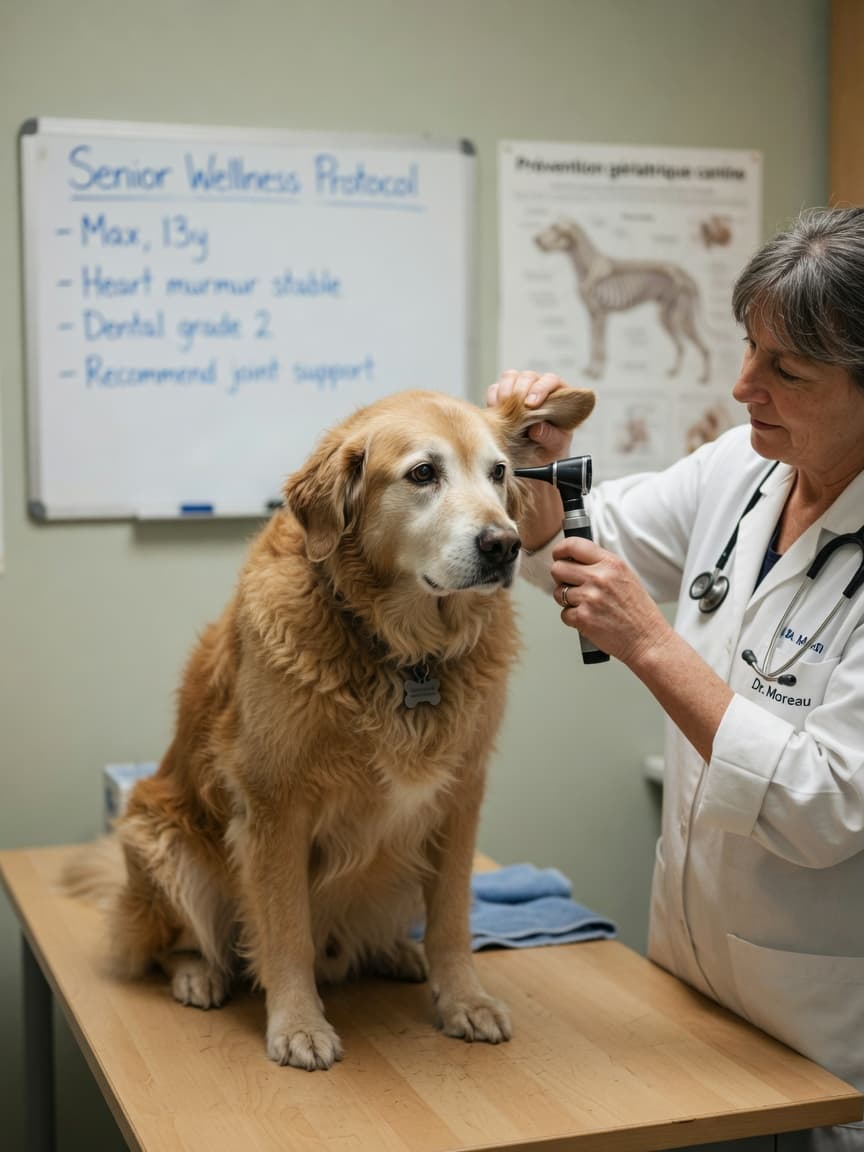
When Is a Dog Considered a Senior?
The age at which a dog becomes a senior is not the same for every breed. Size plays a significant role: smaller breeds tend to age more slowly and are generally considered senior from around seven years of age, whilst medium-sized dogs reach senior status at a similar point. Large and giant breeds, however, age considerably faster. A Great Dane or Bernese Mountain Dog may be considered senior from as young as five or six years old, and their lifespans are correspondingly shorter than those of smaller companions.
The World Small Animal Veterinary Association (WSAVA) recommends that vets and owners begin paying closer attention to health monitoring from the moment a dog reaches the final quarter of its expected lifespan. Understanding where your dog sits on this spectrum helps you plan appropriate care and catch problems early.
WSAVA Senior Health Guidelines: Biannual Vet Checks
The WSAVA guidelines recommend that senior dogs receive veterinary health assessments at least twice a year, rather than the annual visit typical for younger animals. This is because age-related conditions can develop and progress rapidly, and early detection dramatically improves outcomes. A biannual check allows your vet to monitor weight, organ function, dental health, blood pressure, and cognitive status over time.
These visits typically include a full physical examination, blood and urine tests to assess kidney and liver function, thyroid levels, and blood cell counts. Do not wait for visible symptoms before booking an appointment — many serious conditions in senior dogs, including kidney disease and early-stage cancer, cause few outward signs until they are well advanced.
Common Health Changes in Older Dogs
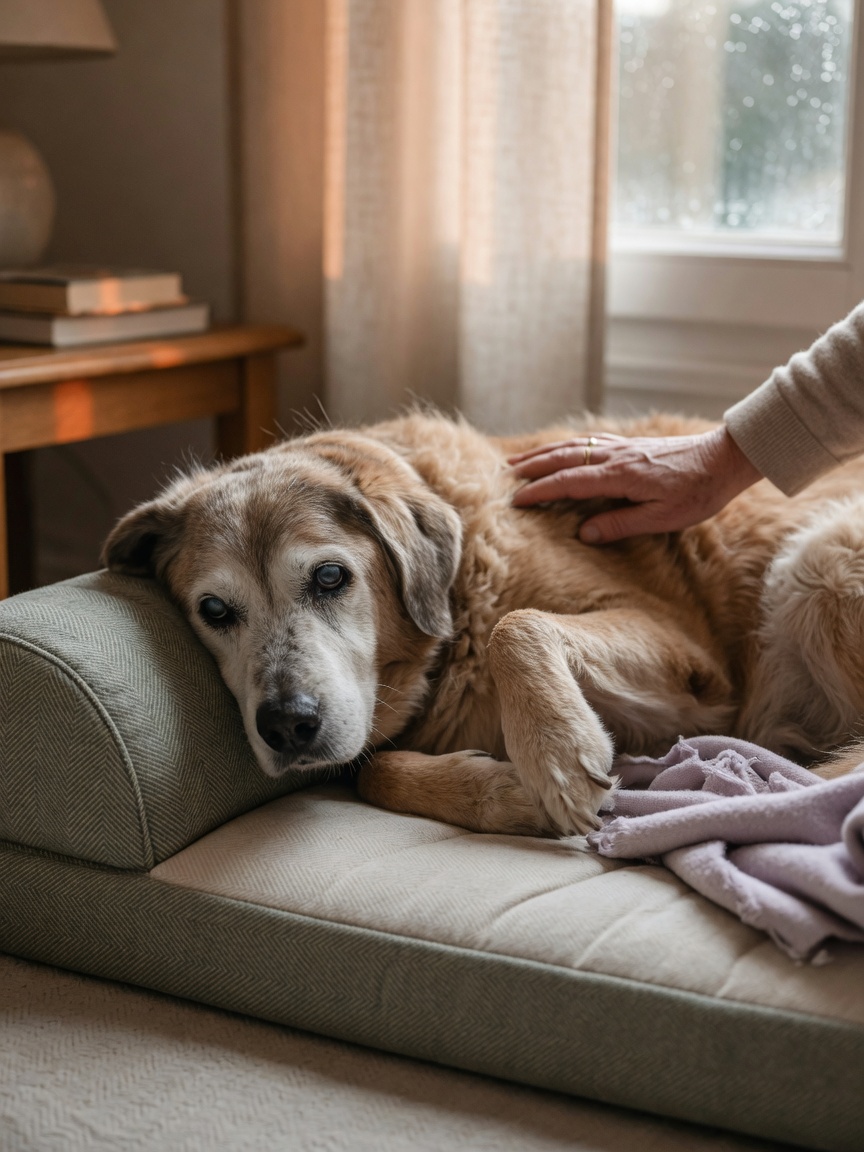
Vision and Hearing Decline
It is normal for older dogs to experience a gradual reduction in vision and hearing. You may notice a bluish haze in the eyes, known as nuclear sclerosis, which is distinct from cataracts and does not usually cause significant vision loss. True cataracts, which appear as white or opaque areas in the eye, do impair vision and should be assessed by a vet. Hearing loss is often gradual; hand signals and vibration-based cues can help you communicate with a dog whose hearing is fading.
Joint Stiffness and Mobility
Arthritis and other forms of degenerative joint disease are extremely common in senior dogs. Stiffness after rest, reluctance to climb stairs, and a reduced willingness to jump are all early warning signs. Pain management options are now excellent and should be discussed with your vet promptly — dogs are stoic animals and often mask discomfort until it is significant.
Dental Disease
Dental disease affects the vast majority of dogs over the age of three, and the situation generally worsens with age. Gum disease causes genuine pain, makes eating uncomfortable, and can lead to systemic infection affecting the heart, kidneys, and liver. Regular dental checks and professional cleaning under anaesthesia when necessary are important components of senior dog care.
Cognitive Dysfunction
Canine cognitive dysfunction (CCD) is the dog equivalent of dementia. Signs include disorientation in familiar environments, disturbed sleep patterns, house-training accidents in a previously reliable dog, and reduced interaction with family members. While there is no cure, medications, dietary supplements, and environmental enrichment can slow progression and improve quality of life.
Dietary Needs in Senior Dogs
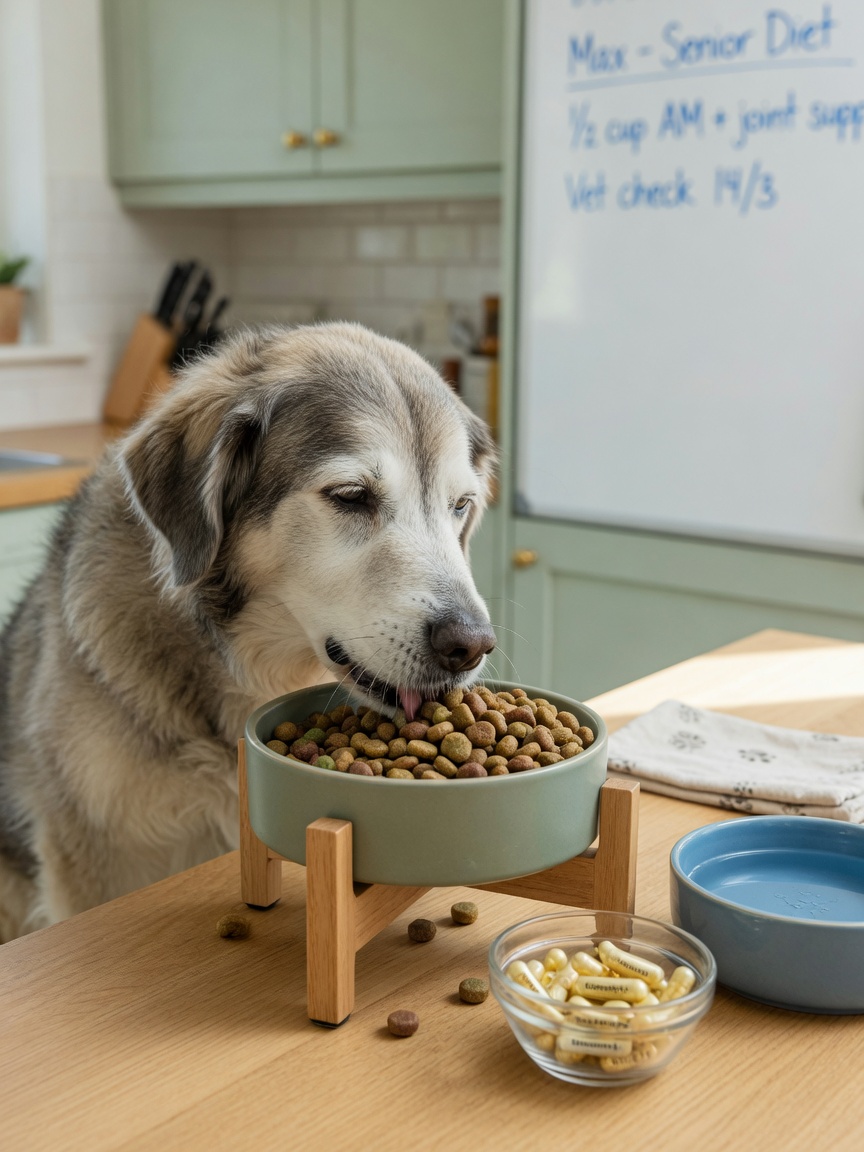
Older dogs often benefit from a diet specifically formulated for their life stage. Senior dog foods are typically lower in calories to account for reduced activity levels, whilst maintaining adequate protein to preserve muscle mass — a common concern in ageing dogs. Some formulations include added omega-3 fatty acids and glucosamine to support joint health.
It is worth noting that senior dogs with specific health conditions, such as kidney disease or heart disease, may require prescription diets that differ from standard senior foods. Always discuss dietary changes with your vet before switching, particularly if your dog has a diagnosed condition.
Joint supplements containing glucosamine, chondroitin, and omega-3 fatty acids are widely used in senior dogs. The evidence for their benefit is mixed but they are generally well tolerated. Zooplus offers a range of senior-specific dog foods and joint supplements that can be a convenient option for owners looking to support their older dog's health at home.
Adapting Exercise for Older Dogs
Senior dogs still need regular exercise — the worst thing you can do is remove activity entirely. However, adjustments are often necessary. Shorter, more frequent walks are generally preferable to long, demanding outings. Watch your dog carefully for signs of fatigue, pain, or reluctance, and adjust accordingly. Swimming and gentle hydrotherapy can be excellent low-impact alternatives for dogs with joint issues.
Avoid over-exercising on cold or damp days, which can worsen joint stiffness. Allow your dog to set the pace rather than pushing them to keep up with younger animals. The goal is to maintain mobility, muscle tone, and mental stimulation without causing pain or exhaustion.
Mental Enrichment for Senior Dogs
Keeping an older dog's mind active is just as important as physical exercise. Gentle training sessions, puzzle feeders, sniff walks where your dog is allowed to explore at their own pace, and calm social interaction all contribute to cognitive health. Mental stimulation helps slow the progression of cognitive dysfunction and keeps your dog engaged with the world around them.
Warmth, Comfort, and Quality of Life
Senior dogs feel the cold more acutely and recover more slowly from physical exertion. An orthopaedic memory foam bed placed in a warm, draught-free location can make a significant difference to an arthritic dog's comfort. Ramps or steps can help dogs access their favourite spots on furniture or in the car without straining painful joints.
Regularly assess your dog's quality of life using tools such as the HHHHHMM scale, which considers hurt, hunger, hydration, hygiene, happiness, mobility, and whether there are more good days than bad. Share your observations with your vet to guide decisions about ongoing care and, when the time comes, end-of-life planning.
Monitoring for Early Signs of Disease
As a senior dog owner, you become one of the most important members of your dog's healthcare team. Keep a note of any changes in appetite, thirst, urination frequency, weight, or behaviour, and report them promptly to your vet. Increased thirst, for example, can signal diabetes or kidney disease, whilst sudden weight loss may indicate a range of serious conditions. Early intervention consistently leads to better outcomes.
With the right care, attentive monitoring, and a loving environment, many dogs continue to enjoy excellent quality of life well into their senior years. The relationship between an owner and an ageing dog is one of the most profound in animal companionship — give it the attention it deserves.