

Senior Dog Weight Management: Special Considerations
How Aging Changes Your Dog's Body Composition
Dogs are generally considered "senior" from around 7 years of age, though this varies significantly by size — giant breeds age faster and may be geriatric by 6, while small breeds often remain vigorous past 10. Regardless of breed, a predictable set of metabolic and physiological changes occur with age that directly affect weight management.
The most significant change is a gradual reduction in resting metabolic rate. Senior dogs burn fewer calories at rest than their younger counterparts, primarily because of changes in hormonal signaling (including reduced thyroid function, growth hormone, and sex hormones after spaying or neutering) and a decrease in lean muscle mass. Studies suggest that resting energy expenditure decreases by roughly 20% between young adulthood and old age in dogs — meaning a senior dog needs meaningfully fewer calories to maintain the same weight.
Coupled with this, senior dogs are typically less physically active, reducing their total daily energy expenditure further. The combined effect: a dog that ate exactly the right amount at age 3 may quietly gain weight on that same diet by age 9, even if nothing appears to have changed.
Sarcopenic Obesity: When a Dog Is Both Overfat and Undermuscled
Sarcopenia is the age-related loss of skeletal muscle mass and strength. In older dogs, this process is driven by reduced anabolic hormone levels, chronic low-grade inflammation (inflammaging), reduced physical activity, and sometimes inadequate dietary protein intake.
The dangerous combination — sarcopenic obesity — occurs when a senior dog simultaneously loses muscle and gains fat. On the scale, the numbers may look stable or even normal, because fat is replacing muscle mass pound for pound. But body composition has shifted unfavorably: less metabolically active tissue, more inflammatory adipose tissue, weaker musculoskeletal support for aging joints.
This is why weighing a senior dog without assessing body composition can be misleading. A dog that maintains a stable scale weight over years is not necessarily maintaining healthy body composition. Body Condition Score (BCS) and, ideally, Muscle Condition Score (MCS) assessments by your veterinarian give a more complete picture.
Why Protein Matters More in Senior Dogs
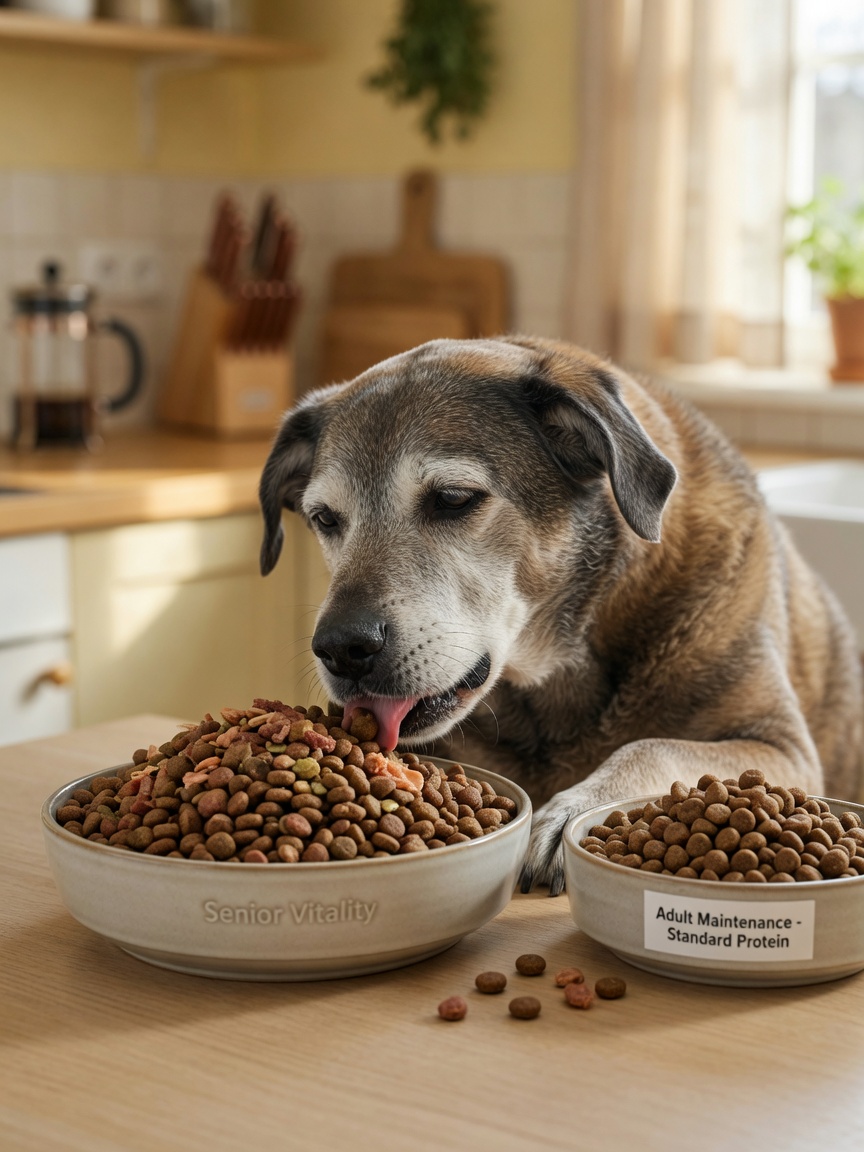
The old advice to restrict protein in senior dogs is outdated and has been largely abandoned by veterinary nutritionists. Unless a dog has confirmed advanced kidney disease requiring dietary protein restriction, aging dogs benefit from higher dietary protein, not less.
Adequate protein intake is essential to maintain muscle mass in the face of age-related anabolic resistance — seniors need more dietary protein to achieve the same muscle-building stimulus as a younger dog. Research suggests that senior dogs need protein intake at or above the levels recommended for adult maintenance, ideally from highly digestible, high-quality sources (chicken, turkey, egg, fish).
In the context of weight management, this creates a specific challenge: the senior dog needs fewer total calories but the same or higher protein. The practical solution is a senior or weight management food formulated with a high protein-to-calorie ratio — more protein per kcal, less fat. Avoid simply cutting portions of a standard adult food, which reduces protein along with calories.
Joint Pain and Exercise: Working Around Stiffness
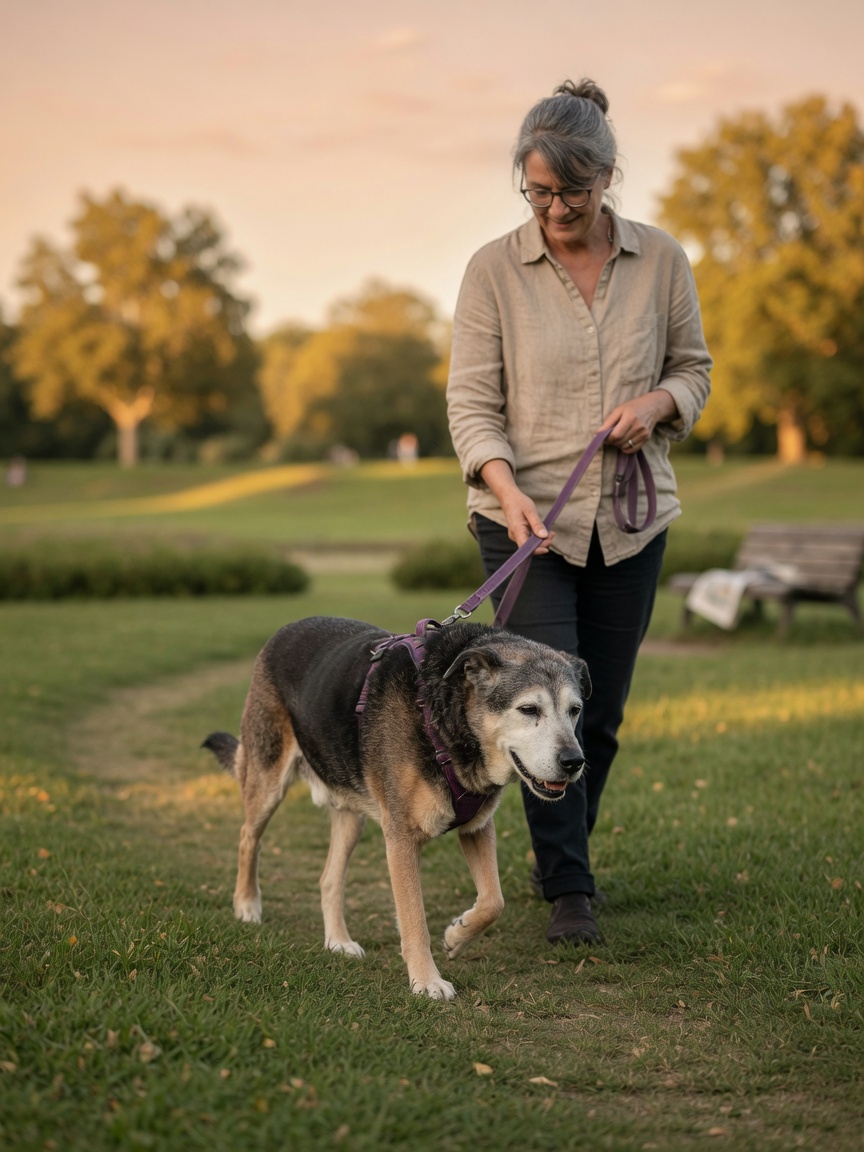
Osteoarthritis is extremely common in senior dogs — estimates suggest that more than 80% of dogs over age 8 have some degree of degenerative joint disease. Joint pain makes exercise uncomfortable, which reduces activity levels, which contributes to weight gain and further muscle loss. The cycle is self-reinforcing.
The approach to exercise in senior dogs with joint disease must be modified:
- Shorter, more frequent outings: Two or three 15–20 minute walks per day are gentler on arthritic joints than one long walk. Shorter sessions also allow the dog to pace themselves.
- Avoid high-impact activities: Running on hard surfaces, jumping, sharp direction changes, and fetch on uneven ground stress already-inflamed joints. Swap for controlled leash walks on softer surfaces.
- Hydrotherapy (water treadmill or swimming): Allows cardiovascular exercise and muscle strengthening with minimal joint loading. Many specialist veterinary rehabilitation centers offer this, and the results for mobility and weight maintenance in senior dogs are excellent.
- Gentle daily movement: Even short garden sniff walks or structured scatter feeding that encourages slow movement stimulates circulation and maintains mobility. Sedentary periods are harmful — gentle, consistent movement is protective.
If your senior dog is reluctant to exercise, seems stiff after rest, or lags behind on walks they previously enjoyed, discuss pain management with your veterinarian. Dogs on appropriate joint pain medication often become significantly more active — which naturally supports weight management.
Caloric Adjustments for Senior Dogs
As a starting point, most senior dogs need approximately 20% fewer calories than they did at peak adult activity. However, individual variation is enormous — some remain highly active well into old age, while others slow dramatically by 8. Monitor body condition monthly rather than applying a fixed reduction.
Feed measured meals (by weight, not volume) twice daily. Avoid free-choice feeding, which makes calorie control impossible. Senior dogs with joint pain may benefit from slightly elevated food bowls to reduce neck and shoulder strain during eating.
If your senior dog is losing weight despite eating well, do not assume this is just aging. Unexplained weight loss in a senior dog is a red flag requiring veterinary investigation — hyperthyroidism, diabetes, kidney or liver disease, dental pain, cancer, and Addison's disease can all cause weight loss and are treatable if caught early.
Senior-Specific Foods: What to Look For
Senior dog foods are formulated to address the specific needs of aging dogs: controlled calories, higher protein, lower phosphorus (to support aging kidneys), added joint-supporting nutrients (glucosamine, chondroitin, omega-3 fatty acids), and often enhanced antioxidant profiles. Look for:
- Named protein source (chicken, salmon, turkey) as the first ingredient
- Protein content of 25–30% or higher on a dry matter basis
- Moderate fat (10–15%) to control calories without eliminating palatability
- Added EPA and DHA (fish oil) for joint and cognitive support
- Glucosamine and chondroitin for joint health support
- Lower phosphorus for kidney longevity
Browse Senior Dog Food at Zooplus →
Key Takeaways
- Senior dogs burn roughly 20% fewer calories at rest than young adults — the same diet can cause weight gain as they age.
- Sarcopenic obesity (simultaneous fat gain and muscle loss) is common and can mask true unhealthy body composition even when scale weight appears normal.
- Older dogs need higher dietary protein — not less — to preserve muscle mass, unless kidney disease requires restriction.
- Joint pain limits exercise in most senior dogs; adapt with shorter walks, softer surfaces, and consider hydrotherapy.
- Unexplained weight loss in a senior dog is never "just aging" — it requires veterinary investigation.
- Choose a senior food with high protein per calorie, joint-supporting nutrients, and appropriate phosphorus levels.
References
Laflamme DP & Hannah SS. (2013). Discrepancy between use of lean body mass or nitrogen balance to determine protein requirements for adult cats. Journal of Feline Medicine and Surgery. PubMed
Freeman LM. (2012). Cachexia and sarcopenia: emerging syndromes of importance in dogs and cats. Journal of Veterinary Internal Medicine. PubMed