
Sharp Teeth, Shredded Hands and Whether to Worry
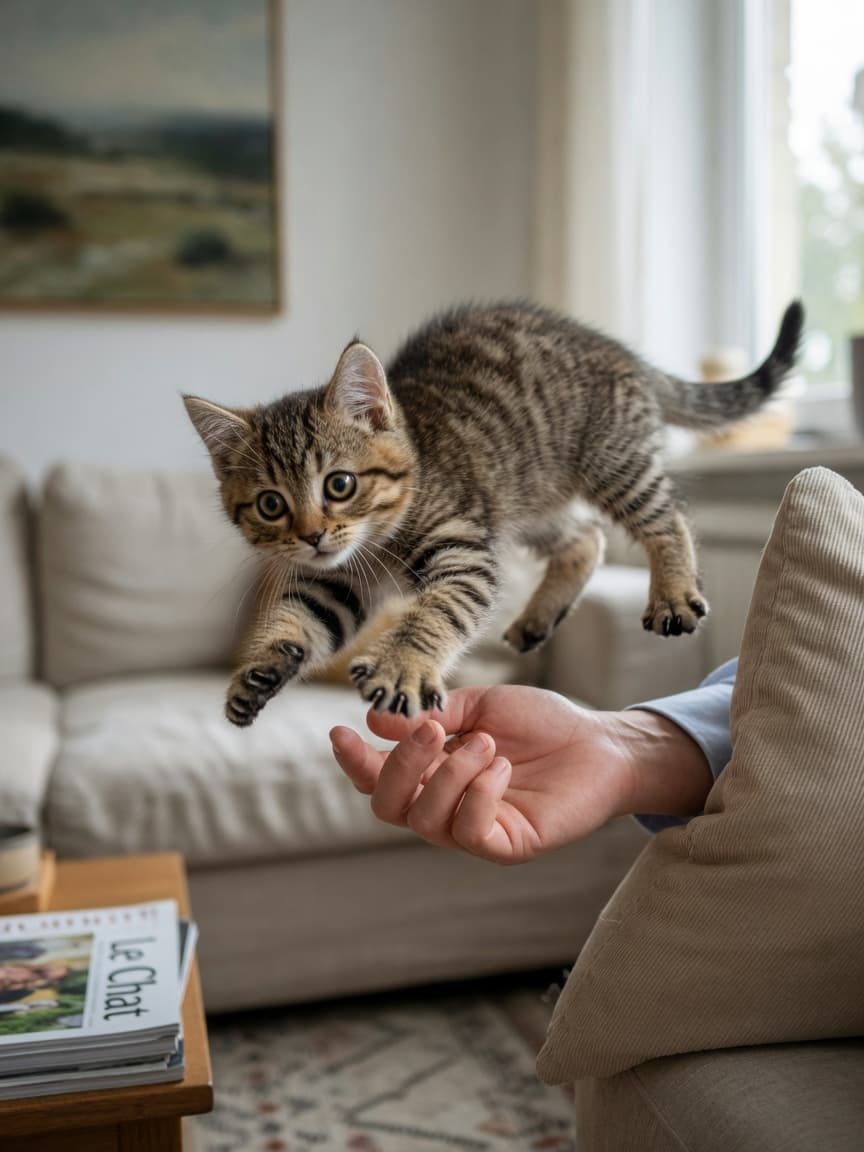
A kitten that launches itself at your ankles, bites your fingers with surprising force, or ambushes you from behind the sofa is not being aggressive in any meaningful clinical sense. It is, in almost all cases, doing exactly what it should be doing at that developmental stage. The question worth asking is not whether the behaviour is normal — usually it is — but whether the intensity, target, and response to intervention place it outside the range of typical development.
Why Kittens Play the Way They Do
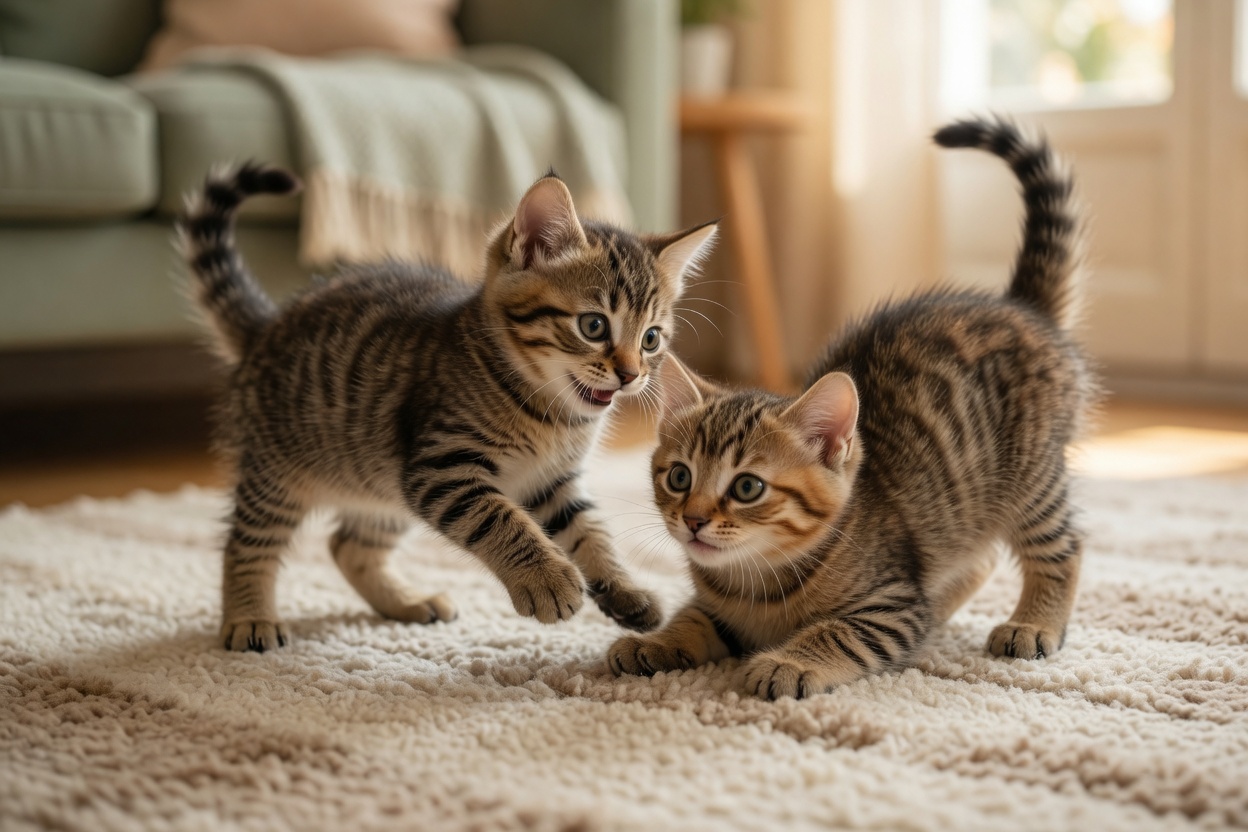
Play in kittens serves a direct developmental function. Between three and sixteen weeks of age, kittens rehearse the predatory motor sequence: stalk, pounce, grab, bite, kick, release. This sequence is hardwired. It develops social coordination when kittens play with littermates, and it develops hunting competence when directed at objects. The problem for many kittens kept as single pets is that they direct this entire sequence at the nearest moving target — which is often human skin.
Kittens raised with littermates learn bite inhibition through immediate feedback: a bite that is too hard elicits a yelp and the cessation of play. A singleton kitten, or one separated from its litter before eight weeks, misses this calibration period and may have a significantly higher bite threshold than is comfortable for human cohabitants.
What Normal Play Aggression Looks Like
Normal play aggression in kittens has consistent characteristics that distinguish it from genuine fear- or pain-based aggression.
- The kitten approaches in a bouncy, exaggerated manner — often sideways, with an arched back
- Pupils are dilated but the overall body is loose and mobile rather than rigid
- Attacks are brief and the kitten disengages readily when play is redirected
- There is no hissing, growling, or sustained fixed staring before the approach
- The kitten returns to normal, relaxed behaviour quickly after the interaction
- Attacks increase at predictable times: dawn, dusk, and after periods of inactivity
These episodes, however painful, are functionally play. The kitten is neither frightened nor hostile. It is operating its predatory system on an available target.
What Crosses the Line Into Problem Behaviour
Play aggression shades into problem behaviour when its intensity, context, or resistance to redirection falls outside typical parameters.
Signs That Warrant Closer Attention
- Bites that consistently break skin or leave bruising beyond what would be expected given the kitten's size
- Attacks that occur in contexts other than clear play arousal — when the kitten is approached while resting, for example
- Growling or hissing associated with play attacks
- Complete failure to disengage when play is redirected using toys
- Escalating intensity with age rather than gradual improvement
- Attacks directed at the face or neck rather than extremities
If you are observing several of these signs, consult your veterinarian. Occasionally, neurological issues, pain, or early handling trauma can produce aggression that resembles play aggression but has a different underlying cause requiring assessment.
Responding to Play Aggression Effectively
Never Use Hands as Toys
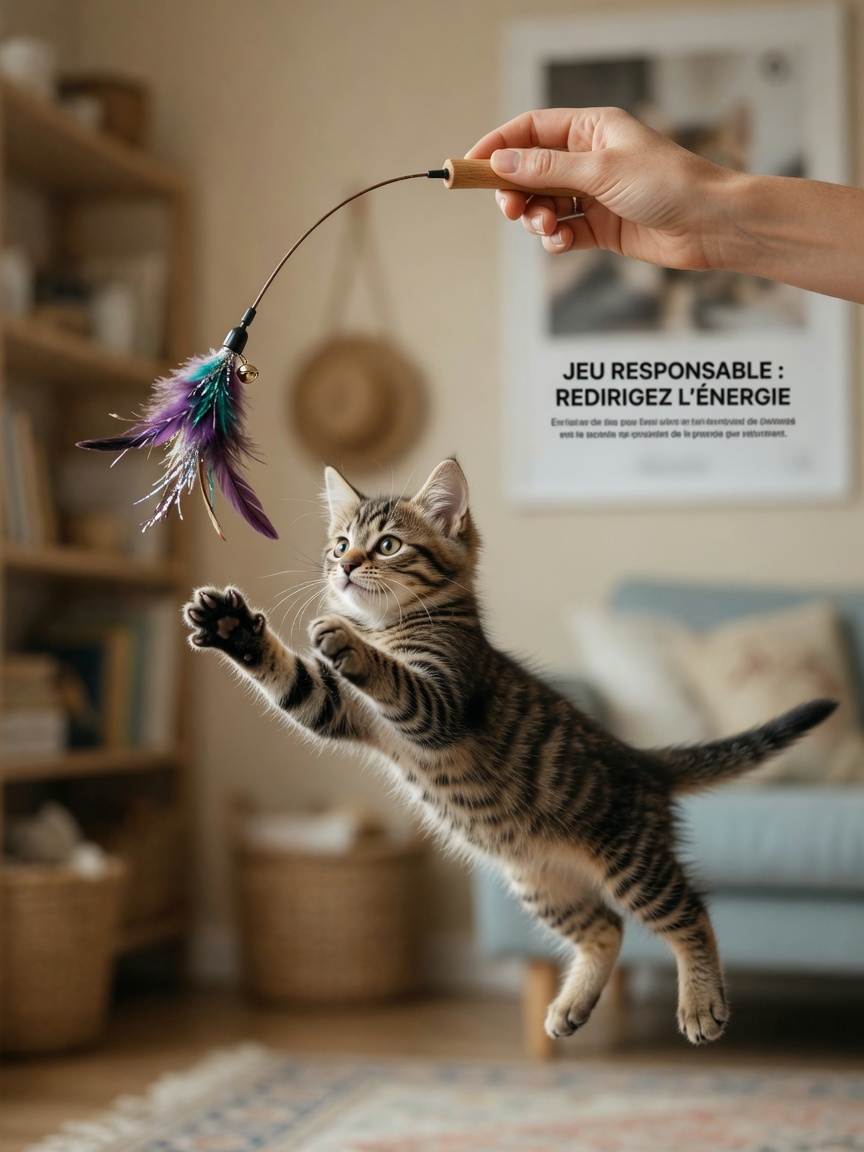
This is the single most effective prevention measure and the one most commonly ignored. Once a kitten learns that hands are appropriate play targets, retraining is possible but takes considerably longer than prevention. Use wand toys, feather teasers, and toys on strings to engage predatory play — keeping your hands entirely out of the game.
Redirect, Do Not Punish
Physical punishment — flicking the kitten's nose, scruffing it, spraying it with water — is not effective for play aggression and consistently worsens anxiety and trust deficits over time. Instead, the moment an attack begins, withdraw all attention immediately. Stand still, fold your arms, look away. Then redirect play onto an appropriate toy.
Provide Adequate Play Outlets
Most play aggression in kittens reflects an unmet need for predatory outlet rather than a personality problem. Provide two to three structured interactive play sessions daily of ten to fifteen minutes each, ideally timed around the kitten's natural activity peaks. Allow the kitten to complete the predatory sequence by catching the toy at the end of each session — a kitten that never gets to catch anything becomes frustrated, and frustrated kittens redirect onto available targets.
Consider a Second Kitten
In singleton kittens where play aggression is significant, the most effective intervention is often the addition of a same-age companion. Two kittens meeting each other's social and predatory play needs is categorically less demanding than attempting to redirect all of that energy yourself. This decision requires careful consideration of your circumstances, but it is worth raising with your vet if play aggression is persistent.
What to Expect as the Kitten Matures
For most kittens, play aggression naturally moderates between six and twelve months of age as the nervous system matures and predatory behaviour becomes more targeted and less indiscriminate. Neutering, particularly in male kittens, tends to reduce intensity of play and general activity levels modestly, though it is not a reliable solution to play aggression alone.
Consistent redirection, structured play sessions, and avoiding the use of hands as toys will, in the overwhelming majority of cases, produce a cat that plays appropriately by its first birthday. If play aggression is intensifying rather than resolving as the kitten approaches twelve months, revisit the situation with your vet to ensure there is no underlying behavioural or medical factor driving the pattern.
Key Takeaways
- Play aggression in kittens is normal developmental behaviour rooted in predatory motor rehearsal
- Singleton kittens and those separated early from their litter often have poorly calibrated bite inhibition
- Normal play aggression features loose body language, easy disengagement, and predictable timing
- Never use hands as toys — this is the most important and most overlooked prevention measure
- Redirect onto appropriate toys and withdraw attention at the moment of attack; do not punish
- Two daily structured play sessions with a clear catching conclusion reduce frustration-driven attacks
- Most kittens moderate naturally by twelve months with consistent management; consult a vet if intensity is escalating