
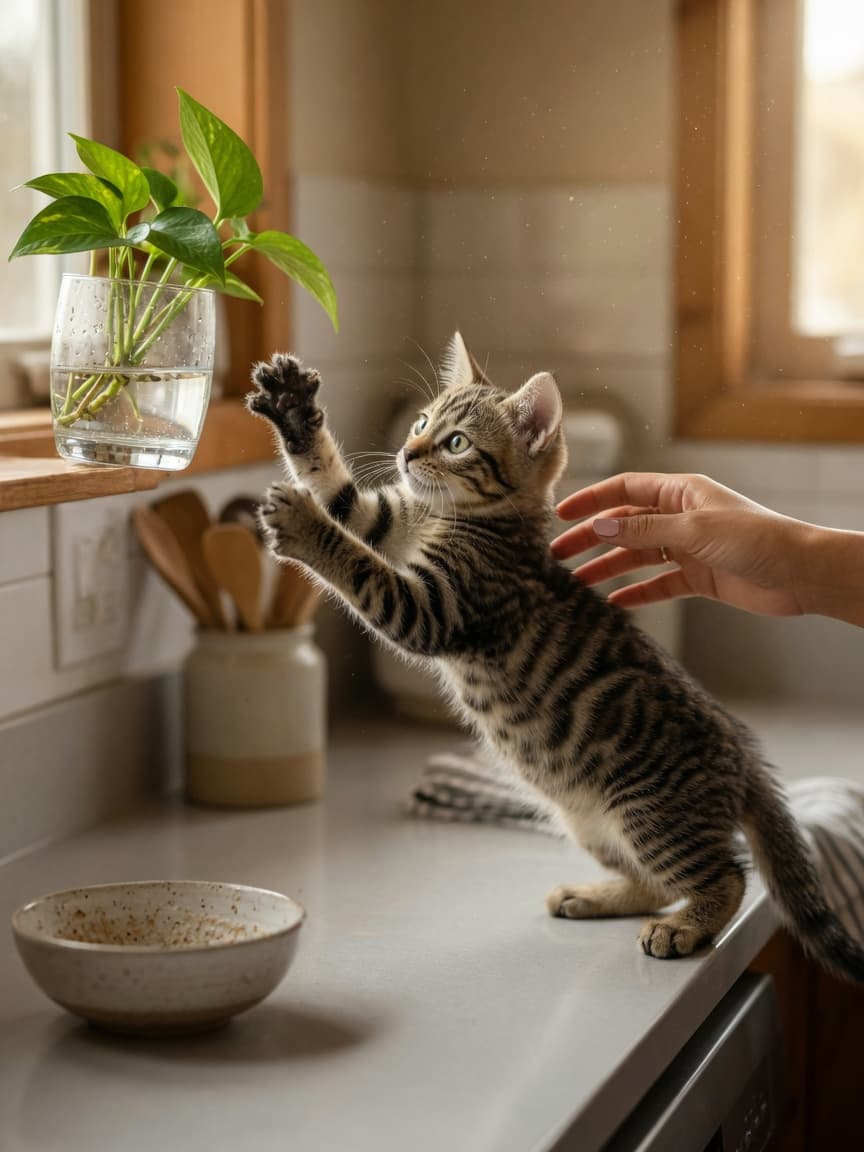
Why Kitten-Proofing Is Not Optional
A kitten's combination of agility, curiosity, and complete absence of caution makes it one of the most accident-prone animals you can bring into a home. Unlike puppies, kittens can reach countertops, squeeze into improbably small gaps, and navigate heights that would give a grown cat pause. Before your kitten arrives — or as soon as possible if it is already home — a thorough room-by-room audit can prevent injuries that are entirely avoidable.
This guide works through your home space by space, covering the hazards most likely to cause serious harm. Keep a notepad handy as you read; the list of things to address is likely longer than you expect.
The Kitchen
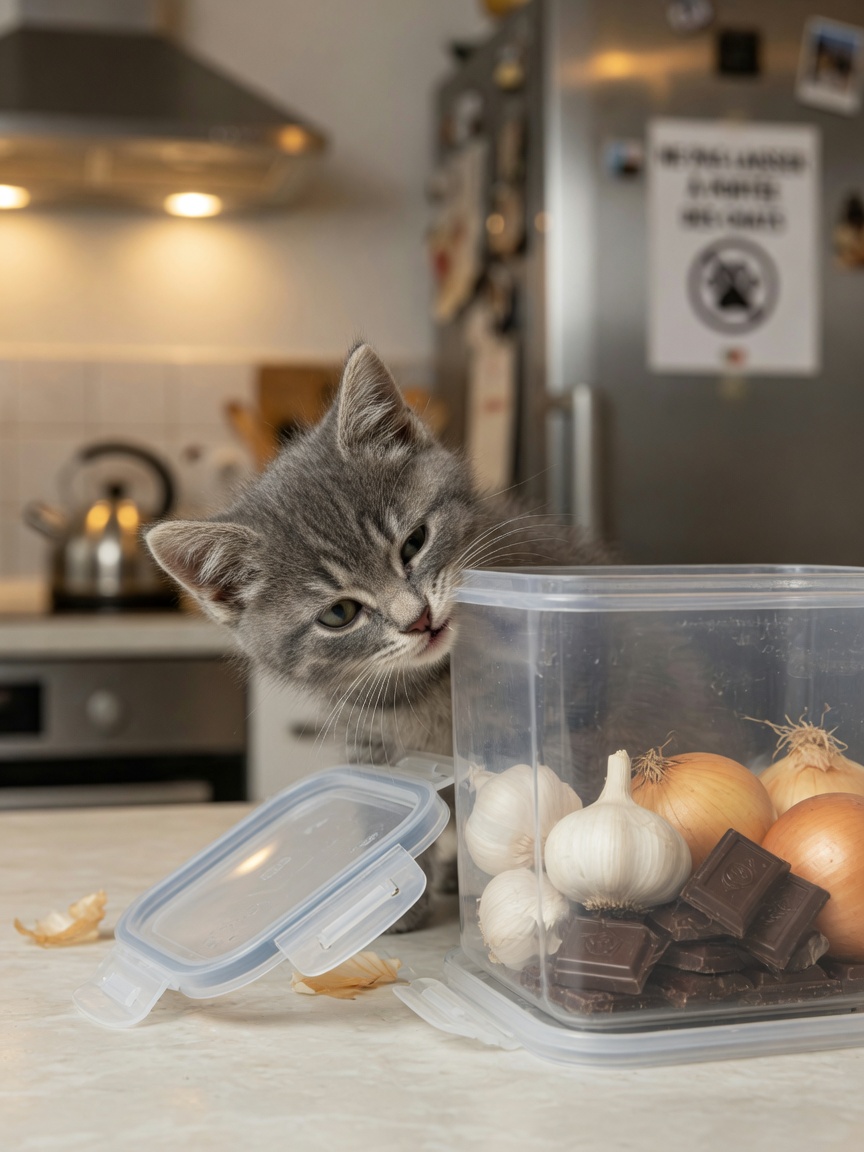
The kitchen is one of the highest-risk rooms in any home for a young kitten. The dangers come from multiple directions simultaneously.
Toxic foods are the most obvious concern. Onions, garlic, leeks, chives, grapes, raisins, chocolate, xylitol (found in sugar-free products and some peanut butters), alcohol, and caffeine are all toxic to cats. Raw dough containing yeast is also dangerous. Keep these foods in sealed containers and never leave them unattended on countertops where a curious kitten might investigate.
Stovetops present a serious burn risk. A kitten that jumps onto a hob that has recently been used may not be able to judge that the surface is still hot. Using hob covers when cooking is finished adds a simple layer of protection. Similarly, never leave pots of hot liquid unattended.
Rubbish bins with accessible contents — food scraps, tin lids, string, plastic bags — are worth securing with a latch or replacing with a lidded model. The inside of a dishwasher, particularly during or after a cycle, is another hazard to keep in mind: always check before closing the door.
The Bathroom
Bathrooms contain a concentration of hazards in a small space. The toilet presents a drowning risk for very small kittens; keeping the lid closed at all times is a simple and effective precaution.
Medications are a critical concern. Paracetamol (acetaminophen) is acutely toxic to cats and even a small dose can be fatal. Many other human medications — including ibuprofen, aspirin, and antidepressants — are also extremely dangerous. Store all medications in a closed cabinet, ideally one with a latch, and be especially careful about anything left on counters or in bags.
Cleaning products, bleach, toilet cleaners, and drain unblockers should be stored in a secured cupboard. Some cats are attracted to the smell of bleach, which makes this a particularly important precaution. Liquid pods for washing machines or dishwashers should be stored in their original sealed containers, well out of reach.
Razor blades, cotton bud stalks, and hair bobbles (which can cause intestinal obstruction if swallowed) should all be stored rather than left on surfaces.
The Living Room
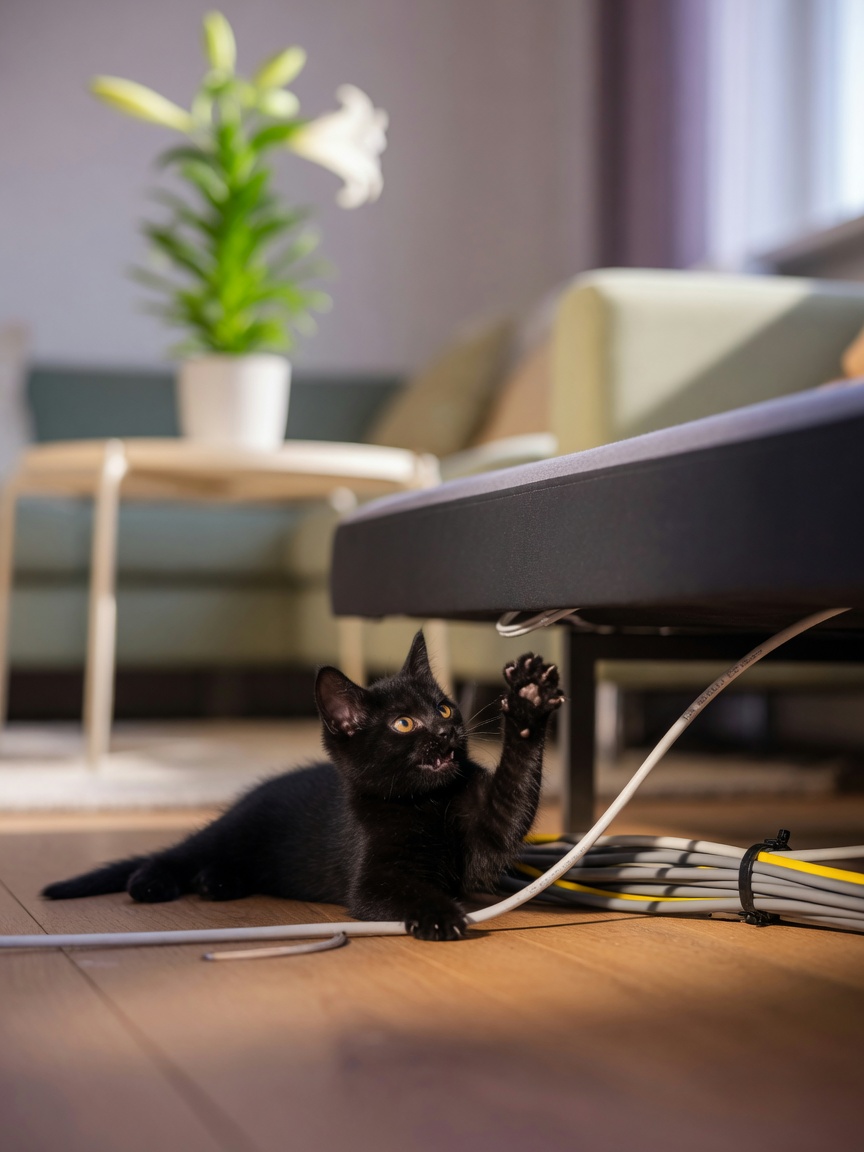
Living rooms tend to have a more diffuse set of hazards, but they are no less serious for it.
Electrical cables are a major risk. Kittens chew cables, and a live cable can cause electrocution or oral burns. Use cable management solutions to bundle and conceal wires, and use cable protector tubing on any cables that remain exposed. Unplug chargers and other cables when not in use.
Small objects — buttons, rubber bands, coins, small toys, batteries — are swallowing hazards and potential causes of intestinal obstruction. Maintain a habit of keeping floors and low surfaces clear of small items.
Recliner chairs and sofa beds are one of the less obvious but more serious risks in a living room. A kitten can hide inside the mechanism and be seriously injured when the chair is adjusted. Always check before operating any reclining furniture.
Houseplants deserve special attention. Lilies are the most dangerous plant for cats — all parts of true lilies (Lilium and Hemerocallis species) are highly toxic, and even ingesting a small amount of pollen or drinking water from a vase containing lilies can cause acute kidney failure. Other toxic plants include poinsettia, ivy, daffodil bulbs, azalea, oleander, and yew. The safest approach is to remove any toxic plants from the home entirely rather than simply placing them out of reach.
The Bedroom
Bedrooms may feel low-risk, but they contain two of the most underestimated hazards in the home: the washing machine and the tumble dryer. Cats seek out warm, enclosed spaces, and both appliances can look very inviting. Always check inside before loading and starting either machine. This applies to the whole household, not just the person primarily responsible for laundry.
Wardrobe doors that close fully are worth checking too. A kitten that climbs inside and becomes trapped may not be found until much later. Keep wardrobe doors closed or use ones with ventilation.
Hair ties, jewellery, and small accessories are another consideration. Keep these in a drawer rather than on a bedside table or dressing table surface.
Windows, Balconies, and Outdoor Access
High-rise syndrome — injuries sustained by cats falling from windows or balconies — is a genuine and serious risk, particularly in the first weeks when a kitten has not yet fully calibrated its spatial awareness. Fit window restrictors that allow ventilation without creating a gap wide enough for a kitten to fall through. On balconies, cat-proofing nets or mesh enclosures are available from specialist retailers and from larger pet suppliers such as Zooplus, which stock safety barriers and cat-proofing supplies suitable for balconies and gardens.
Even ground-floor windows present a risk if a kitten is not yet vaccinated, as outdoor exposure before the vaccination course is complete is inadvisable from an infectious disease perspective.
Safe Hiding Spots and Securing Cabinets
Kittens will find hiding spots whether you provide them or not, so offering appropriate ones reduces the temptation to hide somewhere dangerous. A cardboard box with a cut-out entrance placed in a quiet corner, or a covered cat bed in a low shelf, gives the kitten a retreat that you know is safe.
Cabinets under the sink, in utility rooms, and in garages often contain cleaning products, tools, or other hazardous materials. Fit child-proof cabinet latches to any cabinet that contains something a kitten should not access. The small cost of a pack of latches is trivial compared to an emergency veterinary visit.
Kitten-proofing is not a one-time task. As your kitten grows, revisit your home with fresh eyes — new hazards emerge as it gains height and strength, and what was safely out of reach at eight weeks may be easily accessible at five months.