
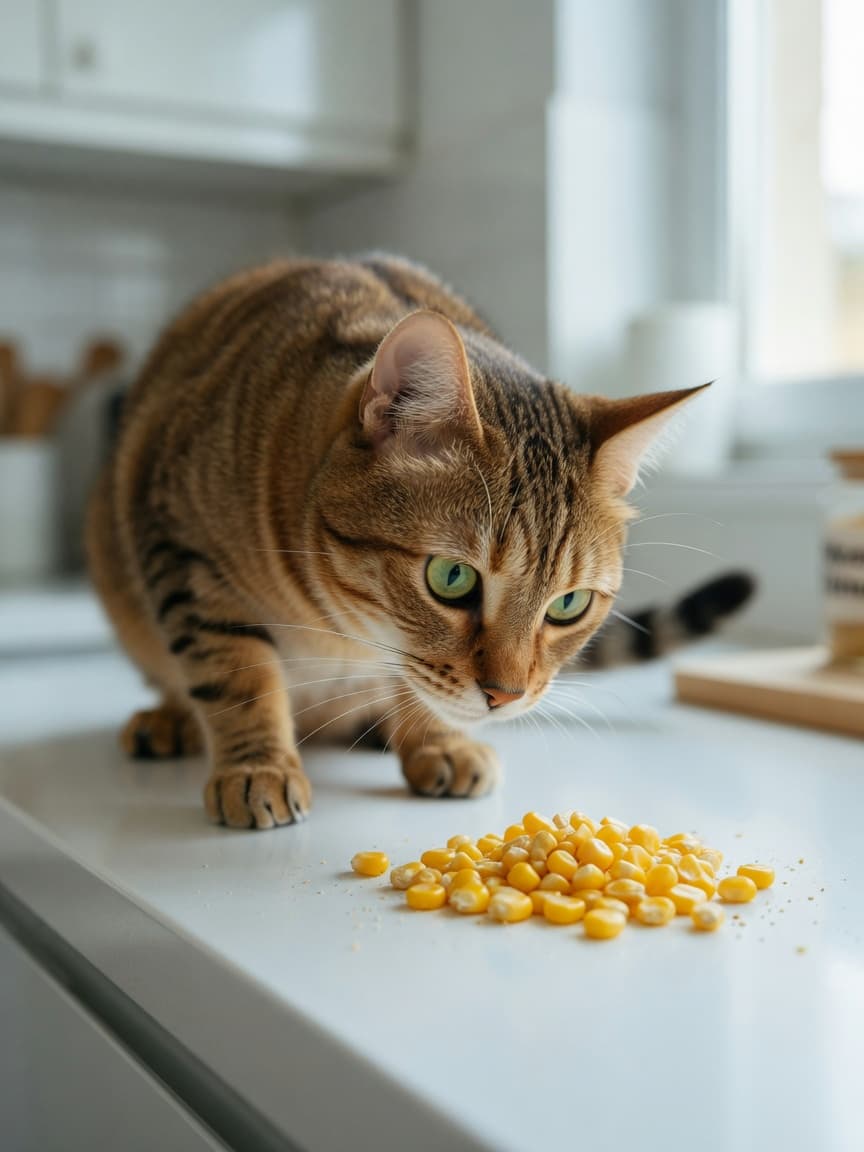
Can Cats Eat Corn? (Obligate Carnivore Perspective)
By Julia Wrenfield, Pet Wellness Researcher
Walk down any commercial cat food aisle and you'll find corn listed as an ingredient in many products. This surprises many owners who assume cats eat a purely meat-based diet. So is corn safe? Is it nutritious? And why does it appear in cat food at all? The answers lie in understanding feline biology from the ground up.
Cats Are Obligate Carnivores: What That Really Means
The term "obligate carnivore" means cats are biologically required to obtain specific nutrients — taurine, arachidonic acid, preformed vitamin A, and niacin — exclusively from animal tissue. Unlike dogs or humans, cats cannot synthesize these compounds adequately from plant precursors. Their digestive systems evolved over millions of years to process animal protein and fat with remarkable efficiency, while carbohydrate metabolism was largely left underdeveloped.
Cats produce very little salivary amylase, the enzyme that begins starch digestion in the mouth in omnivores. Their pancreatic amylase output is also significantly lower than in dogs. Hepatic glucokinase — an enzyme critical for regulating blood glucose after a carbohydrate-heavy meal — is essentially absent in cats. The result: carbohydrates from sources like corn are poorly digested, rapidly elevate blood glucose, and contribute to the feline obesity and diabetes epidemic increasingly documented in veterinary literature.
Is Corn Toxic to Cats?
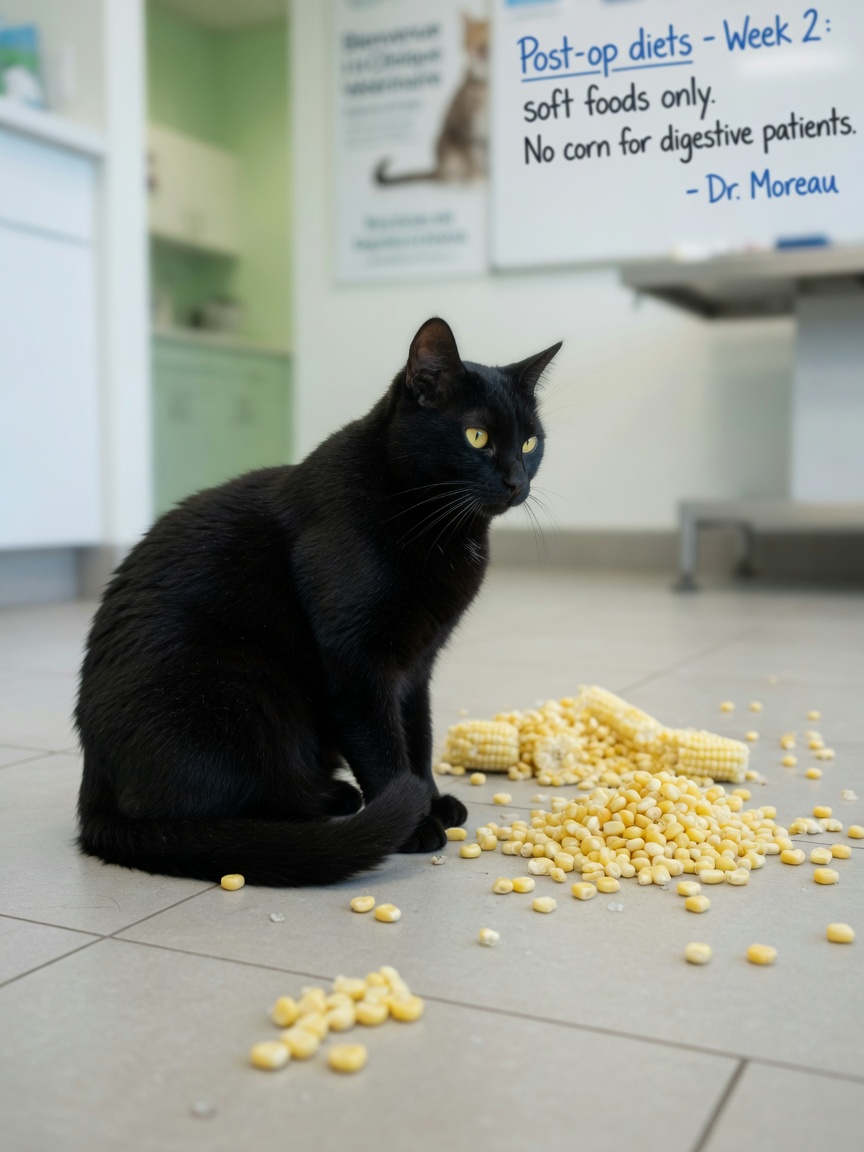
No. Plain, cooked corn kernels are not toxic to cats. There is no compound in corn equivalent to solanine in green tomatoes or theobromine in chocolate. A cat that steals a few kernels of corn on the cob will almost certainly experience nothing more serious than mild digestive upset, if that.
However, the absence of toxicity does not imply nutritional benefit. Corn is primarily starch (carbohydrate) with a moderate protein content. The protein in corn is incomplete — it lacks several amino acids essential to cats — and the digestibility of corn protein for felines is significantly lower than for animal-source proteins. Cats eating corn are essentially processing empty calories that deliver little usable nutrition.
Forms of Corn: What to Watch For
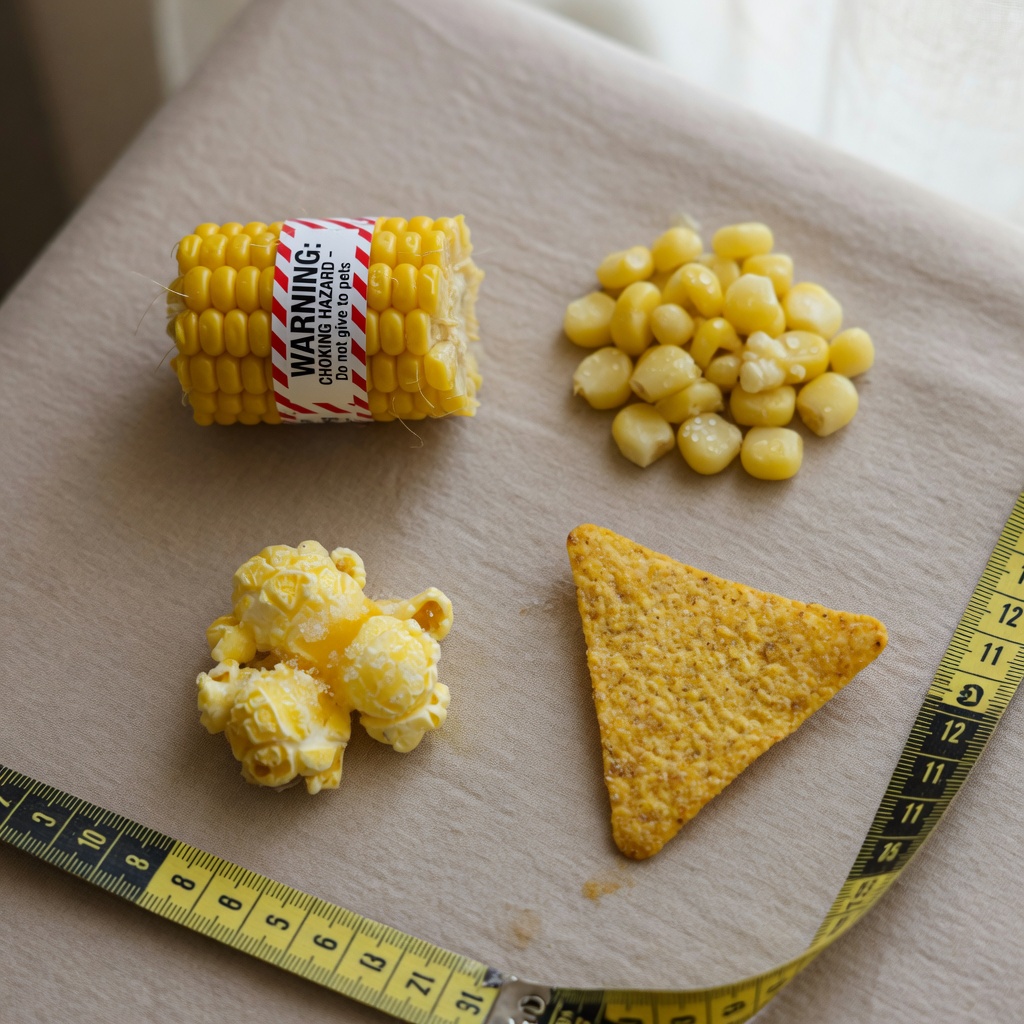
Not all corn is created equal when it comes to feline safety:
- Plain boiled or steamed corn kernels: Lowest risk. Acceptable as a rare, tiny treat but offer nothing beneficial.
- Corn on the cob: The cob itself poses a serious choking and intestinal obstruction risk. Never let a cat chew on a cob.
- Popcorn: Plain, air-popped popcorn is not toxic, but buttered, salted, or flavored varieties introduce dangerous additives. The hard kernel husks can also be a choking hazard.
- Corn chips, tortilla chips, nachos: Loaded with salt, oils, and often garlic or onion powder — all dangerous for cats. Strictly avoid.
- Creamed corn: Contains additives, high sodium, and sometimes dairy — not appropriate for cats.
- Corn syrup: A highly concentrated sugar source that contributes to obesity, dental disease, and insulin dysregulation. Keep away from cats entirely.
Why Is Corn in Commercial Cat Food?
This is a fair question, and the honest answer is partly economic. Corn serves as an inexpensive carbohydrate filler and binding agent in dry kibble formulations. It also provides some calories, which keeps manufacturing costs lower than using equivalent calories from animal protein. Some manufacturers argue that corn supplies linoleic acid (an omega-6 fatty acid) and some B vitamins, which is technically true but misleading — cats can obtain these nutrients far more bioavailably from animal sources.
Higher-quality cat foods minimize or eliminate grain fillers, focusing instead on named meat proteins as the primary ingredient. When evaluating a food label, the first three to five ingredients tell you the most. If corn or corn meal appears before any named meat protein, consider switching to a more species-appropriate formulation.
Explore grain-free and high-protein cat foods at Zooplus — designed around feline biologyCorn Allergies in Cats
Food sensitivities and allergies in cats most commonly involve animal proteins (beef, fish, chicken), but corn is an established secondary allergen in some individuals. Symptoms of corn sensitivity include chronic vomiting, diarrhea, flatulence, skin itching, hair loss, and recurring ear infections. If your cat shows these signs and is eating a corn-containing food, an elimination diet trial supervised by your veterinarian can identify whether corn is the culprit.
What Treats Are Actually Good for Cats?
If you want to reward your cat with something other than commercial treats, small pieces of plain cooked chicken, turkey, or white fish are far better choices. They're biologically appropriate, high in complete protein, and genuinely enjoyable for most cats. Commercial treats formulated specifically for cats provide controlled caloric content and often include beneficial additives like taurine or omega-3s.
Find species-appropriate cat treats at Zooplus — protein-first options your cat will loveKey Takeaways
- Corn is not toxic to cats, but it is biologically unnecessary for obligate carnivores.
- Cats lack key enzymes to digest starch efficiently, making corn low-value nutritionally.
- Corn cobs are a choking hazard; flavored corn products often contain toxic additives.
- Corn in cat food serves primarily as a cheap filler — not a health-promoting ingredient.
- Choose foods with named meat proteins as the primary ingredients for optimal feline health.
Scientific References
- Verbrugghe, A., & Hesta, M. (2012). Cats and carbohydrates: The carnivore fantasy? Veterinary Sciences, 4(3), 55. doi:10.3390/vetsci4040055. PMID: 29056730
- Plantinga, E. A., Bosch, G., & Hendriks, W. H. (2011). Estimation of the dietary nutrient profile of free-roaming feral cats: possible implications for nutrition of domestic cats. British Journal of Nutrition, 106(S1), S35–S48. PMID: 22005436