
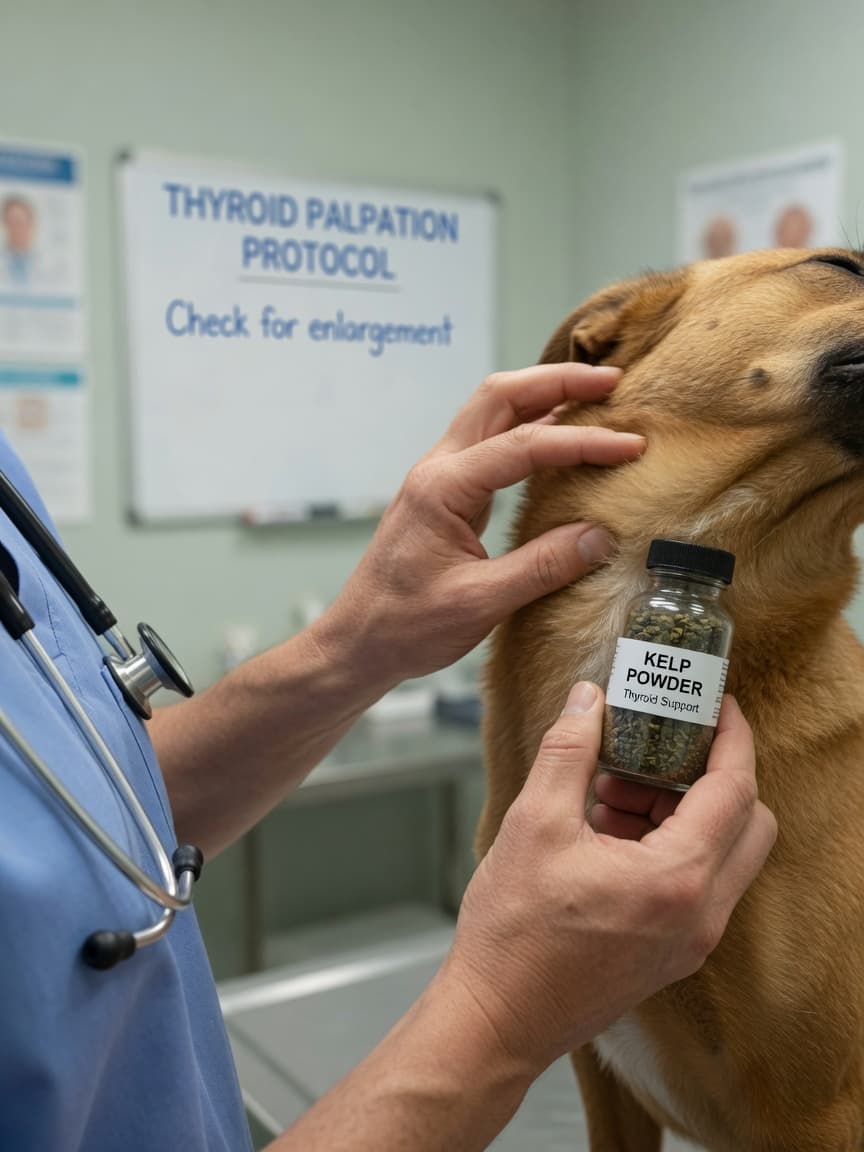
Kelp Supplements for Dogs: Thyroid Risks and Iodine Overload
Kelp has become a fashionable addition to natural pet health routines, appearing in raw food mixes, herbal supplement blends, and premium kibble ingredient lists. Proponents describe it as a rich source of minerals and a natural support for thyroid function, digestion, and coat health. What is less commonly discussed is that kelp also carries a specific and well-documented risk — one that relates directly to its most abundant mineral.
What Kelp Is and What It Contains
Kelp is a type of large brown seaweed from the order Laminariales. Various species are used in pet supplements, including Ascophyllum nodosum (also known as Norwegian kelp), Laminaria, and Macrocystis. These seaweeds naturally accumulate minerals from the ocean through their tissue, which is part of what makes them nutritionally interesting and part of what makes them potentially problematic.
Kelp contains:
- Iodine — present at highly variable concentrations depending on species, harvest location, and processing
- Fucoidan — a type of sulphated polysaccharide with anti-inflammatory and prebiotic properties under investigation
- Alginic acid — a soluble fibre with potential prebiotic effects
- Vitamins including K1 and several B vitamins
- Trace minerals including iron, zinc, magnesium, and calcium
- Heavy metals — including arsenic, cadmium, and lead, present at varying levels depending on sourcing
The fibre content and trace minerals provide a rationale for its inclusion in pet supplements. The iodine content is where the risk lies.
Iodine and the Canine Thyroid
Iodine is an essential mineral. Dogs require it exclusively for the synthesis of thyroid hormones — thyroxine (T4) and triiodothyronine (T3) — which regulate metabolism, growth, energy utilisation, heart rate, and numerous other physiological processes. Without sufficient iodine, the thyroid cannot produce adequate hormone, and hypothyroidism results.
This much is well understood, and it is the basis for the claim that kelp "supports thyroid function." What tends to be omitted is the other half of the equation: excessive iodine is also harmful to the thyroid, and kelp is one of the most concentrated dietary sources of iodine available.
The minimum iodine requirement for adult dogs is approximately 0.25 mg per kilogram of dry matter in the diet. The safe upper limit, as established by the Association of American Feed Control Officials (AAFCO) and European Pet Food Industry Federation (FEDIAF) guidelines, is significantly higher but not unlimited. Problems arise because kelp's iodine content is both very high and very inconsistent.
Published analyses of commercial kelp supplements have found iodine concentrations ranging from less than 100 micrograms per gram to more than 8,000 micrograms per gram — an eighty-fold variation. A dog given a kelp supplement without verified iodine content could easily receive ten, twenty, or even fifty times the appropriate daily dose.
What Iodine Excess Does to Dogs

Chronic iodine excess can cause thyroid dysfunction in either direction. It can suppress thyroid hormone synthesis through a mechanism called the Wolff-Chaikoff effect, leading to hypothyroidism. Conversely, in dogs with pre-existing subclinical thyroid nodules or autoimmune predisposition, excess iodine can trigger hyperthyroidism or thyroiditis.
Clinical signs of iodine toxicity in dogs include excessive nasal discharge, excessive salivation, dry coat, lethargy, and paradoxically — the same signs associated with hypothyroidism that owners may have been trying to address in the first place. Diagnosing iodine-induced thyroid dysfunction requires blood tests and, critically, a thorough dietary history that includes supplements.
There have been documented cases of dogs developing clinical hypothyroidism from kelp supplementation, and the issue is compounded when kelp is present in a commercial raw food mix alongside other iodine-containing ingredients.
Heavy Metal Contamination: A Secondary Concern
Seaweed bioaccumulates heavy metals from its marine environment. Arsenic is the primary concern with kelp specifically. While the arsenic in seaweed is predominantly in organic form (arsenosugars), which is considered less acutely toxic than inorganic arsenic, chronic exposure to elevated arsenic in food remains a legitimate concern. Cadmium and lead have also been detected in various kelp products at concentrations that regulators in some countries have flagged.
The level of heavy metal contamination varies considerably with harvest location and processing method, and is rarely disclosed on pet supplement labels. Third-party testing and certification from reputable suppliers can help, but the information is not consistently available to consumers.
When Kelp Might Have a Place
Kelp is not without any legitimate nutritional role. The fucoidan and alginate content may support gut microbiome diversity and have anti-inflammatory effects, though these are primarily studied in vitro and in other species. As a source of trace minerals in a complete, formulated diet, kelp meal appears in some commercial dog foods at carefully controlled levels.
The critical difference between kelp in a properly formulated commercial diet and kelp as a standalone supplement is quality control. Reputable manufacturers test their ingredients and formulate to meet FEDIAF or AAFCO standards, which include iodine maximums. A bag of kelp powder sold as a supplement has no such regulatory guarantee.
Practical Guidance
If your dog is currently receiving a commercially complete diet formulated to FEDIAF or AAFCO standards, their iodine needs are already met. Adding kelp on top of a complete diet increases iodine intake beyond what any risk-benefit calculation would support.
If you are feeding a home-prepared diet and want to include kelp as a mineral source, this should be done under veterinary guidance with a supplement that has verified, third-party tested iodine content. The dose should be calculated based on your dog's size, the rest of the diet's iodine contribution, and the specific supplement's concentration — not a generic "sprinkle on food" instruction.
Dogs with thyroid conditions, dogs on thyroid medication, and dogs being investigated for unexplained weight gain, lethargy, or coat changes should not receive kelp without an explicit discussion with a veterinarian who is aware of the supplement.
The appeal of kelp as a natural mineral supplement is understandable, but the iodine variability issue is not a theoretical concern — it is a documented cause of clinical harm. This is one area of natural supplementation where the precautionary approach is well warranted.