
Why Moving House Is Hard for Dogs
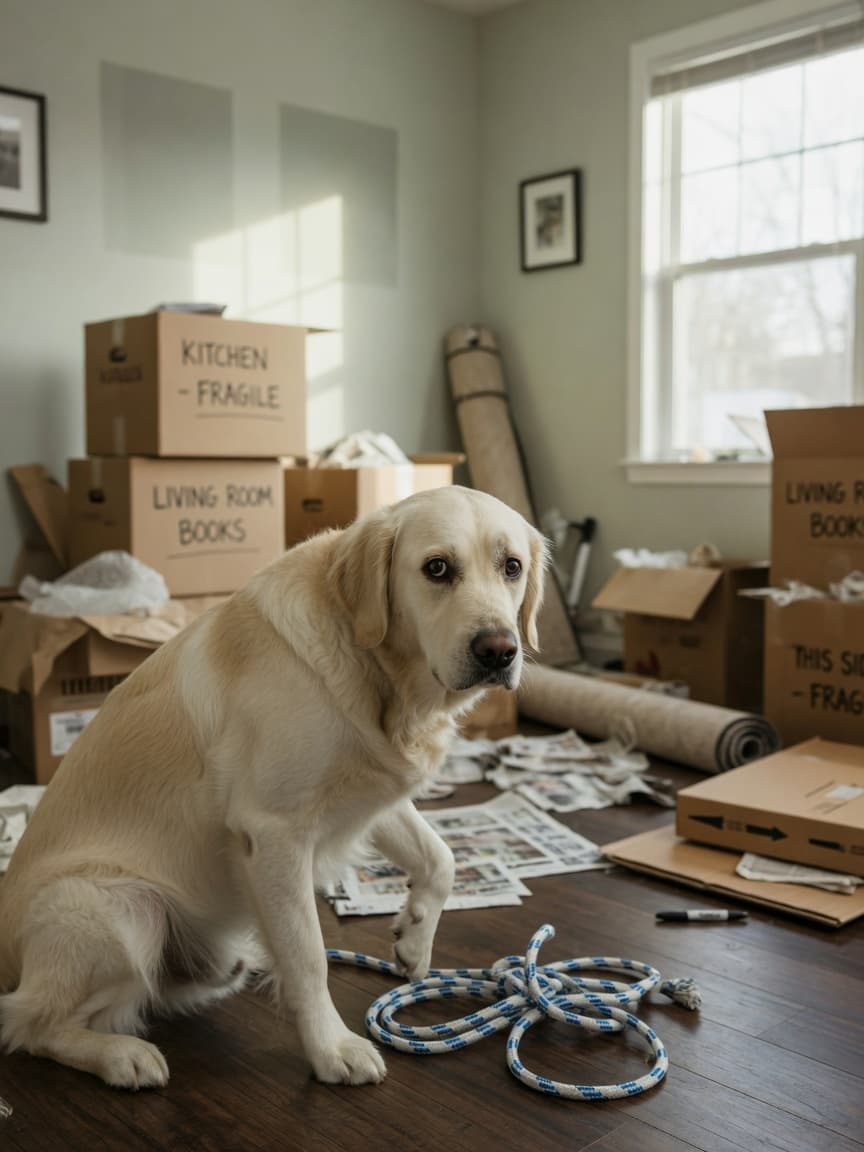
Dogs are creatures of routine and environment in a way that humans, with our capacity for abstract understanding, often underestimate. When you move house, you understand that the new space is your home, that your possessions are coming with you, and that the change is intentional. Your dog has none of that context. What they experience is the progressive dismantling of a familiar world, followed by transportation to an entirely unknown place filled with unfamiliar smells, sounds, and spatial configurations.
For many dogs, this is acutely stressful. Research into canine stress physiology shows that environmental change is one of the most reliable triggers for elevated cortisol levels, and a house move combines multiple stressors simultaneously: disrupted routines, the presence of strangers moving through the home, changes in the owner's behaviour and emotional state, and the complete loss of territorial familiarity.
Preparation Before Moving Day
The weeks before a move are actually the most important period for minimising your dog's stress, and they are also the period most often neglected because owners are understandably absorbed in the logistics of the move itself.
Begin by maintaining your dog's routine as consistently as possible throughout the packing period. Feeding times, walk times, and play sessions should stay as close to normal as circumstances allow. Dogs use routine as a form of predictability and security, and when everything around them is changing visually, the consistency of a routine provides meaningful grounding.
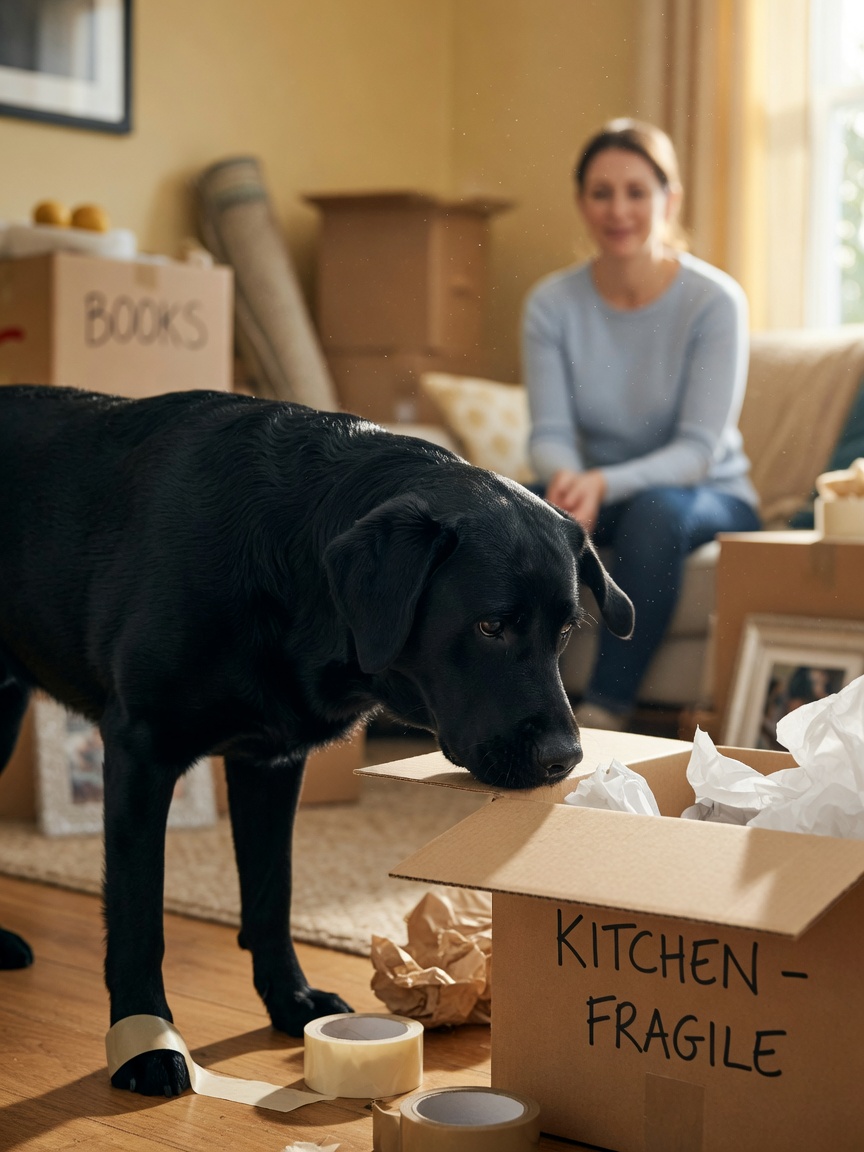
As boxes accumulate and furniture is rearranged, give your dog supervised time to investigate the changes rather than being repeatedly removed from rooms. Dogs process environmental change most effectively through direct sensory investigation, particularly smell. Allowing them to sniff the new boxes, the packing tape, and the rearranged furniture helps them update their mental map of the space rather than simply confronting ongoing strangeness.
Managing Moving Day Itself
Moving day is the highest-stress point for most dogs and deserves its own planning. The ideal arrangement is for your dog to be absent from the property during the main removal process, either staying with a trusted friend or family member, spending time with a professional dog walker, or being dropped off at a familiar boarding facility for the day.
If this is not possible, designate one room in the house as a quiet zone. Place your dog's bed, familiar toys, their water bowl, and an unwashed item of clothing that carries your scent in this room, then keep the door shut throughout the move. A pheromone diffuser such as Adaptil, set up in this room 24 hours before moving day if possible, can provide additional calm support.
The key moving day dos and don'ts include:
- Do ensure your dog's microchip details are updated with your new address before the move
- Do check that collar identification tags show your new address and phone number
- Do keep your dog on a lead during all loading and unloading, as open doors and the chaos of removal day create a significant escape risk
- Do not leave your dog unsupervised in the removal van at any point
- Do not change food brands or feeding schedules on moving day itself
Arriving at the New Home
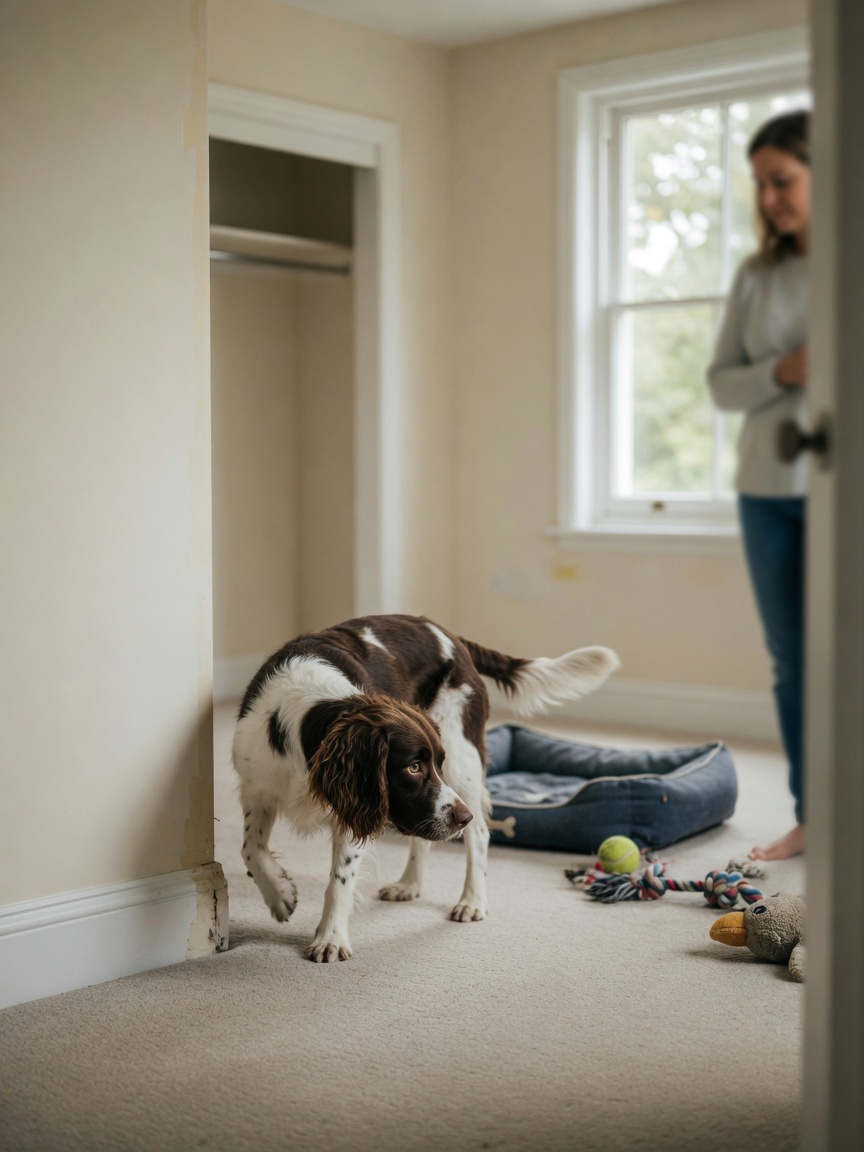
When you arrive at the new property, resist the temptation to give your dog unsupervised access to the whole space immediately. Instead, introduce them to one room at a time, starting with the space where their bed and familiar belongings are set up. Allow them to investigate each new area at their own pace, accompanying them and remaining calm and positive throughout.
Dogs re-establish territory primarily through scent marking, and this is a normal and necessary process in a new environment. Some dogs will be methodical and calm about it; others may be more anxious and will benefit from shorter, more frequent supervised explorations over the first few days rather than being left to roam freely in an unfamiliar space.
Garden security must be checked thoroughly before your dog is allowed off-lead outdoors. Fences, gates, and any gaps under boundaries should be assessed from a dog's perspective before assuming the space is secure. Keep your dog on a long line in the garden initially until you are confident the perimeter is sound.
The First Two Weeks
The settling-in period for most dogs is between one and four weeks, though this varies considerably with temperament, age, and the dog's previous experience of change. During this period, some dogs will display behaviours they have not shown since puppyhood, including house-soiling, excessive vocalisation, destructive chewing, or clinginess. These are expressions of anxiety rather than regression in training, and they should be managed with patience rather than punishment.
Maintain established routines as closely as possible in the new home. Walk at the same times, feed at the same times, and engage in the same types of play and enrichment you used in your previous home. Introducing new walks in the neighbourhood is fine and can actually be enriching, but anchor these new experiences in familiar rituals.
Social interaction with neighbours and their dogs should be managed carefully in the early weeks. Your dog is still orienting to their new environment and may be more reactive than usual. Allow your dog to set the pace for new introductions rather than pushing them into social situations before they are ready.
When Anxiety Persists
Most dogs settle comfortably into a new home within a few weeks. If your dog continues to show significant signs of stress, including persistent house-soiling, refusal to eat, continuous vocalisation, or self-directed behaviours such as excessive licking or chewing, beyond four to six weeks, it is worth consulting your vet or a qualified clinical animal behaviourist.
Ongoing anxiety following a house move can sometimes be the first visible sign of an underlying anxiety disorder that the structure of a familiar environment was previously masking. Early intervention with appropriate behavioural support, and where necessary pharmacological support, produces far better outcomes than waiting to see if things improve on their own.