
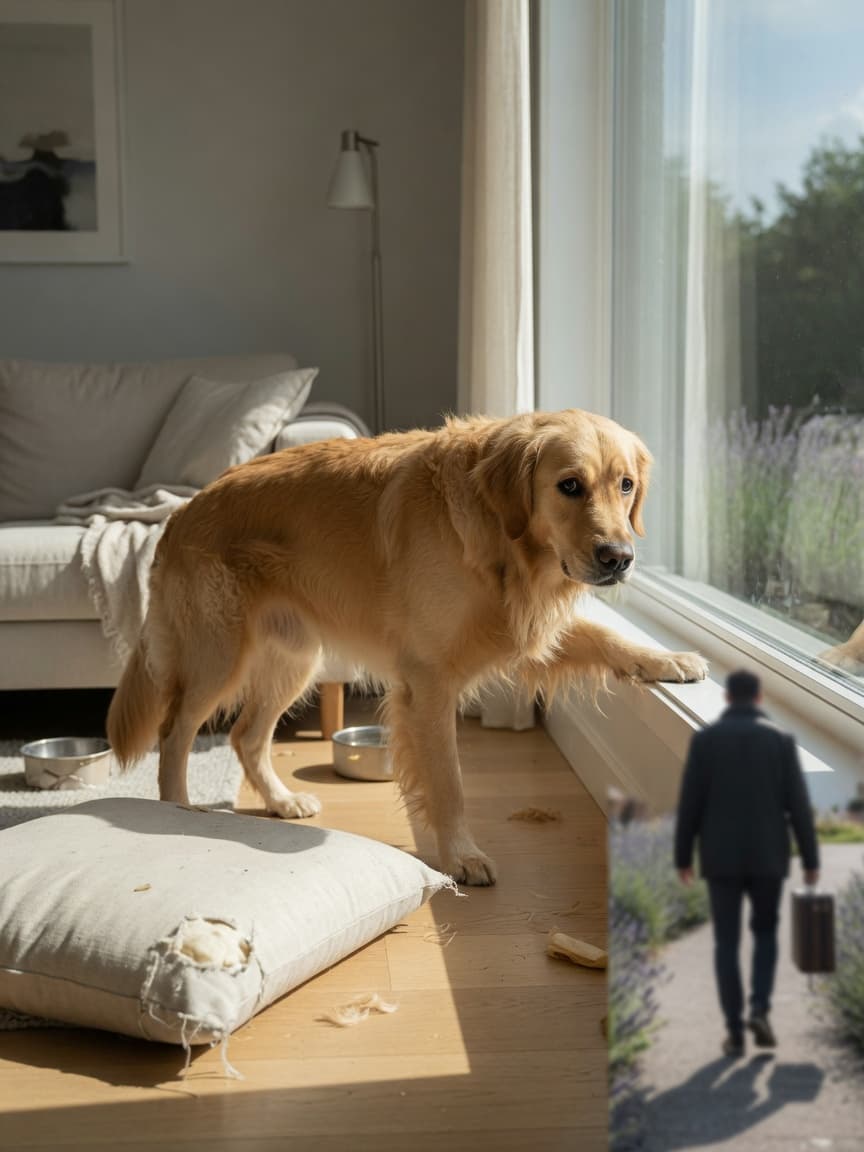
When Leaving Home Becomes Traumatic for Your Dog
Studies suggest that between 14 and 20 percent of dogs presented to veterinary clinics show signs of separation-related distress. For many owners, the evidence arrives through a neighbour's complaint, a chewed door frame, or a puddle of urine on an otherwise house-trained dog. Separation anxiety is not misbehaviour — it is a genuine fear response, and addressing it requires understanding what drives it before reaching for any solution.
What Causes Separation Anxiety
Separation anxiety arises when a dog perceives time alone as a threat. The underlying causes are rarely singular.
Predisposing Factors
- Early weaning or inadequate socialisation during the critical developmental window (3–12 weeks)
- Rehoming, shelter stays, or multiple changes in living situation
- Genetic predisposition — certain breeds show higher prevalence, including Labrador Retrievers and German Shepherds
- A history of traumatic events occurring during solitude
Triggering Events
- A sudden shift from constant owner presence to extended absences — common after lifestyle changes
- Loss of a companion animal or human family member
- A single frightening incident (storm, fireworks) experienced alone
It is also worth distinguishing true separation anxiety from boredom-driven destructiveness or incomplete house training. True anxiety involves physiological arousal — elevated heart rate, panting, drooling, and an inability to settle — not simply a dog that gets bored and explores the kitchen bin.
Assessing the Severity
Before designing a management plan, you need an accurate picture of what your dog actually does when alone. The most reliable method is video footage recorded during a genuine departure. Watch for the following within the first 30 minutes, as most anxious dogs escalate rapidly after the owner leaves.
Mild Signs
- Whining or vocalisation that settles within 10–15 minutes
- Pacing near exits, then self-settling
- Reluctance to eat treats left behind
Moderate to Severe Signs
- Sustained barking, howling, or screaming
- Destructive behaviour focused on exits (doors, windows, skirting boards)
- Self-injury from repeated attempts to escape
- Urination or defecation in a house-trained dog
- Profuse salivation or vomiting
A clinical assessment by a veterinary behaviourist or a certified clinical animal behaviourist should be sought for moderate and severe cases. Pain, cognitive dysfunction in older dogs, and other medical conditions can mimic or worsen anxiety, making a veterinary check an essential first step before any behaviour programme begins.
Behaviour Modification: The Core Approach
The gold standard for treating separation anxiety is systematic desensitisation combined with counter-conditioning. This means gradually exposing your dog to the cues and durations associated with departure, at a level low enough to prevent panic, while pairing those exposures with positive associations.
Pre-Departure Cue Training
Many dogs begin to show anxiety before the owner has even left — the sight of keys, a bag, or a coat can trigger the stress response. Work through these cues individually, picking up your keys and then sitting back down, until the dog no longer reacts. This phase alone can take several weeks.
Graduated Absences
Begin with departures so brief they fall below the dog's anxiety threshold — sometimes this means stepping outside for three seconds and immediately returning. Progress is measured in seconds and minutes, not days. The dog should remain calm throughout. Pushing too fast and triggering a full anxiety response sets the programme back considerably.
Creating Positive Associations
- Offer a long-lasting food item (a stuffed foraging toy, for instance) exclusively during alone time, so its appearance predicts your absence positively
- Avoid emotional departures and arrivals — calm, low-key greetings reduce the contrast between presence and absence
- Ensure adequate physical exercise and mental enrichment on a daily basis, as a well-exercised dog has a lower baseline arousal level
Supporting Tools and Environment
Behaviour modification is the primary intervention, but supportive measures can reduce baseline anxiety and make training more effective.
- Calming pheromone diffusers designed for dogs have shown modest evidence of benefit in some studies, particularly when introduced well before the modification programme begins
- A safe, dog-proofed confinement area (a pen or a single room rather than a crate if crates cause additional distress) can limit destructive access and reduce self-injury risk
- White noise or species-appropriate audio (research on dog-calming music exists and results are promising) may help mask triggering outdoor sounds
- In moderate to severe cases, a veterinary consultation may result in the prescription of anxiolytic medication to bring the dog's arousal to a level at which learning can actually take place — medication is a tool, not a cure in itself
Realistic Expectations and Long-Term Management
Separation anxiety is not resolved in a weekend. Meaningful progress in mild cases may take six to twelve weeks of consistent daily work. Moderate and severe cases often require several months, specialist support, and occasionally long-term pharmacological management. Setbacks are common and do not mean failure — they indicate that the programme has moved too quickly.
Practical adjustments that protect your dog while training is ongoing include doggy day care, a trusted dog sitter, or staggered working hours where possible. These are not substitutes for treatment, but they prevent the dog from experiencing repeated panic during the training period.
Key Takeaways
- Film your dog during genuine absences to establish what is actually happening and how quickly it escalates
- Rule out medical causes with a vet before starting any behaviour programme
- Seek a certified behaviourist for anything beyond mild, self-resolving distress
- Systematic desensitisation is the evidence-based approach — shortcuts tend to prolong the problem
- Manage the environment to avoid panic while training is under way
- Be patient: sustainable improvement takes weeks to months, not days