
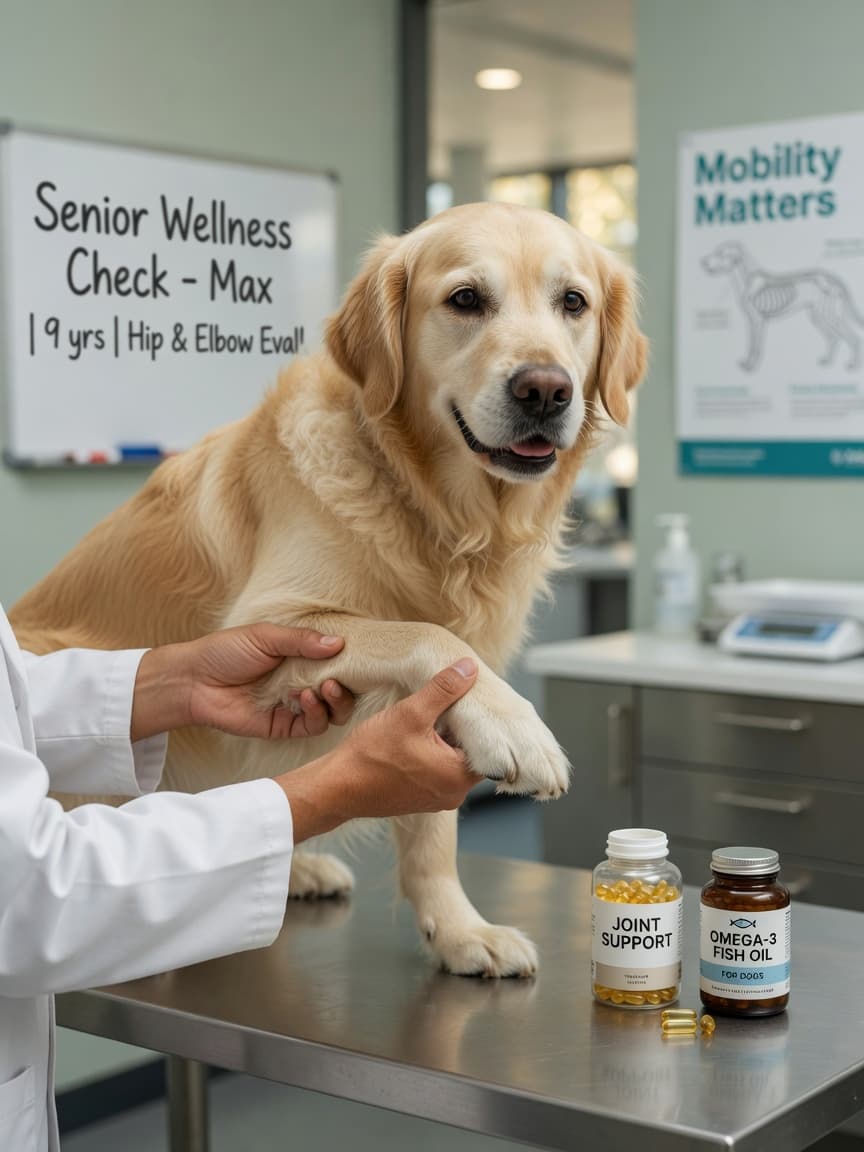
Understanding Joint Disease in Dogs

Osteoarthritis (OA) is one of the most common health conditions affecting dogs, with estimates suggesting it affects up to 20% of dogs over one year of age and a significantly higher proportion of older dogs. It is a degenerative joint disease characterised by the breakdown of cartilage, joint inflammation, and progressive pain and stiffness. Watching a dog struggle to rise from rest, hesitate before stairs, or lose enthusiasm for walks is distressing — and it drives many owners to explore joint supplements as part of a management plan.
The World Small Animal Veterinary Association (WSAVA) has published guidance on nutraceuticals and dietary supplements, noting that while some products show genuine promise, the quality of evidence varies enormously between ingredients. This guide reviews the most commonly available joint supplements using honest, evidence-based assessments.
Glucosamine and Chondroitin: Moderate Evidence
Glucosamine and chondroitin sulphate are arguably the most widely used joint supplements for dogs in Europe, and they are the starting point for most discussions about canine joint health.
Glucosamine is a naturally occurring compound involved in cartilage synthesis. Chondroitin sulphate helps cartilage retain water and resist compression. In combination, they are theorised to support cartilage structure and reduce inflammation in osteoarthritic joints.
The evidence for these supplements in dogs is of moderate quality. Some clinical studies have shown improvements in owner-assessed mobility and pain scores in dogs with OA receiving glucosamine/chondroitin combinations, though results are not universally positive and effect sizes tend to be modest. The evidence is somewhat stronger in human medicine, which has influenced their widespread use in veterinary practice. They are generally considered safe, with a low risk of adverse effects at recommended doses.
When choosing a product, look for clear labelling of glucosamine hydrochloride or glucosamine sulphate content, with specific mg amounts per dose rather than vague "proprietary blends." Zooplus stocks several well-regarded joint supplements for dogs, including products from brands like Canina and Grau, which provide transparent ingredient quantities.
Omega-3 Fatty Acids (EPA and DHA): Strong Evidence
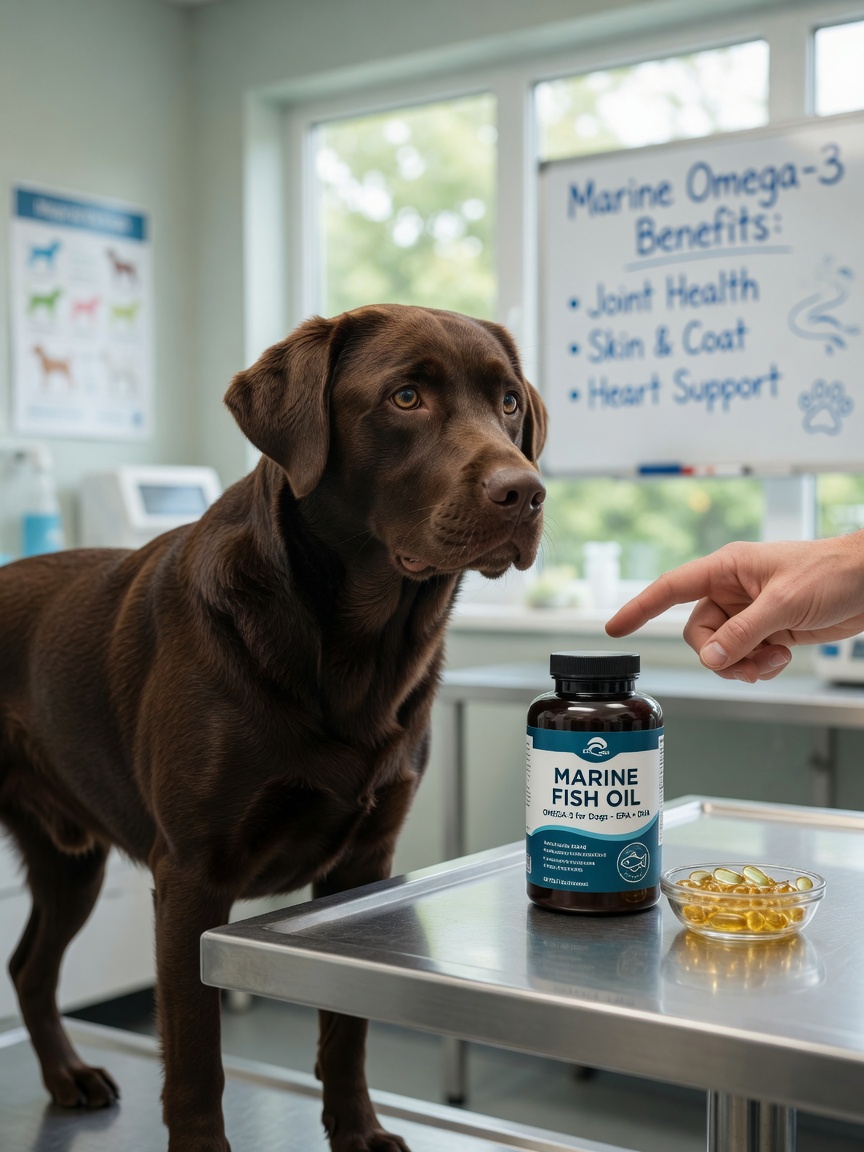
Of all the supplements discussed in this guide, omega-3 fatty acids — specifically eicosapentaenoic acid (EPA) and docosahexaenoic acid (DHA) from marine sources — have among the strongest evidence bases for joint health in dogs.
Marine-derived omega-3s have well-documented anti-inflammatory effects. They work by modulating the production of pro-inflammatory eicosanoids, reducing joint inflammation and potentially slowing cartilage degradation. Multiple clinical studies in dogs have demonstrated meaningful improvements in mobility, force plate measurements, and owner-reported quality of life in arthritic dogs receiving omega-3 supplementation.
The WSAVA guidelines recognise omega-3 fatty acids as one of the nutraceuticals with the most credible evidence for clinical benefit in dogs with OA. Effective doses in clinical studies typically range from 75 to 100 mg of EPA+DHA combined per kilogram of body weight per day — considerably higher than what many standard supplements provide, so checking actual EPA/DHA content on the label is important.
Fish oil is the most common source. Choose products specifically formulated for pets or human-grade fish oil with third-party purity testing, as some fish oils can contain environmental contaminants. Algae-based omega-3s are a suitable alternative for owners who prefer a sustainable or plant-based source, as algae is the original source of EPA and DHA in the marine food chain.
Green-Lipped Mussel: Promising Evidence
Green-lipped mussel (Perna canaliculus), sourced from New Zealand, has attracted considerable interest as a joint supplement for dogs. It contains a unique combination of omega-3 fatty acids (including ETA, a particularly potent anti-inflammatory), glycosaminoglycans, and antioxidants.
The evidence base for green-lipped mussel in dogs is promising, with several published studies showing improvements in joint pain and mobility in dogs with OA. A study published in the Veterinary Journal found that dogs receiving green-lipped mussel extract showed significant improvements compared to control groups, with owner-reported outcomes aligning with objective assessments. Overall, the evidence quality is considered moderate-to-good for this ingredient.
Green-lipped mussel products are widely available in Europe through pet retailers including Zooplus, often in powder, capsule, or chew form. Look for products that specify the quantity of green-lipped mussel powder or extract per dose, and consider products that have been through independent quality testing.
Boswellia: Limited but Positive Early Evidence
Boswellia serrata is a botanical extract with a long history of use in traditional medicine for its anti-inflammatory properties. In companion animal medicine, it has begun to attract research attention as a potential joint support ingredient.
The evidence for boswellia in dogs is limited but generally positive in early studies. Its active compounds, boswellic acids, are thought to inhibit pro-inflammatory enzymes including 5-lipoxygenase. A small number of clinical studies in dogs have shown improvements in joint-related parameters with boswellia supplementation, though the studies are generally small and further research is needed to establish optimal dosing and long-term safety.
Boswellia is frequently found in combination joint supplements rather than as a standalone ingredient. It appears to be well tolerated in dogs at standard supplement doses, with occasional mild gastrointestinal effects reported.
Collagen: Emerging Evidence
Hydrolysed collagen — particularly Type II collagen derived from chicken cartilage or other sources — is an increasingly popular ingredient in joint supplements. The rationale is that collagen peptides may support cartilage structure by providing the building blocks for collagen synthesis in joint tissue.
The evidence for collagen supplementation in dogs is still emerging and currently limited in volume and quality. Some studies in humans and small animal populations suggest potential benefits, but robust clinical trials specifically in dogs with OA are lacking. It is an ingredient worth watching as the research develops, but current evidence does not support strong claims of efficacy.
What to Look for in a Quality Joint Supplement
- Transparent ingredient quantities: Avoid products that hide doses behind "proprietary blends." You should be able to see exactly how many milligrams of each active ingredient you are giving your dog.
- Evidence-based ingredients: Prioritise products containing omega-3 (EPA/DHA) and/or green-lipped mussel, which have the strongest evidence bases.
- Third-party quality testing: Look for products made in facilities with Good Manufacturing Practice (GMP) certification, ideally with independent testing for potency and contaminants.
- Species-appropriate formulation: Ensure the product is designed for dogs and does not contain ingredients harmful to them.
When Supplements Are Not Enough
Joint supplements are supportive tools, not treatments. If your dog is in significant pain, showing marked lameness, or experiencing a notable decline in quality of life, supplements alone are unlikely to be sufficient. Your vet may recommend:
- Non-steroidal anti-inflammatory drugs (NSAIDs), which have strong evidence for pain management in canine OA
- Physiotherapy or hydrotherapy
- Weight management, which is one of the most impactful interventions for dogs with OA
- Referral to a veterinary orthopaedic specialist
Always involve your vet in managing your dog's joint health. Supplements work best as part of a broader management plan, not as a standalone solution.