
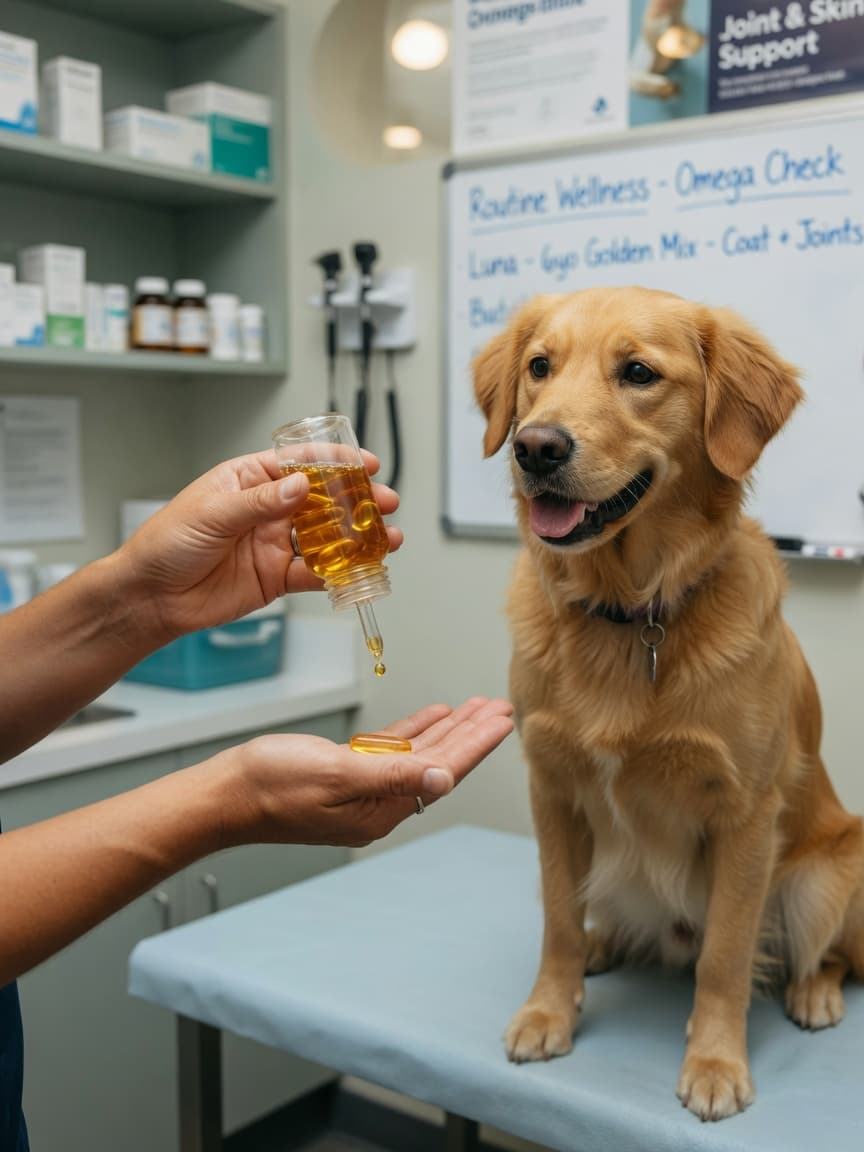
Fish Oil for Dogs: Omega-3 Benefits, Best Sources & Correct Dosing
Fish oil is arguably the most evidence-backed supplement available for dogs. Unlike many pet wellness products that rest on anecdote and marketing, omega-3 fatty acids from fish oil have been studied in peer-reviewed veterinary trials for skin health, joint inflammation, cardiac function, cognitive support, and even kidney disease management. But not all omega-3s are equal, not all fish oil products are pure, and the dose makes all the difference.
Here's everything you need to know to use fish oil safely and effectively for your dog.
EPA and DHA vs. ALA: Why Fish Oil Beats Flaxseed for Dogs
Omega-3 fatty acids come in three primary forms: ALA (alpha-linolenic acid), EPA (eicosapentaenoic acid), and DHA (docosahexaenoic acid). ALA is the plant-based omega-3 found in flaxseed oil, chia seeds, and hemp. EPA and DHA are the marine-derived omega-3s found in fish oil.
Here's the critical distinction: ALA must be converted to EPA and DHA to exert biological effects. In humans, this conversion is inefficient (roughly 5–10%). In dogs, it is even less efficient. Studies show that dogs fed flaxseed oil show minimal increases in tissue EPA and DHA concentrations, while fish oil supplementation produces robust increases. This means that for the anti-inflammatory and organ-supportive benefits we care about, flaxseed oil is essentially ineffective for dogs — fish oil is the necessary source.
How Omega-3s Fight Inflammation: The Eicosanoid Pathway
The mechanism behind EPA and DHA's anti-inflammatory effects is well understood. When cells are damaged, membrane phospholipids release arachidonic acid (an omega-6), which is converted by cyclooxygenase (COX) enzymes into pro-inflammatory prostaglandins and leukotrienes. EPA competes directly with arachidonic acid for the same enzymatic pathway, producing less inflammatory eicosanoids instead. DHA is converted into resolvins and protectins — molecules that actively resolve inflammation rather than merely suppressing it.
This is why the omega-6 to omega-3 ratio in a dog's diet matters. Most commercial dry kibble diets are high in omega-6 (from chicken fat, vegetable oils) and relatively low in omega-3, creating a pro-inflammatory baseline that fish oil can help correct.
Research-Backed Benefits of Fish Oil for Dogs

Skin and Coat Health
This is where the evidence is strongest and most consistent. A controlled study (PMID 26633542) demonstrated that EPA and DHA supplementation significantly improved coat quality scores, reduced transepidermal water loss (a marker of skin barrier integrity), and decreased pruritus (itching) in dogs with atopic dermatitis compared to control groups. Fish oil supports the lipid barrier of the skin, reducing allergic reactivity and improving coat luster. Dogs with environmental allergies and dry, flaky coats are among the most reliable responders to fish oil supplementation.
Joint Inflammation and Osteoarthritis
Multiple veterinary trials show that EPA and DHA supplementation reduces lameness scores and non-steroidal anti-inflammatory drug (NSAID) requirements in dogs with osteoarthritis. The anti-inflammatory mechanism directly targets the prostaglandin cascade responsible for joint pain and swelling. Fish oil is not a cure for arthritis, but it functions as a meaningful adjunct to veterinary pain management, particularly in dogs that cannot tolerate long-term NSAID use.
Cardiac Support
Research published in peer-reviewed veterinary cardiology journals (PMID 22232985) found that EPA and DHA supplementation in dogs with dilated cardiomyopathy (DCM) improved cardiac cachexia (muscle wasting), reduced circulating inflammatory cytokines, and was associated with improved survival outcomes in some studies. The AVMA acknowledges omega-3 supplementation as part of integrative cardiac care in dogs. Dogs with diagnosed heart disease should only receive fish oil under cardiologist supervision, as dosing needs to be precise.
Cognitive Function in Senior Dogs
DHA is the primary structural fatty acid in the canine brain. As dogs age and develop canine cognitive dysfunction syndrome (CDS) — a condition analogous to human dementia — DHA levels in neural tissue decline. Supplementation studies show that DHA-enriched diets slow the progression of cognitive decline markers and improve learning scores in aging dogs. While this research is promising, it's important to note that fish oil cannot reverse established cognitive dysfunction.
Kidney Disease Support
In dogs with chronic kidney disease (CKD), EPA and DHA supplementation has been shown to reduce glomerular hypertension (high pressure in kidney filtration units) and slow disease progression in some studies. Several veterinary therapeutic kidney diets are now formulated with elevated omega-3 levels for this reason. Fish oil for kidney disease should always be managed by a veterinarian.
Best Sources: Why Small Fish Are Superior
Not all fish oil is created equal. The best sources for canine supplementation are:
- Salmon oil: High EPA and DHA content; widely available. Choose wild-caught over farmed when possible, as farmed salmon has a less favorable fatty acid profile.
- Sardine oil: Excellent EPA/DHA concentration; sardines are small, short-lived fish with minimal mercury accumulation.
- Anchovy oil: The gold standard for mercury safety. Anchovies live only 1–2 years and consume phytoplankton directly, resulting in negligible heavy metal bioaccumulation.
Large predatory fish (tuna, swordfish, shark) bioaccumulate mercury, PCBs, and other environmental toxins through the food chain. For this reason, fish oil derived from small forage fish is significantly safer for daily supplementation.
What About Krill Oil?
Krill oil contains EPA and DHA bound to phospholipids rather than triglycerides, which some research suggests improves bioavailability. It also contains astaxanthin, a natural antioxidant. However, krill oil is significantly more expensive per gram of EPA/DHA than anchovy or sardine oil. The bioavailability advantage may not justify the cost difference for most dogs. The AKC notes that standard fish oil remains the most cost-effective option for the majority of dogs.
Dosing by Weight: The Veterinary Guidelines
Fish oil dosing is based on total EPA + DHA content, not the total oil volume on the label. A typical starting dose recommended by veterinary nutritionists is approximately 20–55 mg of combined EPA + DHA per kilogram of body weight per day for general anti-inflammatory support. Therapeutic doses for specific conditions (cardiac disease, kidney disease) may be higher and should be directed by a veterinarian.
Practical examples: A 10 kg (22 lb) dog would receive approximately 200–550 mg EPA+DHA daily. A 30 kg (66 lb) dog would receive approximately 600–1,650 mg EPA+DHA daily. Check the label of your specific product to calculate the actual EPA+DHA per capsule or milliliter — do not assume based on the total fish oil volume.
The Oxidation Problem: Storage Matters
Fish oil is highly prone to oxidation — rancidity — when exposed to heat, light, and air. Oxidized fish oil not only loses efficacy but may actually generate harmful free radicals. Signs that fish oil has gone rancid include a sharp, unpleasant fishy odor (beyond normal), a bitter taste, and a yellow-brown color. Always store fish oil in a dark, cool location (refrigerator after opening), purchase smaller bottles that will be used within 60–90 days, and choose products that contain added vitamin E (tocopherols) as a natural antioxidant.
Quality Markers to Look For
- IFOS Certification: The International Fish Oil Standards program tests products for EPA/DHA content accuracy, heavy metals, PCBs, dioxins, and oxidation levels. IFOS-certified products have passed independent third-party testing.
- Molecular distillation: A purification process that removes heavy metals and environmental contaminants. Look for this on the label.
- NASC Quality Seal: Indicates compliance with National Animal Supplement Council manufacturing and labeling standards.
- Triglyceride form: Naturally occurring triglyceride-form fish oil is better absorbed than ethyl ester form (the latter is cheaper to produce but less bioavailable).
When to Avoid Fish Oil
Despite its benefits, fish oil is not appropriate for all dogs:
- Pre-surgery: EPA and DHA inhibit platelet aggregation and have a mild anticoagulant effect. Fish oil should be discontinued at least 1–2 weeks before any planned surgical procedure to reduce bleeding risk.
- Pancreatitis history: Fish oil is a fat, and high-fat supplementation can trigger pancreatitis flares in susceptible dogs. Dogs with a history of pancreatitis require veterinary guidance before any fat supplementation.
- Dogs on anticoagulant medications: The anticoagulant effect of fish oil may be additive with drugs like warfarin or heparin.
- Vitamin D toxicity risk: Some fish liver oils (particularly cod liver oil) contain high levels of vitamins A and D. At therapeutic doses, these can accumulate to toxic levels. Pure fish body oil does not carry this risk; fish liver oil does.
Key Takeaways
- EPA and DHA from fish oil are the biologically active omega-3s for dogs — flaxseed oil (ALA) cannot be efficiently converted and is not an effective substitute.
- Fish oil has the strongest evidence for skin/coat health and itching reduction in dogs with atopy.
- Small fish sources (anchovy, sardine) are safest due to low mercury and contaminant levels.
- Dose based on EPA + DHA content (20–55 mg/kg/day for general use), not total oil volume.
- Choose IFOS-certified, molecularly distilled products stored in the refrigerator after opening.
- Avoid fish oil before surgery and in dogs with pancreatitis history; always consult a vet for therapeutic dosing.
Scientific References
- Bauer JE. "Therapeutic use of fish oils in companion animals." Journal of the American Veterinary Medical Association. 2011. PMID: 22232985
- Kil DY, Swanson KS. "Omega-3 fatty acids and skin health in dogs." Veterinary Dermatology. 2016. PMID: 26633542