
Fleas are among the most common parasites affecting dogs across Europe, yet many pet owners struggle to identify them. Whether you're dealing with an active infestation or simply want to spot the early warning signs, knowing what fleas actually look like is crucial for protecting your dog's health and comfort. This comprehensive guide will help you recognise fleas at every stage of their life cycle and understand why swift action matters.
Adult Fleas: What to Look For
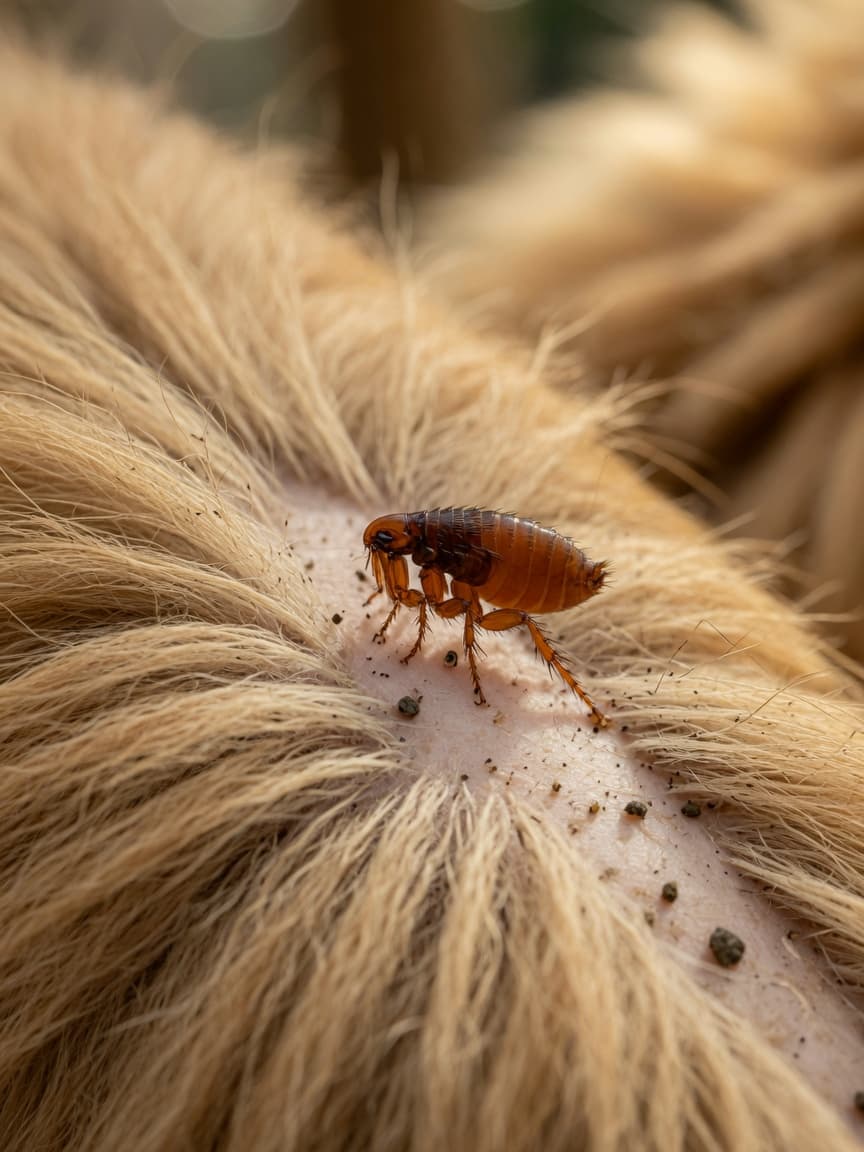
Adult fleas are small but visible to the naked eye, measuring between 2-3mm in length. They're typically reddish-brown or dark brown in colour, though they may appear darker after feeding on your dog's blood. Their bodies are laterally compressed, meaning they're flattened side-to-side rather than top-to-bottom, which allows them to move easily through your dog's fur.
The most distinctive features of an adult flea include:
- Long hind legs adapted for jumping—up to 50 times their own body length
- A smooth, shiny appearance when unfed
- A darker, more bloated appearance after feeding
- Extremely fast movement through the coat
Where to Spot Fleas on Your Dog
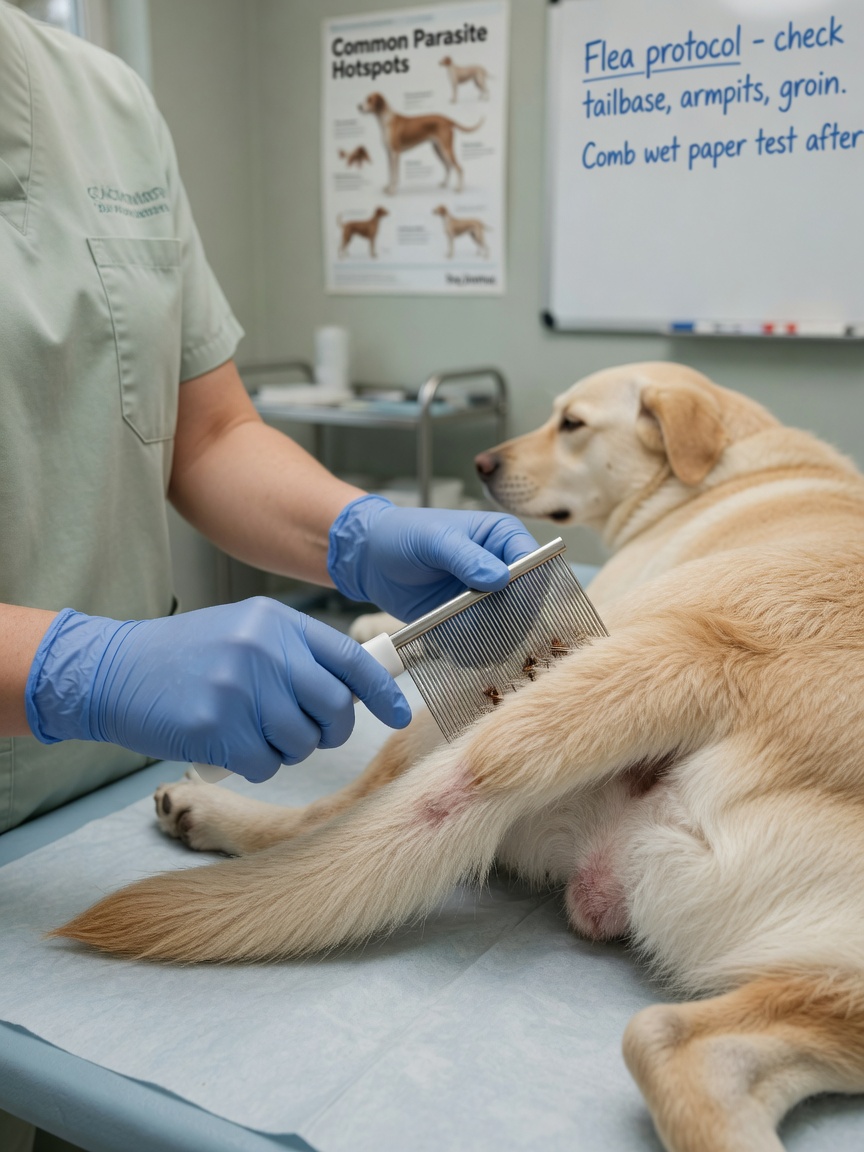
Fleas have favourite locations on your dog's body, particularly in warm, sheltered areas. The most common places to find them include:
- The base of the tail
- Around the groin and back legs
- Inside the ears
- The neck and head area
- Between the toes and paw pads
If you suspect fleas, try using a fine-toothed flea comb directly onto your dog's skin. Part the fur and comb methodically through these hot spots. Any fleas you catch will be visible on the comb, and you can confirm by placing them on a white tissue—live fleas will move quickly, whilst flea dirt (faeces) will smudge reddish-brown.
Flea Dirt: The Real Giveaway
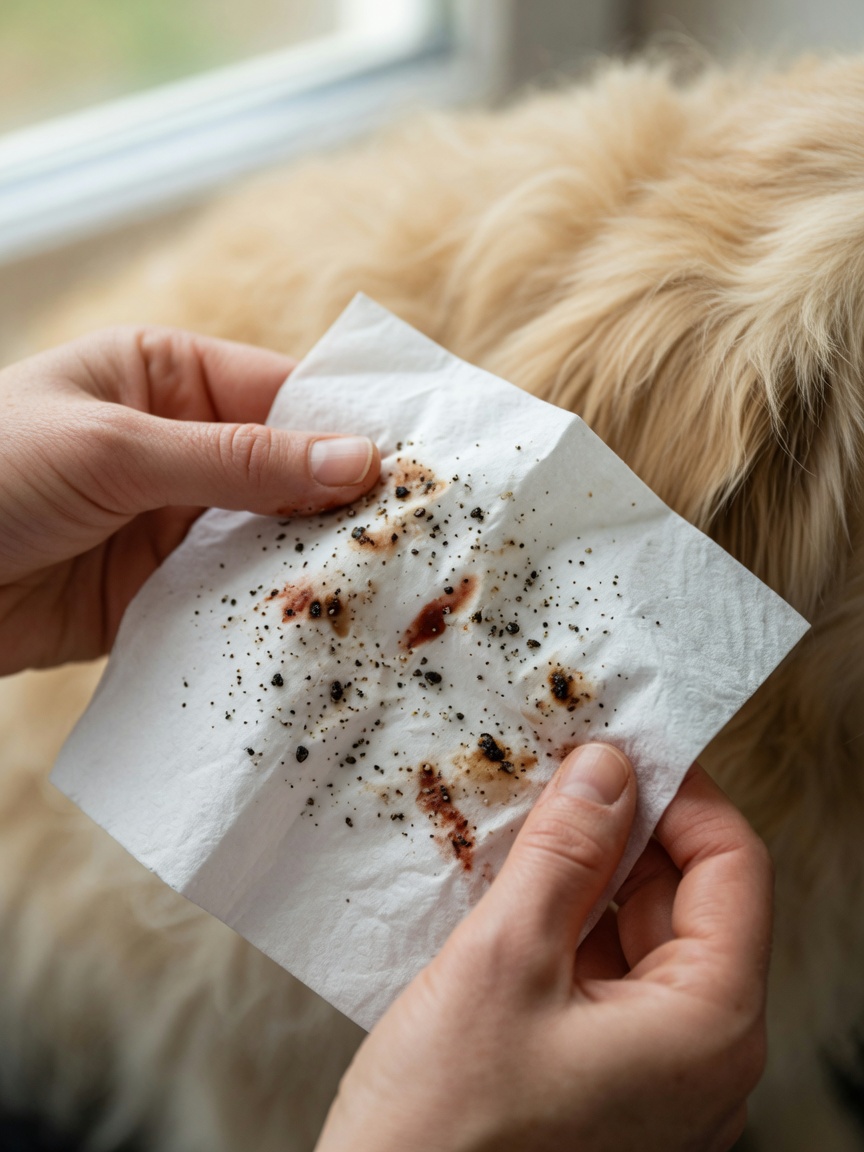
Often, you'll spot flea dirt before spotting actual fleas. Flea dirt looks like tiny black specks or grains of black pepper scattered through your dog's coat. This isn't actually dirt—it's flea faeces composed of digested blood. Finding flea dirt is a reliable indicator of flea infestation, even if you don't see live fleas.
To confirm flea dirt, place the black specks on a damp white tissue. If they turn reddish-brown, you've found flea faeces. This is an important diagnostic tool when fleas themselves are difficult to locate.
The Flea Life Cycle: Other Stages
Understanding the complete flea life cycle helps you appreciate why treatment is essential. Whilst adults are visible, other life stages are harder to spot:
- Eggs: Tiny, oval, and off-white in colour—nearly invisible to the naked eye. They're laid in your dog's fur but quickly fall off into the environment
- Larvae: Thin, worm-like creatures approximately 3-5mm long. They're usually found in carpet, bedding, and dark areas
- Pupae: Encased in cocoons, these are the most resistant stage to treatment and can remain dormant for weeks
Signs Your Dog Has Fleas
Beyond visual identification, watch for these behavioural and physical signs:
- Excessive scratching, particularly around the tail and hindquarters
- Hair loss or bald patches from over-grooming
- Red, irritated skin or small scabs
- Restlessness and difficulty sleeping
- Skin dermatitis or allergic reactions
Key Takeaways for Flea Identification
Identifying fleas early gives you the best chance of preventing a full infestation. Remember that adult fleas are 2-3mm reddish-brown insects that move quickly through fur, whilst flea dirt is often easier to spot. Use a flea comb on warm areas of your dog's body, and don't hesitate to contact your veterinary surgeon if you're unsure. Since only 5% of fleas are adults whilst 95% exist as eggs, larvae, and pupae in your home, professional treatment targeting all life stages is essential for complete control. Regular preventative measures are far more effective and comfortable for your dog than managing an active infestation.