

Two Parasites, Two Very Different Problems
Fleas and ticks are both external parasites that feed on blood, and both are unwelcome guests on any pet. Beyond those basic similarities, however, they operate quite differently, pose different health risks, and require somewhat different approaches to control. Understanding what sets them apart helps you make better decisions about your pet's protection.
Understanding Fleas
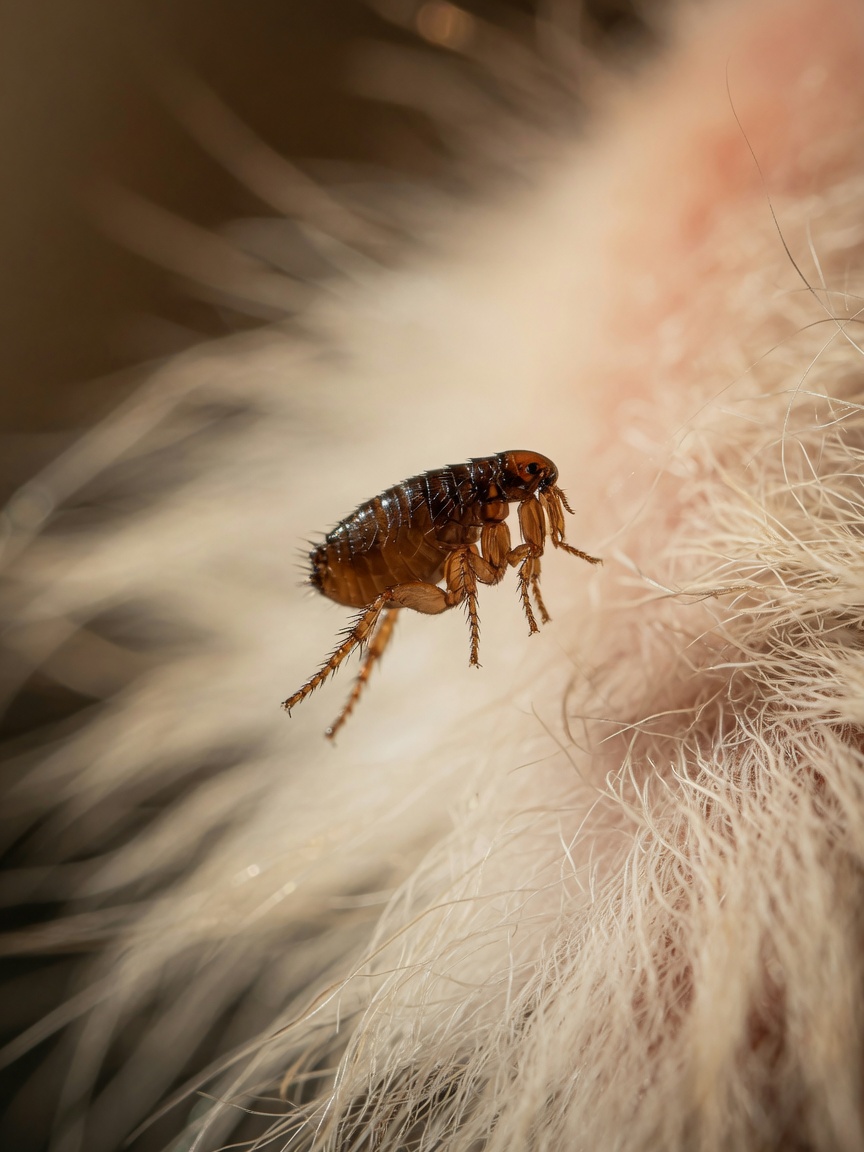
Fleas are tiny, wingless insects — roughly 1 to 3 millimetres in length — that move by jumping rather than flying. A single flea can jump up to 150 times its own body length, which is how they move between hosts and across your home so efficiently. The cat flea, Ctenocephalides felis, is paradoxically the most common species found on both cats and dogs across most of the world.
What many pet owners do not fully appreciate is that the fleas you can see on your pet represent only about 5 percent of the total infestation. The remaining 95 percent — eggs, larvae, and pupae — are living in your carpets, furniture, bedding, and floorboards. This is why treating the pet alone rarely solves a flea problem.
Health Risks Associated with Fleas
- Flea allergy dermatitis — an intensely itchy allergic reaction to flea saliva, one of the most common skin conditions in pets
- Anaemia — in young, elderly, or small animals, heavy flea burdens can cause significant blood loss
- Tapeworm transmission — the dog tapeworm Dipylidium caninum completes part of its life cycle inside fleas; pets acquire it by swallowing an infected flea during grooming
- Bartonellosis — a bacterial infection transmitted by flea faeces, associated with cat scratch disease in humans
- Transmission between pets and to humans in the household
Understanding Ticks
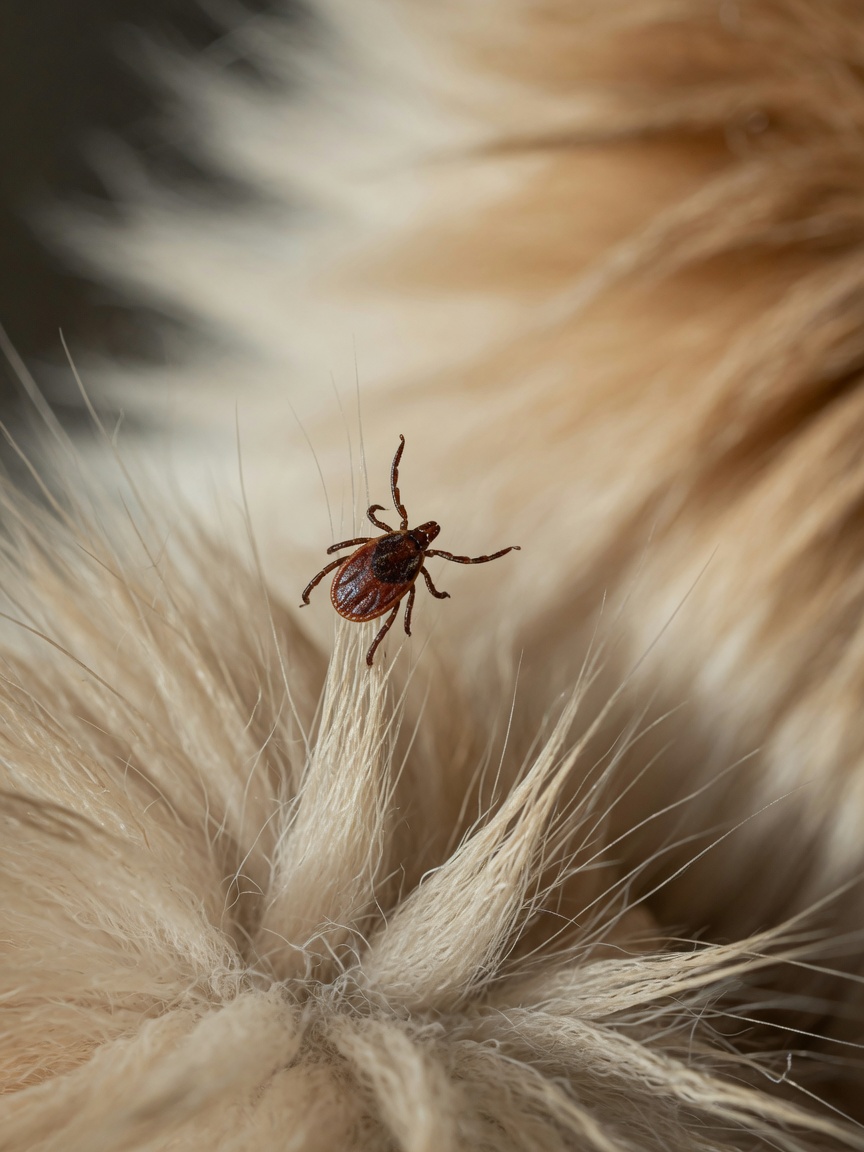
Ticks are arachnids, more closely related to spiders and mites than to insects. They are slow-moving and do not jump or fly — instead, they wait on vegetation with their front legs extended in a behaviour called questing, latching on when a warm-blooded host brushes past. Once attached, ticks feed for several days before dropping off.
The tick's feeding process is what makes it such an effective disease vector. As it feeds, it can transmit pathogens from its salivary glands directly into the host's bloodstream. Some pathogens are not transmitted immediately — Lyme disease, for example, typically requires a tick to be attached for 24 to 48 hours before transmission occurs. This is why prompt removal matters.
Health Risks Associated with Ticks
- Lyme disease — caused by Borrelia burgdorferi bacteria; signs include lameness, fever, lethargy, and in severe cases kidney disease
- Babesiosis — a protozoal infection that destroys red blood cells, potentially fatal without treatment
- Ehrlichiosis and anaplasmosis — bacterial infections affecting white blood cells and platelets
- Rocky Mountain spotted fever — though more common in North America, it illustrates the serious systemic illness ticks can transmit
- Tick paralysis — caused by a neurotoxin in some tick species' saliva; can cause ascending paralysis that resolves once the tick is removed
Where and When You Encounter Each Parasite
Fleas thrive in warm, humid environments and are active year-round in many climates. They are particularly abundant indoors, making them as much a household pest as a pet problem. Even pets that rarely go outside can acquire fleas from visiting animals, second-hand furniture, or wildlife near the home.
Ticks are predominantly outdoor parasites found in woodland, grassland, and areas of dense vegetation. Activity peaks in spring and autumn in temperate climates, though mild winters have extended the active season considerably in recent years. Pets that walk through parks, fields, or forested areas face the highest exposure.
Flea Prevention: What Works
Effective flea control must address both the pet and the environment. On the pet, options include monthly spot-on treatments, oral tablets, and flea collars. Active ingredients vary — imidacloprid, fipronil, spinosad, and afoxolaner are among the most commonly used. Some products kill adult fleas only, whilst others also target eggs and larvae through insect growth regulators.
Environmental treatment involves washing all bedding at high temperatures, vacuuming frequently and thoroughly (including along skirting boards and under furniture), and using household sprays or foggers containing insect growth regulators to prevent larvae from maturing. Without tackling the environmental reservoir, flea problems will persist regardless of how consistently you treat your pet.
Tick Prevention: What Works
Tick prevention focuses primarily on repelling or killing ticks before they can feed long enough to transmit disease. Spot-on treatments, oral medications, and certain collars all offer varying degrees of tick protection. Products containing fluralaner, sarolaner, afoxolaner, or lotilaner are among the most effective oral options, providing protection for one to three months per dose.
Physical tick checks after every outdoor excursion are an important complement to chemical prevention. Run your fingers through your pet's coat, paying particular attention to areas where ticks commonly attach: around the ears, between the toes, in the groin, and along the collar line. If you find a tick, use fine-tipped tweezers or a tick removal tool to grasp it as close to the skin as possible and pull steadily upward without twisting.
Combination Products: Convenient but Not Always Complete
Many modern parasite treatments combine flea and tick protection in a single product, which is convenient and improves compliance. However, no single product covers every parasite in every life stage equally well. Some products are highly effective against ticks but less so against flea eggs; others excel at killing adult fleas but offer minimal tick repellency.
Read product labels carefully and discuss your pet's specific risk profile with your vet. A dog that rarely leaves a city flat has very different needs from one that spends weekends hiking through woodland.
The Human Health Angle
Both fleas and ticks pose health risks to the humans living with infected pets. Ticks that drop off pets can attach to people, and fleas will bite humans even if they do not establish long-term residence on them. Reducing parasite burdens on your pets is therefore a household health issue, not just a veterinary one. Regular, year-round prevention protects your entire family.