
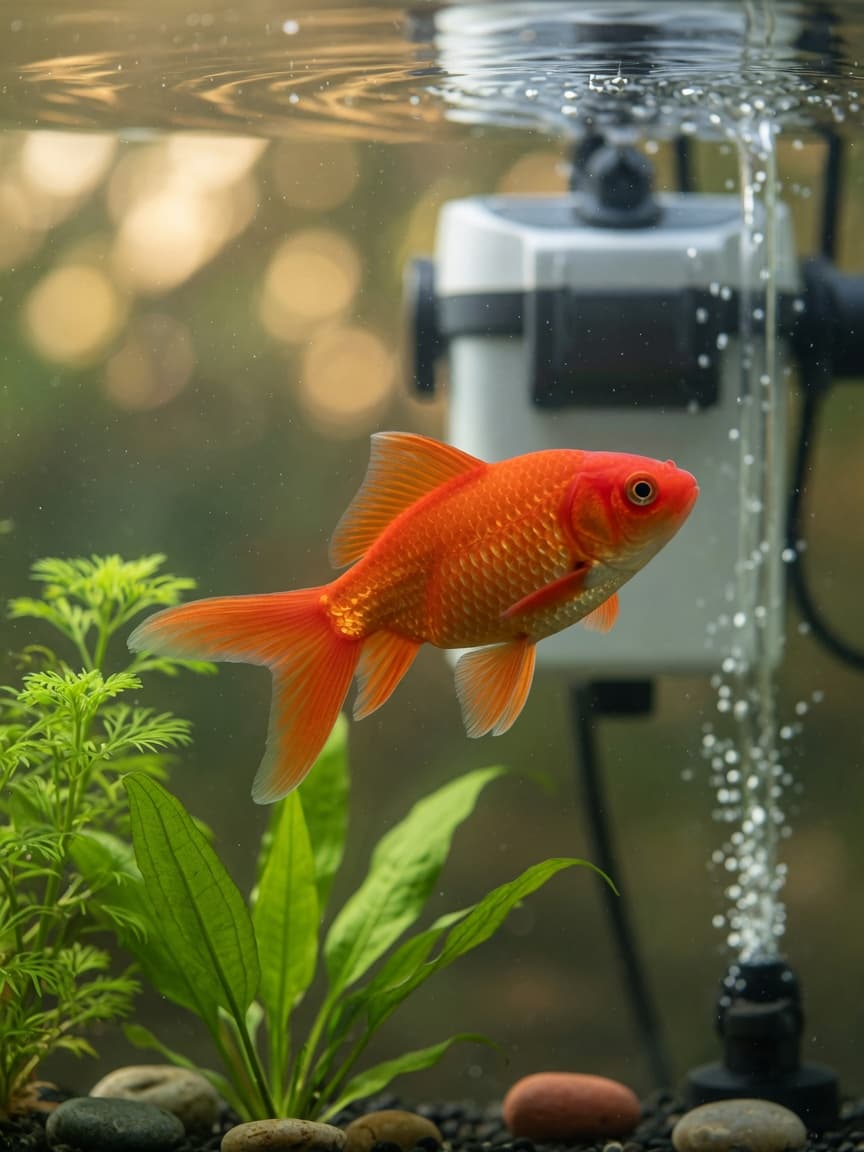
How Long Do Goldfish Live? (Much Longer Than You Think)
By Julia Wrenfield, Pet Wellness Researcher
Ask most people how long a goldfish lives and they'll say "a year or two." Ask a competitive koi breeder or a dedicated aquarist and you'll get a very different answer: 15, 20, even 25 years for common goldfish; 10 to 15 for the fancier double-tailed varieties. The gap between these two realities is one of the most dramatic in all of pet keeping — and it is almost entirely explained by how the fish is kept, not by any inherent biological limitation.
Common Goldfish vs. Fancy Goldfish: Very Different Lifespans
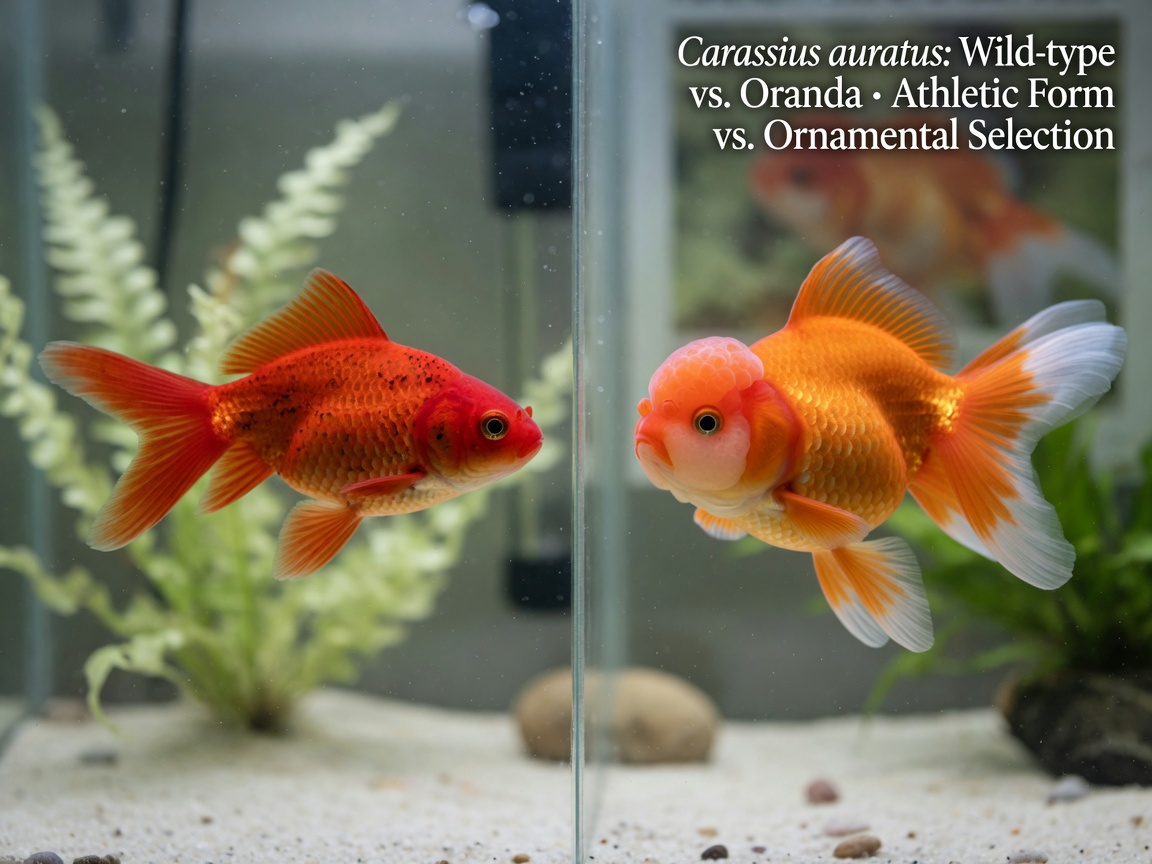
Carassius auratus, the domestic goldfish, was selectively bred from wild Prussian carp in ancient China, with written records of ornamental goldfish dating to at least the Tang Dynasty (618–907 CE). Centuries of breeding have created two broad categories with genuinely different longevity potential.
Common and comet goldfish — the single-tailed, streamlined varieties you see in fairground prizes and pet shops — are physiologically close to their wild ancestors. They are fast, robust, and capable of extraordinary lifespans. Under proper care, 20 to 25 years is realistic. A well-documented common goldfish named Tish, won at a fairground in Thirsk, England, in 1956, died in 1999 at the verified age of 43 years. His owner, Hilda Hand, kept him in a proper aquarium, not a bowl. Tish holds the Guinness World Record as the longest-lived pet goldfish.
Fancy goldfish — orandas, ryukins, telescopes, ranchus, lionheads — have been selectively bred for body shapes that are beautiful but physiologically costly. Their compressed, egg-shaped bodies and shortened spines create a predisposition to swim bladder disorders, digestive issues, and skeletal problems. Even under optimal care, most fancy varieties live 10 to 15 years. Some, like the pearlscale, with its spherical body that leaves almost no room for internal organs, may live only 5 to 8 years even in expert hands.
Record Holders and Documented Long-Lived Goldfish
Beyond Tish, several other goldfish have reached extraordinary ages with proper documentation:
- Goldie, owned by a family in Worthing, UK, lived for 45 years according to the family's account — though this figure is not officially verified by Guinness.
- Fred and Alf, a pair of goldfish in Folkestone, UK, reportedly lived to ages of 38 and 40 years respectively, purchased in the 1950s and surviving into the early 1990s.
- In the US, a comet goldfish documented in a pond setting in Oregon reportedly reached 25 years — an age that surprises most people but is biologically unremarkable for the species.
What all of these animals have in common: none of them spent their lives in a bowl. Every verified long-lived goldfish was kept in either a large aquarium with proper filtration or an outdoor pond.
Why Most Goldfish Die Early: The Real Causes
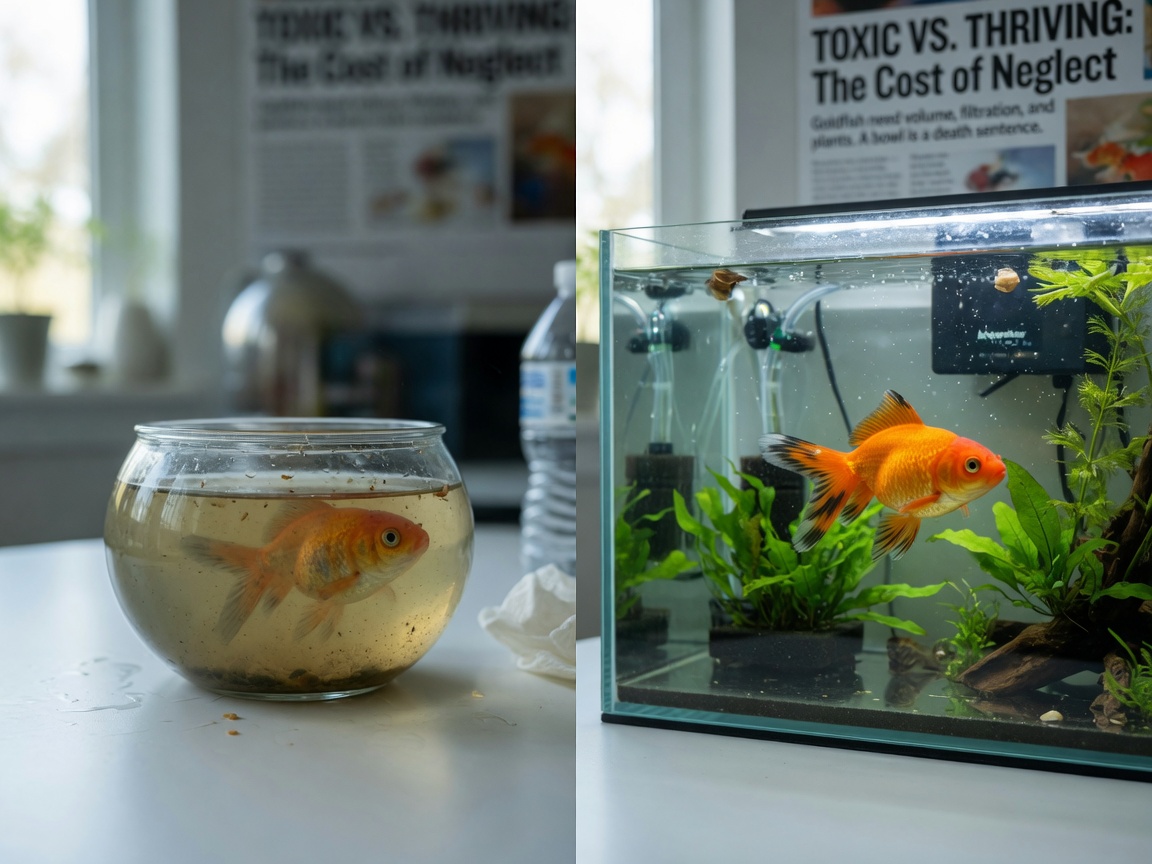
The Bowl Problem
The image of a goldfish in a small glass bowl is culturally universal and biologically catastrophic. Goldfish are large animals — common goldfish reach 30 cm (12 inches) and more under good conditions; comet goldfish in garden ponds routinely reach 35–40 cm. More critically, they are heavy waste producers. A single adult goldfish produces enough ammonia to make a 10-liter bowl toxic within 24 hours.
Without filtration, ammonia accumulates. Chronic ammonia exposure is not a quick death — it causes gradual tissue damage to the gills, liver, and kidneys, destroying the fish's ability to regulate oxygen uptake over weeks and months. The fish appears to "survive" in a bowl, but it is slowly being poisoned by its own waste. What most people interpret as a goldfish's natural short lifespan is actually slow ammonia poisoning.
Bowl-kept goldfish also suffer from oxygen depletion (bowls have minimal surface area relative to volume), temperature instability (small water volumes change temperature rapidly with air conditioning or heating), and severe psychological stress from constant visual exposure and inadequate space for normal movement.
Overfeeding
Goldfish have no stomach in the mammalian sense — they have a continuous digestive tube. They also have no satiation signal comparable to ours; they will accept food indefinitely, and their instinct is to eat whenever food is available, because in the wild, food availability is unpredictable. A goldfish that is fed twice a day until it stops eating will often be chronically overfed.
Overfeeding leads to two problems: the fish's own digestive system becomes impacted and prone to buoyancy disorders, and the uneaten food decays and spikes ammonia and nitrite levels far beyond what a filter can manage. The standard recommendation — feed only what the fish consumes in two minutes, once or twice daily — exists for both reasons.
Inadequate Filtration and No Water Changes
Even in a proper aquarium, goldfish require robust filtration — typically a filter rated for at least double the tank's volume — because of their heavy bioload. And even with strong filtration, nitrate accumulates and must be removed with regular water changes: at minimum 25–30% per week for goldfish. Goldfish that visually appear healthy in green-tinted water with no water changes performed in months are typically living in nitrate levels that are shortening their lives measurably.
What a Goldfish Actually Needs to Live 20 Years
The requirements are straightforward, though they differ sharply from what the pet industry typically communicates at point of sale:
- Tank size: A minimum of 75 liters (20 gallons) for one common goldfish, plus 40 liters (10 gallons) per additional fish. Fancy goldfish can be kept slightly more densely due to their slower swimming, but need equally clean water.
- Filtration: A canister filter or hang-on-back filter rated for at least twice the tank volume. Goldfish require high biological filtration capacity.
- No heater required: Goldfish are temperate, not tropical. They thrive between 18–22°C and actually benefit from seasonal temperature variation. A heated tropical tank can stress goldfish over time.
- Weekly water changes: 25–30%, every week, without exception.
- Diet: A quality sinking pellet (floating pellets can cause gulping of air, contributing to swim bladder issues in fancy varieties), supplemented with blanched vegetables like peas and cucumber.
- Pond option: For common and comet goldfish especially, a garden pond with natural algae, insects, and seasonal temperature fluctuation often produces the longest-lived specimens of all.
Giving Your Goldfish a Real Chance
A goldfish purchased today at 3 cm could, with proper care, be alive when a child born in the same year finishes school. That is not an exaggeration — it is the documented biological reality of the species. The fish that die in bowls after two years are not fulfilling their natural lifespan; they are dying prematurely from preventable conditions.
The commitment is real: a properly kept goldfish is a long-term companion. But for those willing to provide the space, filtration, and weekly maintenance, goldfish are among the most personable, intelligent, and long-lived aquatic pets available — fish that genuinely recognize their owners, learn feeding routines, and interact with their environment in observable ways across decades.
Key Takeaways
- Common goldfish can live 20–25 years; the verified record is 43 years (Tish, UK).
- Fancy goldfish with compressed body shapes live 10–15 years under good conditions.
- Most pet goldfish die within 1–3 years — not from natural aging but from ammonia poisoning in small, unfiltered containers.
- A goldfish produces enough ammonia to make a 10-liter bowl toxic within 24 hours without filtration.
- Minimum setup: 75-liter tank, double-rated filtration, 25–30% weekly water changes, no heater needed.
- Goldfish do not "grow to their tank" — stunting is a sign of chronic stress and poor water quality, not adaptation.
- A garden pond is often the best environment for common and comet goldfish, producing the largest and longest-lived specimens.
References
- Balon EK. "Origin and domestication of the wild carp, Cyprinus carpio: from Roman gourmets to the swimming flowers." Aquaculture, 1995;129(1–4):3–48. Related domestication genomics: PMID 24952745.
- Spotte S. "Captive Seawater Fishes: Science and Technology." Wiley-Interscience, 1992. Ammonia toxicity in closed aquatic systems — foundational research referenced in: PMID 17493979.