
Whether you keep colourful tropical fish, elegant goldfish, or a thriving planted aquarium, regular water changes are the foundation of a healthy aquatic environment. Yet many new aquarium enthusiasts find the process daunting or time-consuming. The truth is, performing water changes properly is straightforward once you understand the why and how. This guide will walk you through the entire process, helping you maintain optimal water conditions for your aquatic pets whilst keeping the routine simple and stress-free.
Why Water Changes Matter
Even with excellent filtration, aquarium water gradually accumulates waste products, excess nutrients, and dissolved compounds that can harm fish and plants. Water changes remove these unwanted substances, replenish essential minerals, and help maintain stable water parameters like pH and nitrate levels. Regular maintenance also prevents the buildup of harmful ammonia and nitrite, which are toxic to aquatic life. Think of water changes as a refresh button for your entire aquatic ecosystem.
How Often Should You Change Your Water?
The frequency depends on several factors:
- Tank size: Smaller tanks require more frequent changes because waste accumulates faster in less water. A 20-litre tank needs weekly changes, whilst a 100-litre system may only need fortnightly changes
- Stocking level: Heavily stocked tanks with many fish need more frequent changes than lightly populated ones
- Filtration quality: Mature, well-maintained filters extend the time between changes
- Plant presence: Live plants help consume nitrates, potentially allowing longer intervals between changes
As a general rule, aim for 25-30% water changes weekly for most community aquariums.
Essential Equipment You'll Need
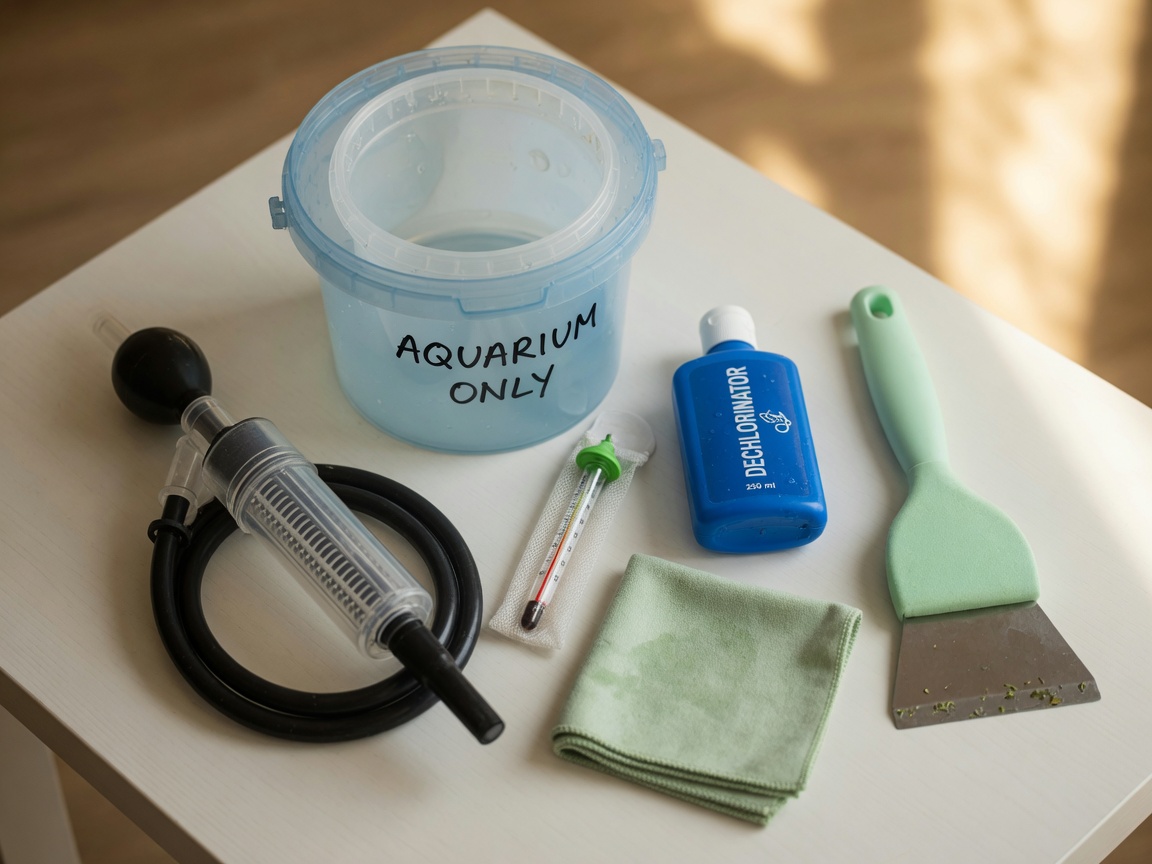
Gather these items before starting:
- An aquarium siphon or gravel vacuum
- Buckets dedicated solely to aquarium use (never use buckets that contained chemicals)
- A thermometer
- Water treatment solution (dechlorinator) if using tap water
- A soft cloth or algae scraper
- Paper towels for spills
Step-by-Step Water Change Process
- Prepare your replacement water: Fill buckets with fresh tap water and allow it to reach room temperature. Add appropriate dechlorinator if required. This usually takes 30 minutes to an hour
- Unplug electrical equipment: Switch off heaters, filters, and air pumps before beginning. This protects both you and your equipment
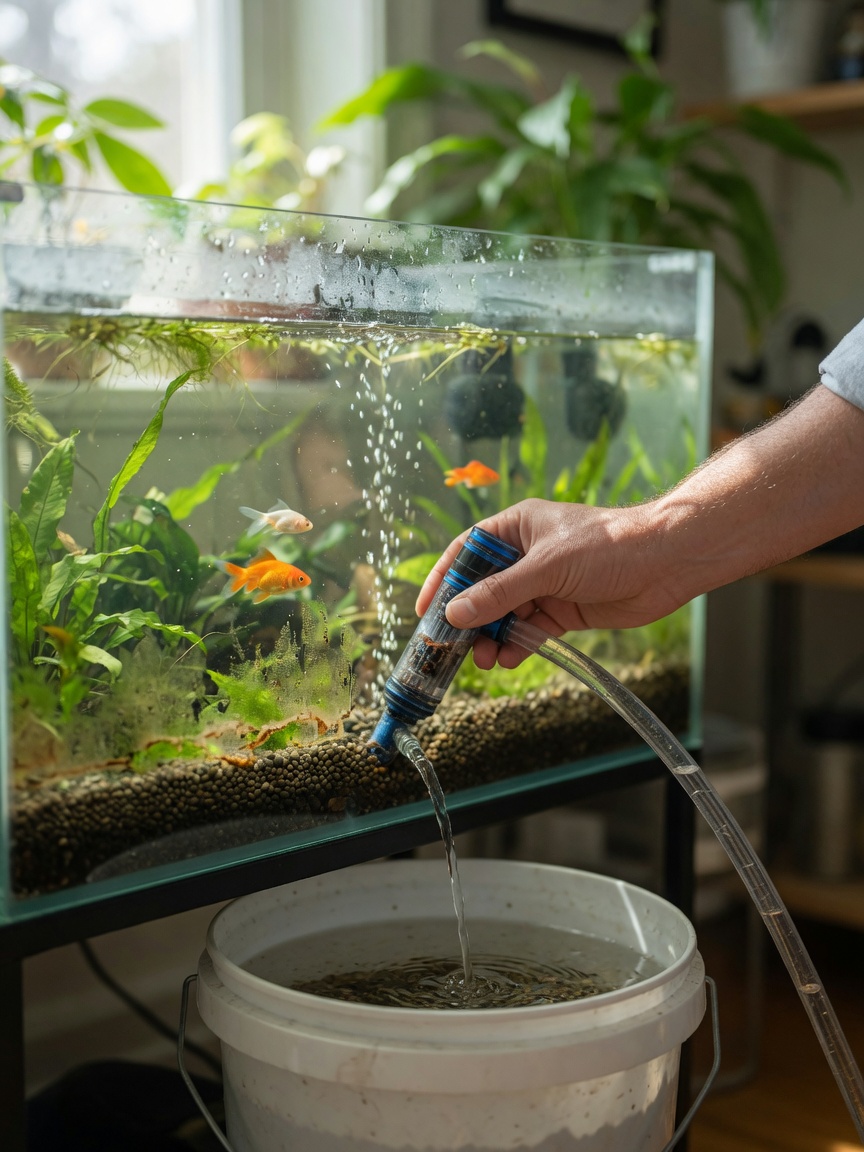
- Remove old water: Use your siphon or gravel vacuum to remove water whilst simultaneously cleaning the substrate. Insert the vacuum into gravel, and water will flow into your bucket. Work methodically around the tank
- Clean the glass: Wipe down interior walls with a soft cloth or algae scraper to remove algae buildup
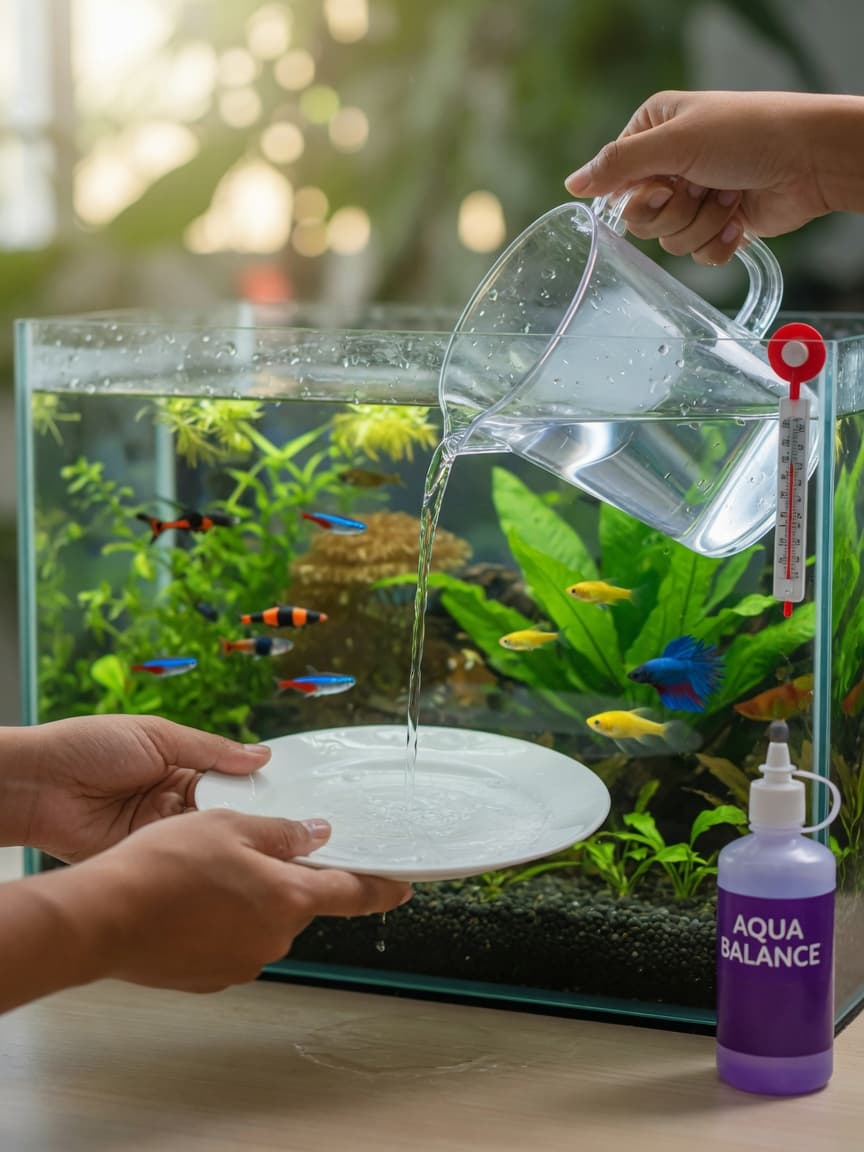
- Refill slowly: Pour prepared water back into the tank slowly to avoid disturbing your substrate and fish. Pour onto a plate or your hand to break the water's fall
- Restore equipment: Once the tank is refilled, switch heaters and filters back on. Check that water temperature remains stable
Important Water Parameters to Monitor
After refilling, verify that temperature remains within your species' preferred range (typically 24-28°C for tropical fish). Test pH and nitrate levels weekly using an aquarium test kit. Sudden parameter changes stress fish, so always ensure replacement water closely matches existing tank conditions.
Common Mistakes to Avoid
- Skipping the dechlorination step—chlorine harms beneficial bacteria and fish gills
- Using water that's too cold or too warm, shocking your fish
- Changing too much water at once, destabilising the ecosystem
- Cleaning the filter during water changes, which removes beneficial bacteria
Key Takeaways
Regular water changes—typically 25-30% weekly—are essential for maintaining healthy aquariums. By following this straightforward process, monitoring water parameters, and avoiding common pitfalls, you'll create a stable, thriving environment where your aquatic pets flourish. With practice, the entire routine becomes quick and rewarding, transforming tank maintenance from an intimidating task into a simple part of responsible pet ownership.