

Why Ear Cleaning Matters for Your Dog
A dog's ear canal is shaped differently from a human's. Rather than running horizontally inward, it forms an L-shape — a long vertical section dropping down before turning horizontally towards the eardrum. This anatomy is excellent at keeping debris away from the eardrum but also traps moisture, wax, and dirt in the lower portion of the canal, where it can accumulate and breed bacteria or yeast.
Regular, gentle cleaning removes this build-up before it becomes a problem. Left unchecked, ear issues escalate quickly from mild discomfort to painful infections that may require weeks of veterinary treatment and prescription medication. Getting into the habit of checking and cleaning your dog's ears at home is one of the most valuable preventive health routines you can establish.
How to Spot Ear Problems Early
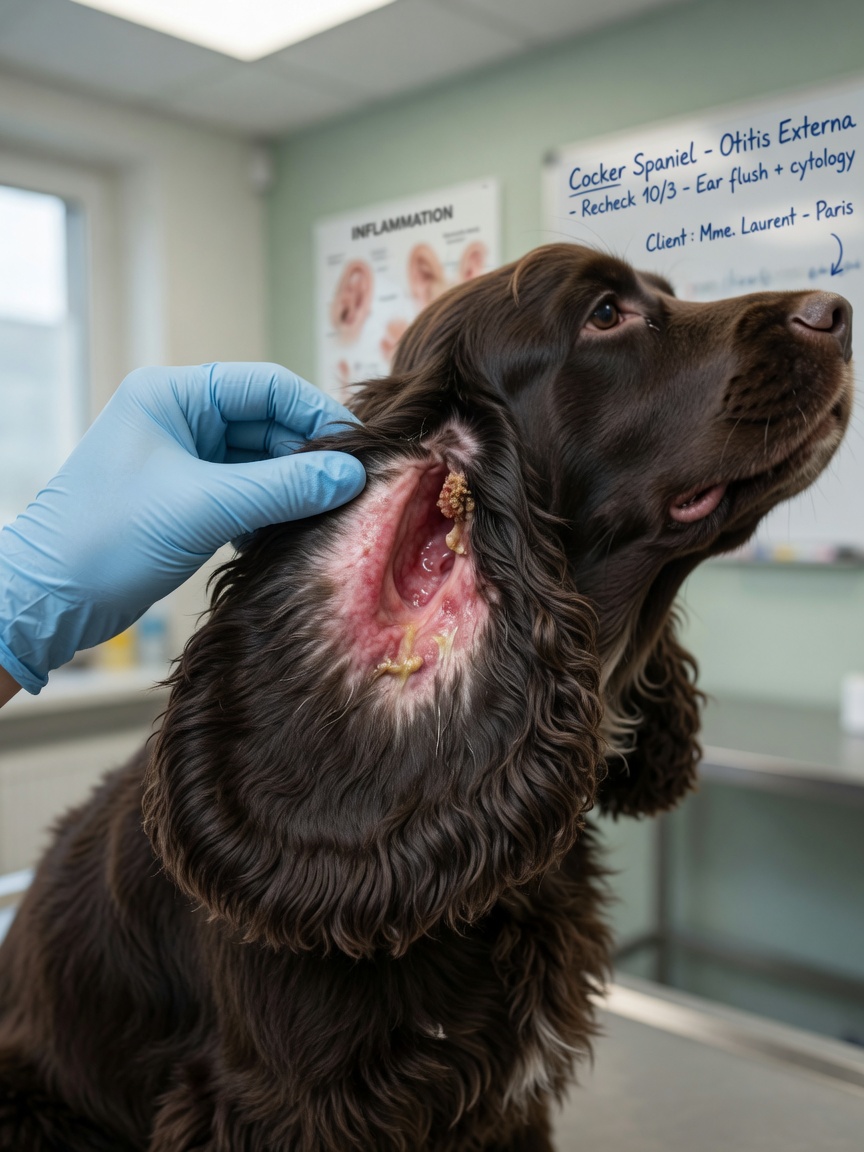
Before you reach for a cleaning solution, take a moment to inspect your dog's ears. Healthy ears should be pale pink inside, have minimal odour, and contain only a small amount of light-coloured wax. Warning signs that something is wrong include:
- Redness or swelling of the ear canal or flap
- Dark brown, black, or yellow discharge
- A strong, unpleasant odour — often yeasty or musty
- Your dog shaking their head repeatedly or tilting it to one side
- Scratching at the ear or rubbing it along the ground or furniture
- Sensitivity or pain when you touch the ear
- Crusting or scabbing around the ear opening
If you notice any of these signs, do not attempt to clean the ear yourself first — contact your vet. Cleaning an infected or ruptured ear can push debris deeper and cause further damage.
How Often Should You Clean Your Dog's Ears?
Most dogs with healthy ears need cleaning once a month or less. However, some breeds and lifestyles demand more frequent attention. As a general rule, check your dog's ears weekly and clean only when there is visible wax build-up or a mild odour. Over-cleaning is a real problem — stripping the natural protective wax layer leaves the skin irritated and more vulnerable to infection.
Breeds Prone to Ear Issues
Certain breeds are significantly more susceptible to ear infections due to their anatomy or coat type. If your dog falls into one of these categories, discuss a cleaning routine with your vet:
- Floppy-eared breeds such as Cocker Spaniels, Basset Hounds, and Beagles — the drooping ear flap reduces airflow and traps moisture
- Dogs that swim frequently — Labradors, Golden Retrievers, and Spaniels are particularly affected
- Breeds with hair growing inside the ear canal — Poodles, Schnauzers, and many Doodle crosses
- Dogs with allergies — chronic ear infections are often a symptom of underlying food or environmental allergies
What You Need
Gather the following before starting:
- A veterinary-approved ear cleaning solution — look for products containing gentle surfactants and drying agents. Virbac Epi-Otic and Thornit Canker Powder are two commonly used options available from Zooplus and veterinary practices across Europe
- Cotton wool balls or gauze pads — never cotton buds, which can push debris deeper and damage the ear
- Treats for reward
- A towel to protect your clothes
Step-by-Step Ear Cleaning Process
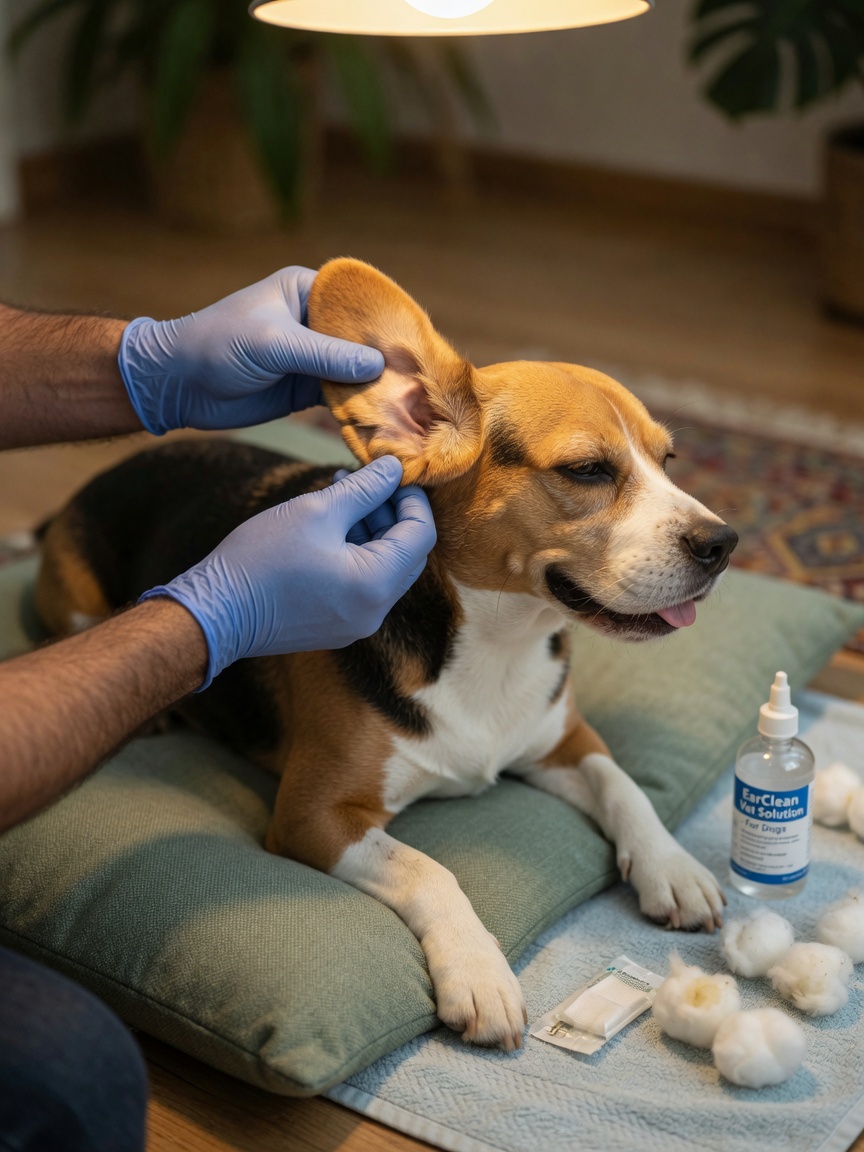
Step 1: Choose the Right Moment
Pick a time when your dog is calm and relaxed — after a walk is often ideal. Have your treats ready and sit or kneel at your dog's level rather than looming over them. If your dog is wriggly, ask a second person to help keep them still.
Step 2: Examine the Ear
Gently lift the ear flap and look into the canal. Use a torch if needed. Assess the amount of wax, the colour of the skin, and whether there is any visible debris or discharge. Smell the ear — a mild, slightly waxy scent is normal; anything stronger suggests a problem.
Step 3: Apply the Cleaning Solution
Hold the ear flap up and away from the head to straighten the canal as much as possible. Insert the nozzle of the cleaning solution just inside the ear opening — do not push it deep into the canal. Squeeze the bottle to fill the lower portion of the canal with solution. Your vet or the product instructions will advise on the correct amount, but typically five to ten drops is sufficient for a medium-sized dog.
Step 4: Massage the Base of the Ear
Hold the ear flap closed and gently massage the base of the ear — the cartilage at the bottom of the canal — for twenty to thirty seconds. You should hear a squelching sound as the solution loosens debris. This step is important; without it, the solution simply sits in the canal without dislodging build-up.
Step 5: Allow Your Dog to Shake
Release the ear and step back — your dog will naturally shake their head, which brings loosened debris and excess solution up and out of the canal. This is completely normal and very helpful. Have your towel ready.
Step 6: Wipe Clean
Use a cotton wool ball or gauze pad to gently wipe the visible portion of the ear canal and the folds of the ear flap. Only clean what you can see directly — do not probe down into the canal. Repeat with a fresh piece of cotton wool until no more debris comes away.
Step 7: Reward Your Dog
Finish with plenty of praise and a treat. Even if your dog found the process uncomfortable, ending on a positive note helps them associate ear cleaning with good experiences over time.
Recommended Cleaning Solutions
Never use water alone to clean ears — it does not evaporate quickly from the L-shaped canal and encourages bacterial growth. Avoid homemade solutions using vinegar or alcohol, which can irritate delicate skin. Purpose-made ear cleaners contain drying agents that evaporate moisture after use and are pH-balanced for the canine ear. Zooplus stocks several reliable brands; if in doubt, ask your vet which product they recommend for your dog's specific needs.
When to See a Vet
Home cleaning is a preventive measure, not a treatment. Contact your vet promptly if:
- You notice any of the warning signs listed earlier in this article
- Cleaning does not resolve mild odour within one or two sessions
- Your dog is in obvious pain when you touch the ear
- You see blood or very dark discharge
- Your dog develops a sudden head tilt or loss of balance
- The ear infection recurs repeatedly — this often signals an underlying allergy requiring investigation
Ear infections are one of the most frequent reasons dogs visit the vet in the UK and across Europe. With consistent home monitoring and appropriate cleaning, many cases can be prevented entirely.