
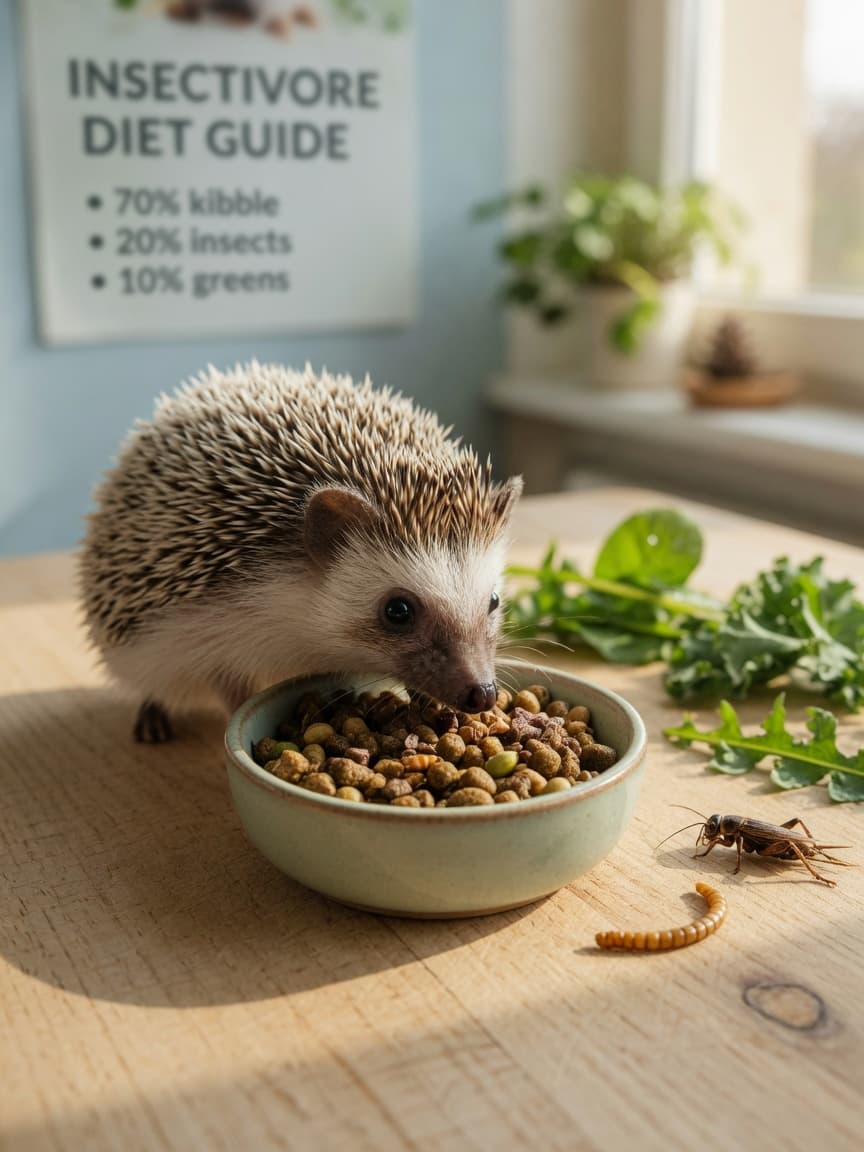
Hedgehog Care Guide: Diet, Housing & Common Health Issues
By Julia Wrenfield, Pet Wellness Researcher
The African pygmy hedgehog (Atelerix albiventris) has grown in popularity as an exotic companion animal, but it comes with a steep learning curve. These animals are insectivores — a fact that reshapes everything from what goes in their food bowl to how their enclosure should be set up. Misinformation about hedgehog care is widespread, and the consequences of getting it wrong range from chronic obesity to life-threatening torpor. This guide gives you what you actually need to know.
Diet: Insectivores, Not Fruit Eaters
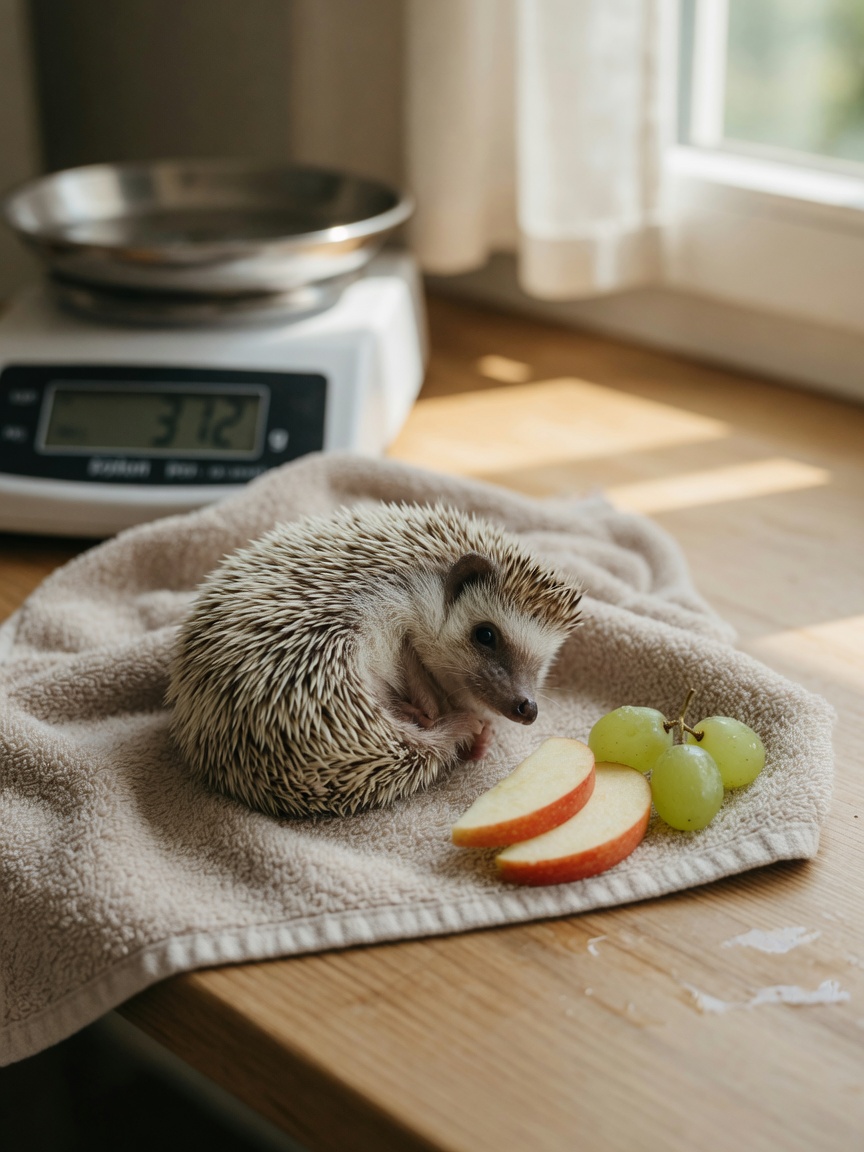
This is the most critical misconception in hedgehog care. Hedgehogs are insectivores. Their digestive system evolved to process chitin-rich insects, not carbohydrates. Yet marketing materials, social media posts, and even some pet store staff routinely suggest feeding hedgehogs fruit as a treat. The reality: fruit, while not acutely toxic in tiny amounts, has no place as a dietary staple and contributes to obesity and fatty liver disease in a metabolically slow captive hedgehog.
Core diet options:
- Hedgehog-specific kibble — the best commercially available option; look for formulas with a named protein source (chicken, turkey) as the first ingredient, fat content under 15%, and no corn syrup or artificial dyes.
- High-quality, low-fat cat food — a widely accepted alternative; choose a kibble with 28-35% protein, under 15% fat, and limited plant-based fillers. Avoid any formula marketed for "senior" cats, as protein content is often reduced.
- Live or dried insects — mealworms, crickets, and dubia roaches are excellent enrichment and a biologically appropriate protein source. Offer 5-10 mealworms 3-4 times per week; do not use as a primary food source due to unfavorable calcium-to-phosphorus ratio.
Avoid: fruit in regular quantities, grapes and raisins (potentially toxic), seeds and nuts (choking risk, wrong nutritional profile), dairy, raw meat, and any sticky or sweetened food that can lodge in the palate.
Obesity is one of the most common captive hedgehog health problems. A healthy adult hedgehog at rest should not have fat rolls visible when curled up, and the animal should be able to fully curl into a ball. Overweight hedgehogs often cannot close fully — a direct consequence of dietary excess. Measure food portions rather than free-feeding.
Housing: Wheel, Temperature, and Space
Hedgehogs in the wild travel 3-5 kilometers per night. In captivity, this energy needs an outlet — and the wheel is the primary vehicle. A wheel is not optional enrichment; it is a necessity that directly affects physical and psychological health.
Wheel requirements: The wheel must be solid-surfaced, not wire or mesh. Wire wheels cause foot and leg injuries — toes catch between the rungs during rapid running, causing fractures and degloving injuries. The wheel must be large enough that the hedgehog runs with a flat back rather than an arched spine (minimum 10-11 inches in diameter for an adult). The Wodent Wheel and Carolina Storm Wheel are widely recommended by exotic vet communities. Clean the wheel daily — hedgehogs frequently defecate while running, and a contaminated wheel introduces bacteria directly into the living environment.
Temperature is critical. African pygmy hedgehogs are not true hibernators, but they will enter a state called hibernation torpor when ambient temperature drops below approximately 65-68°F (18-20°C). This torpor is not safe for this species. Unlike true hibernators, African pygmy hedgehogs do not have adequate metabolic reserves to sustain prolonged torpor — they can become severely hypoglycemic, fail to rouse, and die. The enclosure must be maintained between 72-80°F (22-27°C) year-round. Use a ceramic heat emitter, under-tank heater, or space heater with a thermostat to maintain this range. Check temperature daily.
If you find your hedgehog unresponsive and cold, do not assume it is dead. Warm it slowly in your hands or against your body — not with a heating pad or warm water. If it does not rouse within 30 minutes, contact an exotic vet immediately.
Enclosure size: minimum 2 square feet of floor space, though larger is always better. Solid-sided enclosures prevent foot injuries from climbing wire bars. Ventilation should still be adequate — solid plastic tubs with ventilated lids work well. Provide a hide box large enough for the animal to curl fully inside.
Common Health Issues
Wobbly Hedgehog Syndrome (WHS): A progressive neurological disease unique to African pygmy hedgehogs, with a suspected genetic component. Symptoms begin with weakness and loss of coordination in the hind legs, progressing over months to full hind-limb paralysis and eventually affecting the front legs and muscles of respiration. There is no cure. Management focuses on supportive care — assisted feeding, padded enclosure modifications, and pain management. Any hedgehog showing hind-limb weakness should be evaluated by an exotic vet promptly to rule out other treatable causes (spinal injury, infection) and to begin appropriate supportive care.
Oral cancer: Hedgehogs are disproportionately prone to oral squamous cell carcinoma and other mouth tumors, particularly in animals over 3 years of age. Early signs include drooling, difficulty eating, blood around the mouth, and facial swelling. Oral cancer in hedgehogs is frequently aggressive and fast-growing. Monthly examination of the mouth (gently with a soft cloth during handling) helps catch changes early. Regular exotic vet checkups — at least annually — should include oral examination.
Mites: Sarcoptic and Caparinia mites are common in hedgehogs, causing excessive quill loss, flaky skin, and intense itching. Mite infestations are treatable with ivermectin or selamectin, but must be prescribed and dosed by an exotic vet — over-the-counter treatments are frequently incorrectly dosed and can be fatal at wrong concentrations.
Handling and Socialization
Hedgehogs are naturally nocturnal and solitary. They do not seek human contact instinctively and must be patiently socialized from a young age. Newly acquired animals frequently "huff" and ball up when handled — this is normal defensive behavior, not aggression. Daily handling sessions of 15-20 minutes, consistently and calmly, build tolerance over weeks. Allow the hedgehog to explore from your lap rather than restraining it. Scent bonding — placing a worn t-shirt in the enclosure — accelerates familiarization.
Hedgehogs should be handled in the evening when naturally active. Forcing interaction during daylight hours when the animal is in sleep phase creates stress that undermines long-term socialization progress.
For quality hedgehog hides, solid-surface wheels, and insect-based treats, Zooplus stocks a range of small exotic mammal supplies that work well for hedgehog setups — check the small animal section for appropriate wheel and housing options.
Key Takeaways
- Hedgehogs are insectivores — feed hedgehog-specific kibble or low-fat cat food, supplemented with live insects; limit fruit to near zero.
- A solid-surface wheel (10-11 inch minimum) is mandatory, not optional — wire wheels cause serious injury.
- Temperature must stay between 72-80°F (22-27°C) at all times; torpor in African pygmy hedgehogs is dangerous and often fatal.
- Wobbly Hedgehog Syndrome is a progressive, incurable neurological disease — early exotic vet diagnosis is essential for ruling out treatable conditions.
- Oral cancer is common in hedgehogs over 3 years old — inspect the mouth monthly and schedule annual exotic vet checkups.
- Legality varies by US state and country — verify before acquiring.
- Only an exotic small mammal specialist should provide veterinary care — general practice vets lack the training for hedgehog-specific conditions.
References
- Graesser, D., Spraker, T.R., Dressen, P., Garner, M.M., Raymond, J.T., & Terwilliger, G. (2006). Wobbly hedgehog syndrome in African pygmy hedgehogs. Veterinary Pathology, 43(5), 720-727. PMID: 16966453
- Raymond, J.T. & Garner, M.M. (2000). Spontaneous tumours in captive African hedgehogs: a retrospective study. Journal of Comparative Pathology, 123(2-3), 161-165. PMID: 10968925