

Hamster Species Available in Europe
Several hamster species are kept as pets across Europe, and understanding the differences between them is essential because their care requirements vary significantly. The Syrian hamster, sometimes called the golden hamster, is the largest commonly kept species and is strictly solitary. Two Syrian hamsters housed together will fight, often fatally, regardless of sex. Syrian hamsters typically reach 15 to 18 centimetres in length and are the most common species found in European pet shops.
Dwarf hamsters are smaller and come in several varieties. Campbell's dwarf hamsters and Winter White dwarf hamsters are closely related and are sometimes crossbred in the pet trade. Both can tolerate same-sex companions if introduced at a young age, though fighting remains a risk. Roborovski hamsters are the smallest and fastest of the commonly kept species, best suited to observation rather than frequent handling. Chinese hamsters have a distinctive elongated body shape and a partially prehensile tail. All dwarf species require careful attention to their specific social and housing needs.
Cage Size: What European Welfare Standards Actually Require
This is one of the most misunderstood areas of hamster care. The small cages sold in many European pet shops are inadequate for hamster welfare. The Tierarztliche Vereinigung fur Tierschutz (TVT), Germany's veterinary animal welfare association, recommends a minimum floor space of one square metre for a single hamster. This recommendation is based on research into hamster behaviour, stress indicators, and natural ranging distances. Switzerland legally requires a minimum of 0.12 square metres, but welfare organisations across Europe consider the TVT standard to be the appropriate benchmark for good care.
Inadequate space is a primary cause of stereotypic behaviours in hamsters, such as repetitive bar biting and pacing, which are recognised signs of chronic stress. A hamster kept in a cage that is too small will not thrive regardless of how good its diet or enrichment is.
Choosing the Right Cage Type
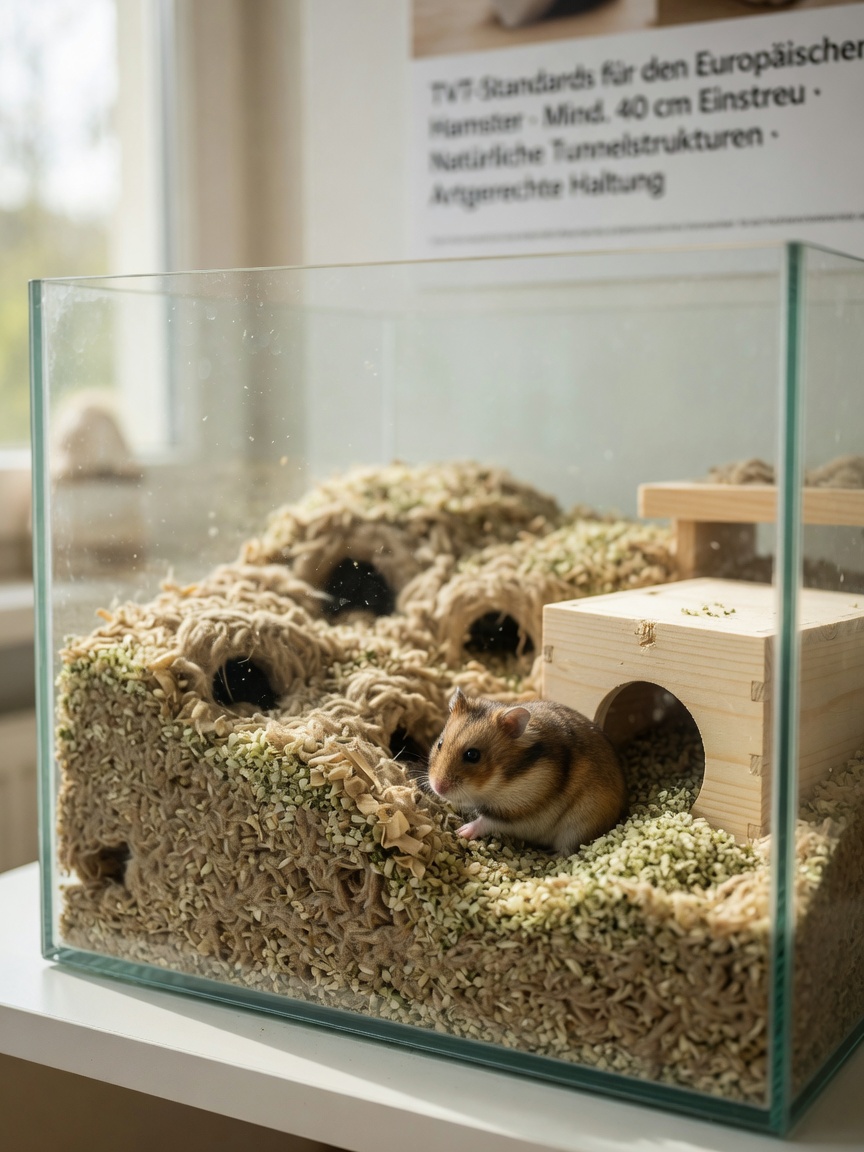
There are three main cage types available to European hamster owners, each with advantages and disadvantages.
- Wire cages with solid floors: Good ventilation and easy to attach accessories, but must have a solid base rather than a wire floor, as wire floors cause injury to hamster feet. Suitable if large enough to meet TVT standards.
- Glass or acrylic terrariums: Excellent for retaining deep bedding and preventing scatter, good for observation, and draught-resistant. Can have ventilation issues if not designed with adequate mesh sections. Often the preferred choice among experienced owners.
- DIY enclosures: Large storage bins, IKEA Detolf display cabinets with modified ventilation, and custom wooden builds are popular in European hamster communities. These can offer the most cost-effective way to achieve adequate space.
Bedding: Depth and Material Both Matter
Burrowing is a fundamental hamster behaviour. Wild hamsters dig extensive tunnel systems for sleeping, storing food, and escaping temperature extremes. Pet hamsters have the same need, and a hamster that cannot burrow will experience elevated stress. The TVT standard recommends a minimum bedding depth of 40 centimetres, with 20 to 30 centimetres considered the absolute minimum to allow even basic burrowing behaviour.
Safe bedding materials include hemp bedding, paper-based bedding such as Carefresh, and meadow hay. Avoid cedar and pine shavings, which contain aromatic oils that are harmful to hamster respiratory systems. A nesting area with additional soft materials such as unscented paper tissue allows the hamster to build a sleeping nest.
Diet: What Hamsters Actually Need
A good hamster diet is based on a high-quality commercial hamster mix that includes a variety of grains, seeds, and dried vegetables. Supplement this with small amounts of fresh food several times a week. Suitable fresh foods include:
- Leafy greens such as kale, broccoli, and rocket
- Cucumber, courgette, and carrot in small pieces
- Small amounts of apple or pear without seeds
- Occasional small portions of cooked chicken, mealworms, or boiled egg as a protein source
Dwarf hamsters, particularly Campbell's and Winter White hamsters, are prone to diabetes and should not be fed sugary foods including most fruits. Water should always be available, either in a sipper bottle or a shallow bowl that is cleaned daily. Hamsters have cheek pouches for transporting food, and you may not see them eating at the bowl — they often bury food in their bedding. Check and remove stored fresh food regularly to prevent mould.
Exercise Wheel: Size and Surface
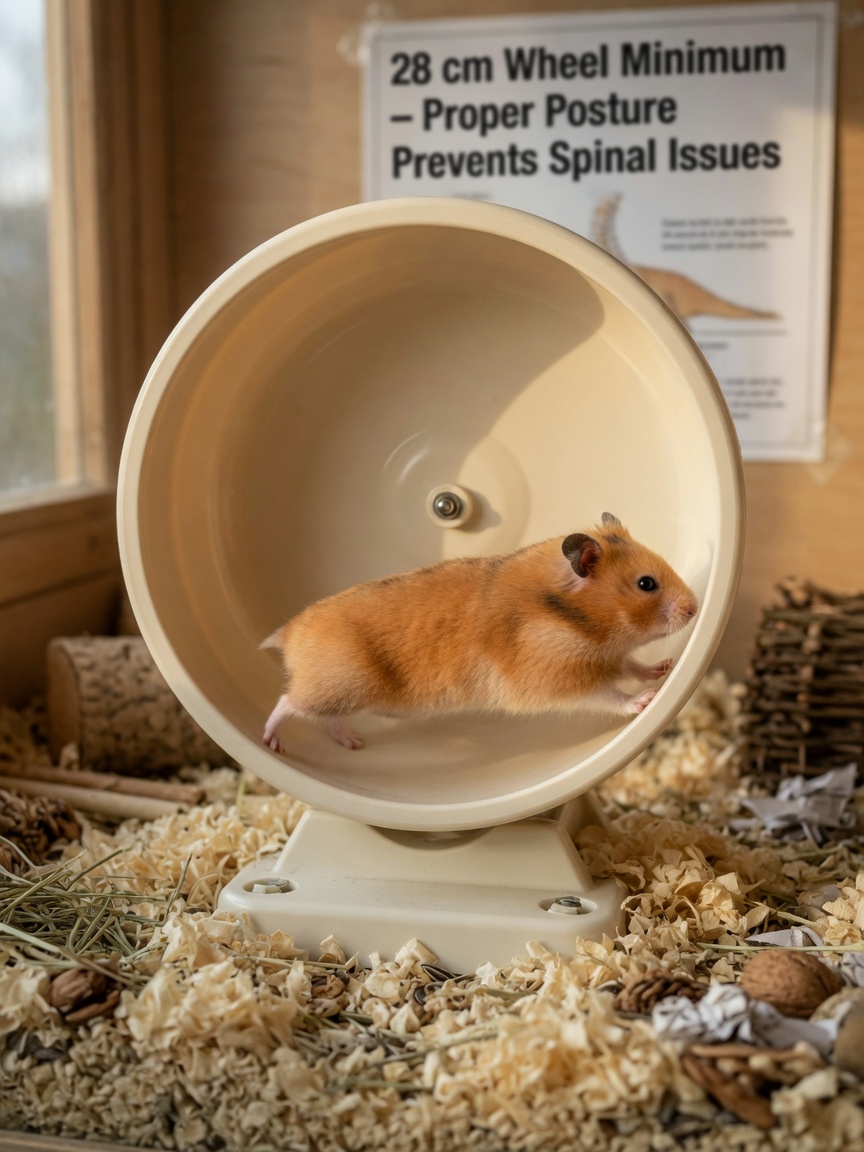
A wheel is essential enrichment for hamsters, which can travel several kilometres per night in the wild. The wheel must be large enough to allow the hamster to run with a straight or very slightly upward-curved back — a hamster running on a wheel that is too small develops a downward-arching spine, which causes spinal pain and injury over time. Syrian hamsters require a wheel of at least 28 centimetres in diameter. Dwarf hamsters need a minimum of 20 centimetres. The running surface must be solid, not barred or mesh, to prevent foot and leg injuries. Silent spinner-type wheels are preferable for the owner's sleep and reduce stress on the hamster.
Common Health Issues in Pet Hamsters
Wet tail, also known as proliferative ileitis, is a bacterial intestinal infection that is most common in Syrian hamsters under 12 weeks of age. It causes severe, often fatal diarrhoea and requires urgent veterinary attention. Any hamster with watery faeces, a wet or soiled rear end, lethargy, or loss of appetite should be seen by a vet immediately.
Respiratory infections present as wheezing, clicking sounds when breathing, nasal discharge, or lethargy, and require antibiotic treatment. Dwarf hamsters, particularly Campbell's dwarfs, have a genetic predisposition to diabetes mellitus. Signs include excessive drinking, frequent urination, weight loss despite normal appetite, and a sweet smell to the urine.
Hibernation torpor is a risk for hamsters kept in rooms that drop below approximately 15 degrees Celsius. A hamster in torpor may appear dead — cold, rigid, with very slow or invisible breathing. If you suspect torpor rather than death, warm the hamster gradually in your hands and contact a vet. Do not place the hamster on a heat source directly.
Handling and Nocturnal Nature
Hamsters are nocturnal and are most active from early evening through the night. Waking a hamster during the day to handle it causes stress and may result in biting from a disoriented animal. Allow newly acquired hamsters at least one to two weeks to settle into their enclosure before attempting regular handling. Begin with brief, gentle sessions and build trust gradually through consistent calm interaction.
When to See an Exotic Vet or ECZM Specialist
Hamsters should be seen by a vet with exotic mammal experience rather than a standard small animal practice wherever possible. An ECZM exotic mammal specialist or a vet with demonstrated experience in small rodents will be better placed to diagnose and treat hamster-specific conditions, prescribe appropriate medication doses, and conduct safe anaesthesia if procedures are required. Register with a suitable exotic vet shortly after acquiring your hamster, as searching for one in an emergency significantly reduces the chance of a good outcome. Hamsters have a lifespan of 18 to 36 months, so while their time with you is short, the quality of care they receive during that time matters enormously.