
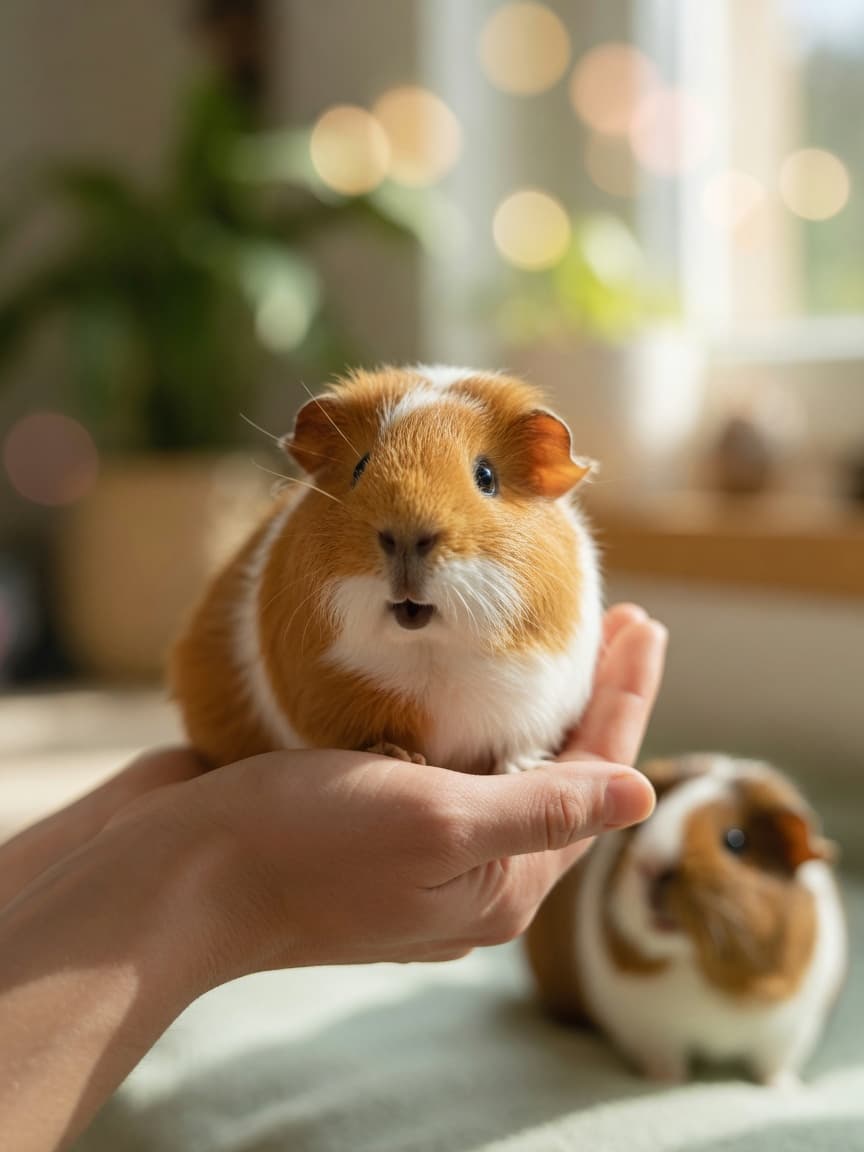
Guinea Pig Behaviour: Understanding What Your Cavy Is Telling You
Guinea pigs — or cavies — are among the most communicative of all small pets. They use a combination of vocalisations, body postures, and movements to express everything from delight to dominance, and learning to read these signals will transform the way you interact with your animals. This guide covers the full range of guinea pig behaviour for European keepers, including EU welfare standards, enrichment advice, and dietary requirements.
Social Needs: Guinea Pigs Must Live in Groups
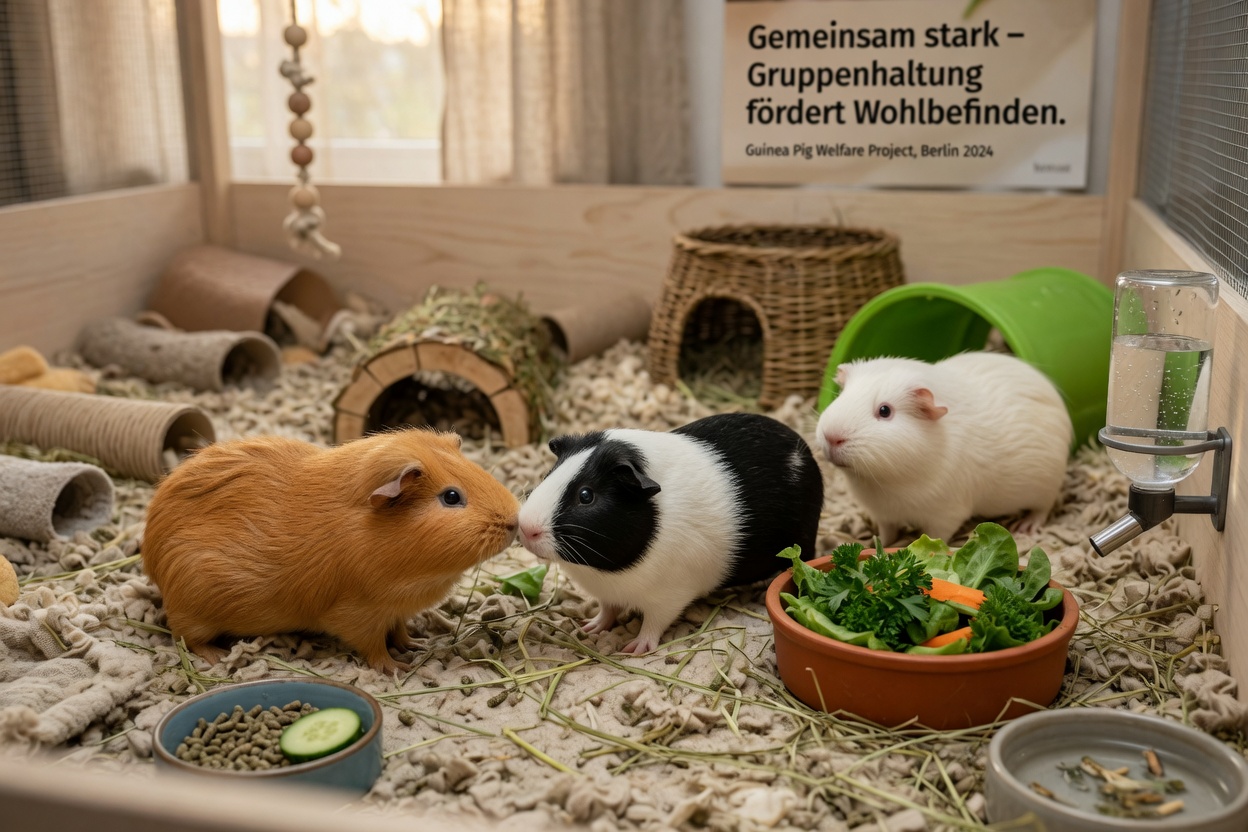
Guinea pigs are herd animals that evolved in the grasslands of South America, living in social groups with complex hierarchies. Keeping a guinea pig alone is widely recognised as a significant welfare problem across Europe. In Switzerland, it is actually a legal requirement to keep guinea pigs with at least one companion — solitary housing is prohibited under the Swiss Animal Welfare Ordinance. While EU-wide legislation does not yet mandate group housing, the Five Freedoms framework that underpins animal welfare standards across member states strongly implies that denying a social animal companionship fails to meet their behavioural needs.
The most common and manageable pairing is two neutered males, two females, or a neutered male with one or more females. Introductions should take place in a neutral space with multiple food sources, hides, and water stations to reduce competition. Never house guinea pigs with rabbits — their social and dietary needs differ significantly, and rabbits can injure guinea pigs even during play.
Vocalisations: What Each Sound Means
Wheeking
The wheek is the iconic guinea pig sound — a loud, high-pitched squeal used as a contact call and expression of excitement. Most guinea pigs learn to associate the sound of a fridge opening or a rustling vegetable bag with feeding time and will wheek enthusiastically. It is a positive sound indicating anticipation and engagement.
Purring
Guinea pig purring is context-dependent, which makes it one of the trickier sounds to interpret. A low, rumbling purr produced when a guinea pig is being stroked and appears relaxed signals contentment. However, a higher-pitched, shorter purring sound — sometimes accompanied by slight body vibration — can signal annoyance or unease. Pay attention to posture alongside the sound to interpret it correctly.
Teeth Chattering
Rapid, audible chattering of the teeth is an unambiguous warning signal. A guinea pig that chatters its teeth is feeling threatened and is warning the perceived threat to back away. This is most commonly seen during dominance disputes between guinea pigs, but can also be directed at humans who handle a stressed or in-pain animal.
Chutting and Whining
Chutting is a soft, rapid sequence of sounds sometimes described as a "chut-chut-chut" noise, typically produced during exploratory or contented behaviour. Whining is a higher, more drawn-out vocalisation associated with mild protest, often heard when a guinea pig is moved somewhere they would prefer not to go.
Body Language: Reading Your Cavy's Movements
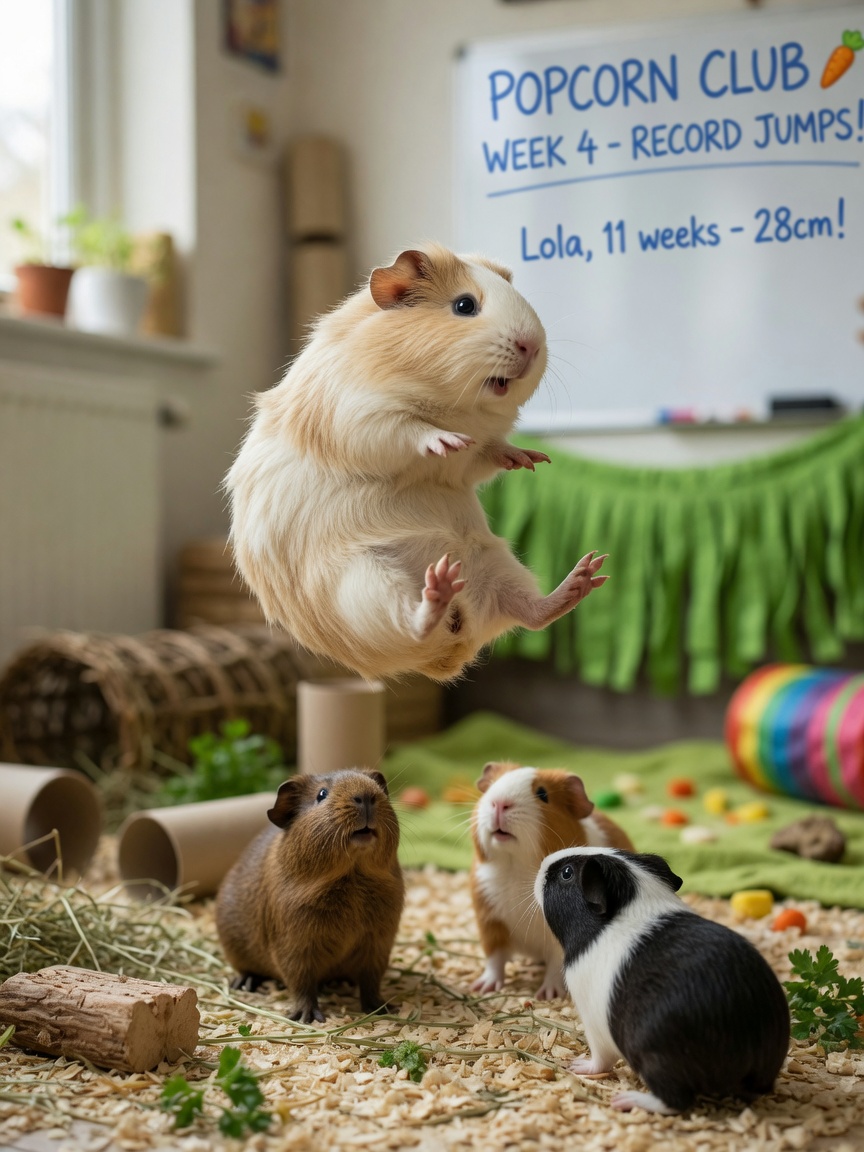
Popcorning
Popcorning is the guinea pig equivalent of binkying in rabbits — an explosive, spontaneous jump into the air, often combined with a change of direction mid-leap. It is an unmistakable sign of joy and excitement. Young guinea pigs popcorn most frequently, but adults will also popcorn in response to a favourite food or a newly expanded enclosure. Seeing your guinea pig popcorn is one of the clearest signs that their welfare needs are being met.
Rumblestrutting
Rumblestrutting is a dominance display in which a guinea pig produces a low, vibrating rumble while swaying their hips from side to side. This behaviour is most common in unneutered males but occurs in females too. It signals to other guinea pigs that the strutting animal is asserting their position in the social hierarchy. Occasional rumblestrutting is normal; frequent or escalating strutting may indicate that a group needs to be re-evaluated.
Freezing
When a guinea pig freezes completely — stopping all movement suddenly — they are in a fear response. In the wild, this behaviour helps prey animals avoid detection by predators. A guinea pig that frequently freezes may be living in an environment with too many stressors, such as loud noises, the presence of dogs or cats nearby, or handling that they find threatening.
Barbering
Barbering is the chewing or pulling of fur, either from a cagemate or from the guinea pig's own coat. It can indicate boredom, stress, or a dominance-related behaviour. If you notice patches of missing fur or shorter hair on one animal in a group, barbering is likely occurring and the group dynamics — and enrichment provision — should be reviewed.
Hiding Behaviour and Its Significance
Guinea pigs are prey animals and need access to hides at all times. A guinea pig that has no hiding space will be under constant stress. However, a guinea pig that hides excessively and refuses to come out voluntarily may be unwell, fearful, or depressed. It is important to distinguish normal use of hides from withdrawal behaviour caused by illness or chronic stress.
Enrichment for Guinea Pigs
An enriched environment supports natural behaviours and prevents stress-related problems. Good enrichment options include:
- Multiple tunnels and hides distributed across the enclosure
- Hay racks positioned at different heights to encourage movement
- Foraging activities — hiding fresh herbs and vegetables in hay piles
- Safe wooden chew toys and willow sticks to support dental health
- Fleece tunnels and paper bags for exploration and shredding
- Puzzle-style feeders for pellet portions
Zooplus offers a good range of guinea pig-specific enrichment, including tunnels, wooden toys, and hay-based treats that are free from artificial additives.
Diet: The Non-Negotiable Role of Vitamin C
Guinea pigs are one of the few mammals — alongside humans and certain primates — that cannot synthesise their own Vitamin C. This means that a dietary deficiency leads to scurvy, which causes joint pain, poor wound healing, and ultimately death. Fresh vegetables high in Vitamin C — including red pepper, kale, and parsley — should be provided daily. Pellets with added Vitamin C are useful but the vitamin degrades rapidly once packaging is opened, so fresh vegetables remain essential.
The dietary foundation should be unlimited high-quality Timothy hay, which supports dental wear and gut motility. Pellets should be plain and measured — avoid muesli-style mixes, which encourage selective feeding and are associated with dental and obesity problems.
Veterinary Care: Finding an Exotic Specialist
Guinea pigs require a vet with genuine small mammal expertise. The European College of Zoological Medicine (ECZM) accredits vets who have completed specialist training in exotic species including small mammals. Routine health checks, dental assessments, and prompt attention to changes in behaviour or appetite are essential for catching common conditions — including dental malocclusion and urinary problems — early.