ForPetsHealthcare
Cats

Can Cats Eat Bread? Understanding the Risks and Benefits

By Julia WrenfieldUpdated August 4, 20263 min read
Evidence-based · Sources checked
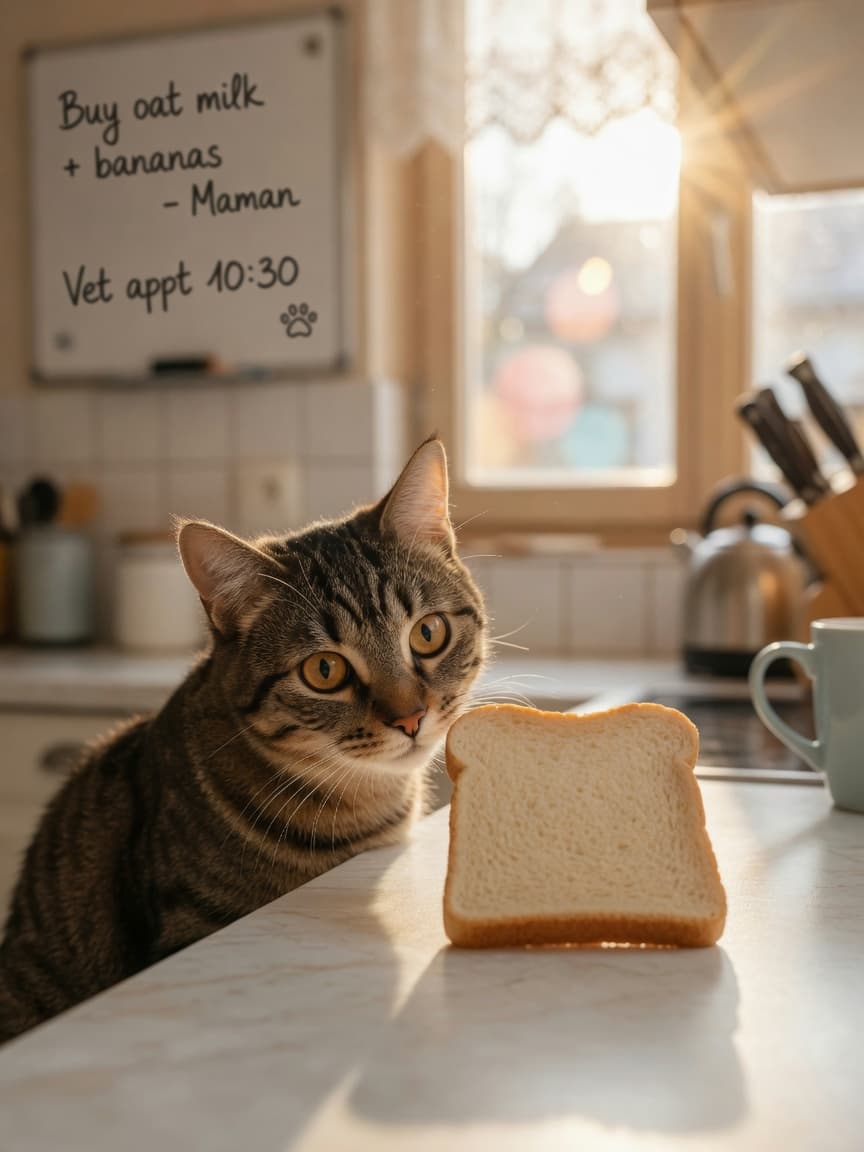
{"en": "Curious cat sniffing a slice of bread on a kitchen counter, exploring human food safely", "es": "Gato curioso olfateando una rebanada de pan en la encimera de la cocina, explorando alimentos seguros", "fr": "Chat curieux reniflant une tranche de pain sur un plan de travail de cuisine, explorant les aliments humains", "de": "Neugierige Katze schn\u00fcffelt an einer Brotscheibe auf der K\u00fcchentheke und erkundet menschliche Lebensmittel", "nl": "Nieuwsgierige kat snuffelend aan een snee brood op het aanrecht, veilig menselijk voedsel verkennen", "pt": "Gato curioso cheirando fatia de p\u00e3o sobre a bancada da cozinha, explorando alimentos humanos com seguran\u00e7a", "it": "Gatto curioso che annusa una fetta di pane su un ripiano da cucina, esplorando il cibo umano in sicurezza"}

Many cat owners have wondered whether it's safe to share a slice of their breakfast toast with their feline companion. Whilst bread isn't toxic to cats, the question of whether they should eat it requires a more nuanced answer. Understanding the nutritional needs of cats and the potential risks associated with bread consumption will help you make informed decisions about your pet's diet.

Is Bread Safe for Cats?

The short answer is yes—plain bread is generally safe for cats in very small quantities. However, "safe" doesn't necessarily mean "beneficial." Unlike humans, cats are obligate carnivores, meaning their bodies are designed to derive nutrition primarily from meat. Bread, being a carbohydrate-based food, doesn't align with their natural dietary requirements.

If your cat has accidentally eaten a small piece of plain bread, there's no cause for concern. However, bread should never become a regular part of their diet.

Nutritional Considerations

Cats require specific nutrients to thrive, including taurine, arginine, and high-quality animal proteins. Bread offers minimal nutritional value for felines and can contribute to unnecessary calorie intake without providing essential nutrients.

  • Empty calories: Bread is primarily carbohydrates, which cats don't efficiently metabolise
  • Lack of taurine: An amino acid crucial for feline heart and eye health, absent in bread
  • Low bioavailability: Even wholemeal bread doesn't provide nutrients in a form cats can easily utilise
  • Potential weight gain: Regular bread consumption can contribute to obesity in sedentary indoor cats

Types of Bread to Avoid

Assorted breads including chocolate, garlic, seeded, and raisin varieties on a cutting board

Whilst plain bread may be harmless, certain types pose genuine health risks and should be strictly avoided:

  1. Bread containing xylitol: This artificial sweetener is toxic to cats and can cause serious health complications
  2. Garlic or onion bread: Both ingredients are toxic to felines and can damage red blood cells
  3. Chocolate bread: Theobromine in chocolate is poisonous to cats
  4. Seeded or raisin bread: Raisins are toxic to cats; seeds may pose choking hazards
  5. Heavily salted bread: Excess sodium can be harmful to cats
  6. Dough containing yeast: Raw dough can expand in the stomach, causing distension and discomfort

Potential Digestive Issues

Some cats may experience digestive upset from bread consumption, particularly if they have sensitive stomachs. Symptoms to watch for include vomiting, diarrhoea, or constipation. Additionally, bread's gluten content can be problematic for cats with grain sensitivities, though true gluten allergies are relatively uncommon in felines.

Practical Guidelines for Cat Owners

If you want to treat your cat, focus on feline-appropriate options instead:

  • Offer small pieces of cooked chicken or turkey
  • Try freeze-dried meat treats designed for cats
  • Use small portions of cooked fish (occasionally, as it shouldn't be a staple)
  • Consider specially formulated cat treats from reputable manufacturers

Key Takeaways

Whilst plain bread won't harm your cat if consumed occasionally in tiny amounts, it offers no nutritional benefit and should not be a regular part of their diet. Instead, reserve treats for foods that align with feline nutritional requirements. Always avoid bread containing xylitol, garlic, onions, chocolate, raisins, or excessive salt. If your cat has consumed problematic bread or shows signs of digestive distress, contact your veterinary surgeon. Remember, the best way to show your cat affection is through appropriate nutrition and quality time together, not through sharing your human foods.

#can cats eat bread understanding the risks and benefits#cat health#feline nutrition#forpetshealthcare

Sources & further reading

This article is based on peer-reviewed veterinary research and reputable animal-health sources. Explore the underlying science in our Research Library.

Related articles

Can Cats Be Allergic to Dogs?

Many multi-pet households wonder whether their feline companions can develop allergies to their canine housemates. The simple answer is yes—cats can indeed be allergic to dogs, though it's far less common than you might think. Understanding the nature of these allergies and how to manage them is cru…

Read more →

What Vaccinations Does My Kitten Need?

Bringing a new kitten into your home is an exciting time, but it also comes with important responsibilities—and vaccination is one of the most critical decisions you'll make for their health. Kittens are particularly vulnerable to infectious diseases during their early weeks, which is why a proper v…

Read more →

What Can Cats Eat? Safe Human Foods & Toxic Ingredients

As a cat owner, you've probably wondered whether it's safe to share your meals with your feline friend. While cats are obligate carnivores with specific nutritional needs, several human foods can be offered as occasional treats—and just as importantly, many common household items can cause serious h…

Read more →

How to Kitten Proof Your Home

Bringing a new kitten into your home is an exciting time, but it also comes with significant responsibilities. Kittens are naturally curious, energetic, and prone to getting into trouble as they explore their new environment. Unlike adult cats, kittens lack the experience to recognise genuine danger…

Read more →

How to Care for a Sick Kitten

Caring for a sick kitten can be stressful, especially if you're a first-time cat parent. Young kittens are vulnerable to various illnesses, from viral infections to parasites, and recognising the signs early is crucial for their recovery. This guide will help you understand the essentials of kitten …

Read more →

Can Cats Have Blueberries? Is It Safe?

If you've ever wondered whether your feline friend can enjoy the same healthy snacks you do, you're not alone. Blueberries are a nutritional powerhouse for humans, packed with antioxidants and vitamins. But when it comes to our cats, the rules are quite different. The good news is that yes, cats can…

Read more →
Disclaimer:This article is for informational purposes only and does not constitute veterinary advice. Always consult a qualified veterinarian for your pet's health concerns.

Free newsletter

Pet health tips, straight to your inbox

Weekly science-backed advice for dog & cat owners. No spam, unsubscribe anytime.