
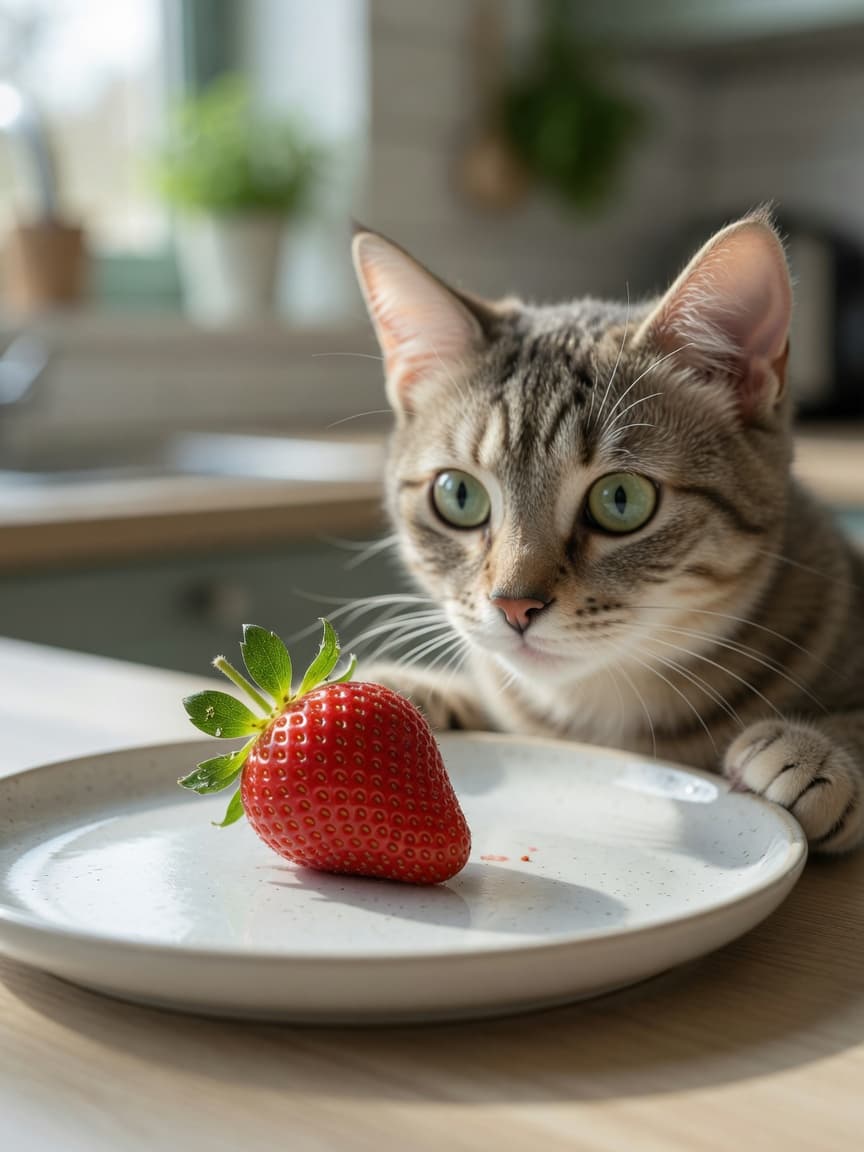
Strawberries and Cats: Sweet but Not Meaningless to Understand
Strawberries occupy a particular place in conversations about pet nutrition — colourful, sweet, and seemingly harmless. Unlike some fruits that sit clearly in the "do not feed" category (grapes being the most prominent example), strawberries are not toxic to cats. But the question of whether they are appropriate to offer goes a little deeper than toxicity alone, and it is worth understanding why.
Are Strawberries Safe for Cats?
Yes — strawberries are not classified as toxic to cats by the ASPCA or the major veterinary toxicology bodies. They do not contain compounds known to cause acute poisoning in felines, unlike grapes, onions, or chocolate. If your cat has eaten a small piece of strawberry, there is no reason for alarm.
However, "not toxic" and "beneficial" are not the same thing, and with cats in particular, the distinction matters considerably.
The Obligate Carnivore Context
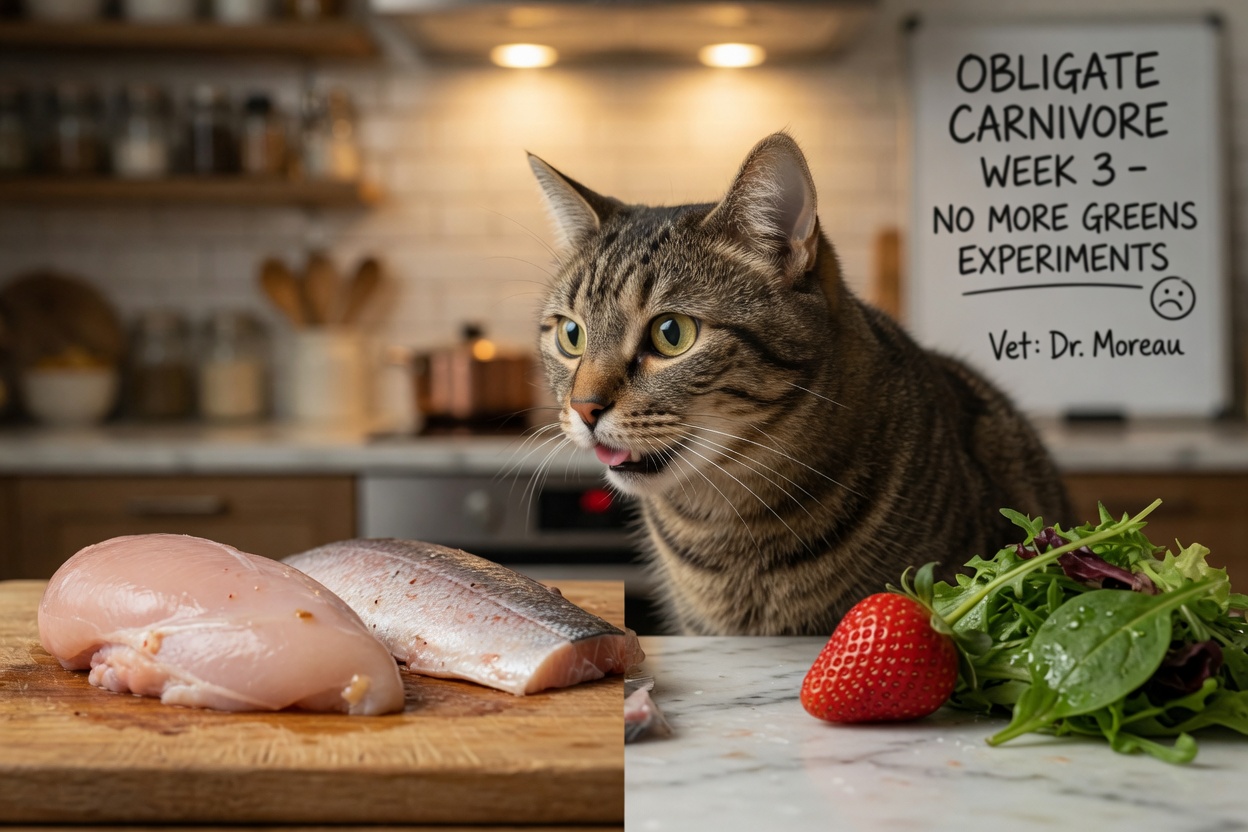
Cats evolved as obligate carnivores — animals whose nutritional requirements are met entirely through the consumption of other animals. Unlike omnivores such as dogs and humans, cats have not developed significant metabolic pathways for utilising plant matter as nutrition. This has several consequences when it comes to fruit:
- Cats cannot taste sweetness. They lack the functional T1R2 receptor — one half of the sweet taste receptor — which means the sugar in strawberries is biologically meaningless to them. Any apparent interest a cat shows in a strawberry is driven by smell, texture, or curiosity, not by a genuine attraction to sweetness.
- Cats have limited ability to process fructose and other fruit sugars efficiently, compared with omnivores.
- The fibre content in strawberries offers minimal benefit to cats, whose digestive systems are optimised for protein and fat rather than plant-based roughage.
This means that while strawberries are not dangerous in small amounts, they also offer cats essentially no nutritional value. The vitamins and antioxidants in strawberries — vitamin C, folate, and manganese among them — are either produced internally by cats (who, unlike humans, can synthesise their own vitamin C) or are more efficiently obtained from animal-based foods.
Sugar Content and Feline Health
Strawberries contain natural sugars — primarily fructose and glucose — at a concentration of roughly 4 to 5 grams per 100 grams of fruit. This is relatively low compared with many other fruits, which is one reason strawberries are often mentioned as a "safer" fruit option for pets.
Nevertheless, the sugar content remains relevant for cats, particularly in the context of:
Diabetes
Feline diabetes mellitus is a common and serious condition, particularly in middle-aged and older cats. Regular consumption of sugary foods — even naturally occurring sugars — can contribute to blood glucose dysregulation. For cats already diagnosed with diabetes, or those with a predisposition to it (typically overweight, indoor, neutered males), any dietary sugar is worth avoiding.
Dental Health
Sugar feeds the bacteria responsible for plaque and tartar accumulation on teeth. Cats are already prone to periodontal disease, and while the sugar in a single small piece of strawberry is unlikely to cause significant impact, it is an additional reason to keep fruit offerings infrequent.
Weight Management
Cats have small caloric requirements relative to their size. Extra calories — even from fruit — can accumulate meaningfully over time. Obesity in cats is associated with diabetes, joint disease, hepatic lipidosis, and reduced life expectancy.
Parts of the Strawberry to Avoid
The flesh of the strawberry is the low-risk part. The leaves and stem of the strawberry plant are a different matter — they are mildly irritating to cats and can cause gastrointestinal upset including vomiting and diarrhoea. Always remove the stalk and leaves completely before offering a piece of strawberry, and ensure any strawberries accessible to your cat are without their green tops.
Strawberry-flavoured products — jam, yoghurt, desserts, or processed snacks — should never be offered to cats. These products typically contain concentrated sugar, artificial sweeteners (potentially including xylitol), dairy (which many cats tolerate poorly), and other additives that are inappropriate or harmful.
What About Allergic Reactions?
Food allergies in cats can, theoretically, involve any food — including strawberries. They are uncommon, but individual sensitivity exists. Signs of a food reaction in cats include itching, skin changes, vomiting, or diarrhoea. If you introduce strawberry and notice any of these signs, discontinue and consult your vet.
Safe Amounts and Practical Guidance
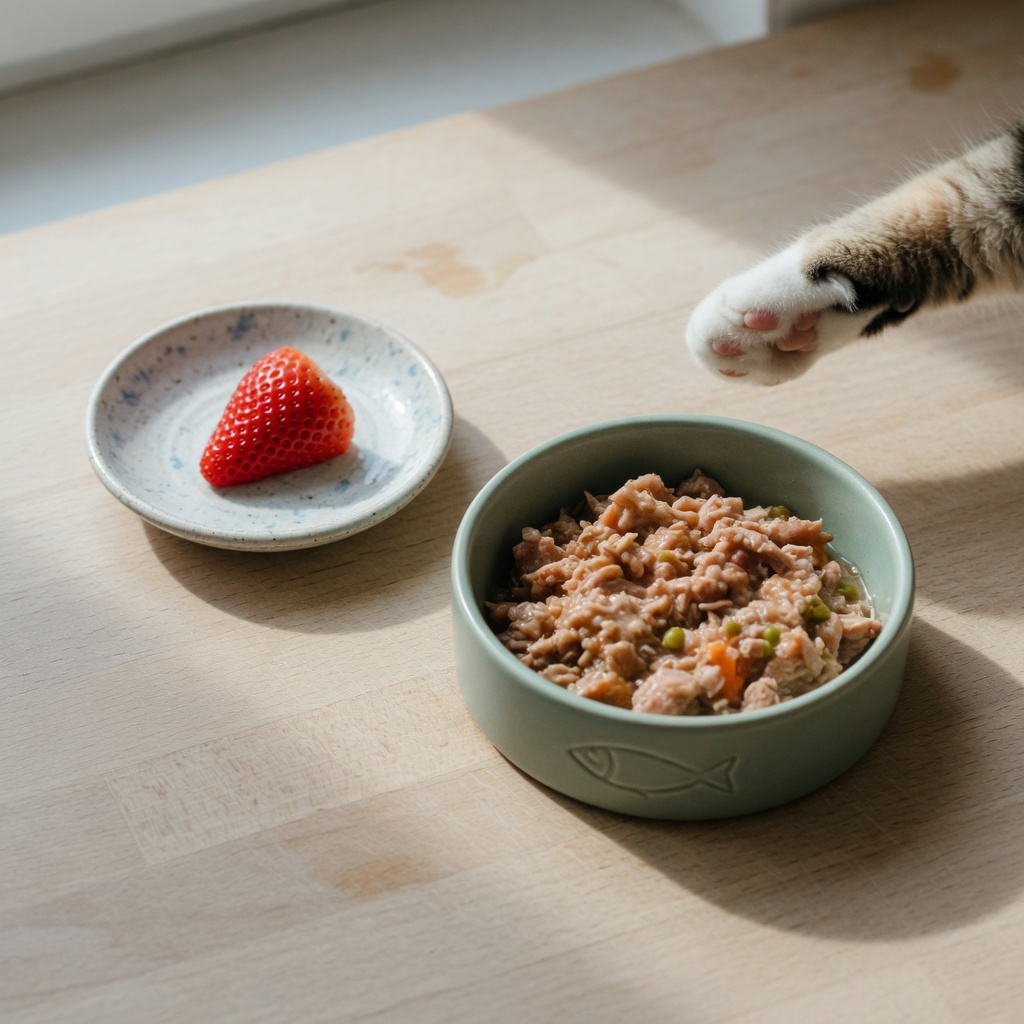
If you want to offer your cat a small piece of strawberry as a novelty or because they have expressed interest, there is no compelling reason to refuse. A practical approach:
- Offer no more than a teaspoon-sized piece, once or twice a week at most
- Remove all leaves and the stem before offering
- Wash the strawberry thoroughly to remove pesticide residue
- Offer plain fresh strawberry only — no added sugar, syrup, or flavouring
- Observe your cat after a first introduction to check for any digestive sensitivity
- Avoid strawberries entirely for cats with diabetes or weight problems
- Never replace part of a meal with fruit
What Cats Actually Benefit From Instead
If the goal is providing a nutritious treat or variety in your cat's diet, animal-based options are always the more appropriate choice. Small pieces of cooked plain chicken, turkey, or white fish provide protein and amino acids that cats can genuinely use. These foods align with feline biology in a way that fruit simply does not.
Strawberries occupy a "harmless in small amounts" category for cats — neither a food to seek out as a treat, nor one to panic about if your cat manages a piece from the fruit bowl. The clearest takeaway is simply that cats have no real need for fruit, and for cats with specific health concerns, even the modest sugar and fibre content in strawberries is a reason to keep them off the menu altogether.