
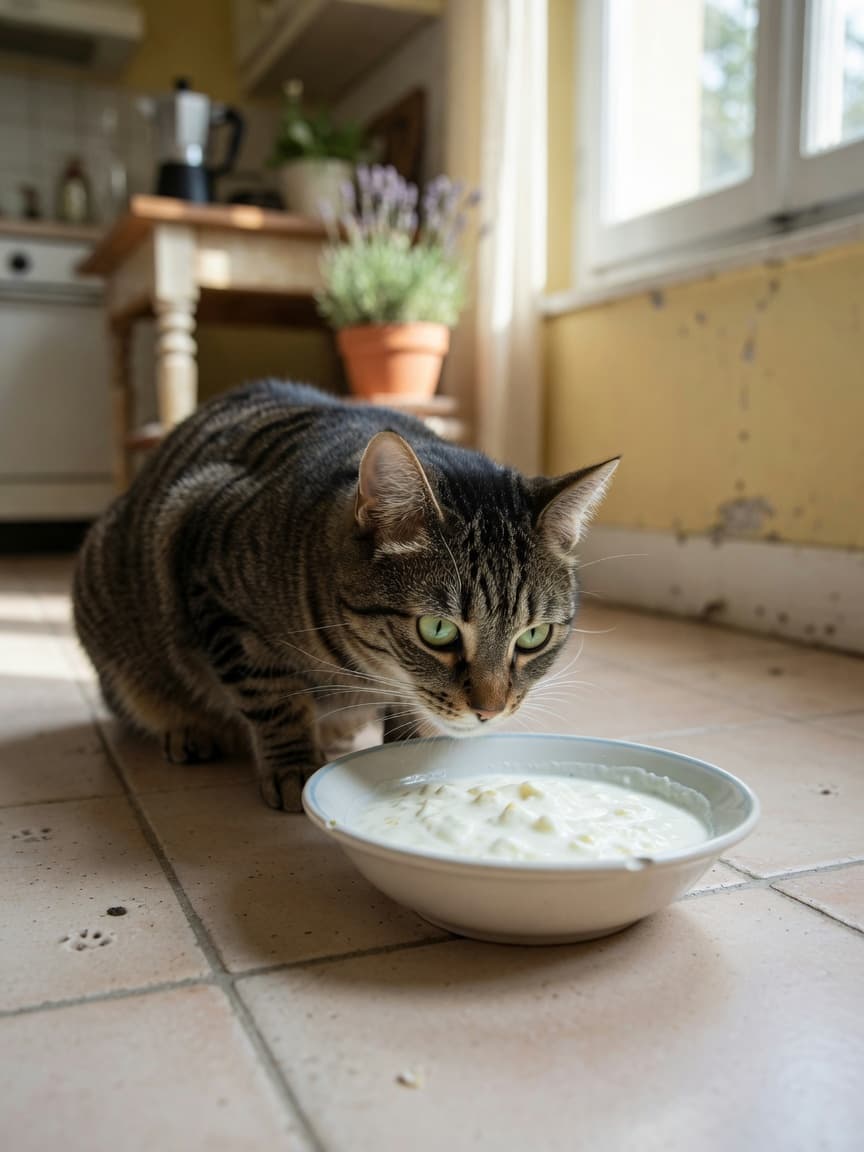
Can Cats Eat Yoghurt?
The image of a cat lapping contentedly at a bowl of cream is deeply embedded in popular culture. But the reality of cats and dairy is considerably more complicated — and more nuanced — than tradition suggests. Yoghurt occupies an interesting middle ground in this discussion. It is a dairy product, yet its processing makes it fundamentally different from milk or cream in terms of how cats can handle it. Whether your cat can eat yoghurt safely depends on the type, the quantity, and what you are hoping to achieve by offering it.
Why Most Cats Are Lactose Intolerant
Kittens are born capable of digesting their mother's milk because they produce lactase — the enzyme that breaks down lactose, milk's primary sugar. After weaning, the production of lactase declines significantly in most cats, because there is no longer any biological need for it. By adulthood, the majority of cats have reduced lactase activity, which means lactose passes through the digestive tract undigested. Gut bacteria ferment this undigested lactose, producing gas and causing osmotic diarrhoea as fluid is drawn into the intestines.
The symptoms of lactose intolerance in cats are familiar: loose stools, flatulence, bloating, and sometimes vomiting, appearing within a few hours of consuming dairy. Not every adult cat is severely intolerant — some retain more lactase activity than others — but it is safer to assume sensitivity than to assume tolerance, particularly if you have not introduced dairy before.
How Yoghurt Differs From Milk
Here is where yoghurt stands apart from most dairy products. During the fermentation process that transforms milk into yoghurt, live bacterial cultures (typically Lactobacillus bulgaricus and Streptococcus thermophilus) consume a significant portion of the lactose, converting it to lactic acid. This process reduces the lactose content of yoghurt by approximately 25–50% compared to the original milk, depending on fermentation time and bacterial strains used.
The living bacteria in yoghurt also continue producing lactase within the digestive environment, which may further support lactose breakdown. This is the primary reason some lactose-intolerant humans tolerate yoghurt better than milk — and the same principle applies to cats, to a degree.
Plain, full-fat yoghurt with live active cultures is therefore the most appropriate type to offer a cat, if you choose to offer dairy at all. Lactose content is lower than milk, and the probiotic bacteria may offer additional digestive benefits.
The Probiotic Angle
Probiotics — live beneficial bacteria — have received increasing attention in veterinary medicine for their potential role in supporting gut health, modulating the immune system, and managing conditions such as inflammatory bowel disease and antibiotic-associated diarrhoea. Several veterinary-specific probiotic products are now available, containing strains shown to survive transit through the feline gastrointestinal tract.
The question is whether the bacterial strains in yoghurt offer similar benefits to cats. Most yoghurt cultures are of bovine or human origin and are selected for dairy fermentation rather than feline gut colonisation. There is limited evidence that Lactobacillus bulgaricus and Streptococcus thermophilus — the standard yoghurt cultures — establish themselves meaningfully in a cat's gut microbiome. They may offer transient benefits, but they are unlikely to provide the same targeted support as species-appropriate veterinary probiotics.
If you are seeking probiotic support for your cat — particularly following antibiotic treatment or during a period of digestive disruption — a veterinary probiotic product containing strains like Enterococcus faecium (NCIMB 10415) or Bifidobacterium animalis is a more evidence-based choice than yoghurt.
Which Types of Yoghurt Are Safe and Which Are Not
Not all yoghurt is created equal, and some varieties are actively problematic for cats:
- Plain, full-fat, live yoghurt — the safest option; lowest lactose content, no additives
- Greek yoghurt — strained to remove more whey and lactose; generally well-tolerated in small amounts
- Low-fat or fat-free yoghurt — not necessarily safer; may contain artificial sweeteners or thickeners
- Flavoured yoghurt — avoid entirely; contains added sugar, fruit concentrates, and potentially xylitol
- Yoghurt with xylitol — highly toxic to cats; even small amounts can cause acute liver failure
- Yoghurt with added fruit — the fruit itself may be harmless, but sugar content is inappropriate for cats
- Vanilla or sweetened yoghurt — unnecessary sugars with no feline nutritional benefit
Always read the ingredient list carefully before offering any yoghurt to your cat. Xylitol in particular has become increasingly common as an artificial sweetener in low-sugar dairy products and is extremely dangerous.
How Much Yoghurt Can a Cat Have?
Even the most cat-appropriate yoghurt should be offered sparingly. A teaspoon of plain, full-fat live yoghurt offered occasionally — once or twice per week at most — is a reasonable upper limit. This is enough to allow your cat to enjoy the taste and texture without risking digestive upset or displacing meaningful nutrition.
Start with a very small amount — half a teaspoon — and observe your cat's stools and general demeanour over the following 12–24 hours. If you notice soft stools, increased flatulence, or vomiting, yoghurt is not well-tolerated by your individual cat and should be discontinued.
Cats with existing gastrointestinal conditions, pancreatitis, obesity, or diabetes should not be given yoghurt without veterinary input. The fat and residual sugar content, though modest, may be inappropriate for these cats.
Cats Who Show Interest in Yoghurt
Some cats are genuinely attracted to the smell and texture of yoghurt, and may investigate your bowl with determination. This interest is likely driven by the fat content and the acidic, slightly fermented smell rather than any inherent love of dairy. If your cat is persistent, a small scrape of plain yoghurt from your spoon as an occasional treat is unlikely to cause harm in a healthy adult cat.
Equally, many cats will sniff yoghurt and walk away entirely, which is a perfectly reasonable response. There is no nutritional reason to encourage yoghurt consumption in a cat who is not interested. A high-quality commercial diet with appropriate moisture content will always be a more reliable foundation for your cat's health than any human food supplement, yoghurt included.